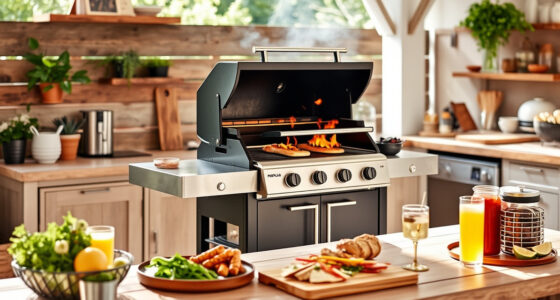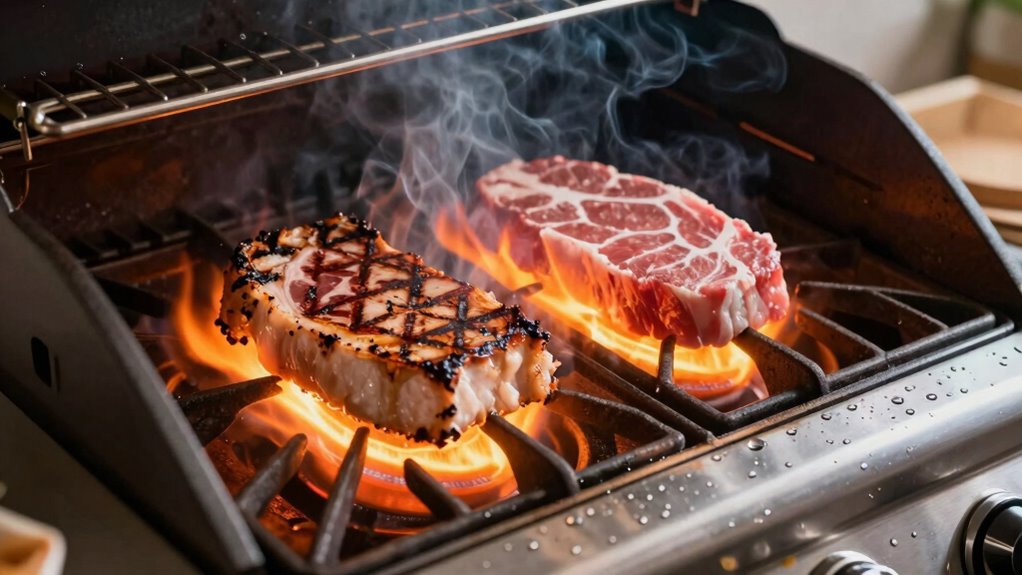
To stop burning the outside while the inside stays raw, you need to master your grill’s heat zones. Start by mapping out hot and cool spots, then use multiple zones to control temperature for different foods. Use direct heat for searing and indirect heat for gentle cooking, adjusting as needed to avoid uneven doneness. Properly managing heat zones makes grilling easier and more consistent—keep exploring to discover more ways to perfect your technique.

Get pool and patio gear delivered free with Prime
- Fast, free delivery on millions of items
- Prime Video, Amazon Music and more included
- Member-only deals all year
Key Takeaways
- Map heat zones regularly to identify hot spots and cooler areas for better heat management.
- Use direct heat for searing and indirect heat for gentle, even cooking to prevent burning and raw centers.
- Adjust burners and vents to create distinct heat zones suited to different food types and thicknesses.
- Monitor internal food temperatures frequently to move food between zones and avoid overcooking or undercooking.
- Maintain clean grill surfaces to ensure even heat distribution and prevent flare-ups that cause burning.
Popular right now

Philips 4400 Series Fully Automatic Espresso Machine with LatteGo Milk System

Dyson V8 Cordless Vacuum
Vitamix 5200 Professional-Grade Blender, 64 oz. Container, Black
As an affiliate, we earn on qualifying purchases.
What Are Gas Grill Heat Zones and How Do They Help You Cook Better?
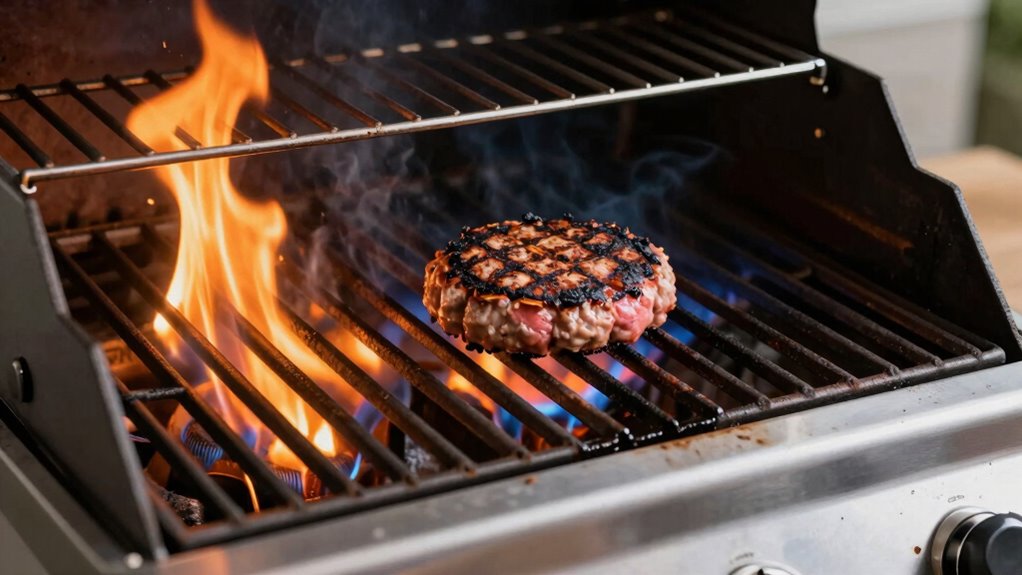
Gas grill heat zones are specific areas on your grill that are heated to different temperatures, allowing you to cook various foods simultaneously at ideal settings. Understanding these zones helps you manage grill safety by preventing flare-ups and uneven cooking. When you know which areas are hot or cooler, you can position your food accordingly, reducing the risk of burning or undercooking. Proper cleaning techniques also play a key role in maintaining consistent heat zones, as grease and residue can interfere with heat distribution. By regularly cleaning your grill, you ensure even heat flow and prolong its lifespan. Mastering heat zones allows you to cook more efficiently, avoid the common problem of burning outside and raw inside, and enjoy safer, more delicious grilled meals.
How to Identify and Map Out Heat Zones on Your Gas Grill
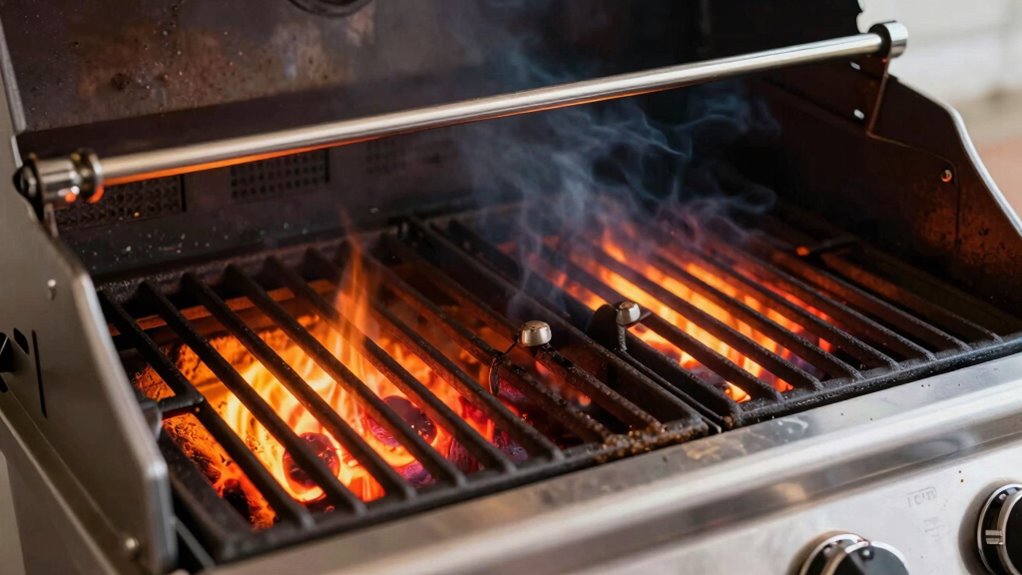
To effectively identify and map out heat zones on your grill, start by turning all burners to high and closing the lid for about 10 minutes. This process allows you to observe how heat distributes across the grill surface, helping with grill temperature calibration. Once heated, carefully open the lid and use an infrared thermometer or grill surface thermometer to measure temperatures in different areas. You’ll notice hotter spots directly above the burners and cooler zones elsewhere. Mark these areas with tape or a marker to create your heat zone map. This mapping helps you understand where to position foods for direct or indirect cooking. Regular heat zone mapping guarantees accurate grill temperature calibration and improves your overall grilling control.
Why Using Multiple Heat Zones Ensures Even Cooking
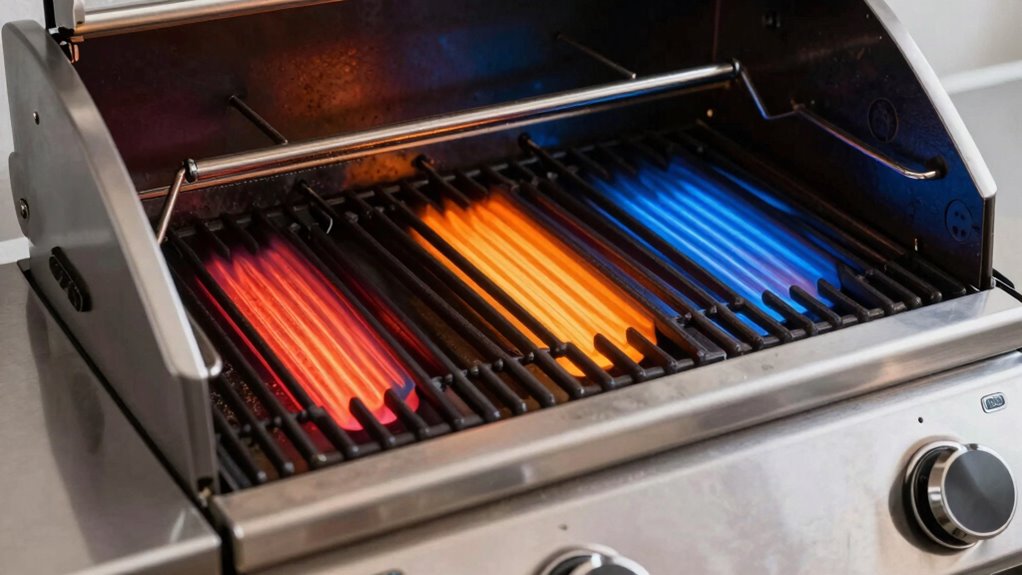
Using multiple heat zones gives you precise control over your grill’s temperature, making it easier to cook different foods perfectly. It also helps prevent hot spots that can cause uneven cooking or burning. By managing these zones, you guarantee your meal turns out evenly cooked every time.
Precise Temperature Control
Have you ever wondered how chefs achieve perfectly cooked dishes on a grill? It all comes down to precise temperature control and effective heat management. Multiple heat zones let you adjust the temperature in different areas, giving you better control over the cooking process. Instead of relying on just one heat setting, you can keep some parts hotter for searing while others stay cooler for slow cooking. This ensures your food cooks evenly from outside to inside. By managing heat accurately, you prevent burning on the outside while the inside remains raw. Good heat management means you can fine-tune the grill’s temperature at will, leading to consistent results and better flavor. Mastering this control turns your grill into a professional-grade cooking station.
Prevents Hot Spots
When you cook on a grill with multiple heat zones, you prevent hot spots that can burn or unevenly cook your food. This setup guarantees consistent cooking, avoiding the frustration of burned outside and raw inside. Using multiple zones also promotes better grill cleaning, as you can move food away from drippings that cause flare-ups. Additionally, it boosts fuel efficiency by directing heat where needed, reducing waste. To maximize benefits:
- Keep burners adjusted to avoid overly hot zones.
- Use indirect heat for delicate items.
- Rotate food between zones for even cooking.
- Clean your grill regularly to prevent grease buildup that causes hot spots.
Implementing these practices guarantees your grill functions at its best and your meals turn out perfectly every time.
How to Set Up Your Gas Grill for Perfect Heat Distribution
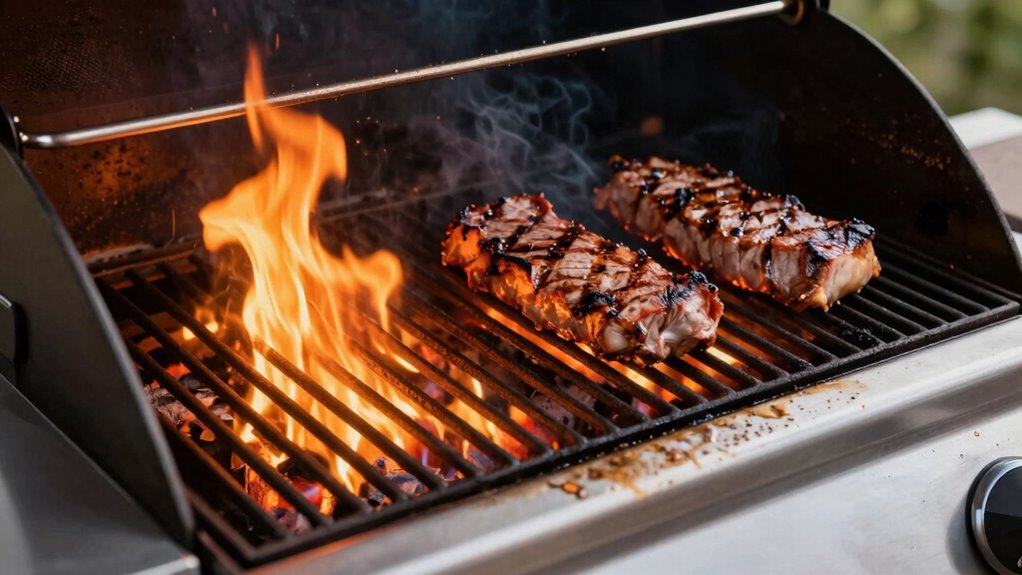
Setting up your gas grill for ideal heat distribution starts with understanding how to create distinct heat zones. Begin by turning on the burners and adjusting them to different levels—high on one side and low or off on the other. This setup allows you to cook foods directly over high heat and move delicate items to the cooler zone, preventing burning and undercooking. Regular grill maintenance ensures the burners work efficiently, helping maintain consistent heat. Proper setup also improves fuel efficiency because you’re not wasting fuel trying to compensate for uneven heat. Use the burners strategically to establish clear hot, warm, and cool zones. This simple configuration helps you control cooking temperatures precisely, giving you better results every time while saving fuel and reducing wear on your grill.
How to Use Heat Zones to Prevent Burning or Undercooking Your Food
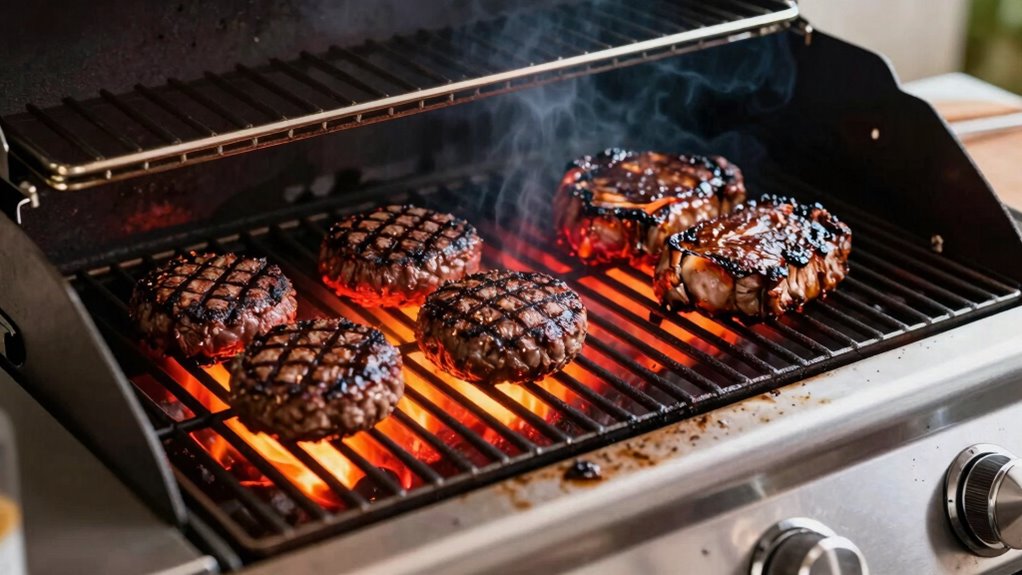
Using heat zones effectively allows you to prevent food from burning or remaining undercooked. Whether you’re using charcoal vs. gas or grilling outdoors vs. indoors, understanding zones is key. Here’s how to do it:
- Identify Hot and Cooler Areas: Use the grill’s design to create direct heat zones for searing and indirect zones for gentle cooking.
- Adjust for Food Type: Thicker cuts benefit from indirect heat, while thinner items need direct, high heat.
- Monitor Temperature: Keep a thermometer handy to maintain the right zone temperature, especially when switching between outdoor and indoor grilling.
- Move Food Accordingly: Shift food between zones to avoid burning the outside or undercooking inside. This way, you control the cooking process precisely.
Managing Different Foods With Varying Heat Requirements
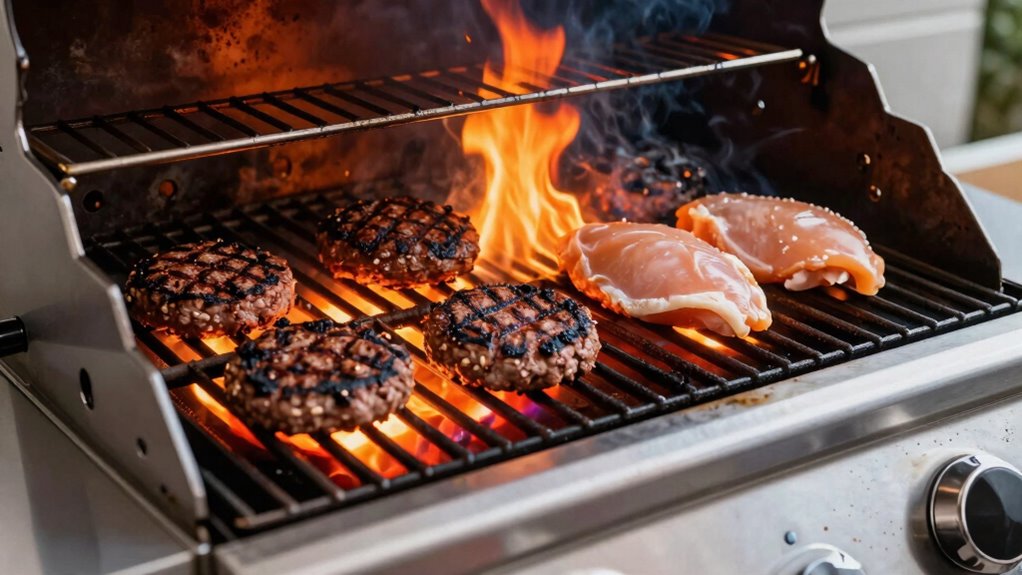
Different types of foods require specific heat levels to achieve the best results. For example, delicate seafood benefits from lower heat to prevent overcooking, while thicker cuts of meat need high heat for proper searing. Managing these varying heat requirements during outdoor cooking techniques ensures each item reaches paramount flavor enhancement without burning or drying out. You can set up your grill with distinct heat zones—hot for searing, medium for cooking, and low for gentle simmering—allowing you to move foods to their ideal temperature spots. This approach gives you better control, reduces the risk of overcooking, and helps preserve the natural flavors of each ingredient. Mastering heat zone management is essential for successful outdoor cooking and achieving perfectly cooked, flavorful meals.
Troubleshooting Common Heat Distribution Problems on Your Grill
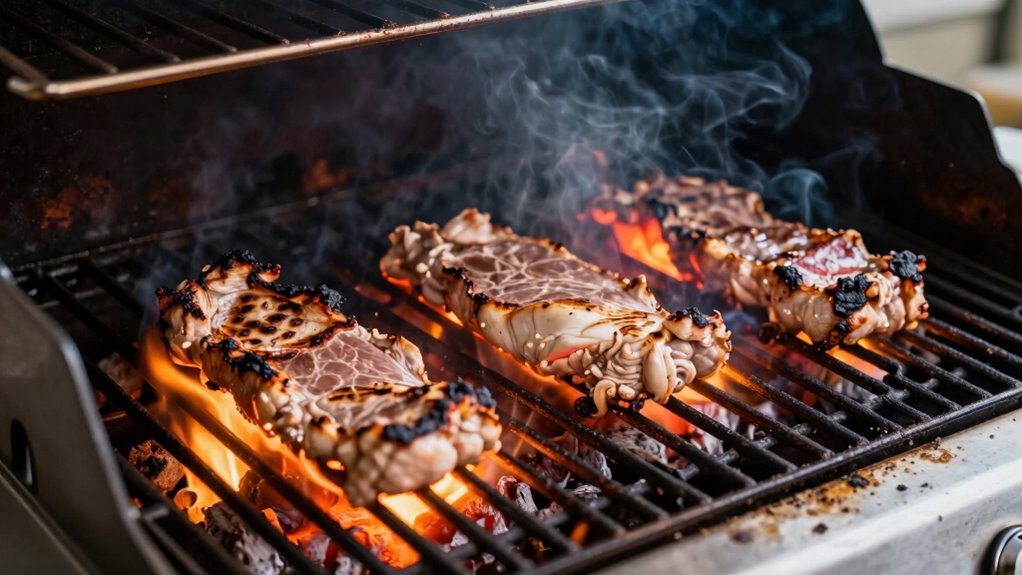
Even the best-designed grills can encounter uneven heat distribution, which can lead to hotspots or cold spots that disrupt your cooking process. To troubleshoot, start by checking your burner connections and ensuring they’re clean and functioning properly. Next, verify that your propane tank or fuel source isn’t running low, as this affects heat consistency and fuel efficiency. Third, examine the grill’s lid seals; leaks can cause heat loss and uneven cooking. Finally, consider the grill’s placement—setting it on a flat, wind-protected surface helps maintain consistent heat. Keeping these factors in check promotes safer grill operation and maximizes fuel efficiency. Regular maintenance and mindful positioning are key to preventing heat distribution problems and ensuring safe, even cooking every time.
Mastering Two-Zone and Three-Zone Grilling for Better Results
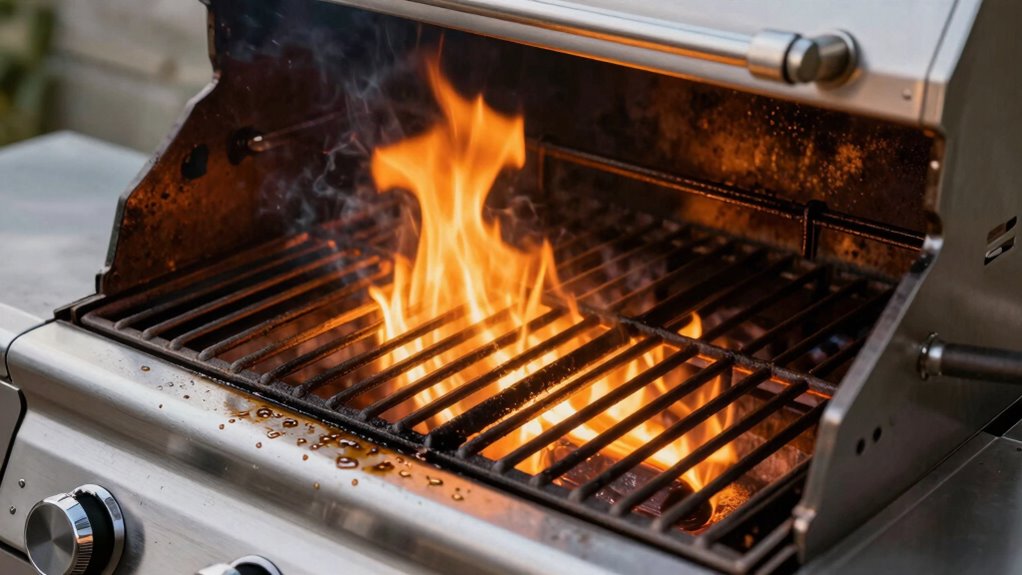
Mastering two-zone and three-zone grilling allows you to cook more efficiently and achieve better results. By setting up distinct heat zones, you can sear foods quickly over high heat, then move them to indirect heat for even cooking, reducing the risk of burning the outside while keeping the inside raw. Regular grill maintenance guarantees your heat zones remain consistent, making this process easier. With proper zone management, your food presentation improves, as you can control doneness and avoid overcooked edges. This technique also helps you handle multiple dishes at once, giving you flexibility and precision. When you understand how to utilize different zones effectively, you’ll elevate your grilling game, produce more visually appealing dishes, and enjoy a smoother cooking experience overall.
How to Adjust Heat Zones During Your Cook for Consistent Results
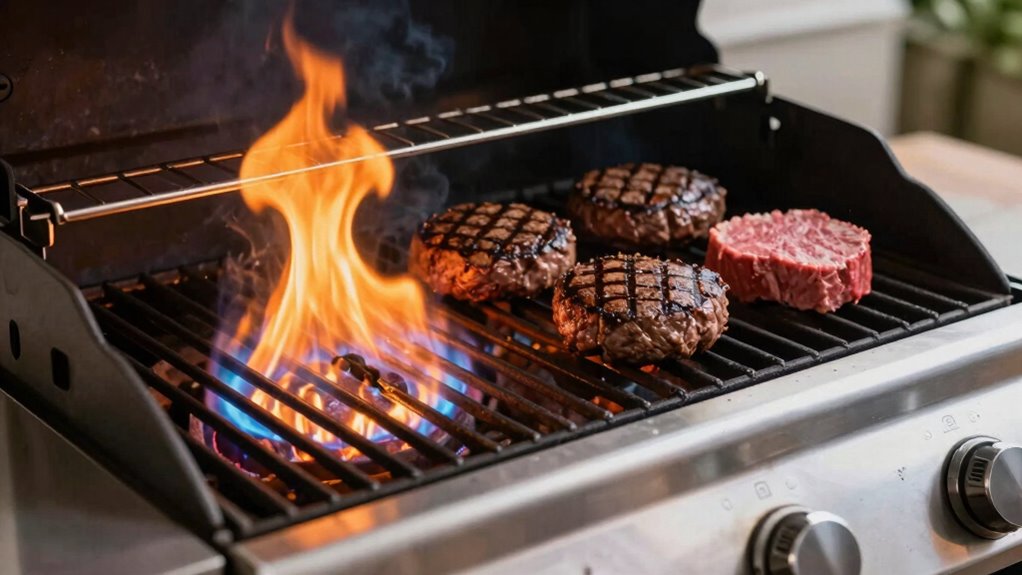
Adjusting heat zones during your cook is essential for maintaining consistent results and preventing overcooking. To do this effectively, consider these key steps:
- Monitor your food’s internal temperature regularly to stay within your desired doneness.
- Shift foods between heat zones to control cooking speed and avoid burning the exterior.
- Use direct heat for searing and indirect heat for gentle cooking, enhancing flavor pairing.
- Adjust the grill’s vents or burners to fine-tune heat levels, creating the perfect environment for your ingredients.
Essential Tools and Accessories to Control Heat Zones Like a Pro
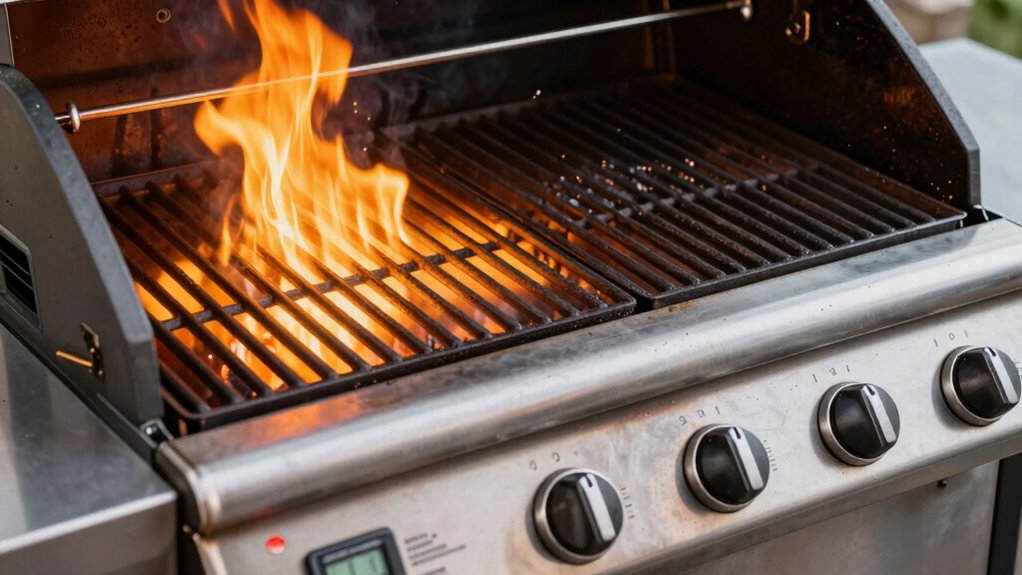
To control heat zones like a pro, you need the right tools and accessories that give you precise temperature management and flexibility. Essential grill accessories include high-quality temperature gauges, which help monitor internal grill temperatures and ensure even heat distribution. Using dual or infrared thermometers allows you to check food temperature without lifting the lid, maintaining consistent heat. Consider heat diffusers or ceramic stones to evenly distribute heat across the cooking surface. A good set of heat-resistant gloves and tools also helps you adjust vents and reposition grates safely. These accessories give you better control over your heat zones, preventing burning or undercooking. With the right tools, you’ll master heat zone management and achieve perfectly cooked, juicy results every time.
Frequently Asked Questions
How Often Should I Check and Adjust My Grill’s Heat Zones?
You should check and adjust your grill’s heat zones before each use and periodically during grilling, especially if you notice uneven cooking. Regular grill maintenance and temperature monitoring help prevent burning the outside while the inside remains raw. Keep an eye on the temperature gauges, and make small adjustments as needed to maintain consistent heat. This proactive approach guarantees your food cooks evenly and your grill stays in top shape.
Can Different Food Types Be Cooked Simultaneously in Separate Zones?
Yes, you can cook different food types simultaneously in separate heat zones, thanks to heat zone segregation. This setup allows you to manage food compatibility, ensuring delicate items like vegetables or fish stay at lower temperatures while meats cook hotter. By maintaining proper zone separation, you prevent cross-flavor contamination and uneven cooking, making your grilling more efficient and versatile. Just make sure your zones are well-defined for peak results.
What Safety Precautions Are Necessary When Manipulating Heat Zones?
When manipulating heat zones, you should prioritize fire safety and effective heat management. Always wear heat-resistant gloves and keep a fire extinguisher nearby. Adjust burners gradually to prevent flare-ups, and avoid leaving the grill unattended when changing zones. Verify all connections are secure to prevent gas leaks. By practicing these precautions, you reduce the risk of accidents and maintain safe, controlled cooking conditions.
How Do Ambient Weather Conditions Affect Heat Zone Effectiveness?
Ambient temperature and wind effects markedly impact your heat zone effectiveness. When it’s hot outside, your grill may reach higher temperatures more quickly, risking overcooking or burning the exterior. Wind can cause uneven heat distribution, making it harder to maintain consistent zones. To counteract this, adjust your burners accordingly, shield your grill from wind, and monitor temperatures closely to guarantee even cooking and avoid burning outside while keeping the inside raw.
Are There Specific Grill Models Better Suited for Multi-Zone Cooking?
You should look for grill models with flexible zone configurations, which allow you to customize heat zones for better control. Some brands offer multiple zone options, making it easier to cook different foods at varying temperatures simultaneously. When selecting a grill model, prioritize those with adjustable burners and modular grates. This way, you can optimize heat distribution, prevent burning the outside, and make certain the inside cooks thoroughly.
Conclusion
Mastering heat zones lets you cook food evenly without burning the outside or leaving it raw inside. By understanding and adjusting your grill’s heat distribution, you’ll enjoy perfectly cooked meals every time. So, why settle for uneven results when a few simple techniques can make all the difference? Take control of your grill, experiment with heat zones, and turn every barbecue into a culinary success. Your perfectly cooked meal is just a zone away!