
TL;DR
A Homes and Gardens report citing Cornell Lab of Ornithology specialist Miranda Rinck describes yard practices that can support chickadees through winter. Recommendations include limiting heavy pruning of native evergreens, leaving brush and leaf piles, and planting native trees; results will depend on local species and conditions.
A Homes and Gardens report citing Cornell Lab of Ornithology specialist Miranda Rinck recommends retaining natural cover and food sources in yards to support chickadees through winter. The advice includes avoiding heavy pruning of native evergreen trees and dense shrubs, and leaving brush piles and fallen leaves where practical; the report does not quantify how much these steps increase bird visits.

Get pool and patio gear delivered free with Prime
- Fast, free delivery on millions of items
- Prime Video, Amazon Music and more included
- Member-only deals all year
Rinck, an engagement support specialist for Project FeederWatch at the Cornell Lab, says chickadees spend winter in flocks searching for food and shelter. The report describes seven chickadee species across North America, with ranges differing by region. Which species a yard might attract depends on its location and habitat.
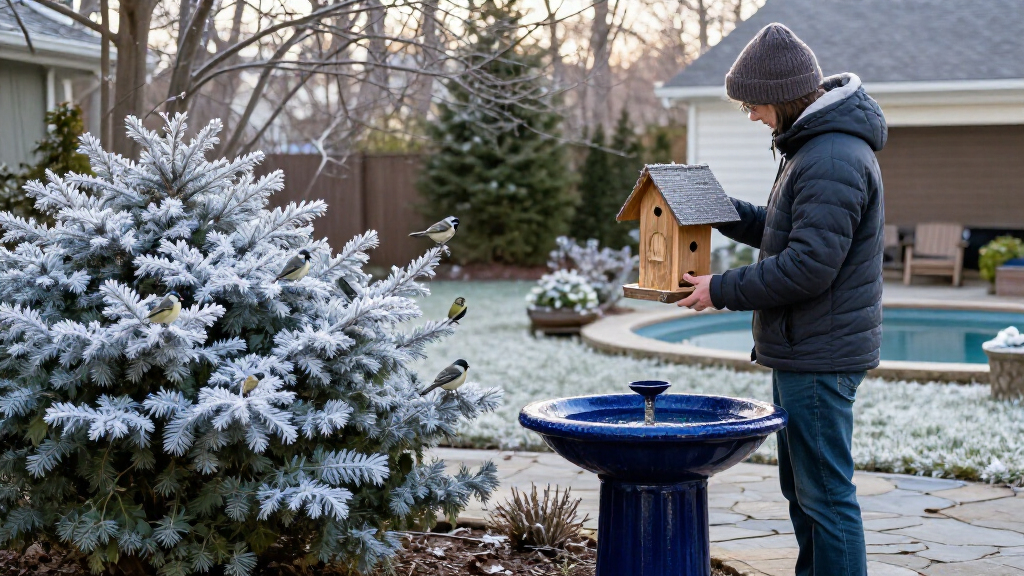
One recommendation is to avoid heavy fall pruning of native pines, spruces, firs and dense shrubs, particularly near woodland edges and in sheltered yard corners. Rinck says this vegetation can provide cover from wind, snow and predators, as well as places where chickadees may cache food. The report advises leaving damaged, diseased or dead branches out of this general guidance and says heavy trimming is better left until late winter or early spring.
The report also recommends keeping some branches and twigs in a quiet corner as a brush pile, and allowing fallen leaves to remain in suitable areas. Chickadees forage for insects and eggs on branches, bark and buds; leaf litter can provide habitat for insects and places for them to lay eggs. Native trees, including spruce, pine, oak, fir and juniper, may add shelter and food sources, while plants can support insects birds eat.
Yard Choices Can Add Winter Cover
The guidance focuses on small changes that can retain habitat in residential landscapes during a season when food and shelter are central to chickadees’ survival. Keeping evergreen cover, twigs and leaf litter can make parts of a yard more useful to birds and to insects that form part of their diet. These measures may also benefit other wildlife, though the report does not measure their effects.
For readers hoping to see more chickadees, the recommendations offer habitat-focused alternatives to relying only on feeders. They are not a guarantee of sightings: local species, nearby habitat, weather and food availability can all affect whether birds visit. The advice is framed as ways to support birds, rather than evidence that any single action will produce a specific increase.
Popular right now

Bose QuietComfort Headphones (2nd Gen), Wireless Over-Ear Noise-Cancelling Headphones, Black

KitchenAid 5.5-Quart Bowl-Lift Stand Mixer, Porcelain White

Hisense 40-Inch QD4SR Series Hi-QLED Full HD Smart Roku TV
As an affiliate, we earn on qualifying purchases.
Chickadees Stay Through Cold Weather
Unlike many migratory songbirds, chickadees generally remain in their ranges through winter. Rinck says they gather in flocks to find food and shelter, and that some northern populations endure months of freezing temperatures. The report says seven species occupy distinct ranges across the continent, spanning parts of the United States, Canada and Mexico.
Examples in the report include black-capped chickadees across much of Canada and the northern two-thirds of the United States, and chestnut-backed chickadees along the West Coast from southeastern Alaska to southern California. Boreal chickadees are associated with northern coniferous forests, while Carolina chickadees occur farther south and overlap in range with black-capped chickadees. Mountain and Mexican chickadees occupy more specific western and southern ranges. These descriptions help explain why planting choices should suit local conditions rather than assume one species is present everywhere.
“Dense cover provided by shrubs and evergreen trees provides protection from wind, snow, and predators – and can even provide places for chickadees to store their cached food.”
— Miranda Rinck, Engagement Support Specialist for Project FeederWatch at the Cornell Lab of Ornithology, as quoted by Homes and Gardens
Local Results Will Vary
The report offers habitat recommendations, not a controlled study showing how many more chickadees a particular yard will attract. It gives no measured results, comparison baseline or timeline for changes in bird visits. It also does not specify which species will occur in every locality; ranges vary, and local habitat matters.
The supplied report excerpt ends during its discussion of native plants, so it is not clear whether the original article included additional recommendations. The source material also does not provide a publication date. Readers should treat the advice as general guidance and choose plants and yard practices suited to their region.
Apply the Advice by Region
Homeowners can begin by identifying which chickadee species occur locally and checking whether existing native trees and shrubs can be left intact through winter. Where space and safety permit, a quiet brush pile and an area of leaf litter can retain cover and insect habitat. Anyone planting should favor species suited to the local climate and growing conditions.
The report describes seasonal practices rather than a scheduled research milestone or official program change. People who want to track what visits their yards can observe birds over time or take part in citizen-science projects such as Project FeederWatch, but the source does not promise that any one yard measure will lead to more sightings.
Key Questions
What can I do to support chickadees in winter?
The report recommends preserving dense native shrubs and evergreens, leaving a brush pile in a quiet area, and retaining some fallen leaves where practical. These features can offer shelter and foraging habitat, but they do not guarantee visits.
Should I prune evergreens in fall?
The report advises against heavy fall pruning of native pines, spruces, firs and dense shrubs, especially along woodland edges and in sheltered corners. It says damaged, diseased or dead branches are a separate consideration and suggests delaying heavy trimming until late winter or early spring.
Do chickadees migrate for winter?
The report says chickadees generally stay in their ranges through winter and search in flocks for food and shelter. The species present depends on the region; their ranges extend across parts of the United States, Canada and Mexico.
Will these steps guarantee more chickadee sightings?
No. The source offers recommendations for improving habitat but provides no measured increase in bird visits. Local species, existing habitat and seasonal conditions can affect what appears in a yard.
Source: rss