
TL;DR
Hosta leaves can be cut back after frost, once they turn yellow and collapse. Chicago Botanic Garden senior horticulturist Heather Sherwood says removing slimy foliage can help clear habitat for pests and fungal diseases, particularly for gardeners who have had slug problems.
A Country Living gardening report advises cutting back hostas after frost has turned their leaves yellow and caused them to fall over, rather than pruning healthy foliage early. Heather Sherwood, senior horticulturist at the Chicago Botanic Garden, says collapsed leaves can become slimy and matted, and clearing them is especially useful for gardeners who have dealt with slugs.

Get pool and patio gear delivered free with Prime
- Fast, free delivery on millions of items
- Prime Video, Amazon Music and more included
- Member-only deals all year
Sherwood says hostas may turn yellow in fall, but a killing frost, around 30 degrees Fahrenheit or colder, can make the leaves collapse and mat together. The report notes that this is particularly noticeable with large hostas, including varieties with leaves 18 inches or more across. Once foliage has fallen and become slimy, Sherwood says, it should be removed.
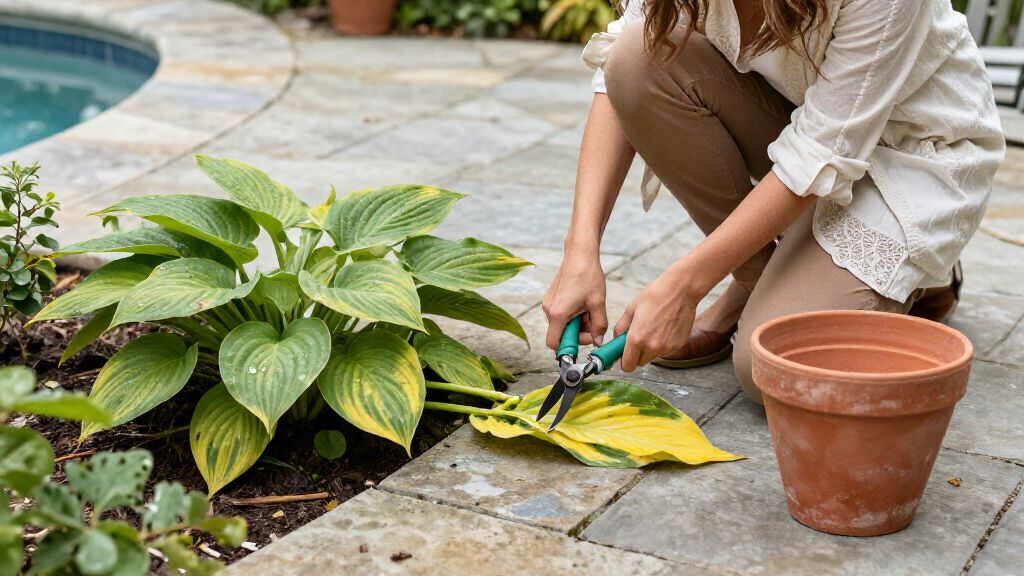
For pruning, wait until the leaves are yellow and fallen over. Gather them together and cut them about one inch above the ground with a garden knife, following Sherwood’s instructions. The report says hostas are difficult to damage during this process because their growing eyes are deep within the plant. Chopped leaves can be composted and break down quickly.
Removing dead foliage also clears leaf litter around the plants. Sherwood says matted leaves can hold water and offer a place for fungal diseases, mice and voles to overwinter. The report also identifies the soil beneath hostas as a place where slugs lay eggs; clearing dead leaves and litter may expose those eggs to drying. That makes cleanup a preventive measure, not a guarantee against slugs next year.
Why Removing Matted Leaves Helps
The advice gives gardeners a practical way to time fall cleanup: wait for frost damage, then remove foliage that has collapsed instead of cutting back hostas while their leaves are still upright and green. This is relevant for large plants whose leaves can clump together on the ground and for gardeners who want to reduce debris left in beds through winter.
Cleanup may also reduce sheltered conditions for pests and disease, according to Sherwood’s comments in the report. For people who saw slug damage during the growing season, removing leaf litter can help disrupt places where eggs may overwinter. The report does not claim that pruning alone will eliminate slugs or prevent fungal disease; it describes a useful garden-maintenance step.
Popular right now

Roborock Q7 M5+ Robot Vacuum and Mop

Dyson V8 Cordless Vacuum

KitchenAid 3-Piece Pasta Roller and Cutter Set for Stand Mixers
As an affiliate, we earn on qualifying purchases.
Hosta Cleanup After Frost
Hostas are shade-loving perennials grown for foliage in a range of sizes and colors. The Country Living report describes them as reliable, versatile plants that provide interest through the growing season. Their fall appearance changes after cold weather: leaves may turn yellow, then collapse after a hard frost.
Gardeners may leave perennial cleanup until spring while handling other fall chores, such as raking leaves or dividing plants. In Sherwood’s account, however, hosta foliage that has become slimy has little reason to remain in the bed over winter. The timing depends on the plant’s condition: the guidance is to cut it back after the leaves have yellowed and fallen, not on a particular calendar date.
“Hostas do have a pretty yellow color in the fall, but once we have a killing frost—around 30 degrees or colder—they fall over and get matted down.”
— Heather Sherwood, senior horticulturist at the Chicago Botanic Garden, as quoted by Country Living
Timing Depends on Local Frost
The report gives a frost temperature of around 30 degrees Fahrenheit or colder as an example of a killing frost, but it does not set a date for pruning that applies everywhere. Local weather and the condition of each plant determine when its leaves yellow and fall. The source also does not quantify how much removing foliage reduces slug numbers or disease risk, and it does not promise that the practice prevents either problem.
Watch Leaves Before Cutting
Gardeners can watch for hosta leaves to turn yellow, collapse and become matted after frost, then gather and cut them near the base. Those dealing with slug damage can also clear dead leaves and surrounding leaf litter. The report offers no further scheduled update; the next step for readers is to apply the timing guidance when frost affects their own garden.
Key Questions
When should hostas be cut back in fall?
Wait until frost has turned the leaves yellow and they have fallen over. Sherwood’s guidance, reported by Country Living, is to remove them once they have become slimy and matted.
How close to the ground should I cut hosta leaves?
Gather the leaves and cut them about one inch above the ground with a garden knife, according to Sherwood’s instructions.
Can I compost the cut leaves?
Yes. The report says hosta leaves can be chopped up and composted, where they break down quickly.
Does fall cleanup stop slugs from returning?
No guarantee is given. Removing dead foliage and leaf litter may disturb slug eggs sheltered in the soil and expose them to drying, but the report does not say this will eliminate slugs.
Source: rss