When you’re underwater, water drastically changes how light, color, and visibility work, making your camera settings more important than on land. You need to adjust for low light, color fading, and scattering to get clear, vibrant footage. Waterproof housings can limit lighting, so manual tweaks become essential. Without the right settings, your shots can look dull, blurry, or washed out. If you keep going, you’ll discover how to make the most of your underwater captures.

Get pool and patio gear delivered free with Prime
- Fast, free delivery on millions of items
- Prime Video, Amazon Music and more included
- Member-only deals all year
Key Takeaways
- Water absorbs and scatters light, requiring specific camera adjustments to maintain color and brightness.
- Underwater environments cause rapid lighting changes, making proper settings crucial for consistent footage.
- Limited natural light underwater necessitates higher ISO and white balance adjustments.
- Water distortion impacts focus and exposure, demanding tailored camera configurations.
- Water’s environmental factors make manual and external lighting essential for clear, vibrant images.
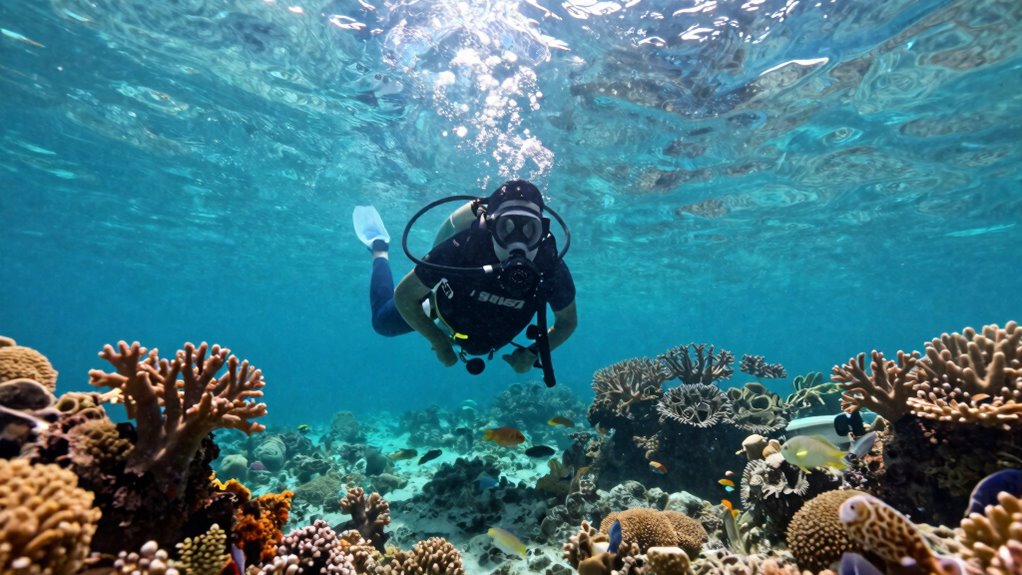
When you’re capturing water-based adventures, the right action camera settings can make all the difference in the quality of your footage. Water introduces unique challenges that demand careful attention to your camera’s configuration. Unlike on land, where lighting conditions are often stable, water environments can fluctuate rapidly, affecting how your footage appears. Underwater lighting can be tricky—colors fade, contrast drops, and images often appear dull or bluish without proper adjustments. To combat this, you need to tweak your camera settings to compensate for the light absorption and scattering that happen underwater. Using a camera with good underwater lighting support or adding external lights can help brighten scenes and restore natural colors, but your camera’s internal settings still play a vital role. Adjusting ISO and white balance settings is crucial; increasing ISO can brighten low-light scenes, while setting a custom white balance helps maintain color accuracy beneath the surface.
Optimizing camera settings like ISO and white balance is key for vibrant, clear underwater footage.
A waterproof housing is essential when filming water adventures, but it’s not enough to just protect your gear. Many housings can limit light intake or alter the camera’s exposure settings. You need to ensure your camera’s settings are optimized for underwater conditions, which often means manually adjusting exposure and focus before diving in. Properly configured, your waterproof housing becomes an effective shield that preserves image quality, but it’s your settings that really allow you to make the most of the environment. Without tweaking your camera, you risk ending up with footage that’s grainy, washed out, or too dark to appreciate. Additionally, understanding water lighting challenges can help you better adapt your settings for optimal footage quality underwater.
Since water can distort and diffuse light, paying attention to your camera’s aperture and shutter speed is equally important. A faster shutter speed helps freeze motion like splashes or swimming fish, while a smaller aperture can increase depth of field, keeping more of your scene in focus. These adjustments are especially important when lighting conditions change suddenly as you descend or surface. Remember, in water, natural light diminishes quickly, so plan your settings accordingly, adjusting as needed during your shoot. Moreover, being aware of light absorption and scattering can guide you in choosing the right camera settings for different depths and water clarity, ensuring your footage remains vibrant and clear.
underwater action camera waterproof housing
As an affiliate, we earn on qualifying purchases.
As an affiliate, we earn on qualifying purchases.
Frequently Asked Questions
How Does Water Pressure Affect Camera Settings?
Water pressure can impact your camera settings by risking equipment durability if not properly adjusted. Higher pressure might force you to change focus or exposure settings to compensate for distortion or bubbles. You need to handle your camera carefully, making sure it’s secured and protected. Adjusting settings for water conditions helps prevent damage, keeps your footage clear, and guarantees your camera withstands water pressure during underwater adventures.
What Are the Best Waterproof Camera Modes?
The best waterproof camera modes often include underwater stabilization, which helps keep your footage steady beneath the surface. Use modes designed for low light and vibrant colors to capture clear, vivid shots. Choose appropriate camera housing choices that suit your environment, ensuring water resistance and protection. Experiment with settings to find what works best for your water adventures, and always verify stability features to prevent shaky footage underwater.
How to Prevent Fogging in Underwater Shots?
Don’t let fogging ruin your underwater shots; it’s a common issue that’s easier to prevent than fix. Before diving in, clean your lens thoroughly and make certain your equipment is well-maintained. Use anti-fog inserts or sprays designed for underwater gear to keep moisture at bay. Remember, a little prevention goes a long way, and keeping your gear in top shape will help you capture clear, stunning shots every time.
Do Lighting Conditions Change Underwater Camera Settings?
Yes, lighting conditions underwater do change your camera settings. You’ll need to make lighting adjustments to compensate for reduced light and color absorption, especially reds and oranges. As you dive deeper, increase exposure and consider using filters to enhance brightness. Color correction becomes essential to restore natural tones, so adjust white balance accordingly. These steps guarantee your footage stays vibrant and clear despite the challenging underwater lighting environment.
How Does Saltwater Impact Camera Performance?
A stitch in time saves nine—saltwater impacts your camera by causing salt corrosion, which can damage internal parts. You must prioritize camera maintenance after each dive, rinsing it thoroughly with fresh water to remove salt residue. Salt corrosion accelerates wear and tear, so regular cleaning and proper storage are vital. Protect your action camera with waterproof housings and check seals to guarantee longevity and peak performance underwater.
Conclusion
As you prepare for your next water adventure, remember that settings can make or break your shot. The right adjustments might seem small, but they hold the power to transform your footage into something unforgettable. Are you truly ready to capture every splash, ripple, and wave in stunning detail? Don’t underestimate the importance of fine-tuning your camera — because when water’s involved, the difference between a good shot and a great one often depends on what you don’t see at first glance.
Halloween Picks
halloween
As an affiliate, we earn on qualifying purchases.