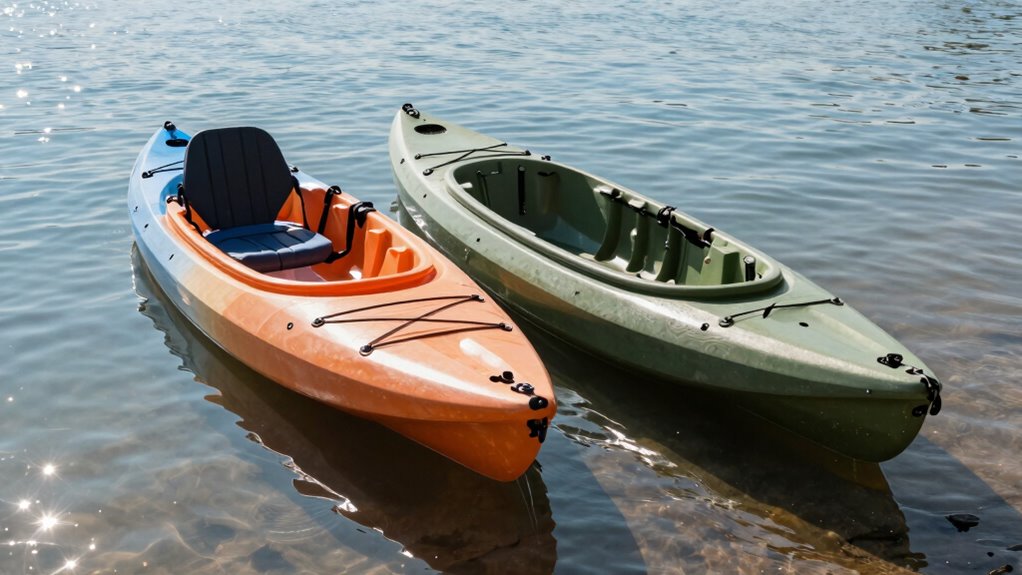

Choosing between a sit-on-top and a sit-inside kayak depends on your beach day plans. Sit-on-tops are great for casual paddling, easy exits, and quick access, making them perfect for relaxing trips and playing in shallow waters. Sit-inside kayaks offer more protection and stability for longer paddles and choppy conditions. To find out which fits your beach adventures best, explore the key differences and suitable activities—more details await.
Key Takeaways
- Sit-on-top kayaks are ideal for casual beach days, offering easy entry, quick access, and good water visibility.
- Sit-inside kayaks provide better wind and wave protection, making them suitable for longer, more secure beach outings.
- Choose sit-on-top models for activities like swimming, fishing, or short trips in calm, warm waters.
- Opt for sit-inside kayaks if your beach day involves extended paddling or choppy conditions requiring extra water safety.
- Consider storage, transport, and comfort preferences when selecting the kayak type for your ideal beach experience.
What Are the Main Differences Between Sit-On-Top and Sit-Inside Kayaks?
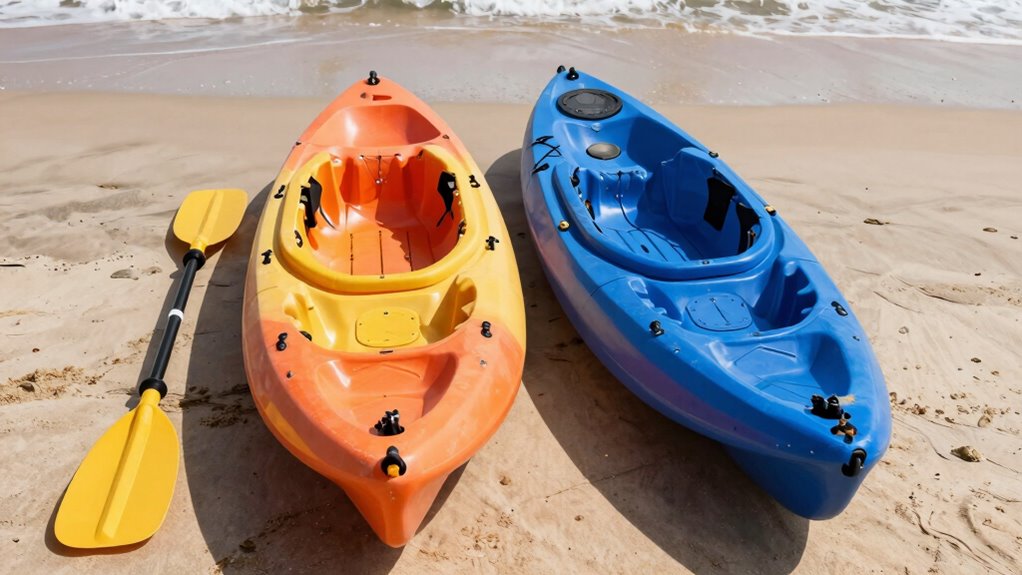
What are the main differences between sit-on-top and sit-inside kayaks? Sit-on-top kayaks offer an open design, making it easier to get in and out, which is great for casual paddling. They tend to be more stable and are ideal for warm water and rough conditions. Sit-inside kayaks, on the other hand, have a closed cockpit that provides better protection from water and wind. This design allows for more efficient kayak paddling techniques, especially on longer trips. Maintenance tips for sit-on-top kayaks include keeping the hull clean and dry, while sit-inside kayaks require checking seals and cockpit areas regularly. Choosing between them depends on your comfort and paddling style, but understanding these differences helps ensure you pick the right kayak for your adventures.
Which Kayak Is More Stable for Beach and Calm Water Trips?
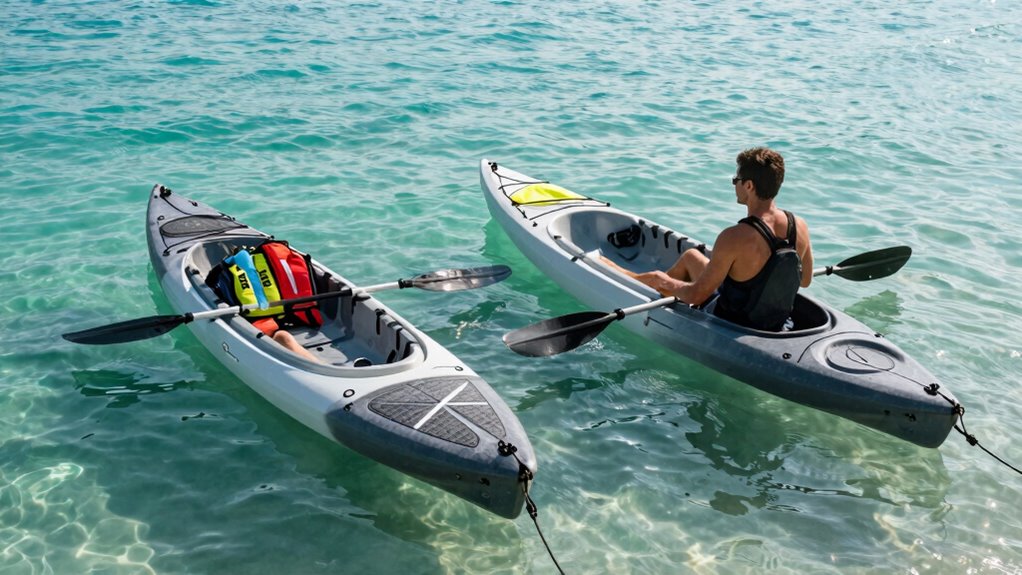
When choosing a kayak for calm waters, stability is key, and your center of gravity plays a big role in that. Design features like hull shape and width also influence how steady the kayak feels under you. Additionally, your experience and comfort level affect how confident you’ll be on different types of kayaks.
Center of Gravity
The center of gravity plays a crucial role in a kayak’s stability, especially on calm water and beaches. Your personal weight affects how the kayak balances, with a lower center of gravity generally offering more stability. Sit-inside kayaks tend to have a lower center of gravity because your body is enclosed within the hull, helping you stay balanced as water displacement shifts with your movement. On the other hand, sit-on-top kayaks sit higher, raising the center of gravity, which can make them feel less stable but more maneuverable. Knowing how your weight distribution impacts water displacement helps you choose the right kayak. If you prefer a stable, calm water experience, a kayak with a lower center of gravity is typically the better option.
Stability Design Features
Stability design features play a significant role in determining which kayak is better suited for beach and calm water trips. A wider hull, lower center of gravity, and volume distribution all contribute to stability, making your paddling experience smoother. To maximize stability, focus on proper kayak paddling techniques, maintaining even weight distribution, and avoiding sudden movements. Sit-on-top kayaks often have a broader base, providing extra stability, while sit-inside models rely on a lower profile. Regular kayak maintenance tips, like checking for hull damage and keeping gear secure, help preserve stability over time. Keep in mind that understanding how these features influence balance helps you choose the right kayak for calm water adventures and ensures safer, more enjoyable outings.
User Experience Factors
Choosing the right kayak for beach and calm water trips depends heavily on your experience and comfort level with each type. Sit-on-top kayaks often feel more stable due to their open design, making paddle handling easier and providing better ergonomics considerations for quick adjustments. Sit-inside kayaks may require more skill, but they offer a secure feeling in rougher conditions, affecting user experience. To help you decide, here’s a quick comparison:
| Feature | Sit-On-Top | Sit-Inside | Best For |
|---|---|---|---|
| Stability | High, open design | Moderate, depends on hull shape | Calm, beach trips |
| Ergonomics Considerations | Easy to get on/off, comfortable seating | Better support but less accessible | Longer paddling sessions |
| Paddle Handling | More direct, less restricted | May require more control | Experienced paddlers |
| Comfort | Spacious, adjustable footrests | Enclosed, cozy feel | Beginners, casual trips |
| User Experience | intuitive, relaxed, stable | secure, controlled | Calm water, beginner paddlers |
Which Kayak Is Easier to Transport and Store?
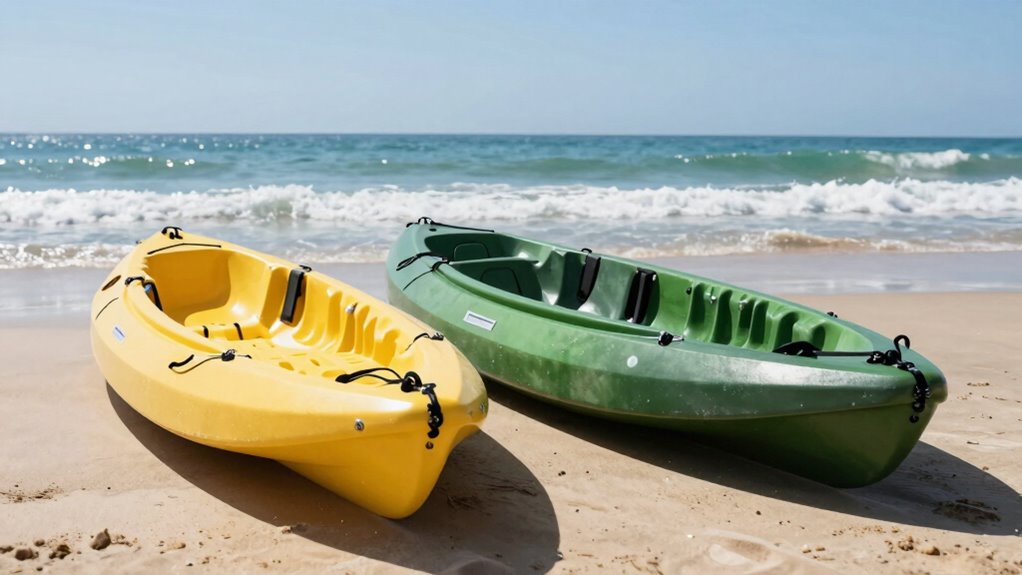
Since sit-on-top kayaks are generally wider and more stable, they tend to be bulkier and heavier, making them more challenging to transport and store. Their size can impact storage convenience and transportability factors, especially if you have limited space or a small vehicle. To make things easier, consider these points:
- Use a roof rack or kayak cart for simpler transport
- Opt for foldable or lighter models to reduce weight
- Store in a garage, shed, or wall-mounted rack to save space
Sit-on-top kayaks are often less portable due to their bulk, but their straightforward storage options and ease of handling can compensate for that. When choosing, weigh how much effort you’re willing to put into transporting and storing your kayak.
How Do Comfort and Accessibility Vary Between the Two Types?
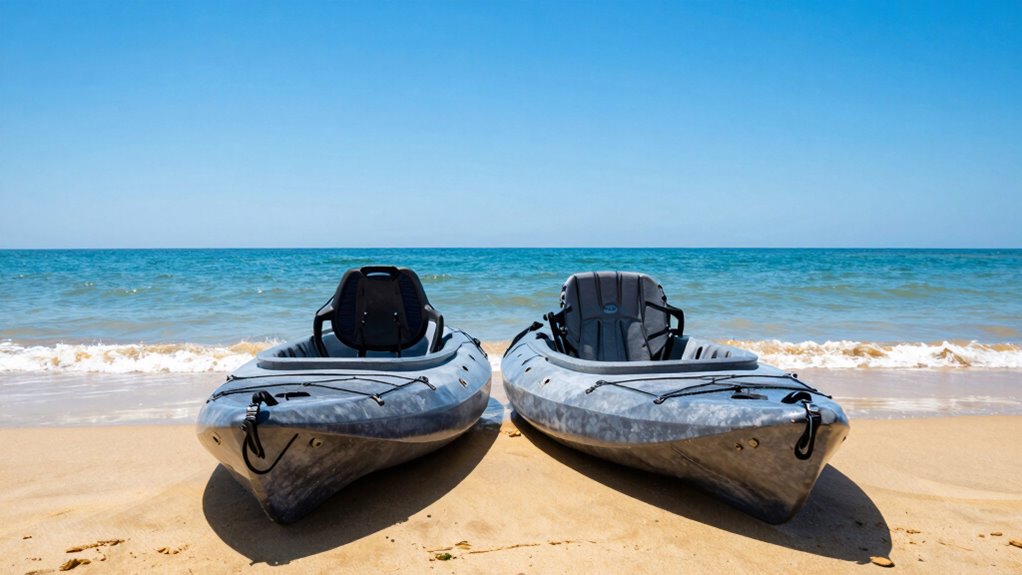
You’ll notice that sit-on-top kayaks offer easier entry and a more open feel, making it simple to hop in and out. Sit-inside models usually provide more support and comfort, especially on longer trips, but can be trickier to get into. When it comes to gear, sit-on-tops often give better accessibility, allowing you to reach your equipment without much hassle.
Ease of Entry
Sit-on-top kayaks generally offer easier access because you can simply hop on and off the deck without stepping into a confined space. This makes getting in and out quick, especially if you’re tired or balancing gear. Plus, you don’t need to worry about climbing over high gunwales, which can make entry easier for beginners or those with limited mobility. You’ll find that gear organization is simpler since you can easily reach gear stored on deck. Paddling techniques are also more straightforward, as you’re seated higher and more open. To maximize ease:
- You can quickly adjust your position without squeezing into tight spaces
- You’re less likely to get trapped if you tip or fall
- Entry and exit are faster, saving time before and after paddling
Seating Comfort Levels
Seating comfort and accessibility substantially influence your overall paddling experience with each kayak type. Sit-on-top kayaks often feature ergonomic padding that provides cushioning and support, making long paddles more comfortable. Their seats usually offer some degree of seating adjustability, so you can fine-tune your position for better comfort and stability. In contrast, sit-inside kayaks typically have molded, contoured seats with built-in padding that promotes good posture but may limit adjustability. While they often keep you drier and warmer, the fixed seating can feel restrictive if you prefer customizing your sitting position. Ultimately, the level of comfort depends on how much you value ergonomic support and seating flexibility, influencing your overall enjoyment on the water.
Accessibility to Gear
While both kayak types offer storage options, access to gear varies considerably due to their designs. Sit-on-top kayaks typically feature open decks with accessible storage hatches, making it easier to grab gear quickly. In contrast, sit-inside kayaks often hide gear in sealed compartments, requiring more effort to reach essentials.
Consider these points:
- Sit-on-tops allow for easy gear storage and retrieval, ideal for casual outings.
- Sit-insides may require adjusting paddling techniques to reach gear stored in internal compartments.
- Accessibility impacts your ability to stay comfortable and organized during longer trips.
Your choice influences how smoothly you manage gear and your paddling flow, making accessibility a key factor in your kayak decision.
What Are the Best Uses for Sit-On-Top vs. Sit-Inside Kayaks?
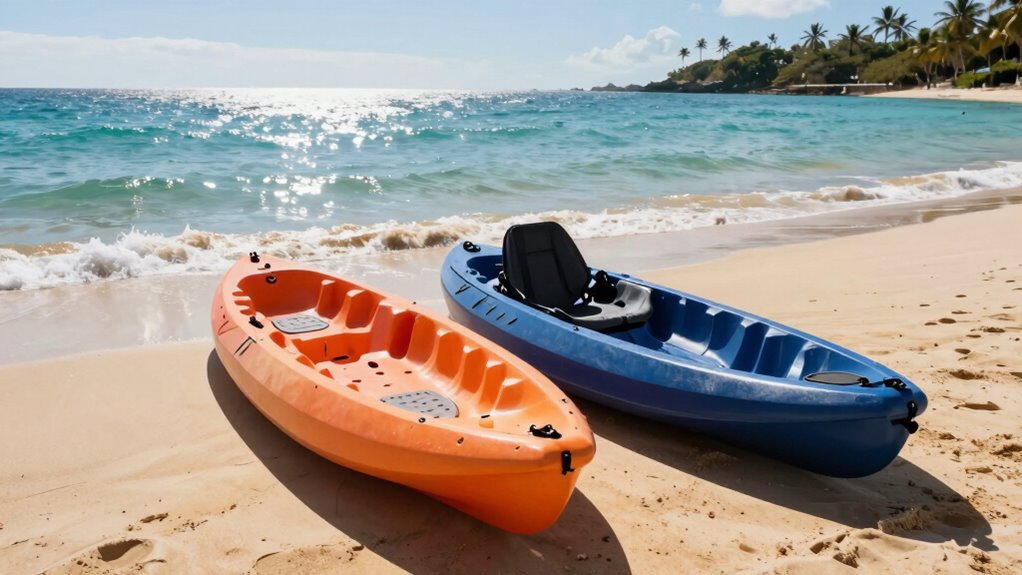
Choosing the right kayak depends on what you plan to do on the water. If you enjoy calm lakes or leisurely kayak paddling, a sit-on-top kayak offers quick access and easy re-entry, making it ideal for casual outings. It also provides better water safety since you’re more visible and can easily exit if needed. On the other hand, sit-inside kayaks excel for longer trips, rougher waters, or where wind and waves are more challenging. They keep you more protected from the elements and help maintain stability in choppy conditions. For activities like fishing or extended touring, sit-inside models offer better comfort and control. Consider your water safety needs and the kind of paddling adventures you want to pursue to choose the best kayak for your beach days.
How to Choose the Right Kayak for Your Beach Day Activities?
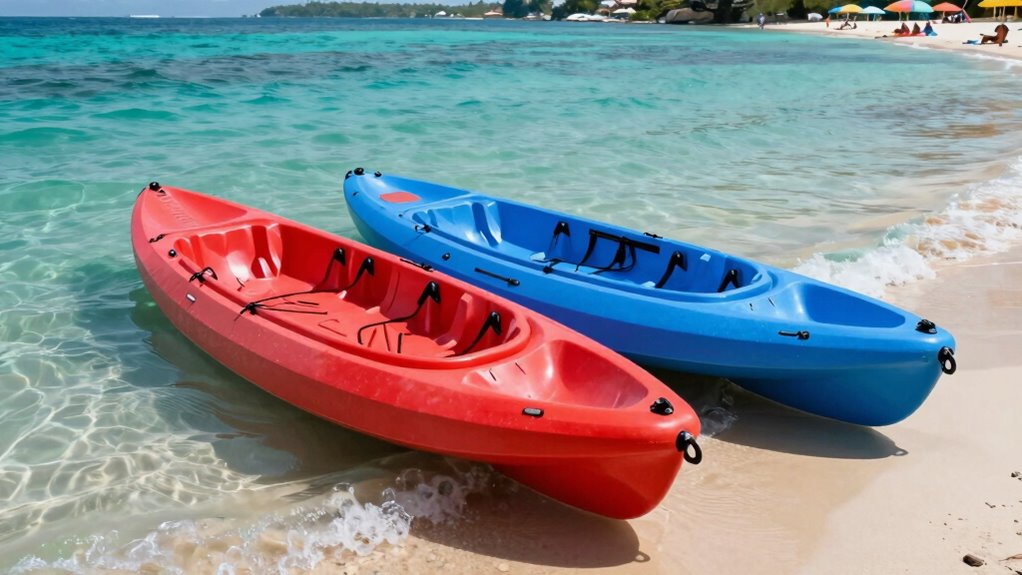
To select the perfect kayak for your beach day, you need to contemplate the activities you’ll enjoy most and the conditions you’ll face. Consider factors like water type, duration, and your comfort level. Your choice of kayak materials impacts durability and weight—fiberglass is lightweight but pricier, while polyethylene is sturdy and budget-friendly. Think about paddle types: a lightweight, adjustable paddle offers ease for longer trips, while a double-bladed paddle suits quick outings. Here’s what to keep in mind:
- Match kayak materials to water conditions and budget
- Choose paddle types based on comfort and activity intensity
- Decide between sit-on-top or sit-in models depending on your preferred experience
Frequently Asked Questions
How Do They Perform in Rough or Choppy Water Conditions?
In rough or choppy waters, sit-inside kayaks tend to perform better due to their wave stability; they’re less likely to take on water. Sit-on-top kayaks offer good maneuverability and are easier to re-enter if you capsize, but can be less stable in big waves. You should choose based on your comfort with handling waves—sit-inside for stability, sit-on-top for quick maneuvering.
Are Sit-On-Top Kayaks Suitable for Beginners or Advanced Paddlers?
Sit-on-top kayaks are great for beginners because they offer excellent kayak stability and are easy to get in and out of, reducing paddling complexity. You’ll find they’re forgiving if you’re just starting out, making your first paddling experiences enjoyable. Advanced paddlers also use them for their stability, but they might prefer sit-inside kayaks for more control and efficiency on longer or more technical trips.
Can Sit-In Kayaks Be Modified for Added Comfort or Storage?
Absolutely, sit-in kayaks can be customized for extra comfort and storage. You can add seat cushions or padding to make long paddles more enjoyable, and install kayak customization accessories like storage compartments or deck rigging to keep gear handy. Think of it as turning your kayak into a tailored ride—enhancing comfort and maximizing storage solutions so you’re ready for any adventure. With a few tweaks, your kayak becomes truly your own.
What Safety Equipment Is Recommended for Each Kayak Type?
You should always wear a life jacket and carry a whistle for safety on any kayak. For sit-on-top kayaks, guarantee the life jacket fits well and is easy to move in, as they’re more exposed. For sit-inside kayaks, choose a snug life jacket to stay secure. Whistle safety is essential for alerting others if you need help, regardless of kayak type. Always check your safety gear before launching.
How Do Weather Conditions Influence the Choice Between the Two?
Imagine the weather as your kayak’s silent dance partner. When weather variability and wind impact are high, a sit-inside kayak feels like a sturdy shield, offering protection and stability. But on calm days, a sit-on-top invites freedom and adventure, like sailing with the breeze. Your choice depends on understanding how shifting weather conditions can turn a peaceful paddle into a challenging journey.
Conclusion
Ultimately, choosing between a sit-on-top and a sit-inside kayak depends on your needs and plans. If you want ease and versatility, a sit-on-top might be your best bet. For more protection and longer trips, a sit-inside could be the way to go. Don’t put all your eggs in one basket—consider what matters most to you. With the right choice, you’ll be ready to hit the beach and make a splash!