You need a strobe for underwater photography when natural light at depth becomes too weak to capture vibrant colors or details, especially in murky or low-visibility conditions. It’s essential for freezing fast-moving subjects and preventing motion blur, as continuous lights often lack enough power and flexibility. Strobes also enhance contrast and brightness, revealing shadows and textures. If you want to achieve sharp, colorful images beyond what ambient light allows, understanding when to use a strobe is vital—more tips are ahead.

Get pool and patio gear delivered free with Prime
- Fast, free delivery on millions of items
- Prime Video, Amazon Music and more included
- Member-only deals all year
Key Takeaways
- Use a strobe when natural light is insufficient for vibrant, detailed images at greater depths.
- Employ a strobe to freeze fast-moving subjects and prevent motion blur during action shots.
- Opt for a strobe when consistent, powerful illumination is needed to restore colors lost underwater.
- Choose a strobe for macro or close-up photography to highlight subtle color differences and details.
- Rely on a strobe to reduce backscatter, soften shadows, and improve overall image clarity in low-visibility conditions.
underwater strobe light for photography
As an affiliate, we earn on qualifying purchases.
As an affiliate, we earn on qualifying purchases.
When Do You Need a Strobe for Underwater Photography?
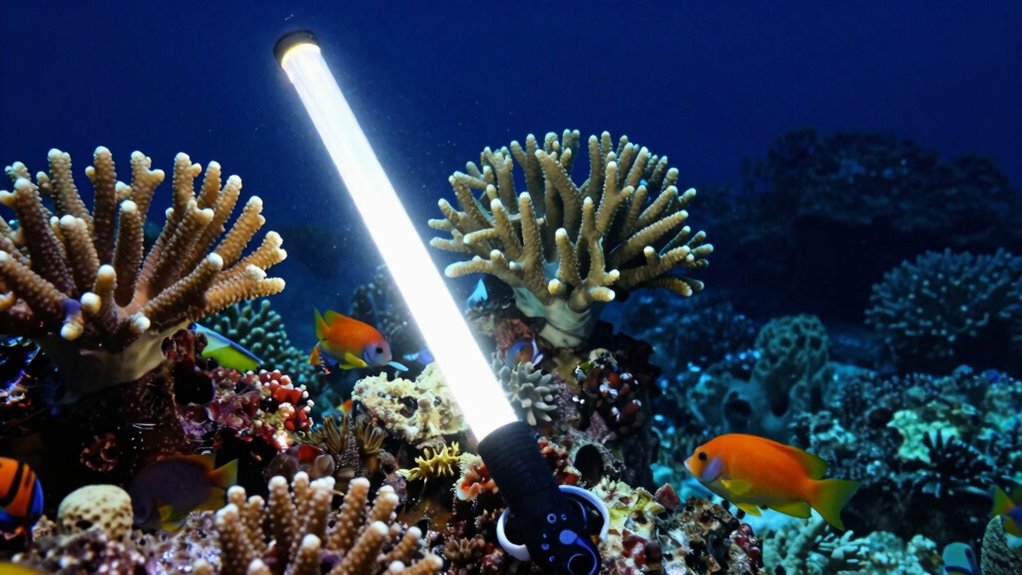
You should consider using a strobe when natural light isn’t enough to illuminate your subject clearly. Underwater lenses often struggle with ambient light, especially at greater depths, causing images to appear dull or washed out. When ambient light diminishes, a strobe helps bring out vibrant colors and details that would otherwise be lost. It provides the necessary brightness to highlight your subject without relying solely on available light. This is particularly important when shooting close-up or macro shots, where subtle color differences matter. If your photos lack contrast or appear flat, adding a strobe can dramatically improve clarity. Remember, a strobe isn’t just for low-light conditions; it’s essential for ensuring your images are sharp, colorful, and well-exposed underwater.
Why Use a Strobe to Freeze Fast-Moving Subjects?

Using a strobe helps you freeze fast-moving subjects by shortening your exposure time, so motion blur doesn’t spoil your shot. It also provides higher light intensity, illuminating quick actions clearly. This combination guarantees you capture sharp, detailed images even of rapid movements.
Shorter Exposure Time
Fast-moving subjects underwater can be challenging to capture clearly because their quick movements often result in blurred images. Using a long exposure allows ambient light to wash out details and create motion blur, making it difficult to freeze fast action. To get sharp, crisp photos, you need a shorter exposure time. A strobe provides a burst of bright light that illuminates your subject instantly, effectively freezing motion. This means you don’t rely solely on available ambient light, which may be too dim or uneven, especially at depth. With a shorter exposure, your camera captures a quick snapshot, preventing blur caused by rapid movement. This technique is essential for photographing quick subjects like fish or moving objects, ensuring clear, dynamic images that capture the moment perfectly.
Higher Light Intensity
When capturing quick-moving subjects underwater, higher light intensity is essential because it provides the brightness needed to freeze motion sharply. A powerful strobe delivers the quick burst of light necessary to override ambient light limitations and prevent motion blur. This intense illumination enhances color correction by reducing the loss of reds and other warm tones, which are quickly absorbed underwater. Using a strobe ensures your subject remains crisp and vividly colored, even in low-light or murky conditions.
- Creates sufficient contrast for fast action
- Compensates for ambient light variability
- Preserves true colors by minimizing color cast
Sharp Image Capture
A powerful strobe plays a key role in capturing sharp images of quick-moving subjects underwater. It freezes motion instantly, preventing blur caused by movement or slow shutter speeds. Underwater, ambient lighting is often insufficient for fast action, making a strobe indispensable. By providing a burst of intense light, the strobe enhances contrast and detail, improving depth perception and making subjects stand out sharply against their environment. Without a strobe, fast-moving objects can appear blurry or ghosted due to lingering ambient light and motion. Using a strobe ensures you get crisp, clear images even in low-light conditions, capturing the rapid motion with precision. This technique is crucial for underwater photographers aiming to document dynamic scenes with clarity and sharpness.
How Do Continuous Lights Fall Short for Action Shots?
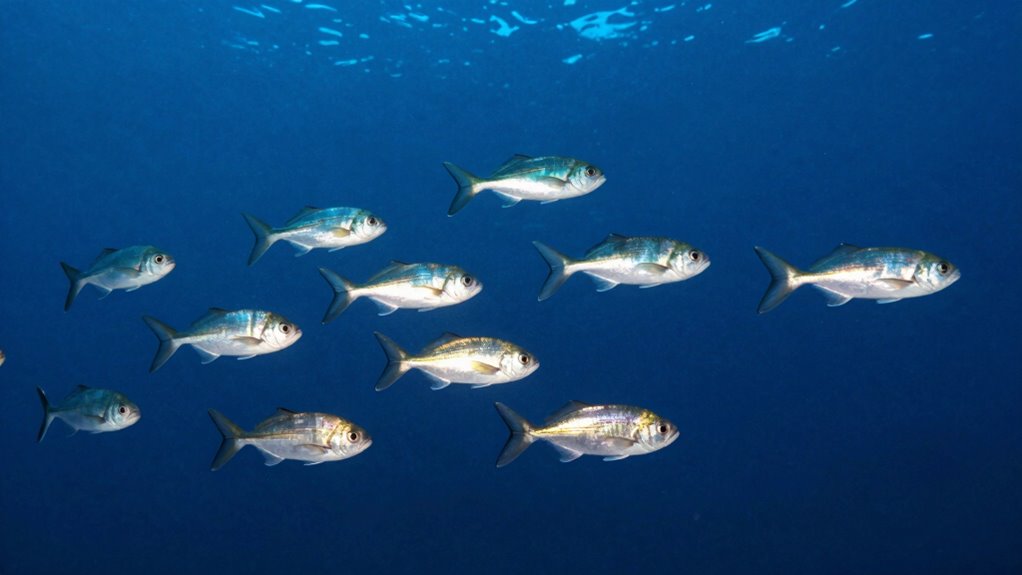
Continuous lights often don’t provide enough brightness to clearly freeze fast-moving subjects, making action shots look blurry. Their limited power flexibility also restricts your ability to adjust for different conditions. As a result, motion blur becomes a common challenge, diminishing the sharpness of your images.
Insufficient Light Intensity
Continuous lights often fall short for action shots because they can’t deliver the high light intensity needed to freeze fast-moving subjects effectively. This limitation impacts your ability to capture sharp images, especially in low-light underwater environments. Additionally, insufficient light can compromise color accuracy, causing colors to appear dull or off-tone. Depth limitations also come into play, as continuous lights lose intensity quickly with increasing distance, reducing their effectiveness at greater depths. To overcome these challenges, you need a lighting solution that offers higher power and quick bursts of light. Consider these factors:
- Brightness levels that can freeze motion effectively
- Maintaining color fidelity under intense illumination
- Consistent light output at various depths
Limited Power Flexibility
While continuous lights provide steady illumination, they often lack the power flexibility needed for dynamic action shots. Their power constraints mean you can’t easily increase brightness in a pinch, which is vital when capturing fast-moving subjects. Battery limitations further restrict their use, as high-intensity continuous lighting drains power quickly, reducing shooting time and flexibility. Unlike strobes, which can deliver quick, intense bursts, continuous lights struggle to adapt to changing conditions without risking inadequate illumination or overheating. This inflexibility makes them less ideal for capturing spontaneous underwater action, where rapid adjustments are necessary. If you’re aiming to freeze motion sharply, relying solely on continuous lighting can leave you underpowered and limited in your creative options.
Motion Blur Challenges
When capturing fast-moving underwater action, the limitations of steady illumination become evident through motion blur. Continuous lights often struggle with underwater flickering, which can distort fast movements and reduce image sharpness. Ambient light interference from sunlight or surface reflections further complicates capturing clear action shots. These issues make it difficult to freeze motion, resulting in blurred subjects that lose detail and impact. To overcome these challenges, consider:
- Using strobes or high-speed flashes to provide instant, flicker-free bursts of light
- Adjusting camera settings to optimize shutter speed and reduce blur
- Employing specialized lighting designed for rapid synchronization with fast movements
Relying solely on continuous lights isn’t enough for action-packed scenes; strobes are essential to ensure sharp, well-lit captures free from flickering and ambient light interference.
How Strobes Improve Color and Brightness in Deep or Murky Water

Strobes substantially enhance color and brightness in deep or murky water by providing a powerful burst of light that restores the natural hues lost at depth. Without a strobe, your camera struggles with color correction, resulting in dull, washed-out images. The intense flash compensates for the absorption of reds and other warm tones, bringing vibrant colors back into focus. Additionally, brightness enhancement from the strobe ensures your subjects are well illuminated, even in low-visibility conditions. This quick burst of light helps reveal details hidden in shadows and murk, producing crisp, clear photos. By using a strobe, you effectively counteract the limitations caused by water’s filtering effects, capturing true-to-life images with accurate colors and maximum brightness.
Strobe vs. Continuous Light: Which Is Better for Your Shot?

Choosing between a strobe and continuous light depends on your shooting situation and the results you want. If you seek precise control over depth perception and underwater color correction, strobes often excel by providing powerful, instant bursts of light that freeze motion and illuminate subjects evenly. Continuous lights, however, offer a steady illumination, making it easier to compose shots and monitor exposure in real-time. Consider these factors:
Strobes provide powerful, instant light for sharp images; continuous lights offer steady, real-time exposure monitoring.
- Strobes improve depth perception by sharply highlighting subjects against the background.
- Continuous lights help gauge color correction in real-time, especially in cloudy or murky water.
- For dynamic scenes or fast-moving subjects, strobes freeze action better.
Ultimately, your choice hinges on your priorities for image clarity, color accuracy, and scene complexity.
Tips for Using a Strobe Effectively Underwater

To use a strobe effectively underwater, you need to understand how to balance its power with your camera’s settings. Start by adjusting your underwater camera gear’s strobe output to match the scene’s brightness and the distance to your subject. Keep in mind that marine life behavior influences your approach; sudden movements or bright flashes can scare away shy creatures. Use diffusers or bounce the light to soften shadows and reduce backscatter, which improves image clarity. Position your strobe at an angle rather than directly in front to avoid red-eye and harsh reflections. Practice controlling your strobe’s power, especially when photographing close-up details or vibrant marine life, to ensure natural colors and sharp focus. Properly managing your strobe enhances your underwater photos and respects marine habitats.
Common Mistakes to Avoid When Using a Strobe Underwater?
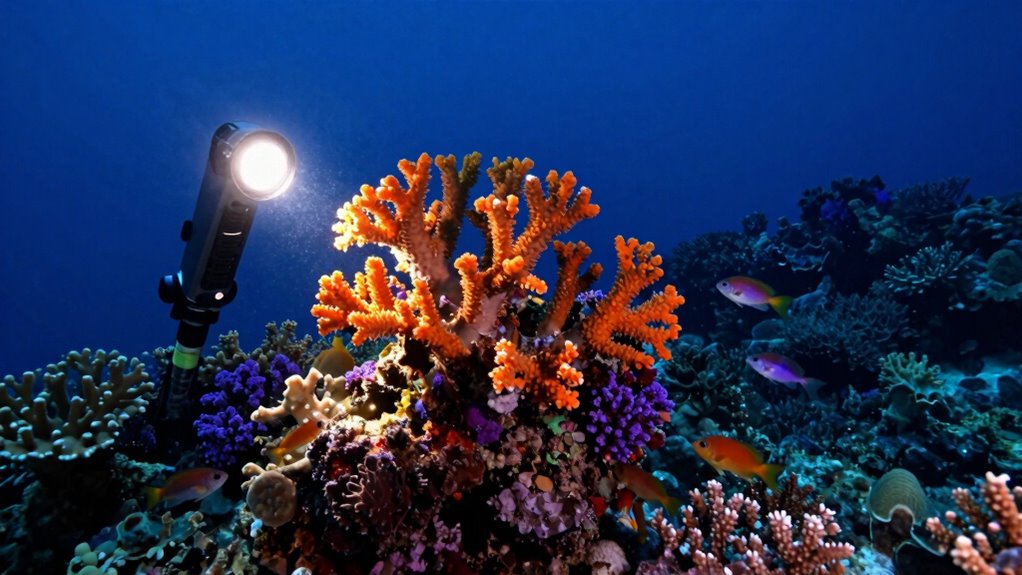
One common mistake is relying too heavily on the strobe’s full power, which can wash out colors and create harsh shadows. Overusing intensity also risks disturbing underwater camouflage, making your subject stand out unnaturally. To avoid this, practice proper strobe maintenance, ensuring filters and diffusers are clean for softer, more natural lighting. Additionally, keep these points in mind:
- Ignoring the importance of adjusting your strobe angle to prevent unwanted backscatter
- Failing to balance ambient light with strobe output, resulting in unnatural images
- Neglecting to experiment with different distances to achieve even lighting without overpowering your shot
Being mindful of these errors helps preserve the scene’s natural look and enhances overall image quality.
Frequently Asked Questions
Can I Use a Strobe With a Compact Underwater Camera?
Yes, you can use a strobe with a compact underwater camera. Just make certain proper strobe placement to avoid backscatter, and regularly perform strobe maintenance for peak performance. Position the strobe close to your subject, but not directly on top, to achieve balanced lighting. Keep your strobe’s batteries and seals in good condition, and practice correct placement techniques for clearer, more vibrant underwater photos.
How Do I Choose the Right Strobe Power for Different Depths?
To choose the right strobe power for different depths, consider your strobe positioning and battery life. For shallow waters, lower power settings suffice, while deeper dives require higher intensity to illuminate subjects properly. Opt for a strobe with adjustable power levels so you can adapt as needed. Also, make certain your battery can handle prolonged use at higher settings, preventing interruptions and ensuring consistent lighting throughout your dive.
What Accessories Enhance Strobe Performance Underwater?
You’ll find that arm attachments and diffuser accessories truly enhance your strobe performance underwater. Arm attachments provide stability and better positioning, so your shots stay sharp and well-lit. Diffusers soften the light, reducing harsh shadows and glare, making your images more natural. Together, these accessories improve light control and coverage, helping you capture stunning underwater scenes with less effort and more confidence.
How Does Water Clarity Affect Strobe Effectiveness?
Water clarity markedly impacts your strobe’s effectiveness. High water turbidity causes particles to scatter light, reducing visibility and dulling your photos. Additionally, increased light absorption in murky water diminishes the strobe’s ability to illuminate subjects properly. To counter this, use a powerful strobe, position it closer to your subject, and adjust your camera settings accordingly. Clearer water allows your strobe to enhance colors and details more vividly, making your shots pop.
Are There Specific Strobe Settings for Macro Versus Wide-Angle Shots?
For macro shots, set your strobe to lower power and guarantee proper strobe synchronization to avoid overexposure. Adjust the color temperature to match ambient light, enhancing detail. For wide-angle shots, increase strobe power to illuminate larger areas and use color temperature adjustment to maintain consistent colors across the scene. Always fine-tune your settings based on water conditions and subject distance for ideal results.
Conclusion
Now that you know when to reach for a strobe, you’ll see your underwater shots in a whole new light. Remember, a strobe can be your secret weapon to freeze action, boost colors, and bring your images to life even in the murkiest waters. Don’t let opportunities slip through your fingers—use your strobe wisely and make every shot count. With the right tools, you’ll be capturing underwater magic like a fish in water.
Halloween Picks
halloween
As an affiliate, we earn on qualifying purchases.