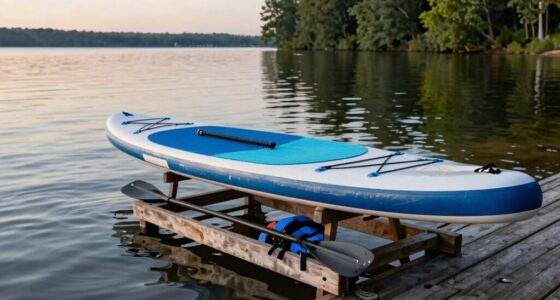
To improve your fishing kayak’s stability, focus on adding a sturdy standing platform, which offers a secure footing for balance. Choose a wider hull and consider its shape; wider kayaks naturally provide better stability, especially when standing. Keep the center of gravity low and centered by properly distributing weight and gear. These adjustments enhance safety and confidence on the water. Continuing will reveal key tips to optimize your kayak’s balance for various conditions.

Get pool and patio gear delivered free with Prime
- Fast, free delivery on millions of items
- Prime Video, Amazon Music and more included
- Member-only deals all year
Key Takeaways
- Wider hulls enhance stability and balance, especially when standing, by providing a broader base.
- Proper weight distribution and low center of gravity improve overall kayak stability and reduce tipping risks.
- Installing stable standing platforms offers secure footing, increasing control and confidence during fishing.
- Hull shape (flat or V-shaped) influences ease of maintaining balance and upright posture on the water.
- Modifying gear placement and adding anchor points helps keep weight centered, boosting stability.
As an affiliate, we earn on qualifying purchases.
What Factors Influence Stability in Fishing Kayaks?

Have you ever wondered what makes a fishing kayak stable on the water? Several factors influence stability, starting with deck padding. Good deck padding provides a comfortable, non-slip surface, helping you stay balanced when moving around or standing. Next, paddle length plays a role—using a paddle that’s too long or too short can affect your control, making it harder to maintain balance, especially in choppy water. The kayak’s overall design, including its hull shape and weight distribution, also impacts stability. A well-designed kayak with appropriate deck padding and an optimized paddle length allows you to stay steady, even when fighting a fish or adjusting your gear. Understanding these factors helps you select a kayak that keeps you balanced and confident on the water.
How Width and Design Affect Your Kayak’s Balance

The width and design of a fishing kayak play significant roles in how well it maintains equilibrium on the water. A wider hull offers greater stability, especially when standing, but can reduce speed and agility. The hull shape also influences balance; a flat or V-shaped hull affects how easily you can stay upright. Material density impacts weight and overall stability—lighter materials improve maneuverability, while denser ones provide sturdiness. Consider this table:
| Feature | Effect on Balance |
|---|---|
| Width | Increases stability; wider is better |
| Hull Shape | Flat hull improves standing support |
| Material Density | Heavier materials add stability |
Choosing the right combination ensures your kayak stays balanced in various conditions.
Why Your Center of Gravity Matters When Kayaking

Why does your center of gravity matter so much when kayaking? It directly impacts your balance and safety. A low, centered gravity helps you stay stable, especially when standing or paddling. Poor weight distribution shifts your center of gravity, making you prone to tipping. To improve stability, consider these key points:
- Keep your weight low and centered on the kayak.
- Use balance techniques like leaning slightly forward or backward.
- Distribute gear evenly to avoid shifting your center of gravity.
- Stay relaxed and maintain a steady posture to react quickly to balance changes.
Top Tips to Improve Stability and Safety on Your Kayak

To enhance your stability and guarantee safety on the water, focus on maintaining proper weight distribution and staying alert to your surroundings. Proper lure placement can prevent sudden shifts that upset balance, so position gear evenly. When using different fishing techniques, adjust your stance and movements to stay centered. Keep your center of gravity low by sitting or kneeling, especially when casting or reeling. Be mindful of your posture, as leaning too far can cause tipping. Use the following tips to boost stability:
| Tip | Focus Area | Benefit |
|---|---|---|
| Distribute weight | Even gear placement | Prevents imbalance |
| Use standing platform | Stable footing | Improves confidence and safety |
| Adjust fishing techniques | Smooth, controlled movements | Maintains balance during activity |
How to Choose or Modify Your Kayak for Better Balance?

Choosing or modifying a kayak for better balance starts with understanding your specific needs and the conditions you’ll encounter. To enhance stability, consider these key factors:
- Anchor points: Add or reposition anchor points to secure gear low and centered, lowering your center of gravity.
- Storage compartments: Use large, accessible storage compartments to distribute weight evenly, preventing top-heavy setups.
- Hull width: Opt for a wider hull to improve lateral stability, especially in choppy waters.
- Standing platforms: Install or upgrade standing platforms for a more secure footing, reducing wobble.
Frequently Asked Questions
How Does Paddle Technique Affect Kayak Stability?
Your paddle technique directly impacts kayak stability by influencing your balance and center of gravity. Using smooth paddle strokes helps maintain your position, while abrupt or uneven strokes can cause instability. Incorporate balance adjustments with each paddle stroke, shifting your weight smoothly to stay centered. Proper paddle technique guarantees you remain steady, especially when standing or making quick movements, reducing the risk of capsizing and improving overall control on the water.
Can Adding Accessories Impact Balance on a Fishing Kayak?
Adding accessories can impact your kayak’s balance, especially if you don’t consider weight distribution and gear placement. When you add items like fish finders, rod holders, or coolers, they can shift your center of gravity, making your kayak less stable. To keep your balance, you should distribute weight evenly across the kayak and place heavier gear low and centered. This helps maintain stability and prevents tipping.
What Role Does Water Conditions Play in Kayak Stability?
Did you know that water conditions can reduce kayak stability by up to 60%? Water currents and wave height play a huge role in how stable your kayak feels. Strong currents can push you off balance, while high waves cause rocking and instability. When steering through choppy waters, stay low, keep your weight centered, and use a wider kayak if possible. Adjust your paddling to maintain control and enjoy safer fishing adventures.
Are There Specific Brands Known for More Stable Fishing Kayaks?
You’ll find that brands like Hobie, Old Town, and Wilderness Systems are known for stable fishing kayaks. Their brand reputation is built on quality, and they use durable materials that withstand rough water conditions. These brands often incorporate wider hulls, stable standing platforms, and well-designed center of gravity features, making them ideal for anglers seeking stability. Choosing a kayak from these brands boosts your confidence on the water, especially in challenging conditions.
How Does Fatigue Influence Kayak Control and Safety?
When fatigue effects set in, your control can subtly deteriorate, making your kayak less responsive and increasing safety concerns. You might find yourself less stable, reacting slower to waves or sudden movements. This weariness can lead to lapses in judgment or balance, putting you at risk. To stay safe, listen to your body, take breaks, and avoid pushing beyond your limits—preserving your control and confidence on the water.
Conclusion
To keep your fishing kayak steady as a rock, pay attention to its width, design, and your center of gravity. Adding a standing platform or adjusting your gear can make a big difference. Remember, a stable kayak isn’t just about safety — it’s about enjoying your time on the water without feeling like you’re walking a tightrope. Stay proactive, make smart modifications, and you’ll be fishing like a pro in no time.
Halloween Picks
halloween
As an affiliate, we earn on qualifying purchases.