To cut noise and save money, start by programming your variable speed pool pump to run during off-peak hours, often at lower speeds for routine circulation. Assess your water usage and adjust the schedule for weekends, heavy-use periods, and seasonal changes. Use controls to set specific start and stop times, and monitor your pump’s performance. With the right setup, you’ll enjoy quieter operation and reduced energy costs—keep going to learn how to fine-tune your schedule for maximum benefits.

Get pool and patio gear delivered free with Prime
- Fast, free delivery on millions of items
- Prime Video, Amazon Music and more included
- Member-only deals all year
Key Takeaways
- Use the control panel’s “Schedule” feature to set specific start and stop times during off-peak hours.
- Adjust pump speeds seasonally and for different pool activities to optimize energy savings and reduce noise.
- Program longer filtration cycles during holidays or gatherings to maintain water quality efficiently.
- Regularly review and update your schedule based on water usage, weather, and seasonal changes.
- Incorporate smart scheduling tools and timers to prevent overuse and extend equipment lifespan.
As an affiliate, we earn on qualifying purchases.
Why Scheduling Your Variable Speed Pool Pump Saves Noise and Money

Scheduling your variable speed pool pump can markedly reduce both noise and energy costs. When you set a proper schedule, your pool operates during off-peak hours, lowering overall energy consumption and saving you money on utility bills. Consistent operation also simplifies pool maintenance by preventing overuse or sudden surges in pump activity, which can strain equipment. By optimizing run times, you reduce unnecessary wear and tear, extending the life of your pump and other pool components. Plus, a well-planned schedule minimizes noise disturbances, especially during quiet hours, making your backyard more peaceful. Proper scheduling allows you to balance efficient pool maintenance with quieter operation, ensuring your pool stays clean and functional without the added costs or noise disruptions.
How to Assess Your Pool’s Water Usage for Better Scheduling

Understanding your pool’s water usage is essential for creating an effective pump schedule. To do this, monitor how often your pool requires water top-ups or refilling, as frequent additions may indicate high evaporation or leaks. Checking your pool water chemistry regularly helps identify if chemical imbalances are affecting water quality, which can influence filtration needs. Proper filter maintenance is also vital; a clean filter improves water circulation, reducing unnecessary pump runtime. Observe when your pool needs more frequent filtration cycles, such as after heavy use or storms. Tracking these factors allows you to adjust your pump’s speed and schedule more accurately, ensuring efficient operation. This tailored approach helps optimize water clarity, save energy, and prolong equipment lifespan.
Choosing the Best Pump Speeds for Quiet and Efficient Operation
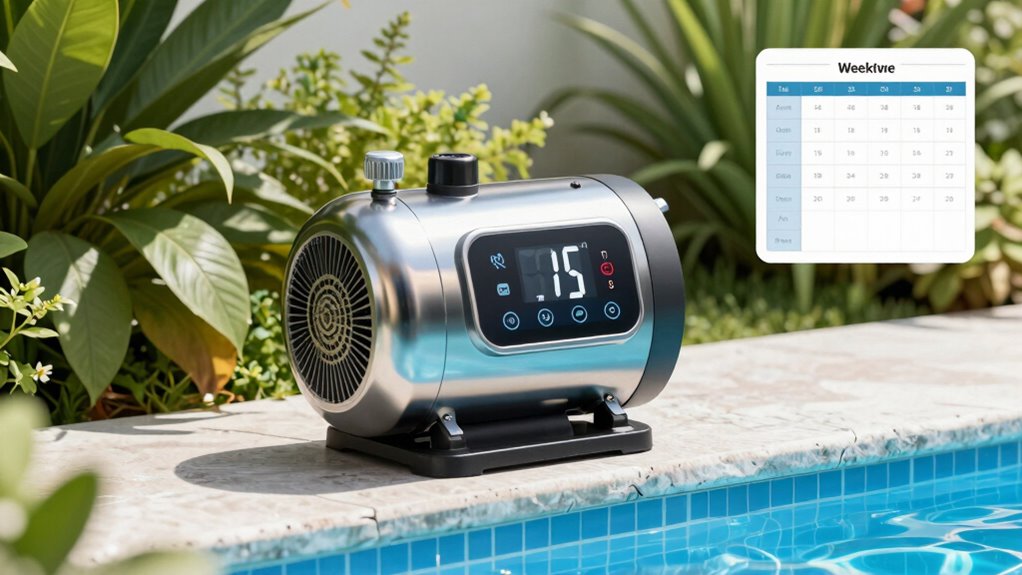
Choosing the right pump speeds can considerably impact both your pool’s noise levels and energy efficiency. To minimize pump noise, select lower speeds during routine circulation, which also reduces energy consumption. For thorough cleaning or when filtering debris, higher speeds may be necessary, but avoid running them longer than needed. Matching pump speed to your pool’s specific requirements ensures you get quiet operation without sacrificing performance. Using the pump’s variable speed settings intelligently can cut down on electricity costs while keeping noise levels low. Remember, the goal is to find a balance: operate at the lowest effective speed for your needs. Properly choosing pump speeds not only makes your pool quieter but also optimizes energy efficiency, saving you money over time.
Step-by-Step Guide to Programming Your Pool Pump Schedule

To start programming your pool pump schedule, first access the pump’s settings menu. Next, set your desired operating times and speeds to match your pool’s needs. Once complete, save your settings to make certain your pump runs efficiently and on your preferred schedule.
Access Pump Settings
Ever wonder how to customize your pool pump’s schedule to fit your needs? Accessing your pump’s settings is the first step. Locate the control panel, which usually features a display screen and buttons. Press the “Menu” or “Settings” button to enter the configuration mode. Use the arrow keys to navigate through options like “Schedule,” “Pump Speed,” or “Timer.” Adjusting these settings allows you to optimize pump operation for energy savings and quiet operation. Proper access assures you can perform regular pump maintenance and keep your pool safe by maintaining correct operation levels. Here’s a quick guide:
| Step | Action |
|---|---|
| Find Control Panel | Locate the pump’s display and buttons |
| Enter Settings | Press “Menu” or “Settings” |
| Navigate & Adjust | Use arrow keys to select options |
Getting comfortable with access helps ensure your pool remains safe and well-maintained.
Set Desired Schedule
After accessing your pump’s settings, it’s time to set the desired schedule to guarantee your pool runs efficiently. Proper scheduling can improve pool maintenance by reducing unnecessary run times and help you maximize energy efficiency. Decide when you want your pump to operate—perhaps during off-peak hours or when you’re most likely to be at home. Use the control panel to set specific start and stop times, adjusting the speed as needed for different periods. This tailored approach minimizes noise and saves money by preventing the pump from running longer than necessary. Regularly review and adjust your schedule based on seasonal changes or pool usage, ensuring peak performance and long-term energy savings. Properly programmed schedules keep your pool clean and your energy bills low.
Monitoring Your Pump Schedule to Maximize Savings and Water Quality
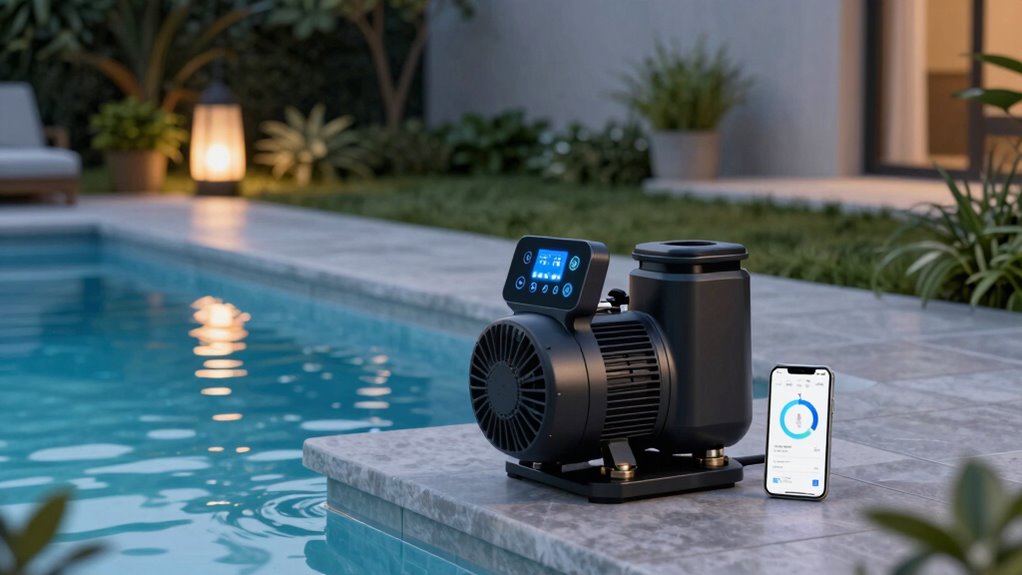
Monitoring your pump schedule helps you save money and keep your water clean. You should adjust settings for peak hours to avoid unnecessary energy use. Tracking performance and optimizing filtration cycles make sure your system stays efficient and effective.
Adjust for Peak Hours
To maximize energy savings and maintain water quality, adjusting your variable speed pump schedule for peak hours is essential. Peak hours are when your pool sees the highest usage or when energy costs are at their highest. During these times, you might want to reduce your pump’s speed slightly to save energy without compromising filtration. Conversely, during off-peak hours, you can increase the speed for better circulation and water clarity at a lower cost. Monitoring your schedule allows you to identify these peak periods and fine-tune your pump’s operation accordingly. This approach boosts energy efficiency by aligning pump activity with actual pool needs, minimizing unnecessary runtime, and lowering your utility bills. Proper adjustments ensure your pool remains clean while cutting noise and costs.
Track Pump Performance
Keeping a close eye on your pump’s performance helps guarantee your scheduling adjustments deliver maximum savings and water quality. Regularly monitoring pump metrics—like flow rate and runtime—lets you identify signs of inefficient operation or potential issues. This proactive approach supports proper pump maintenance, reducing wear and extending lifespan. Tracking performance also highlights opportunities for energy conservation, ensuring your variable speed pump runs only as needed. Use your pump’s control panel or a dedicated monitoring system to log data and spot patterns. Adjust your schedule based on these insights to optimize efficiency, cut costs, and maintain clear, healthy water. Consistent performance tracking keeps your system running smoothly, saving you money and protecting your investment over the long term.
Optimize Filtration Cycles
By carefully adjusting your filtration cycles based on real-time pump data, you can maximize energy savings and maintain ideal water quality. Monitoring your pump’s runtime helps you avoid over-filtration, which wastes energy, and under-filtration, which risks chemical imbalance and poor water clarity. Regularly check that your equipment maintenance is up to date, ensuring the pump operates efficiently. Adjust your schedule to run during off-peak hours when possible, and tailor filtration times to your pool’s usage and weather conditions. This approach not only reduces energy costs but also promotes better chemical balance, preventing algae growth and corrosion. Consistently optimizing your filtration cycles keeps your pool clean and safe while saving you money on electricity and maintenance.
Seasonal and Special Event Tips for Adjusting Your Pool Pump Schedule

Adjusting your pool pump schedule for seasonal changes and special events can save energy and extend the life of your equipment. During seasonal maintenance, reduce pump run times when the pool isn’t in use. For holiday adjustments, schedule longer filtration cycles when hosting guests or during peak usage. Here are three tips:
- Adjust for seasonal maintenance: Increase filtration before and after heavy use periods to keep water clean.
- Plan for holidays: Extend pump hours during parties or gatherings to maintain water clarity.
- Use smart scheduling: Regularly update your schedule to match seasonal weather changes and special events, preventing unnecessary operation.
These adjustments help you cut costs, reduce noise, and ensure your pool stays in top shape year-round.
Common Scheduling Mistakes and How to Avoid Them

Many pool owners make common scheduling mistakes that can lead to unnecessary energy use, higher costs, and equipment wear. For example, running your pump during peak electricity times or leaving it on longer than needed wastes energy and strains your equipment. To avoid these pitfalls, plan your schedule carefully with energy conservation in mind. Consider the following mistakes:
| Mistake | Consequence | Solution |
|---|---|---|
| Running pump 24/7 | Increased energy & wear | Use timers to run only when necessary |
| Ignoring off-peak hours | Higher electricity costs | Schedule during low-demand periods |
| Not adjusting for weather | Overworking in cool weather | Reduce run time on cooler days |
| Skipping regular equipment maintenance | Reduced efficiency | Maintain pump regularly for *ideal* performance |
How a Well-Set Schedule Can Extend Your Pool’s Life and Keep Water Clear
A well-set schedule not only saves energy but also substantially extends your pool’s lifespan and keeps the water crystal clear. Proper timing ensures your pump runs when needed, reducing wear and tear, and supporting ideal pump maintenance. It also helps maintain balanced pool chemistry, preventing algae growth and cloudy water.
Proper scheduling conserves energy, extends your pool’s life, and keeps water clear and balanced.
Consider these tips:
- Run the pump during high-use times to circulate chemicals effectively and prevent stagnation.
- Avoid over-scheduling; running the pump too long can cause unnecessary wear.
- Adjust schedules seasonally to account for temperature changes and sunlight, ensuring consistent water clarity.
Frequently Asked Questions
Can I Automate My Pool Pump Schedule With Smart Home Devices?
Yes, you can automate your pool pump schedule with smart home devices. Many variable speed pumps offer smart home integration and are compatible with popular automation systems like Alexa, Google Home, or Apple HomeKit. By connecting your pump to these platforms, you can set custom schedules, control it remotely, and optimize operation for noise reduction and energy savings. Confirm your pump’s automation compatibility before purchasing for seamless setup.
How Does Weather Affect My Pool Pump Scheduling Choices?
Think of weather as nature’s invisible switch, guiding your pump’s rhythm. Sunny days boost solar efficiency, so you can run your pump more during peak sunlight, saving energy and money. Cloudy or windy days lower efficiency, so cut back to avoid wasting energy. Keep an eye on energy tariffs too; adjusting your schedule based on weather helps you optimize costs and guarantee your pool stays perfect without unnecessary noise or expense.
Is There a Recommended Backup Plan if My Schedule Fails?
If your schedule fails, you should have a backup plan ready. Set your pump to run manually or at a constant low speed during emergencies or technical issues. Regularly check your system to spot potential schedule failures early. Keep a log of issues and reset your schedule promptly. Using a smart controller can help automate this backup, ensuring your pool stays clean without unnecessary noise or cost.
How Often Should I Review and Update My Pump Schedule?
You should review your pump schedule every few months, like tuning a guitar before a concert. Regular maintenance routines and seasonal adjustments keep your system running smoothly and efficiently. As seasons change, so should your settings, to optimize performance and save energy. Keep an eye on water clarity and noise levels, adjusting as needed. Staying proactive guarantees your pool stays pristine, quiet, and cost-effective all year long.
What Are Signs My Current Schedule Is Not Optimal?
If your pump noise has increased or sounds unusually loud, your current schedule might not be ideal. Also, if your energy bills stay high despite minimal usage, it’s a sign you’re not maximizing energy savings. You should regularly monitor your pump’s performance, listen for irregular noises, and compare energy costs over time. Adjust your schedule accordingly to reduce noise and improve efficiency, ensuring your pump runs smoothly and cost-effectively.
Conclusion
By setting a smart schedule for your variable speed pool pump, you’ll save money, cut down on noise, and keep your pool sparkling like a diamond. When you fine-tune your pump’s operation, you’re not just making your backyard oasis more peaceful—you’re also extending its lifespan beyond what you ever thought possible. Don’t underestimate the power of a well-planned schedule; it’s the secret weapon that turns your pool into a pristine paradise with less effort and more enjoyment.
Fall Picks
fall essentials
As an affiliate, we earn on qualifying purchases.