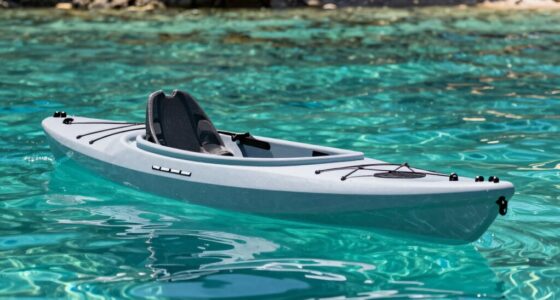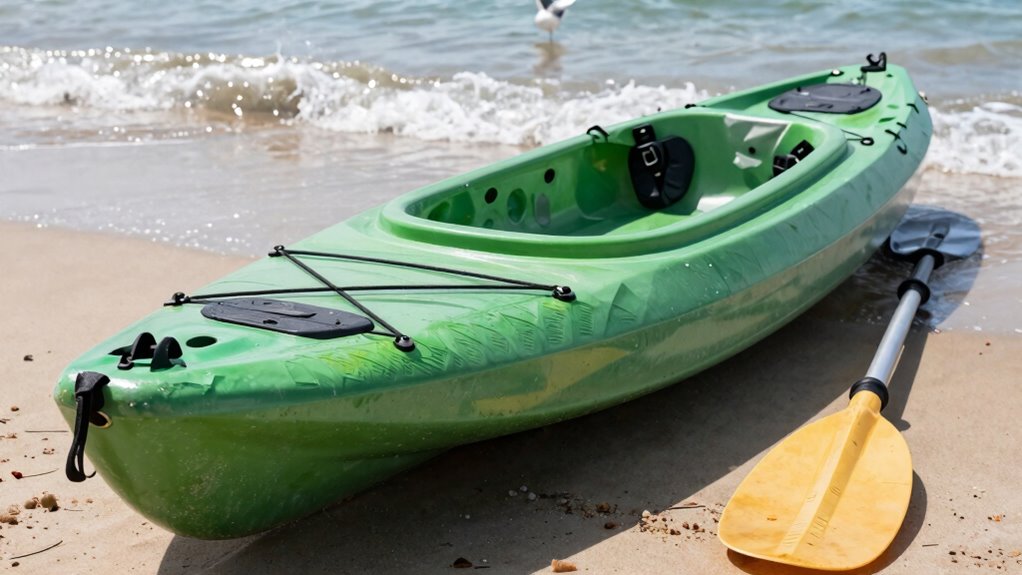

Before buying a kayak for saltwater, check its materials—look for high-quality, saltwater-resistant, and corrosion-resistant features like reinforced seams, valves, and heavy-duty materials such as military-grade PVC. Make sure it offers stability and handles challenging conditions well. Consider storage options and how easy it is to transport, along with regular maintenance needs. Paying attention to these details helps you choose a durable, seaworthy kayak—continue exploring to learn more essential tips.

Get pool and patio gear delivered free — and shop member deals
- Fast, free delivery on millions of items
- Access to Prime Big Deal Days deals on October 6–7
- Prime Video, Amazon Music and more included
Key Takeaways
- Ensure the kayak is made from durable, saltwater-resistant materials like military-grade PVC or reinforced vinyl.
- Check for reinforced seams and corrosion-resistant valves suitable for harsh saltwater conditions.
- Assess the kayak’s stability and handling capabilities for challenging saltwater environments.
- Confirm proper storage options and transportation ease to maintain kayak integrity.
- Inspect for maintenance features such as easy-to-clean surfaces and protective coatings against saltwater damage.
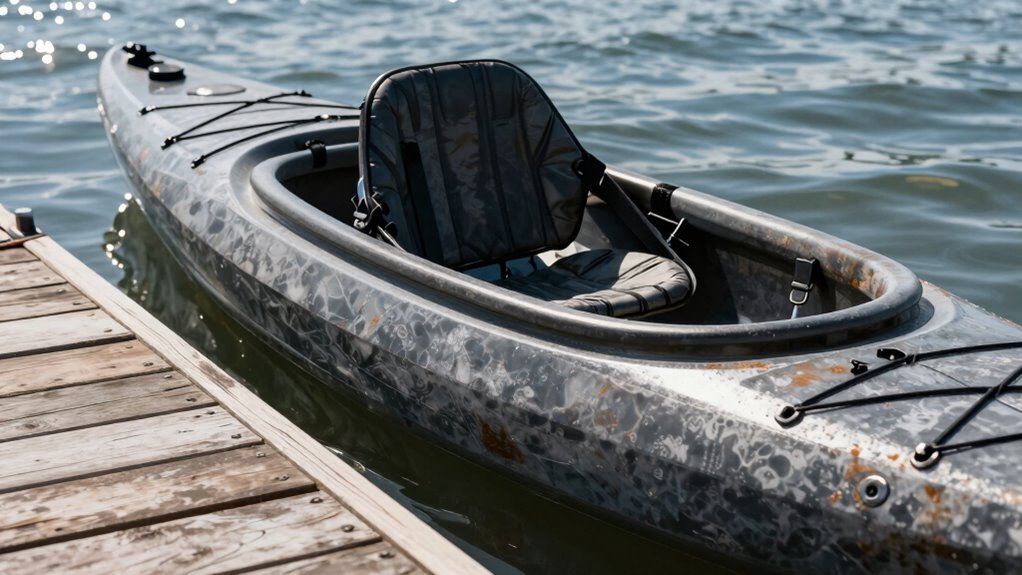
If you’re considering buying a kayak for saltwater adventures, there’s more to it than just choosing a sleek design. You need to think about the material, stability, and how well it handles the challenges of saltwater environments. Saltwater can be harsh on gear, so durability is key. When exploring inflatable options, make sure the kayak is made from high-quality, saltwater-resistant materials. Inflatable kayaks are convenient for storage and transport, but not all are built to withstand the corrosive effects of saltwater. Look for models with reinforced seams, corrosion-resistant valves, and heavy-duty materials like military-grade PVC or reinforced vinyl. These features ensure your kayak can handle the salt and the rigors of regular use.
Choose saltwater-resistant, durable kayaks with reinforced seams and corrosion-resistant valves for reliable saltwater adventures.
Beyond the kayak’s construction, it’s essential to consider how you’ll store it when not in use. Proper kayak storage tips help extend the lifespan of your vessel. For inflatable options, deflate and store the kayak in a cool, dry place, away from direct sunlight that can degrade the material over time. Roll or fold the kayak carefully to prevent punctures or tears, and keep it in a breathable bag or storage container. Hard-shell kayaks benefit from being stored on racks or wall mounts, protected from direct sunlight and moisture. Ensuring it’s out of the elements helps prevent warping, corrosion, and material breakdown. Regularly check your kayak for any signs of wear, especially around seams and valves, and address issues early to avoid costly repairs later. Additionally, understanding material resistance can help you select a kayak that will stand up to the corrosive nature of saltwater environments. Proper maintenance and awareness of corrosion prevention techniques contribute significantly to extending the life of your kayaking gear. Being familiar with saltwater-specific treatments can further enhance your kayak’s longevity and performance. Regularly inspecting and applying protective coatings can also help guard against saltwater damage, ensuring your kayak stays in top condition for years to come. Maintaining correct cleaning practices after each use is also vital for preventing salt buildup and corrosion.
saltwater resistant inflatable kayak
As an affiliate, we earn on qualifying purchases.
As an affiliate, we earn on qualifying purchases.
Frequently Asked Questions
How Long Is the Typical Lifespan of a Saltwater Kayak?
A saltwater kayak usually lasts about 5 to 10 years, depending on how well you maintain it. Proper kayak storage and regular corrosion prevention are key to extending its lifespan. Store your kayak in a dry, shaded area and rinse it with fresh water after saltwater use. Applying protective coatings or corrosion inhibitors also helps prevent damage, ensuring your kayak stays in good condition and serves you well for many seasons.
Are There Specific Brands Known for Saltwater Durability?
You might think all kayaks are equally durable in saltwater, but brand reputation really matters. Brands like Hobie, Wilderness Systems, and Perception are known for their material durability and resilience against corrosion. These companies invest in high-quality materials and rigorous testing, proving their kayaks stand up to harsh saltwater conditions. Selecting a reputable brand guarantees your kayak remains sturdy, reliable, and long-lasting, making your saltwater adventures safer and more enjoyable.
What Maintenance Is Required After Saltwater Use?
After saltwater use, you should clean your kayak thoroughly with fresh water, focusing on any crevices and moving parts. Use a gentle scrub brush and mild soap if needed. Applying a protective coating or marine-grade wax helps prevent corrosion and damage from salt. Regularly inspect for cracks or damage, and store your kayak in a dry, shaded area to extend its lifespan and maintain peak performance.
Can I Use a Freshwater Kayak in Saltwater?
You can use a freshwater kayak in saltwater, but you’ll want to evaluate kayak compatibility and maintenance afterward. For example, if you take your kayak from a lake to the ocean, salt residue can cause corrosion, especially on metal parts. Make sure your kayak is made of saltwater-friendly materials like rotomolded plastic. Rinse it thoroughly with fresh water after each use and apply corrosion protectants to prolong its lifespan.
How Does Saltwater Corrosion Affect Different Kayak Materials?
Saltwater corrosion can considerably impact your kayak’s materials, especially if they lack corrosion resistance. Aluminum and steel parts are prone to rust, reducing their longevity. Plastic and composite kayaks generally resist corrosion better, offering greater material longevity in saltwater. To protect your investment, choose a kayak with corrosion-resistant components and regularly rinse it with fresh water after saltwater use. This upkeep helps preserve its durability and ensures it remains seaworthy longer.
Conclusion
Before you set sail on saltwater adventures, make sure your kayak is built to withstand the elements—look for durability, proper materials, and the right size for your needs. Don’t forget to check for stability and storage options, and consider your comfort on long trips. Remember, even the most seasoned sailors would agree that a well-chosen kayak can make all the difference. So, take your time, and don’t rush—your future salty escapades depend on it!
Fall Picks
fall essentials
As an affiliate, we earn on qualifying purchases.