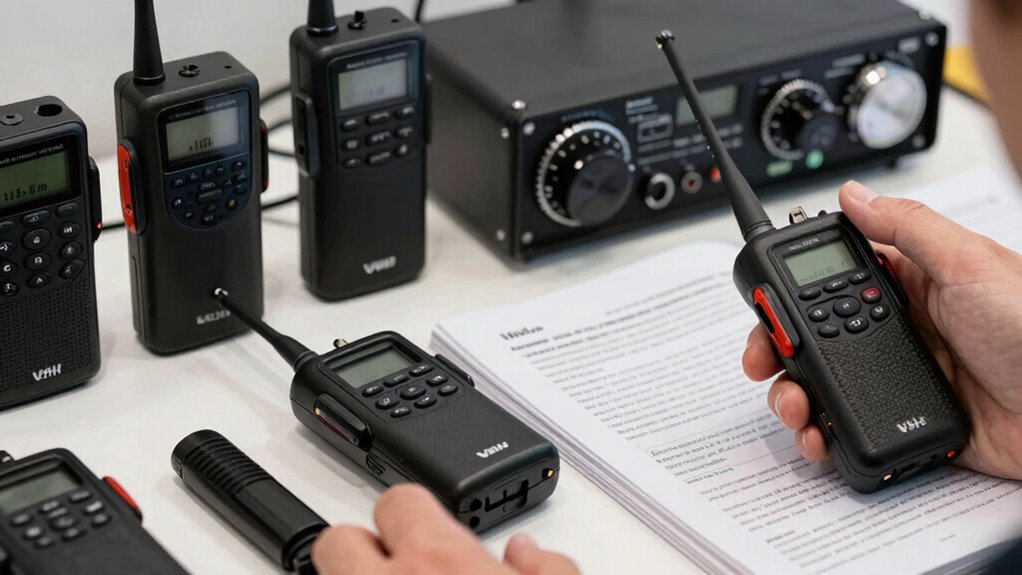

Before assuming any VHF radio will do, consider its antenna type, placement, and power output. A better antenna and higher wattage can extend your communication range, but may drain your battery faster. Check for proper certification and compatibility with your region’s frequency bands to guarantee reliable performance. Durability, ease of use, and environmental features like waterproofing also matter. Keep all these factors in mind to make an informed choice—you’ll find essential details to guide your selection ahead.

Get pool and patio gear delivered free — and shop member deals
- Fast, free delivery on millions of items
- Access to Prime Big Deal Days deals on October 6–7
- Prime Video, Amazon Music and more included
Key Takeaways
- Verify the radio’s certification standards and compliance with regional safety and performance regulations.
- Choose the appropriate antenna type, placement, and height for optimal signal strength and range.
- Match power output to your communication needs, balancing range with battery life and portability.
- Ensure the radio is water-resistant or waterproof for durability in harsh marine or outdoor environments.
- Review user feedback and model features to confirm reliability and suitability for your specific use scenario.

Are you searching for a dependable VHF radio that meets your communication needs? If so, you’ll want to understand some key factors before assuming any model will do. VHF radios come in various configurations, and choosing the right one depends on more than just brand or price. One of the most important aspects to examine is the antenna type. Different antennas—such as whip antennas, wire antennas, or handheld units with integrated antennas—affect the radio’s range and clarity. For example, whip antennas tend to offer better reception and transmission over longer distances, especially on boats or open areas, while compact wire antennas are suitable for portable use but may have limited range. The antenna’s height and placement also influence how well your radio performs, so make sure that the model you select allows for proper antenna installation or replacement. Additionally, the placement of the antenna can impact your radio’s performance in various environments, so consider your typical usage scenarios when choosing.
Equally vital is understanding the power output of the VHF radio. Power output, usually measured in watts, determines how far your signal can travel. Lower-powered radios, like those with 1-2 watts, are ideal for short-range communication, such as within a boat or for personal use. Higher-powered models, offering 25 watts or more, extend your communication range considerably, making them suitable for larger vessels, emergency situations, or professional applications. Keep in mind that increasing power output might also impact battery life or power consumption, especially in portable units. As a result, balancing power with your specific needs is essential; you don’t necessarily need a high-wattage radio if you only require short-distance communication. Properly assessing your typical environment and operational range can help you choose the most suitable power level for your needs. Moreover, understanding certification standards can ensure your device complies with safety and performance regulations, giving you added confidence in your purchase. It’s also beneficial to consider frequency bands that are compatible with your intended use, as this can influence the radio’s effectiveness in different regions or scenarios. When selecting a VHF radio, it’s also helpful to consider user reviews and feedback from others who have used the device in similar conditions.
Beyond antenna types and power output, it’s wise to evaluate other features, such as waterproof ratings, durability, and ease of use. If you’re on a boat, a waterproof or water-resistant radio can prevent failures during splashes or rain. Ease of use, including clear controls and a straightforward interface, can make your communication more effective in urgent situations. Remember that not all VHF radios are created equal—some may be designed for marine use, while others are more suited for land-based or professional environments. Always check if the model you’re considering complies with relevant standards and certifications, ensuring reliable performance when you need it most. Investing in a properly certified radio can significantly enhance your confidence in its reliability during critical moments.
VHF marine radio with waterproof design
As an affiliate, we earn on qualifying purchases.
As an affiliate, we earn on qualifying purchases.
Frequently Asked Questions
Can VHF Radios Be Used Underwater?
VHF radios can’t be used underwater for communication, as they’re not designed for submerged signals or underwater communication. When submerged, signals don’t transmit effectively, so you’d need specialized equipment like underwater acoustic modems. VHF radios work best when you’re above water, providing clear line-of-sight communication. If underwater communication is essential, look for equipment specifically built for that purpose, since standard VHF radios won’t perform reliably underwater.
What Is the Maximum Range of a VHF Radio?
You’ll find VHF radios typically reach up to 20 miles, but this varies. The maximum range depends heavily on antenna placement—higher antennas boost signal distance—and power output; higher wattage generally extends your reach. Keep in mind, obstacles like buildings or hills can reduce range. To get the best performance, make sure your antenna is properly installed and powered at the highest safe wattage for your device.
Are VHF Radios Legal for Use on All Boats?
VHF radios are generally legal for use on all boats, but you must follow marine regulations and obtain the necessary radio licensing. Depending on your location, you might need to register your radio with authorities like the FCC in the U.S. or other relevant agencies. Always make certain you’re compliant with local rules, operate your radio responsibly, and keep your license updated to avoid penalties and ensure safe communication at sea.
How Do Weather Conditions Affect VHF Radio Performance?
Weather conditions can considerably impact your VHF radio’s performance. Heavy rain, thunderstorms, or fog can weaken signals, especially if your antenna isn’t ideally placed. Poor antenna placement can increase signal interference, making communication less reliable during storms. To guarantee clear communication, position your antenna correctly, away from obstacles, and be aware that severe weather may still cause disruptions despite good setup. Stay prepared for changing conditions.
Do VHF Radios Require Regular Maintenance or Updates?
Think of your VHF radio as a trusted compass; it needs regular check-ups to stay reliable. You should routinely inspect antenna placement, ensuring it’s ideal for clear signals, and adjust power settings as needed for better performance. Updating firmware or software keeps your radio current with new features and security patches. Regular maintenance prevents issues, ensuring your radio remains a dependable tool for communication when you need it most.
Conclusion
Before you make your VHF radio purchase, remember that choosing the right model isn’t just about features—it’s about reliability. Did you know that over 60% of marine communication failures are due to incompatible or poorly maintained radios? By doing your homework and understanding your needs, you guarantee clear, dependable communication when it matters most. So, take your time, compare options, and select a VHF radio that truly keeps you connected and safe on the water.
Fall Picks
fall essentials
As an affiliate, we earn on qualifying purchases.