
Choosing a wider kayak can help improve your stability, making it easier to stay upright and feel secure on the water, especially if you’re a beginner or planning to stand while fishing or relaxing. However, a kayak that’s too wide may require more effort to paddle and slow you down over long distances. If you want to find the best balance between stability and maneuverability, understanding how width affects performance will guide your decision. Keep exploring to learn more.

Get pool and patio gear delivered free with Prime
- Fast, free delivery on millions of items
- Prime Video, Amazon Music and more included
- Member-only deals all year
Key Takeaways
- Wider kayaks generally improve stability, making them better for beginners and activities like fishing.
- Excessively narrow kayaks reduce stability, increasing tipping risk, especially on rough water.
- The optimal width balances stability and paddling efficiency based on activity and skill level.
- Wider designs provide a stable platform for standing, but may require more effort to paddle.
- Narrower kayaks enhance speed and maneuverability but can compromise overall stability.
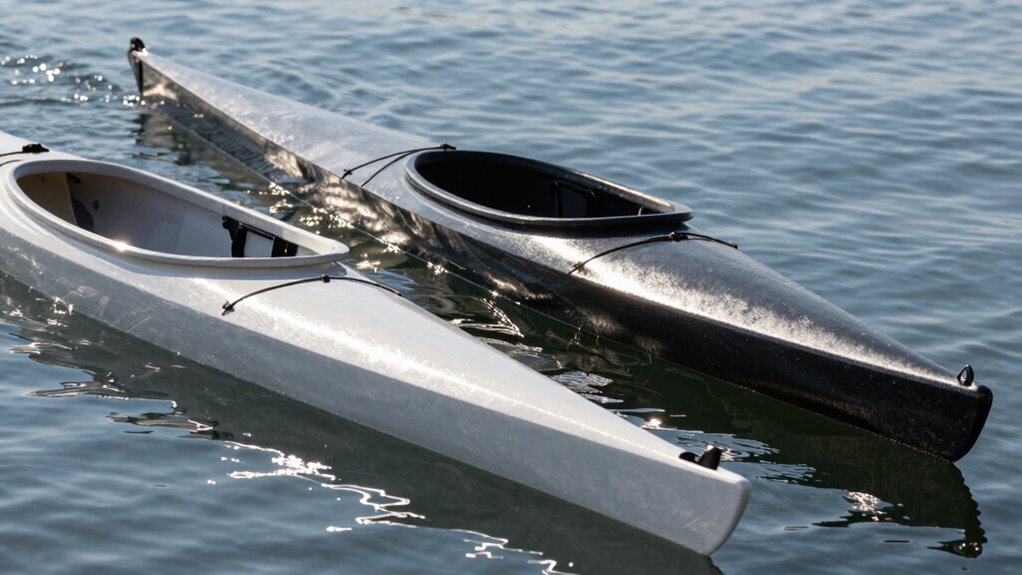
When choosing a kayak, understanding how width affects stability can make a big difference in your paddling experience. The width of your kayak influences how steady you feel on the water, especially when you’re out fishing or enjoying recreational paddling. If you’re a fisherman, comfort is key, and a wider kayak can provide a more stable platform to stand or sit comfortably while casting or reeling in fish. A broader hull offers better balance, helping you feel secure even when the water gets choppy or when you shift your weight to reach for gear. This increased stability can make a significant difference in comfort and confidence during long fishing trips, reducing the risk of tipping and allowing you to focus more on your catch than on staying upright. Additionally, the kayak width impacts how much effort is needed to paddle, influencing overall paddling efficiency and enjoyment.
For recreational paddling techniques, the width of your kayak also plays a crucial role. A wider kayak generally provides more initial stability, which is ideal if you’re new to paddling or prefer a relaxed, laid-back experience on calm lakes or gentle rivers. It’s easier to maintain your balance and control, especially if you’re just learning the basics or taking family members out for a leisurely day. However, keep in mind that wider kayaks tend to be less maneuverable and may require more effort to paddle over long distances. If you’re planning extended trips or want a kayak that responds quickly to your steering, a slightly narrower model might be better suited for your needs.
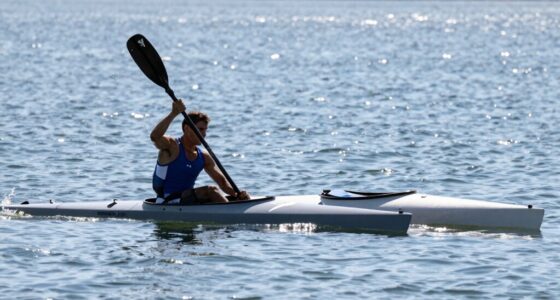
That said, the trade-off between stability and speed is something to consider. Narrower kayaks often cut through water more efficiently, making them faster and more agile. But, they can feel less stable, especially if the water is unpredictable or if you’re not experienced at balancing on a narrower platform. When choosing the right width, think about your primary activities. If you’re mostly fishing or enjoying slow, peaceful paddles, a wider kayak will give you the extra reassurance and comfort you need. If you’re into more dynamic paddling or racing, a narrower design might serve you better.
Ultimately, your choice should match your skill level, activity preferences, and comfort needs. A wider kayak offers increased stability, making it easier for you to relax, fish, and enjoy your time on the water without constantly worrying about tipping over. On the other hand, a narrower kayak can be more responsive and faster, but might require a bit more skill to stay steady. By understanding these differences and considering your specific use case, you can select a kayak that helps you paddle confidently and comfortably, whether you’re out fishing or just exploring new waterways.
wider fishing kayak for stability
As an affiliate, we earn on qualifying purchases.
As an affiliate, we earn on qualifying purchases.
Frequently Asked Questions
How Does Weight Distribution Affect Kayak Stability?
Your weight distribution directly impacts kayak stability by influencing your center of gravity. When you evenly distribute your weight, it helps maintain balance, preventing tipping. Keeping your center of gravity low and centered improves balance maintenance, making your kayak more stable. If your weight shifts unevenly, stability can decrease, causing you to wobble or capsize. Proper weight placement guarantees better control and confidence on the water.
Can Narrow Kayaks Be More Stable Than Wider Ones?
Narrow kayaks can sometimes be more stable than wider ones, especially if you focus on paddle ergonomics for better control. Stability depends on your skill and technique, not just width. Also, kayak color visibility plays a role in safety, making it easier for others to see you. So, if you master paddle ergonomics and choose a bright kayak color, a narrow kayak can be surprisingly stable and safe.
How Does Paddle Technique Influence Kayak Balance?
Your paddle technique directly impacts your kayak balance. When you maintain a proper paddle grip, you guarantee better control, which helps keep the kayak steady. Focusing on stroke efficiency allows you to distribute your effort evenly, reducing unnecessary wobbling. Smooth, deliberate strokes minimize side-to-side movement, enhancing stability. Practicing good paddle technique boosts your confidence and balance, making your kayaking experience safer and more enjoyable, regardless of kayak width.
What Role Does Water Type Play in Kayak Stability?
Water type plays a vital role in your kayak’s stability by affecting surface conditions and water density. Smooth, calm water offers a stable, predictable surface, making balancing easier. Choppy, turbulent water challenges your stability with irregular surfaces and shifting water density, requiring more skill and focus. Understanding these factors helps you anticipate how your kayak responds, allowing you to adjust your technique and maintain balance more confidently in different water environments.
Is Stability More Important Than Speed in Kayak Design?
Stability often outweighs speed in kayak design, especially if you prioritize safety and comfort. You want a kayak that balances ergonomics, making paddling easier and less fatiguing, with material durability to withstand rough conditions. While speed is useful, especially for racing or covering long distances, prioritizing stability guarantees you stay safe and comfortable on the water. Focus on a design that offers a solid, stable platform, even if it sacrifices some speed.
Conclusion
Choosing the right kayak width directly impacts your stability, balancing comfort and control. A narrower kayak offers agility but may wobble more, while a wider kayak provides steadiness but can be less maneuverable. Think of it as finding your perfect fit—where confidence meets ease, where skill meets comfort. By understanding your needs and preferences, you can select a width that keeps you steady, confident, and ready to enjoy every paddle, every trip, every adventure.
Fall Picks
fall essentials
As an affiliate, we earn on qualifying purchases.