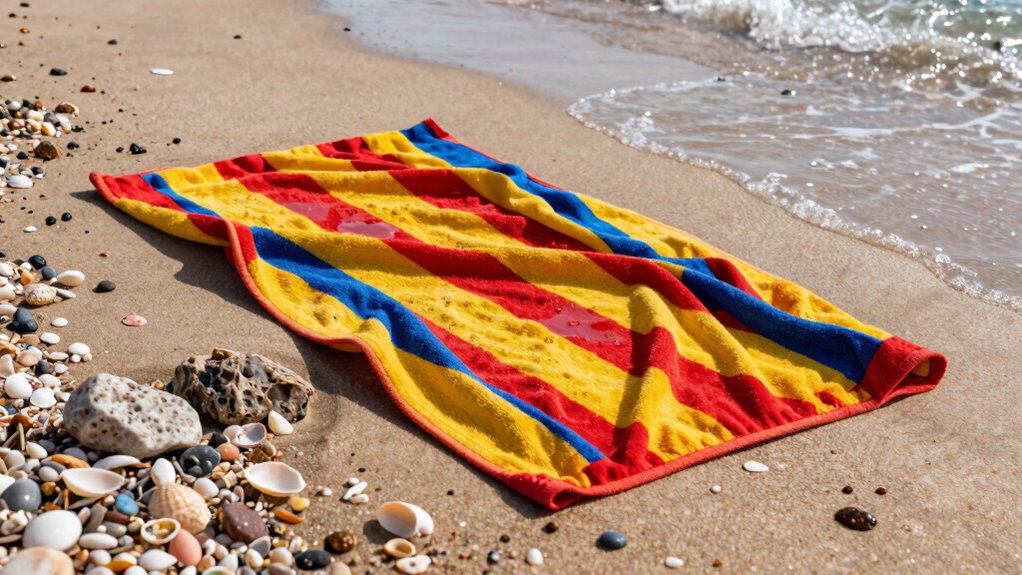

The biggest mistake you can make is choosing a beach towel that traps too much sand, which makes drying off take forever. Towels with loose weaves or poor sand-repellent features let sand cling to your skin, prolonging your drying time and causing frustration. Instead, opt for towels with tighter weaves or special coatings that reduce sand cling. Stay with us to discover how the right towel can save you time and keep your beach day stress-free.

Get pool and patio gear delivered free — and shop member deals
- Fast, free delivery on millions of items
- Access to Prime Big Deal Days deals on October 6–7
- Prime Video, Amazon Music and more included
Key Takeaways
- Using a towel with a loose weave traps more sand, increasing drying time and discomfort.
- Choosing towels without sand-repellent coatings allows sand to cling, prolonging moisture removal.
- Thick, bulky towels retain more sand and moisture, slowing the drying process.
- Towels that trap excessive sand require more effort to shake off, delaying drying.
- Failing to select sand-resistant fabrics causes persistent sand buildup, extending drying time.
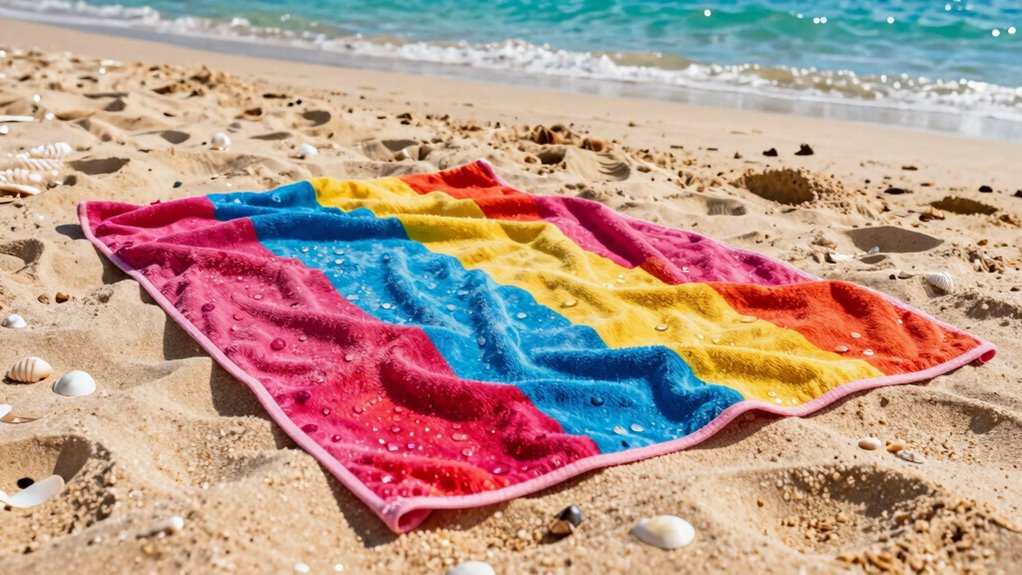
Many beachgoers overlook a simple but vital detail when packing their gear, often leading to discomfort or frustration. That detail is the type of towel they bring, especially how it handles sand retention and its material. Choosing the wrong towel can turn a relaxing day at the beach into a never-ending battle to dry off and stay comfortable. Instead of grabbing the first towel you see, think about these key factors that can make or break your experience.
Sand retention is a major concern when selecting a beach towel. Some towels trap more sand than others, and once you’re back home or heading to your car, that sand can be a real nuisance. It gets into your bag, your clothes, and even your car seats, making cleanup a hassle. Look for towels specifically designed to minimize sand retention. These often feature tighter weaves or specialized fabrics that allow sand to fall right off with a shake. That way, you’re not dragging a sand-covered towel around, and you won’t spend extra time cleaning up after your beach trip. Sand retention is influenced by the towel’s weave and fabric type, so choosing the right material is essential. Choosing a towel with the right sand-resistant properties can save you time and effort afterward. Additionally, some towels are engineered with sand-repellent coatings, which can further enhance their ability to shed sand. These innovations can significantly improve your beach experience by reducing the amount of sand that clings to your towel. When selecting a towel, consider material durability to ensure it withstands beach conditions and frequent washes.
As an affiliate, we earn on qualifying purchases.
Frequently Asked Questions
Can I Prevent My Towel From Smelling After Use?
To prevent your towel from smelling after use, focus on odor prevention and proper towel maintenance. Always hang your towel in a well-ventilated area to dry fully, avoiding dampness that causes odor. Wash it regularly with hot water and a mild detergent, adding a cup of white vinegar to eliminate bacteria. Avoid leaving it bunched up or stored when damp, and your towel will stay fresh longer.
How Often Should I Wash My Beach Towel?
You should wash your beach towel after every few uses, especially if you’ve been swimming or sweating. Towel materials like cotton or microfiber can harbor bacteria and odors if not cleaned regularly. To maintain sun protection, guarantee the towel stays clean and dry, as mold or mildew can develop otherwise. Washing after 3-4 uses helps keep your towel fresh, hygienic, and effective for sun protection on your next beach day.
Are Microfiber Towels Better for Quick Drying?
Microfiber towels are definitely better for quick drying because their tiny fibers absorb water efficiently. You might worry about durability, but microfiber towels are surprisingly sturdy and long-lasting with proper care. Their advantages include fast drying times and lightweight design, making them perfect for beach trips or travel. You’ll appreciate how easily they dry off, saving you time and effort, and they hold up well over repeated uses.
What’s the Best Way to Fold a Beach Towel?
To optimize towel storage, you should fold your beach towel using a neat folding technique. Lay it flat, fold in the sides to create a rectangle, then fold it in thirds or halves depending on your storage space. This method keeps your towel compact, reduces wrinkles, and makes it easier to stack or store in a bag. Practice these folding techniques regularly to keep your beach gear organized and ready for next time.
Can I Use a Hairdryer to Dry My Towel Quickly?
Using a hairdryer can dry your towel quickly, but it depends on the towel’s material—microfiber dries fast, while cotton takes longer. Nearly 80% of people overlook proper drying techniques, which can extend drying time. For best results, set your hairdryer to low or medium heat, hold it evenly over the towel, and avoid overheating. This method speeds up drying without damaging delicate fibers, making your towel ready in minutes.
Conclusion
If you keep that beach towel crumpled and wringing like a soggy rag, drying will feel like chasing the horizon—endless and futile. Instead, lay it flat and give it a gentle shake, letting it breathe and bask in the sun’s embrace. Think of your towel as a lazy river, flowing smoothly with air and warmth, not a trapped storm. Break the mistake, and turn your drying time into a breezy, sun-kissed escape.
Evergreen bestsellers Picks
bestsellers
As an affiliate, we earn on qualifying purchases.