
To make your beach wagon work on soft sand, choose one with wide, low-pressure tires that act like snowshoes, reducing sinking and improving flotation. Keep the frame lightweight yet sturdy for easier pushing over shifting terrain. Proper wheel placement near the ground and stable, well-aligned wheels help with maneuverability and prevent tipping. Combining these features makes hauling gear less tiring, and if you keep exploring, you’ll discover even more tips to enhance your beach days.

Get pool and patio gear delivered free — and shop member deals
- Fast, free delivery on millions of items
- Access to Prime Big Deal Days deals on October 6–7
- Prime Video, Amazon Music and more included
Key Takeaways
- Oversized, wide tires improve flotation and prevent sinking into soft sand.
- Proper wheel alignment and placement lower the center of gravity for increased stability.
- Lightweight, durable frames make pushing and maneuvering easier on shifting terrain.
- Pivoting or swivel wheels enable sharp turns and better control on loose surfaces.
- Combining wide tires, stable wheel positioning, and lightweight design enhances overall beach wagon performance.
Have you ever wondered how well a beach wagon handles soft, loose sand? If you’re planning a day at the beach, you know that hauling your beach gear can quickly become a struggle when the sand isn’t firm. The right beach wagon can make all the difference, but what truly makes a wagon effective on soft sand? It’s not just about having a sturdy frame or large wheels; it’s about how well the wagon’s design facilitates sand steering. The key lies in the combination of features that help you move smoothly over uneven, shifting terrain without exhausting yourself.
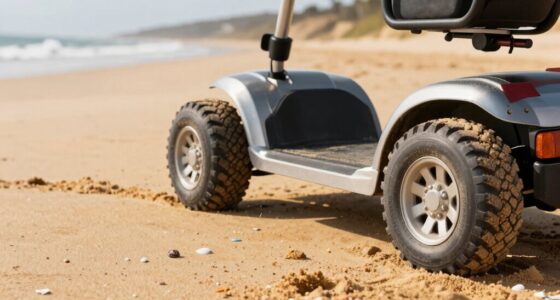
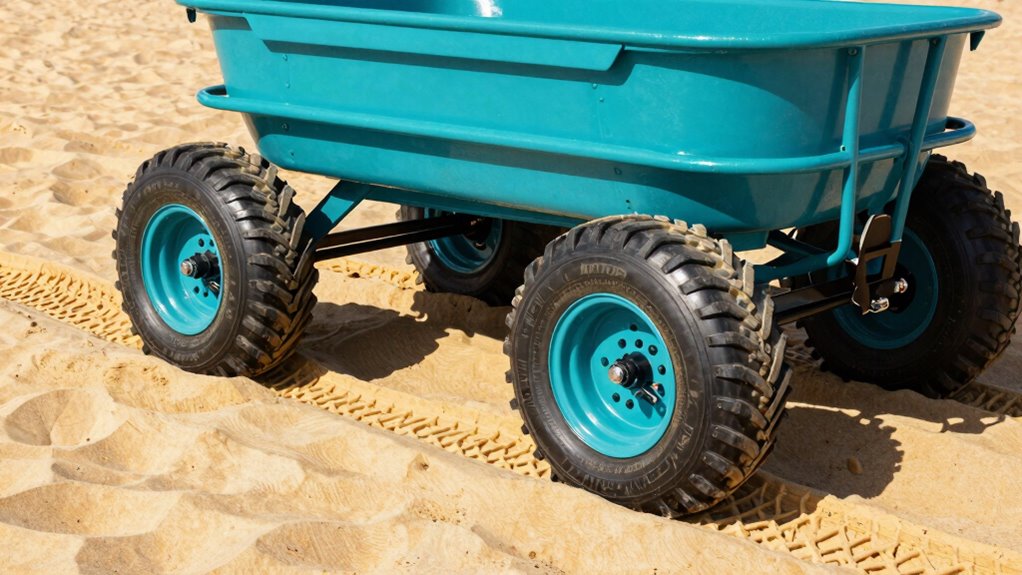
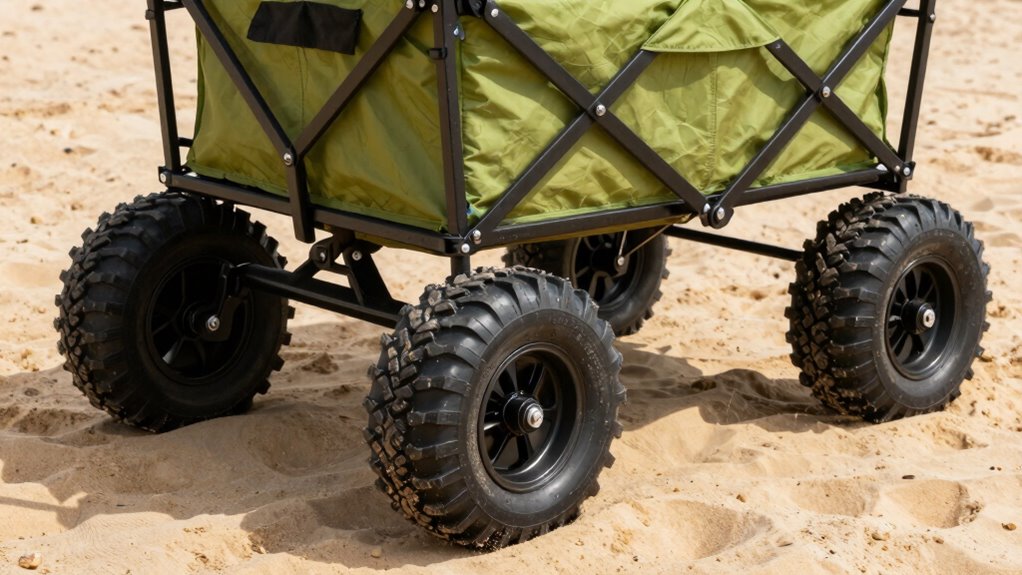
First, look for a beach wagon equipped with oversized, wide tires. These tires displace the weight more evenly and reduce the chances of sinking into the sand. Wide tires act like snowshoes for the sand, providing better flotation and stability. They help you glide over loose surfaces rather than dig in, which is essential for effortless sand steering. High-quality air-filled tires are even better because they absorb shocks and adapt to the terrain, giving you more control and less jostling. Solid rubber tires, on the other hand, tend to sink more, making your task more difficult.
Oversized, wide tires improve flotation and stability, making beach wagons easier to maneuver over loose, shifting sand.
Next, consider the wagon’s wheel design and axle placement. A low center of gravity is vital for stability on soft sand. When the wheels are positioned closer to the ground, the wagon won’t tip easily, especially when steering through small dips or uneven patches. Some models feature a three-wheeled design, which can be advantageous because it distributes weight more efficiently and reduces the chances of getting stuck. The axle’s placement also influences how easily you can maneuver, with some wagons offering pivoting or swivel wheels to help you turn sharply without additional effort. Additionally, wheel design plays a crucial role in how well the wagon handles shifting terrain. Incorporating a proper wheel alignment can further improve maneuverability on soft surfaces. Moreover, the use of beach-specific wheel features can significantly enhance performance on loose sand. Choosing a wagon with optimized wheel configurations can make navigating soft terrain even easier, especially when combined with the right traction techniques.
Another important aspect is the overall weight and construction of the wagon. A lightweight frame makes it easier to push through the sand, but it still needs to be durable enough to carry your gear. Look for models made from sturdy yet lightweight materials like aluminum or reinforced plastics. You want a balance between strength and ease of movement, so your beach gear doesn’t turn into a heavy chore to transport. Additionally, features like a wide, flat bed or open design allow for easier loading and unloading, reducing the time and effort it takes to prepare for your beach day.
Ultimately, what makes a beach wagon work on soft sand is a thoughtful combination of sand steering features—wide tires, stable wheel placement, and lightweight construction—paired with practical beach gear compatibility. When you choose a wagon designed with these elements in mind, you’ll find it much easier to enjoy your day at the beach without the hassle of fighting against the shifting terrain.
As an affiliate, we earn on qualifying purchases.
Frequently Asked Questions
Can Any Beach Wagon Handle Very Loose or Deep Sand?
Not all beach wagons can handle very loose or deep sand. You need one with sturdy, wide wheels designed for soft terrain, and good traction. Also, consider waterproofing features to protect your gear and easy beach wagon storage options for convenience. A wagon with these qualities guarantees smooth movement through deep sand, keeping your belongings dry and making your beach trips more enjoyable.
What Maintenance Is Required for Beach Wagons Used on Soft Sand?
To keep your beach wagon working well on soft sand, regularly check and adjust the tire pressure to the manufacturer’s recommended level for better traction and easier maneuverability. Also, inspect wheel alignment to prevent uneven wear and guarantee smooth movement. Keep wheels clean from sand and debris, and lubricate axles if needed. Proper maintenance helps your wagon stay reliable, especially when tackling challenging soft sand terrain.
Are There Specific Tires Best Suited for Soft Sand?
You should choose tires with wide, deep tire tread and larger wheel size for soft sand. These features help distribute weight more evenly, preventing sinking and making it easier to glide over loose surfaces. Imagine contrasting smooth, narrow tires with broad, knobby ones—your wagon moves smoothly on soft sand when equipped with tires designed for grip and flotation. The right combination guarantees effortless mobility and stability on challenging terrain.
How Do Weight and Load Affect a Beach Wagon’s Performance?
Your beach wagon’s performance depends heavily on weight and load. Proper weight distribution guarantees the wagon stays balanced, preventing it from sinking or tipping on soft sand. Keep within the load capacity to avoid straining the wagon’s frame or wheels. Overloading can reduce mobility and make it harder to maneuver. By managing weight and load effectively, you’ll enjoy smooth, easier transport across the sand, making your beach day more enjoyable.
Can a Beach Wagon Be Modified for Better Soft Sand Traction?
Yes, you can modify your beach wagon for better soft sand traction. Add beach wagon accessories like wider wheels or pneumatic tires to distribute weight more evenly. Use soft sand tactics such as lowering tire pressure to increase surface contact, improving grip. These modifications help your wagon navigate soft sand more easily, making your beach trips smoother and less frustrating. Just guarantee your adjustments are suitable for your specific wagon model.
Conclusion
Now that you know what makes a beach wagon effective on soft sand, you’re better equipped to enjoy your day at the beach. Remember, wagons with wide, inflatable tires can distribute weight more evenly, reducing sinkage. Remarkably, a study found that wagons with larger tires can handle up to 35% more soft sand than those with smaller tires. So, invest in the right wagon, and you’ll glide effortlessly over the sand, making your beach day even more enjoyable.
Halloween Picks
halloween
As an affiliate, we earn on qualifying purchases.