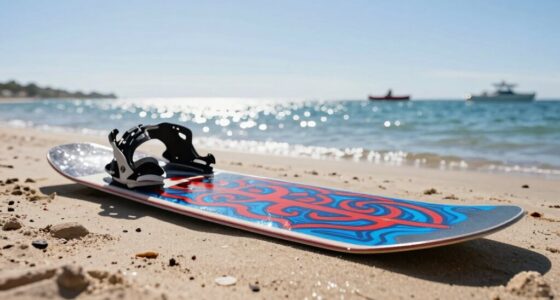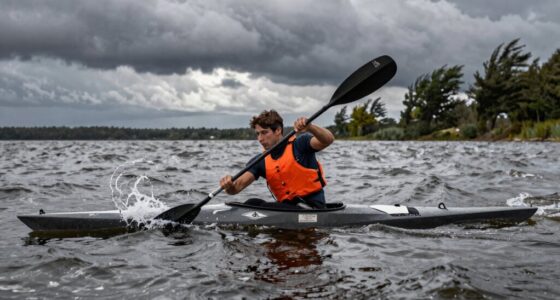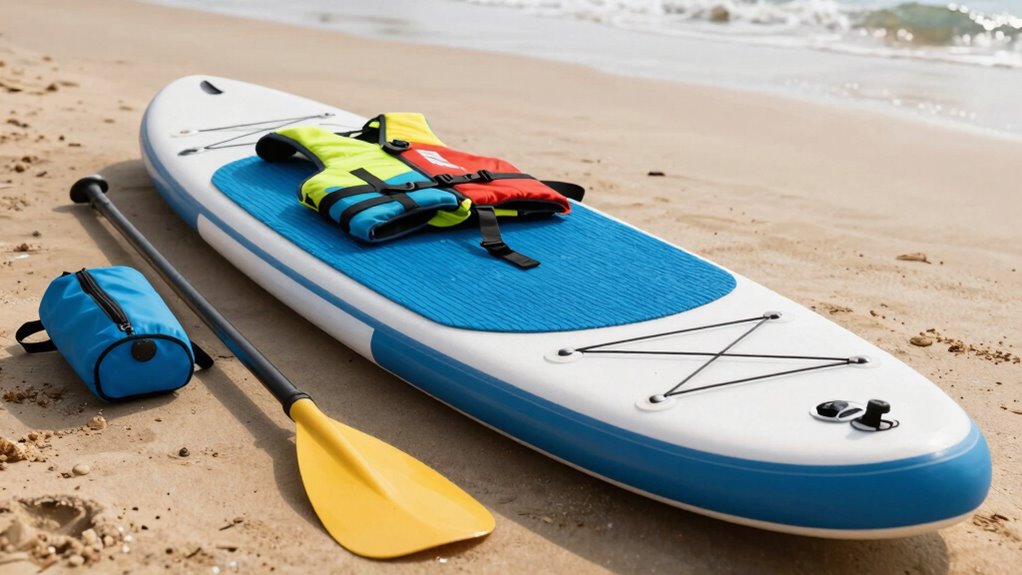

To prevent a bad first trip, establish a thorough pre-paddle setup routine. Inspect your board for cracks, dents, or wear, and verify fins and straps are secure. Check that your paddle is the right length and that your leash is intact. Review weather and water conditions to stay safe, and double-check all gear before launching. Developing these habits helps maintain safety and confidence. Keep going to discover more tips that set you up for success on your first paddle.

Get pool and patio gear delivered free with Prime
- Fast, free delivery on millions of items
- Prime Video, Amazon Music and more included
- Member-only deals all year
Key Takeaways
- Conduct a thorough pre-trip equipment inspection, including checking fins, leash, paddle, and inflation valve.
- Practice mounting and balancing on land to build confidence before entering the water.
- Confirm all gear is securely attached and properly assembled to prevent issues during the trip.
- Review weather and water conditions to choose a safe route matching your skill level.
- Pack essential safety items, such as a whistle, waterproof phone, and sun protection, in an accessible waterproof bag.

Starting a new hobby like stand-up paddleboarding (SUP) can be exciting, but establishing a solid setup habit is key to enjoying your experience safely and confidently. When you take the time to prepare properly before heading out, you reduce the chances of mishaps and ensure a smooth, enjoyable trip. The foundation of that preparation is focusing on equipment maintenance and safety precautions. Ignoring these steps can lead to frustrating or even dangerous situations that might ruin your first outing or cause injury.
First, make sure your paddleboard and gear are in top shape. Regular equipment maintenance is critical—inspect your board for cracks, dents, or signs of wear, especially around the fins and the deck. Check that your leash is intact and securely attached; a broken or loose leash can lead to losing your board in the water, which is both frustrating and unsafe. Your paddle should be free of cracks and have a comfortable grip. Don’t forget to verify that your inflation valve (if it’s an inflatable SUP) holds air properly and that your fin is securely attached. Properly maintained equipment not only prolongs its lifespan but also guarantees safety during your paddle. Additionally, a quick inspection routine before each trip ensures that your gear remains safe and reliable over time.
Next, prioritize safety precautions. Always wear a personal flotation device (PFD), no matter how calm the water seems. It’s a simple step that can save your life if you fall unexpectedly. Before you set out, familiarize yourself with your environment—know the water conditions, currents, and weather forecast. Avoid rough or fast-moving water during your first few trips. Check the weather forecast again before you leave, and keep an eye on changing conditions while on the water. Carry a whistle or signaling device to alert others if needed, and consider packing a small waterproof bag with essentials like a phone, sunscreen, and water. Additionally, regular equipment inspections are vital for ensuring your gear remains safe and reliable over time. Developing a consistent habit of thorough checks can prevent overlooked issues that might arise during your paddle.
When preparing your setup, double-check that your paddle is the right length for your height, and make sure all straps and attachments are secure. Practice mounting your board on land first, so you get comfortable with balancing and handling. This practice helps you develop confidence and reduces the risk of falling or losing your gear once you’re on the water.
inflatable stand-up paddleboard with pump
As an affiliate, we earn on qualifying purchases.
As an affiliate, we earn on qualifying purchases.
Frequently Asked Questions
What Safety Gear Is Essential for First-Time SUP Trips?
For your first SUP trip, essential safety gear includes a life jacket or personal flotation device, which keeps you afloat if you fall. Carry a whistle for signaling and a leash to stay attached to your board. Pay attention to weather considerations to avoid unexpected storms or strong currents. Practice safe paddle techniques, stay alert to your surroundings, and always check the weather forecast before heading out to make certain of a safe and enjoyable experience.
How Do I Choose the Right Size SUP Board?
Choosing the right-sized SUP board isn’t rocket science—unless you’re aiming for one that makes you look like a bobblehead. Focus on your weight, skill level, and typical water conditions. For board materials, opt for lightweight, durable options like EPS foam. Pick paddle types that match your height and style—carbon for speed, fiberglass for versatility. A well-matched board and paddle make your first paddle adventure smooth sailing, not a kayak chase.
What Are Common Beginner Mistakes to Avoid?
To avoid beginner mistakes, focus on your paddle technique and pay attention to weather considerations. Keep your paddle steady and controlled to maintain balance, and avoid overreaching. Check the weather forecast before heading out—strong winds or storms can make paddling difficult or unsafe. Always start in calm conditions, stay aware of your surroundings, and practice proper posture. These habits help guarantee a safe, enjoyable first paddle experience.
How Do I Improve My Balance Quickly?
Imagine yourself standing tall on your SUP, feeling the gentle sway of the water beneath you. To improve your balance quickly, focus on paddle techniques that keep your center stable and practice balance exercises like single-leg stands or shifting weight side to side. These movements strengthen your core and enhance stability. With consistent practice, you’ll find yourself more confident and steady on the board, ready to enjoy your time on the water.
What Should I Do if I Fall Into the Water?
If you fall into the water, stay calm and practice water rescue techniques like floating on your back and signaling for help if needed. Quickly grab your dry bag essentials, such as a whistle, phone in a waterproof case, and snacks. Once safe, climb back onto your board carefully, keeping your movements controlled to avoid injury. Staying composed and prepared helps guarantee a safe and enjoyable paddle.
Conclusion
Think of your first SUP trip as planting a seed—if you set it up right, it’ll grow into a smooth, enjoyable experience. Developing a solid setup habit guarantees you’re not just riding the waves, but riding them confidently. Like tending a garden, consistency and attention to detail pay off in the long run. So, take these habits seriously; they’re the roots that’ll keep your adventures steady and fun, no matter how big the tide.
Halloween Picks
halloween
As an affiliate, we earn on qualifying purchases.