
TL;DR

Get pool and patio gear delivered free with Prime
- Fast, free delivery on millions of items
- Prime Video, Amazon Music and more included
- Member-only deals all year
A new foam-based floating solar PV system with air bubblers has been successfully tested for cold climates. The system shows increased energy efficiency and ice mitigation, potentially expanding floating solar use in colder regions.
Researchers at Western University have developed and tested a foam-backed floating solar PV system equipped with air bubblers, demonstrating its potential to operate effectively in cold climates, which could expand floating solar adoption in colder regions.
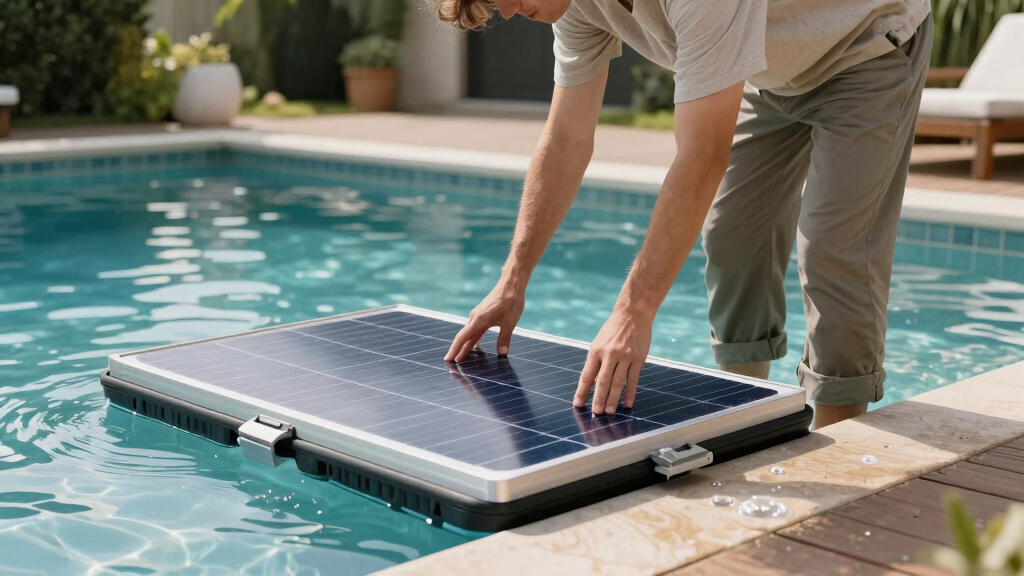
The foam-based floating PV system uses polyethylene foam slabs to support solar modules, elevating them about 1 centimeter above water, which provides natural insulation. An air bubbler system is integrated to prevent ice formation on the water surface, a common challenge in cold climates. Experimental tests showed that this design yields higher annual energy production compared to traditional floating solar systems, thanks to better temperature management. The system also reduces water evaporation, offering additional environmental benefits. According to an author involved, Joshua M. Pearce, the foam-based system proved to be both effective and economical, addressing key cold-climate challenges with minimal energy input.
Potential for Cold-Climate Floating Solar Expansion
This innovation could significantly broaden the deployment of floating solar PV in colder regions, where ice formation and low temperatures have limited system efficiency and durability. The foam-backed design offers improved insulation and ice mitigation with low additional energy costs, making it a promising option for expanding renewable energy infrastructure in northern latitudes. If commercialized, this technology could contribute to increased renewable capacity and water conservation efforts in cold climates, aligning with global decarbonization goals.
floating solar panel with ice prevention
As an affiliate, we earn on qualifying purchases.
As an affiliate, we earn on qualifying purchases.
Advances in Floating Solar Technologies for Diverse Climates
Floating solar PV has grown rapidly worldwide, with an estimated 10 GW installed globally by 2025. Most systems are designed for warm climates, where cooling effects improve efficiency. However, cold climates pose unique challenges, including ice buildup and low temperatures that reduce system performance. Recent research by Western University focuses on overcoming these barriers through innovative design, such as foam support structures and ice-preventing air bubblers. Previous efforts have primarily targeted warm regions, making this development a notable step toward diversifying floating solar applications.
“The foam-based FPV generated more energy annually compared to other PV models, emphasizing the importance of accurate temperature modeling for cold-climate systems.”
— an anonymous researcher
Uncertainties About Scaling and Market Adoption
It is not yet clear how the foam-based floating PV system will perform at larger scales or in diverse water bodies beyond laboratory or small-scale tests. Questions remain about long-term durability, maintenance requirements, and overall cost competitiveness compared to existing solutions. Market acceptance and regulatory hurdles in different regions are also still to be addressed, making widespread deployment uncertain at this stage.
Next Steps for Commercialization and Broader Testing
Further research is expected to focus on scaling up the foam-based system, conducting long-term field trials in various cold regions, and evaluating economic viability at commercial levels. Developers will also need to navigate regulatory approvals and develop manufacturing processes suitable for large-scale production. Monitoring and performance data from these future deployments will determine if the technology can be adopted widely in cold climates.
Key Questions
How does the foam backing improve the floating solar system in cold climates?
The foam provides natural insulation, helping to maintain higher panel temperatures, which improves efficiency. It also elevates the panels slightly above water, reducing ice contact and formation.
What role do air bubblers play in this system?
The air bubblers create a gentle flow on the water surface, preventing ice buildup and reducing the risk of damage during freezing conditions.
Is this technology ready for commercial deployment?
Not yet. While promising results have been demonstrated in tests, further large-scale trials and economic assessments are needed before commercial deployment can be considered.
Could this foam-based floating PV system be used in warm climates?
Yes, but its primary advantage is in cold climates where traditional floating solar systems face ice and low-temperature challenges. In warm regions, conventional systems may suffice without foam insulation.
What are the environmental benefits of this system?
Besides energy generation, the foam-based FPV system reduces water evaporation and mitigates ice formation, helping conserve water and protect aquatic ecosystems.
Source: CleanTechnica
Halloween Picks
halloween
As an affiliate, we earn on qualifying purchases.