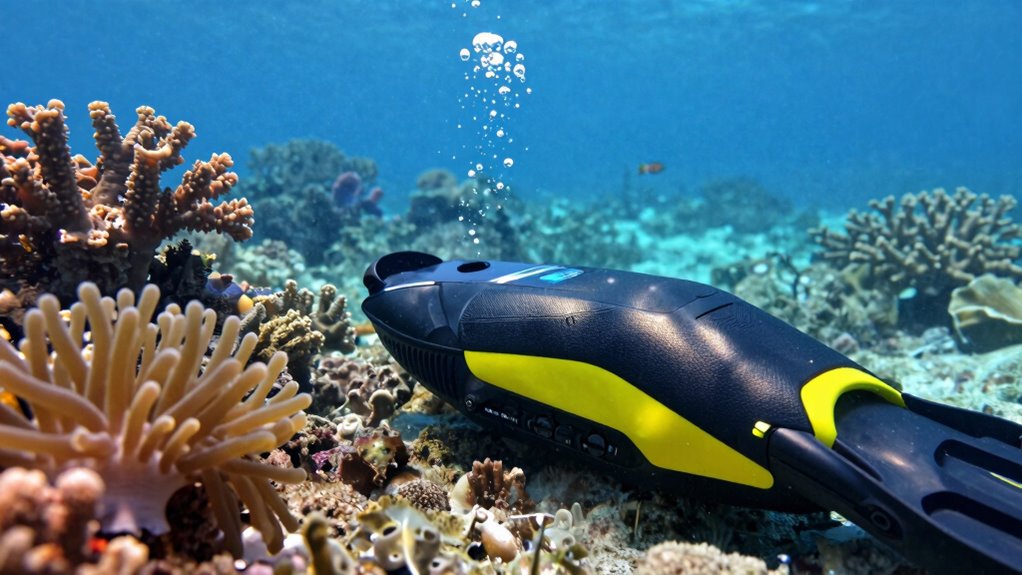

To get the most out of your sea scooter, regularly check and monitor your battery’s charge and health. Keep the terminals clean, store the scooter in a cool, dry place, and avoid extreme temperatures that can speed up capacity loss. Your battery’s performance depends on factors like depth, speed, and age, so plan dives accordingly. Proper maintenance and charging practices will extend its lifespan. Want to dive deeper into keeping your battery reliable? Keep going for more tips.

Get pool and patio gear delivered free with Prime
- Fast, free delivery on millions of items
- Prime Video, Amazon Music and more included
- Member-only deals all year
Key Takeaways
- Battery life varies based on depth, speed, and usage; plan dives accordingly for optimal performance.
- Regularly monitor battery health and charge levels to prevent unexpected power loss during dives.
- Proper charging practices, including using recommended chargers, extend battery lifespan and maintain capacity.
- Extreme temperatures and age significantly reduce battery capacity and runtime over time.
- Maintaining clean terminals and storing batteries properly helps ensure reliable, long-lasting performance.
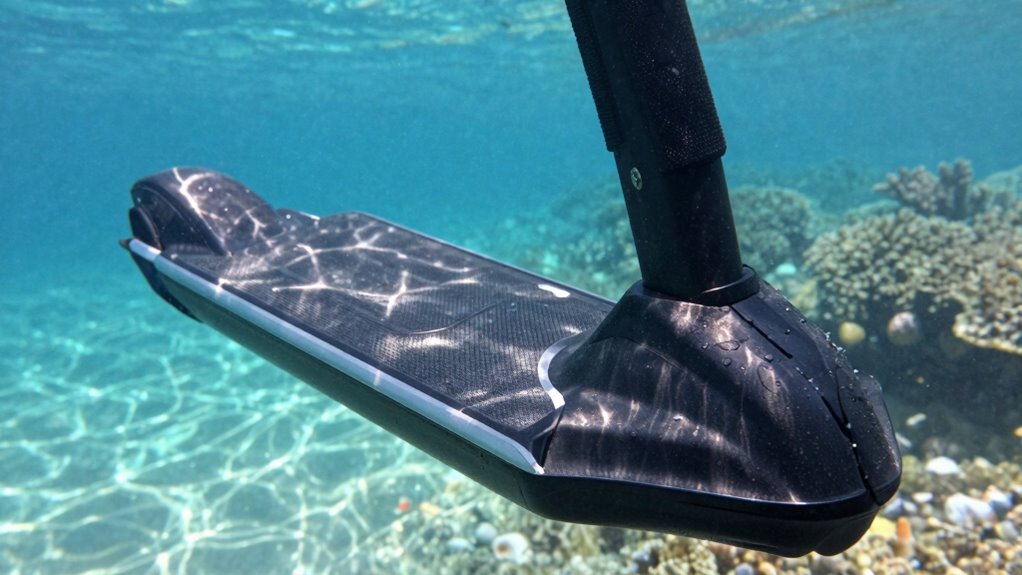
If you want your sea scooter to perform at its best underwater, maintaining its battery life is essential. The battery is the heart of your device, and proper battery maintenance ensures you get the most out of each dive. Regularly inspecting your battery for any signs of damage or wear can prevent unexpected failures. Keep the terminals clean and dry, and store the scooter in a cool, dry place when not in use. Avoid exposing the battery to extreme temperatures, as heat or cold can degrade its capacity over time. By taking these simple steps, you extend your battery’s lifespan and ensure reliable performance when you need it most. Monitoring your battery’s charge level before each dive ensures you’re not caught off guard. Properly maintaining your battery and following charging best practices not only prolongs its life but also guarantees a safer, more enjoyable diving experience. Understanding how long your battery will last during typical dives can help you plan better. Many factors influence battery life, including the depth of your dives, the speed you operate at, and the age of the battery itself. As batteries age, their capacity diminishes, so don’t expect the same performance as when the battery was new. Always using the correct charger and following manufacturer recommendations can prevent battery degradation caused by improper charging practices. Additionally, being aware of battery capacity can help you better gauge how much runtime you have left during your dives. Regularly checking your battery health can give you early warning signs and help you avoid unexpected issues. Being familiar with your battery’s charging cycle schedule can also help maintain its longevity. Practicing proper battery maintenance ensures you maximize the lifespan and performance of your device.
As an affiliate, we earn on qualifying purchases.
Frequently Asked Questions
How Do Temperature Changes Affect Sea Scooter Battery Performance?
Temperature changes, especially cold weather, substantially impact your sea scooter battery performance due to thermal impact. When submerged in cold water, your battery’s chemical reactions slow down, reducing power output and decreasing runtime. To maximize performance, avoid exposing the battery to extreme cold, and store it in a warm place when not in use. Being mindful of thermal impact helps guarantee your sea scooter stays reliable during your underwater adventures.
Are There Specific Brands With Longer-Lasting Batteries?
Some brands stand out with longer-lasting batteries, but it’s your approach that makes the difference. You need to focus on battery capacity and smart charging techniques—like avoiding overcharging and keeping it cool—to extend your sea scooter’s runtime. Stay vigilant; as technology evolves, new brands may emerge with better longevity. Keep an eye out, because your next adventure could depend on choosing the right brand with superior battery performance.
How Often Should I Replace My Sea Scooter Battery?
You should replace your sea scooter battery when it no longer holds a sufficient charge or shows signs of reduced performance, typically after 300-500 charge cycles. Always consider proper battery recycling to prevent environmental harm, and guarantee your replacement battery is compatible with your charger. Regularly check charger compatibility to avoid damage, and follow manufacturer guidelines for lifespan and replacement timing to keep your underwater adventures smooth.
Can I Upgrade My Battery for Extended Use?
Yes, you can upgrade your battery for extended use. Did you know that increasing your battery capacity by 20% can substantially boost your dive time? To get the most out of your upgrade, focus on proper charging practices—avoid overcharging and fully discharge before recharging. Upgrading your battery involves choosing a compatible, higher-capacity pack, which can enhance your sea scooter’s performance and extend your underwater adventures.
What Safety Precautions Are Needed for Battery Maintenance?
You should always handle battery maintenance with care, prioritizing charging safety by using the recommended charger and avoiding overcharging. When it’s time for disposal, follow proper battery disposal procedures to prevent environmental harm. Keep batteries away from heat and flames, and store them in a cool, dry place. Regularly inspect for damage or corrosion to guarantee safe operation, and never attempt to repair or open sealed batteries yourself.
Conclusion
Understanding your sea scooter’s battery life helps you plan better dives and avoid surprises underwater. For example, if you’re exploring a vibrant reef, knowing your battery lasts about 45 minutes means you can enjoy the scenery without worry. Always carry a spare or charger, and practice conserving power by using eco modes when possible. With these tips, you’ll extend your adventures and make every dive safe, exciting, and worry-free.
Halloween Picks
halloween
As an affiliate, we earn on qualifying purchases.