
Choosing a drysuit only makes sense in cold water conditions where insulation, buoyancy control, and environmental factors are critical. If water temperatures are consistently low, you need a suit designed for heat retention and safety features like adjustable buoyancy. In milder waters, a wetsuit might suffice. Understanding your environment helps you pick the right gear, ensuring comfort and safety. Keep exploring to discover which features best match your diving conditions.

Get pool and patio gear delivered free with Prime
- Fast, free delivery on millions of items
- Prime Video, Amazon Music and more included
- Member-only deals all year
Key Takeaways
- Drysuits are essential only in consistently cold water conditions to prevent hypothermia during prolonged dives.
- They are ideal when precise buoyancy control and insulation are required in challenging environments.
- Drysuits may be unnecessary in warmer water where wetsuits provide sufficient thermal protection.
- Proper maintenance and durability considerations are critical only when frequent use in demanding conditions is expected.
- Suit material selection depends on environmental factors, making drysuits suitable primarily for specific cold or variable water conditions.

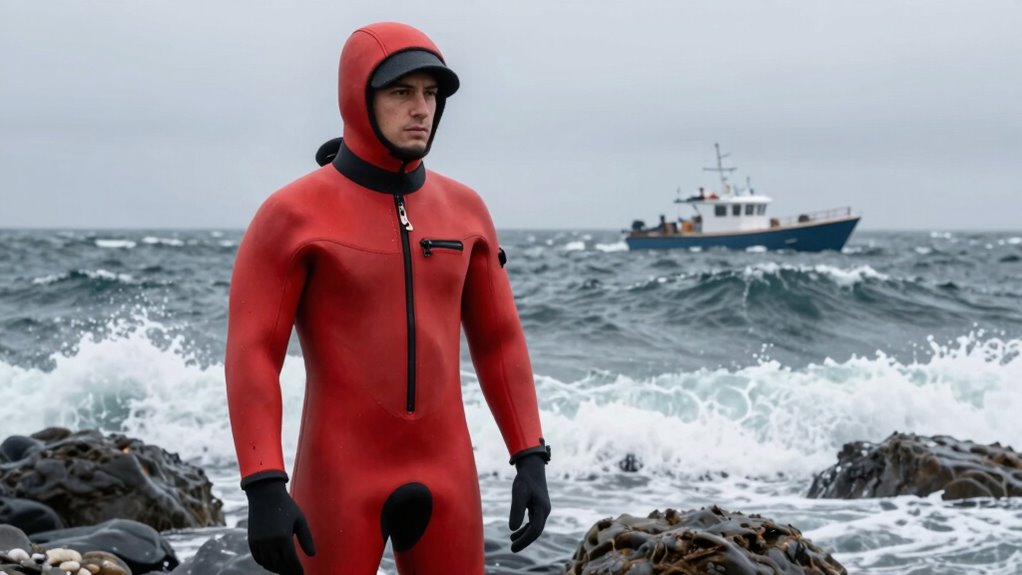
Choosing the right drysuit can make all the difference when conditions turn challenging. When you’re navigating cold waters, your primary concerns are staying warm and maintaining control, and your drysuit’s features directly impact both. Thermal insulation is a key factor here. A drysuit with proper insulation keeps your body heat from escaping, which is vital during extended dives in chilly environments. The thickness of the suit’s material, layered insulation options, or the addition of thermal undergarments all contribute to maintaining your core temperature. If you’re in conditions where water temperatures are consistently low, investing in a suit designed specifically for thermal insulation isn’t just smart — it’s essential for safety and comfort. The right suit prevents hypothermia and fatigue, letting you focus on your activity rather than battling the cold.
Beyond warmth, buoyancy control is equally crucial. A drysuit that offers excellent buoyancy control allows you to finely tune your position in the water with ease. This is especially important in challenging conditions where currents, waves, or uneven terrain can make stability a challenge. When you can adjust your buoyancy efficiently, you conserve energy and reduce fatigue, which enhances your overall safety. Many drysuits feature built-in or adjustable inflation mechanisms, letting you add or release air as needed. This control helps you maintain a neutral buoyancy, so you hover effortlessly at your desired depth without constantly fighting against the suit’s buoyancy or overcompensating with your breathing or fins. In extreme conditions, water temperature plays a significant role in determining the appropriate drysuit features, making the right choice even more critical. Additionally, understanding how drysuit materials and features interact with environmental conditions can help you select the most suitable gear for your specific needs. Proper drysuit maintenance is also essential to ensure these features continue to perform optimally in demanding environments. A thorough knowledge of suit durability and compatibility with accessories can further improve your long-term performance and safety.
As an affiliate, we earn on qualifying purchases.
Frequently Asked Questions
Are Drysuits Suitable for Beginner Divers?
Drysuits can be suitable for beginner divers, especially if you prioritize staying warm and dry in cold water conditions. While they offer excellent dry suit durability, they require some practice to master proper donning and buoyancy control. As part of your beginner diving gear, a drysuit might seem complex initially, but it’s a great investment if you’ll dive often in colder environments. Just make certain you get proper training beforehand.
How Do Drysuits Compare to Wetsuits in Warmth?
Drysuits generally provide better warmth than wetsuits because of their superior thermal insulation, keeping you dry and cozy in colder waters. They also offer improved buoyancy control since you can adjust the inflation, making your dives more comfortable and safer. Wetsuits rely on water trapped between your skin and the suit for insulation, which can be less effective in very cold conditions, making drysuits the better choice for extreme temperatures.
What Are the Main Signs of Drysuit Malfunction?
If you notice your drysuit leaking or see water pooling inside, it’s a clear sign of a malfunction. Zipper failure can also cause water to seep in, compromising your warmth and safety. Check the zipper regularly for damage or misalignment, and inspect for dry suit leaks around seals and seams. Address these issues promptly to prevent cold water from entering and to maintain your drysuit’s protective function.
Can Drysuits Be Used in Freshwater Environments?
Yes, you can use drysuits in freshwater environments. Just keep in mind that freshwater can cause saltwater corrosion if you’ve been diving in saltwater, so rinsing your suit thoroughly afterward is essential. Also, make certain your suit insulation remains effective, as freshwater doesn’t impact insulation directly, but proper maintenance prevents wear. Regular inspections and cleaning help prolong your drysuit’s lifespan, making it reliable for freshwater adventures.
How Often Should I Perform Maintenance on My Drysuit?
Think of your drysuit as a trusted shield. You should perform maintenance on it after every dive, focusing on a thorough inspection and cleaning. Follow a maintenance checklist that includes checking seals, zippers, and valves to guarantee dry suit durability. Regular upkeep keeps your dry suit in top shape, preventing surprises and extending its life. Staying proactive with maintenance makes each dive safer and more enjoyable.
Conclusion
Ultimately, choosing a drysuit depends on your specific conditions and comfort level. If you paddle in cold, turbulent waters more than 20 days a year, investing in one is wise—studies show it can extend your paddling season by up to 30%. But if you only kayak occasionally in milder conditions, a drysuit might be unnecessary. Weigh your frequent environments carefully; making the right choice guarantees safety and enjoyment on every trip.
Halloween Picks
halloween
As an affiliate, we earn on qualifying purchases.