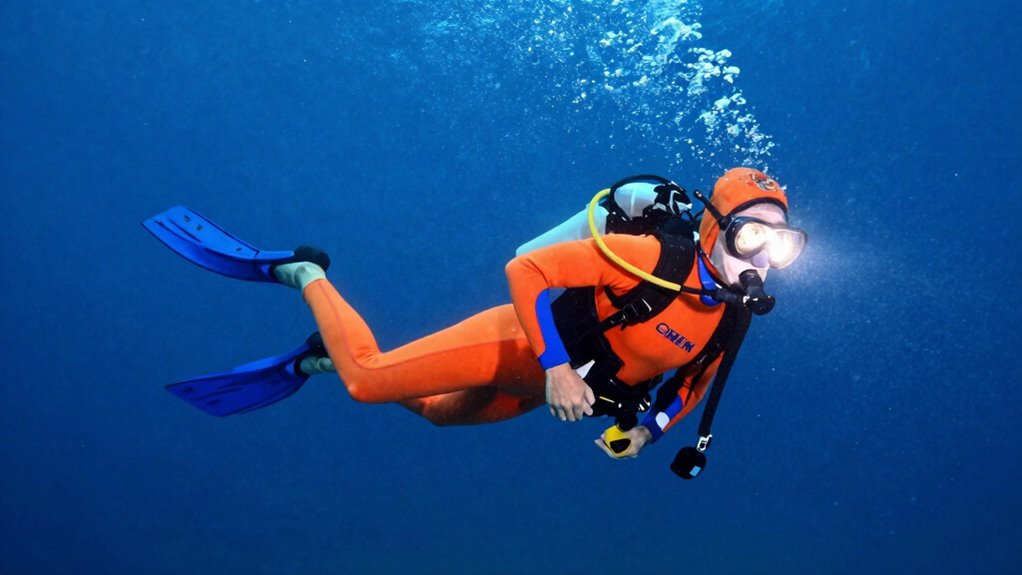
Using your strobe too close or directly in front of your subject is a common mistake that quickly ruins underwater photos. It causes harsh reflections, overexposed highlights, and unnatural lighting that distract from the scene. This poor positioning flattens the shot, reducing depth and vibrancy. Instead, angle your strobe carefully and maintain a proper distance to create softer, more natural light. Keep going to discover more tips that help you master better underwater lighting techniques.

Get pool and patio gear delivered free with Prime
- Fast, free delivery on millions of items
- Prime Video, Amazon Music and more included
- Member-only deals all year
Key Takeaways
- Placing strobes too close or directly in front causes overexposure and harsh reflections.
- Overusing high-powered strobes flattens the scene, reducing depth and natural textures.
- Ignoring proper strobe angles results in uneven lighting and unnatural shadows.
- Neglecting regular equipment maintenance can lead to inconsistent lighting and technical failures.
- Failing to adjust strobe power based on distance diminishes color vibrancy and scene authenticity.
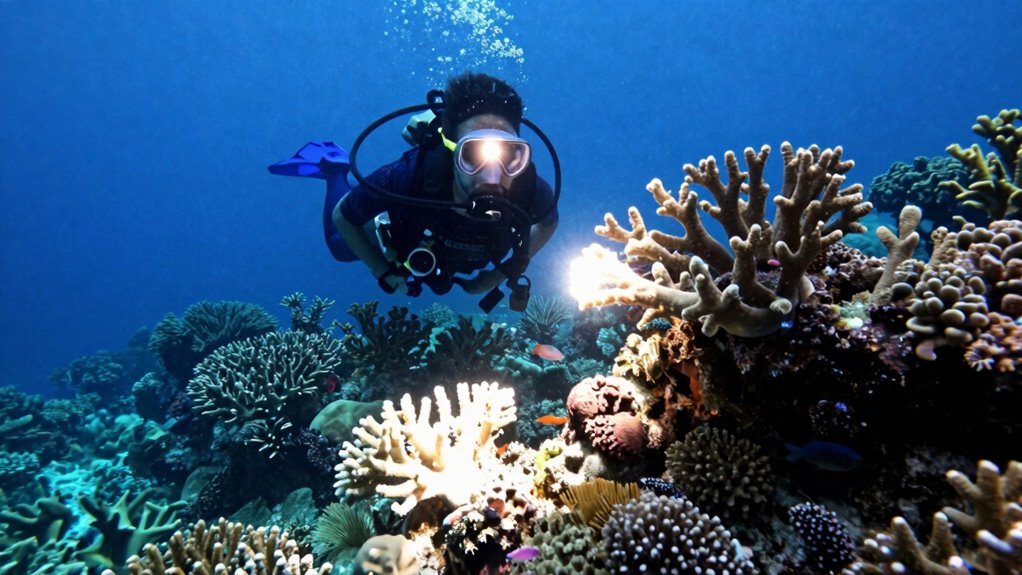
When photographing underwater scenes, many divers mistakenly rely heavily on their strobes without considering how their placement and settings impact the final image. This over-reliance often stems from a desire to eliminate shadows and brighten subjects, but it can lead to issues that compromise the quality of your photos. One common mistake is positioning your strobes too close to the subject or directly in front of it, which can result in overexposed highlights, unnatural reflections, or harsh shadows that distort marine life behavior. Instead, you should experiment with angling your strobes and maintaining a mindful distance to create softer, more natural lighting that respects the behavior of marine creatures. When you understand how your strobes influence the scene, you’ll capture more authentic behavior and avoid startling or unnerving your subjects. Proper equipment maintenance is also essential for consistent results and avoiding technical issues that could ruin a shot. Regularly checking and cleaning your gear helps prevent malfunctions that could interfere with your ability to capture the perfect shot. Neglecting this can cause your strobes to malfunction or produce uneven lighting, which undermines your efforts to get sharp, well-exposed images. Proper maintenance ensures your gear performs reliably, allowing you to focus on composition rather than fixing technical problems mid-dive. Many divers also forget that using high-powered strobes without considering their impact can lead to unnatural images. Overusing powerful lighting can flatten the scene, diminish the depth and texture of underwater landscapes, and cause glare that distracts from the subject. It’s better to use lower light levels or adjust your strobe power dynamically based on distance and ambient conditions. This approach preserves the scene’s natural ambiance, highlighting marine life’s true colors and behaviors as they are seen by the eye. Additionally, understanding light behavior underwater can help you make more informed decisions about your lighting setup. Knowing how light diffuses and reflects in water allows you to better control your lighting and avoid unwanted reflections that can ruin a shot. Being aware of the diffusion characteristics of water helps you adapt your lighting to different conditions, ensuring more consistent results. By fine-tuning your settings and understanding the behavior of marine life, you’ll create images that feel more genuine and engaging. In essence, the mistake that quickly damages underwater photos isn’t just about strobe placement or power settings — it’s about how you integrate these tools into your overall approach. Take time to learn how your strobes interact with the environment and marine creatures, maintain your equipment diligently, and adapt your lighting to suit the scene. Doing so will elevate your underwater photography, capturing the true essence of marine life and avoiding the pitfalls of over-illumination or technical failures that can ruin your shots.
As an affiliate, we earn on qualifying purchases.
Frequently Asked Questions
How Can I Prevent Backscatter When Using Strobe Lights Underwater?
To prevent backscatter when using strobe lights underwater, angle your strobes away from the camera lens and slightly downward. This reduces the chance of light reflecting off particles toward your lens. Keep your strobes fully charged for consistent power, aiding in proper color correction and minimizing the need for post-editing. Using diffusers can also soften light, reducing backscatter and improving overall photo clarity.
What Settings Should I Use for Optimal Underwater Strobe Lighting?
Ever wondered how to get perfect underwater shots? Set your underwater camera to manual mode, start with a shutter speed around 1/125 sec, and keep your aperture between f/8 and f/11 for sharpness. Use a strobe positioning that minimizes backscatter—place the strobes slightly above and angled toward your subject. Adjust your strobe power to avoid overexposure, and always review your shots to fine-tune the settings.
Is It Better to Use One or Multiple Strobes Underwater?
Using multiple strobes underwater is better because it helps you control color temperature and achieve even lighting. With multiple strobes, you can reduce harsh shadows and improve color accuracy by balancing light sources. Applying underwater diffusion to each strobe softens the light, preventing overexposure and color shifts. This setup guarantees vibrant, well-lit photos with natural-looking colors, making your underwater shots more professional and visually appealing.
How Does Water Clarity Affect Strobe Lighting Effectiveness?
Think of water clarity as a painter’s canvas—clear water makes your strobe light shine like a spotlight, revealing vibrant details. When water’s murky due to pollution or algae growth, the light scatters, dulling your shots and losing depth. You’ll find it harder to get sharp, colorful images, as the particles block and diffuse the light. Good water clarity is essential; it’s the foundation for stunning, well-lit underwater photos.
Can Post-Processing Fix Lighting Issues Caused by Strobes Underwater?
Post-processing can help fix underwater lighting issues, but it has limits. You can perform color correction to restore natural hues and exposure adjustment to brighten or darken your images. However, if the initial photo is severely underexposed or has poor color balance due to strobe mistakes, the results may not be perfect. It’s best to get the lighting right in-camera, but a little post-processing can improve borderline shots.
Conclusion
Avoid the common mistake of overusing strobe lighting underwater, or you risk turning your vibrant photos into dull, lifeless images that no amount of editing can truly revive. Remember, your strobe should complement rather than overpower your shot—think of it as the seasoning to your culinary masterpiece, not the main ingredient. Mastering this balance can elevate your underwater photography from mediocre to breathtaking, making your images stand out like a rare jewel in a sea of sameness.
Evergreen bestsellers Picks
bestsellers
As an affiliate, we earn on qualifying purchases.