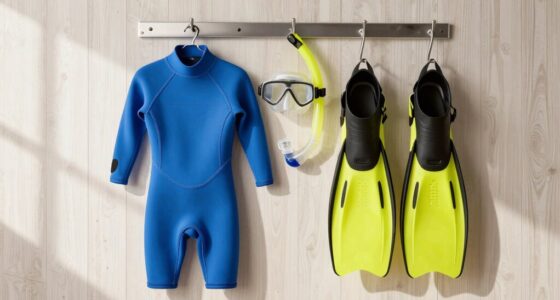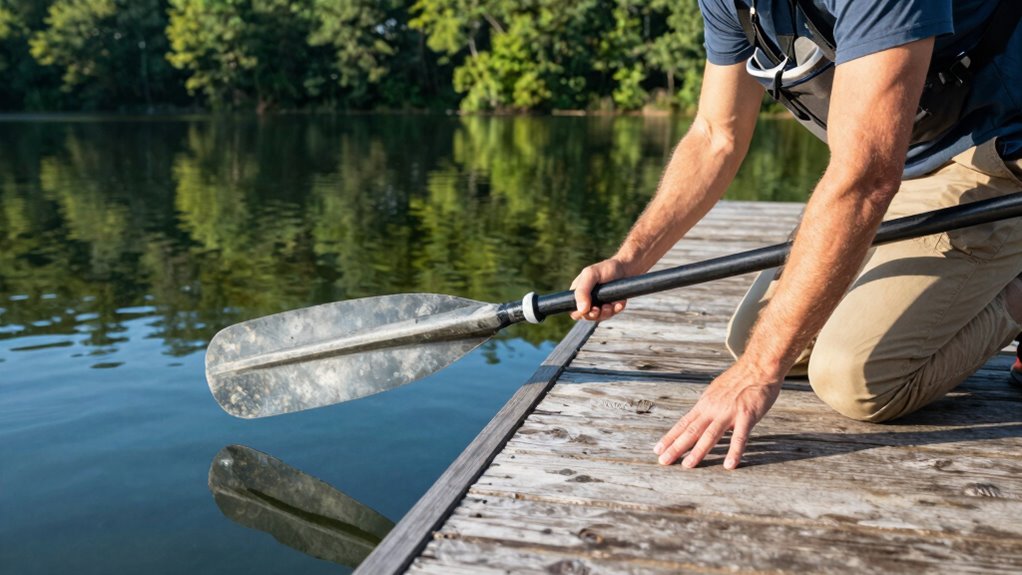

Choosing the right launch spot is more crucial than having the most expensive kayak gear because it guarantees safety and an enjoyable experience. Look for safe, well-maintained access points away from strong currents, boat traffic, or hazards. Consider environmental factors like tide, weather, and wildlife protection. Picking a good spot can prevent accidents and make your trip smoother. Stay with us to discover how to select the best launch site for your adventure.

Get pool and patio gear delivered free with Prime
- Fast, free delivery on millions of items
- Prime Video, Amazon Music and more included
- Member-only deals all year
Key Takeaways
- Prioritize safe, stable, and well-maintained launch sites over costly gear to ensure safer kayaking experiences.
- Choose environmentally responsible locations to minimize ecological impact, regardless of gear quality.
- Consider accessibility, parking, and ease of access at the launch site to enhance overall trip convenience.
- Assess weather, tide, and water conditions to prevent hazards, which are more critical than expensive equipment.
- Select managed sites with safety features and clear access to promote safe and sustainable kayaking.
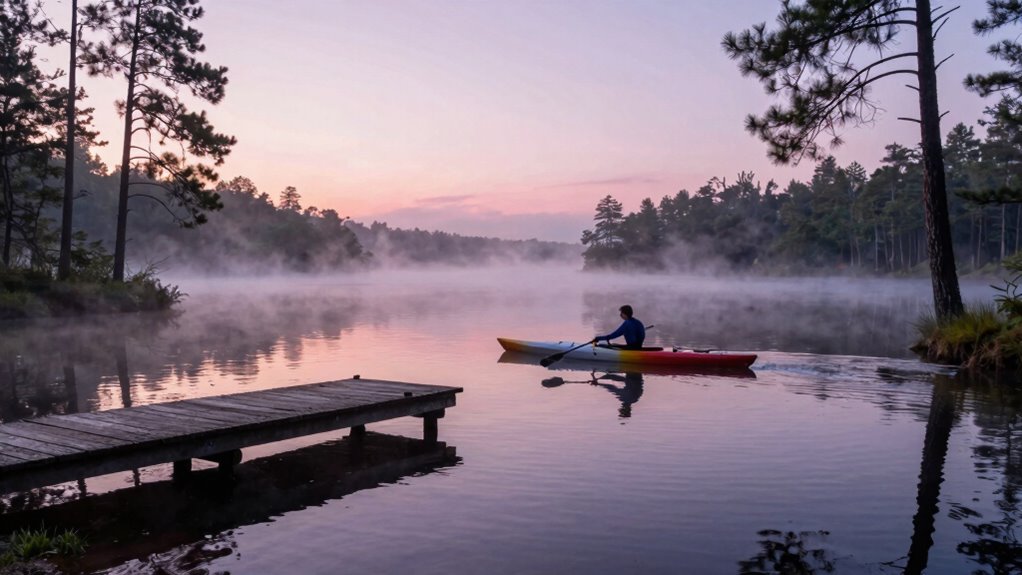
Choosing the right launch spot can make or break your kayaking experience, often more than splurging on expensive gear. It’s not just about convenience or scenery—your choice impacts safety and the environment. Before you paddle out, take a moment to evaluate the site. Are there safe entry and exit points? Is the water calm enough for your skill level? These safety considerations are vital because even the best kayak can become dangerous if you’re launching into rough or unpredictable waters. Look for designated boat ramps or beaches with stable, clean access. Avoid spots with strong currents, heavy boat traffic, or submerged hazards that could tip the balance between an enjoyable trip and a rescue call.
Environmental impact is another essential aspect that’s often overlooked. Your launch site can influence local ecosystems. Choose spots that minimize disturbance to wildlife and vegetation. Avoid launching from areas that are fragile wetlands or nesting grounds—disturbing these habitats can have lasting negative effects. Instead, seek out designated launch points that are managed for conservation or are located in less sensitive zones. Properly disposing of trash and avoiding fuel spills during launch can also reduce your ecological footprint. Remember, your kayak trip shouldn’t come at the expense of the environment; making mindful choices helps preserve these natural settings for others and future adventures. Additionally, environmental considerations are crucial to ensure your kayaking activities do not harm the ecosystems you enjoy exploring.
Furthermore, launch site management plays a crucial role in ensuring a sustainable and safe kayaking experience, so always prioritize well-maintained and regulated locations. In addition to safety considerations and environmental impact, think about practicality. Is the launch site accessible and easy to reach? Does it have enough space for your kayak and gear? Check if there’s ample parking and if the area is well-maintained to prevent accidents. Also, consider the tide and weather conditions. Launching at low tide or during heavy rain can make your trip more challenging or even hazardous. Always check local conditions and advisories before heading out. By choosing a launch spot that aligns with safety protocols and respects the environment, you set yourself up for a smoother, more responsible kayaking experience.
As an affiliate, we earn on qualifying purchases.
Frequently Asked Questions
How Do Weather Conditions Impact Launch Spot Decisions?
Weather conditions directly influence your launch spot decisions by affecting safety and ease. You need to take into account weather patterns, such as rain or storms, which can create dangerous conditions. Wind speed is especially critical; strong winds can make launching and paddling difficult or risky. By monitoring these factors, you guarantee a safer, more enjoyable experience, choosing a launch spot that aligns with current weather conditions rather than risking accidents or frustration.
What Are Common Mistakes When Choosing a Launch Location?
Choosing a launch location is like steering through a maze—you might take wrong turns without careful planning. Common mistakes include ignoring launch site accessibility, which can make setup frustrating, and neglecting equipment storage options, leading to clutter. You might also overlook nearby safety features or underestimate water conditions. To avoid these pitfalls, scout your launch site beforehand, ensuring easy access and secure storage, setting yourself up for a smooth, enjoyable adventure.
How Does Water Traffic Influence Launch Spot Safety?
Water traffic greatly impacts launch safety because busy waterways increase the risk of collisions and accidents. When selecting a launch spot, you should observe water traffic patterns and avoid congested areas, especially during peak times. Recognizing areas with high water traffic helps you stay alert and prevents mishaps. Prioritizing safe launch spots with minimal traffic guarantees a smoother, safer experience, letting you focus on enjoying your adventure without unnecessary danger.
What Local Regulations Should I Consider for Launch Sites?
You should check local regulations before launching, especially wildlife regulations and permit requirements. Coincidentally, many areas have specific rules to protect wildlife, so permits might be needed to access certain sites. Ignoring these can lead to fines or environmental harm. Always research your launch spot’s regulations, and make sure you comply with permits and protected species guidelines to enjoy a safe, responsible adventure.
How Can I Assess Current Water Conditions Before Launching?
You should check the water temperature and wind direction before launching. Water temperature affects your comfort and safety, so use a waterproof thermometer or consult local reports. For wind, observe the current conditions and forecast, as strong or shifting winds can impact your paddling. Monitoring these factors helps you choose the safest, most enjoyable launch site and plan your route effectively.
Conclusion
So, next time you’re planning a kayak trip, remember that choosing the right launch spot can make all the difference—more than splurging on expensive gear. It’s about maximizing your experience and enjoying the water, not just having the fanciest equipment. Isn’t that what adventure is all about? So, focus on finding the perfect spot, and let the journey unfold naturally. After all, the best memories often come from the simplest choices.
Halloween Picks
halloween
As an affiliate, we earn on qualifying purchases.