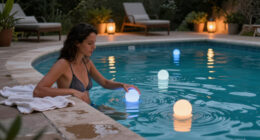

To get comfortable falling into the water, start by wearing proper safety equipment like a well-fitted life jacket to boost confidence. Practice controlled breathing and visualize smooth, relaxed entries to ease anxiety. Focus on body positioning and aim for gentle, controlled water entry rather than stiff plunges. Repeating these steps, along with mental rehearsal, helps build your confidence. Keep safety in mind, and you’ll find becoming comfortable with water entry becomes much easier—more tips await if you continue.

Get pool and patio gear delivered free with Prime
- Fast, free delivery on millions of items
- Prime Video, Amazon Music and more included
- Member-only deals all year
Key Takeaways
- Practice with properly fitted safety gear, like life jackets, to boost confidence and reduce fear during water entry.
- Use deep, controlled breathing and mental visualization to stay calm before and during the fall.
- Focus on relaxed body positioning and smooth entry techniques to improve control and comfort.
- Repeatedly practice water entries to build familiarity and gradually increase confidence.
- Immediately focus on safe breathing and floating post-entry to stay relaxed and prevent panic.

Falling into water can be intimidating, but with the right approach, you can become comfortable and even confident in the process. The key is preparation and understanding how to stay safe while reducing anxiety. First, always prioritize safety equipment. Wearing a properly fitted life jacket or personal flotation device can make a significant difference. It provides buoyancy, helping you stay afloat effortlessly and giving you peace of mind as you practice falling into water. When you know you’re protected by reliable safety gear, your focus shifts from fear to technique, making the experience less challenging.
Next, mastering breathing techniques is essential. When you’re nervous, your instinct might be to hold your breath or panic, which can make the situation worse. Instead, practice deep, controlled breathing before you even get near the water. Inhale slowly through your nose, filling your lungs completely, then exhale steadily through your mouth. This calm, rhythmic breathing helps regulate your heart rate and reduces anxiety. When you actually fall in, remind yourself to keep breathing steadily. Exhaling underwater can help you stay relaxed and prevent water from rushing into your nose or mouth, which can trigger panic. You might find it helpful to practice exhaling underwater during controlled exercises, so you get accustomed to the sensation.
As you prepare to fall, keep your body relaxed and your limbs loose. Tension can make entering the water uncomfortable and harder to control. When you fall, aim for a smooth, controlled entry rather than a stiff or awkward plunge. Think of it as a gentle roll or slide into the water, which minimizes impact and discomfort. Additionally, practicing proper technique can significantly improve your comfort level and safety during water entries. Developing awareness of body positioning helps in executing a safer and more controlled fall, increasing confidence over time. Incorporating mental rehearsal can also help reduce anxiety by visualizing successful entries and calming your nerves before actual practice. It’s also beneficial to understand how safety considerations influence your confidence and safety during water entries. After entering, immediately focus on maintaining your breathing techniques and keeping your safety equipment in place. Float on your back or tread water if needed, giving yourself time to get comfortable. Repeating this process gradually builds your confidence, helping you associate falling into water with safety rather than fear. Additionally, understanding the effects of water entry on your body can help you adapt your technique for more comfortable and controlled falls.
As an affiliate, we earn on qualifying purchases.
Frequently Asked Questions
What Equipment Should I Wear for Water Entry Safety?
You should wear a life jacket and protective gear for water entry safety. A well-fitting life jacket keeps you afloat and visible, making rescue easier if needed. Protective gear like a wetsuit or rash guard can help prevent injuries from rocks or debris. Always check your equipment before entering the water, make sure it’s in good condition, and wear it properly to stay safe and comfortable during water activities.
How Can I Overcome Fear of Water Unexpectedly Falling In?
When fear strikes unexpectedly, it’s like catching a wave you didn’t see coming. You can conquer it by practicing mindfulness to stay present and calm your nerves. Visualization exercises help you imagine yourself confidently falling into the water, reducing panic. Focus on your breathing and remind yourself that falling in is safe and manageable. With consistent practice, you’ll build trust in your ability to stay composed, even when surprises happen.
Are There Specific Techniques for Different Water Depths?
Yes, there are specific techniques for different water depths. For shallow water, focus on depth adaptation by entering feet first to prevent injury, keeping your body stiff and relaxed. In deeper water, you can practice controlled falling, leaning back slightly to distribute impact evenly. Technique variations help you stay safe and comfortable, so adjust your approach based on depth, always staying calm and mindful of your surroundings.
How Do I Stay Calm After Hitting the Water?
To stay calm after hitting the water, focus on your breath control and mental focus. Take slow, deep breaths to steady your nerves and oxygenate your body. Keep your mind centered on calming thoughts, avoiding panic. Remind yourself that you’re safe and can handle the situation. Maintaining awareness of your breath and staying mentally focused helps you conserve energy and regain composure quickly, making it easier to navigate your next move.
What Are Common Mistakes to Avoid When Falling In?
You want to avoid common pitfalls when falling into water, like poor breath control and lack of mental preparedness. Keep calm and breathe steadily to prevent panic. Focus on staying relaxed, so you don’t tense up or hit the water awkwardly. Don’t forget to visualize your fall beforehand—this boosts your confidence and helps you stay composed. Staying mindful and practicing these habits guarantees a smoother, safer entry every time.
Conclusion
So, seize the splash, soften the fall, and savor the sensation. With patience, practice, and a playful perspective, you’ll progress from apprehension to acclamation. Embrace each experience as an essential step toward serenity in the surf, and soon, sinking into the water will feel like a simple, satisfying splash rather than a frightening fall. Keep calm, stay confident, and let your courage carry you comfortably into the cool, calming creek of confidence.
Halloween Picks
halloween
As an affiliate, we earn on qualifying purchases.