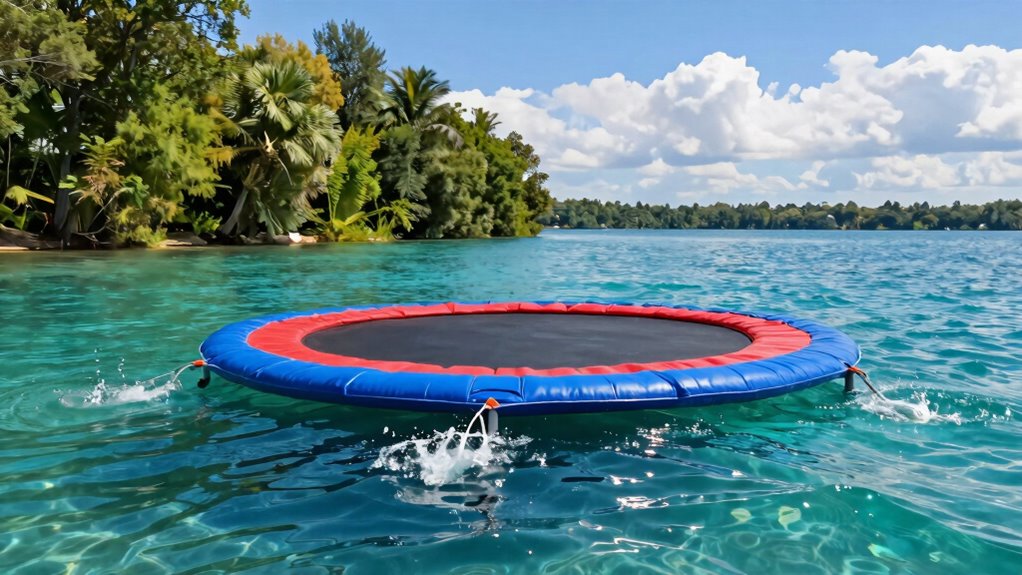

Before adding a water trampoline to your lake, inspect the area for hazards like debris, sharp objects, or shallow spots, making sure the water is at least 8-10 feet deep. Confirm that the setup is secure, with good anchoring to prevent drifting or flipping, and avoid installing during storms or high winds. Regularly check and maintain the equipment, and always supervise users, especially children. Keep safety in mind, and you’ll be well on your way—learn more to guarantee a safe, fun experience.

Get pool and patio gear delivered free — and shop member deals
- Fast, free delivery on millions of items
- Access to Prime Big Deal Days deals on October 6–7
- Prime Video, Amazon Music and more included
Key Takeaways
- Ensure water depth is at least 8-10 feet and free of debris or hazards before installation.
- Securely anchor the trampoline to prevent drifting or flipping during use.
- Conduct regular equipment inspections for tears, corrosion, and valve functionality to maintain safety.
- Avoid setup during storms, high winds, or extreme weather to ensure stability and safety.
- Supervise users, limit jumpers, and prohibit dangerous stunts to prevent accidents.
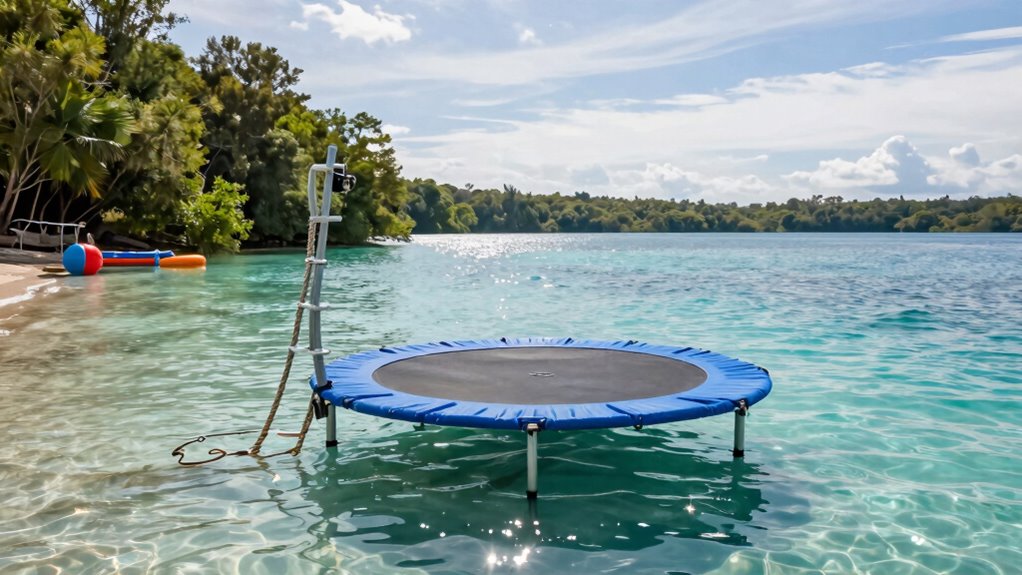
Are you ready to plunge into the fun of setting up a water trampoline? Before you dive in, it’s essential to understand what it takes to do it safely and keep your equipment in top shape. Safety precautions are your first priority. You want everyone to enjoy the water trampoline without risking injury. Start by inspecting the area thoroughly. Make sure the water is free of debris, sharp objects, or anything that could puncture the trampoline or cause harm. Check the depth of the water to confirm it’s suitable for jumping—generally, at least 8 to 10 feet deep is recommended. You also need to consider the weather. Avoid setting up during storms or high winds, as these conditions can make the trampoline unstable or dangerous. Once the setup begins, ensure the anchoring system is secure. Proper anchoring prevents the trampoline from drifting or flipping over, which could lead to accidents. Instruct all users on safe jumping practices. No flips or dangerous stunts unless they’re trained and supervised. Also, limit the number of jumpers at one time to prevent overloading and potential injuries. Keep a close eye on children and inexperienced swimmers, ensuring they’re wearing life jackets if necessary. Regular equipment maintenance is crucial to ensure safety and longevity. It’s vital to keep everything in excellent condition. Regularly inspect the trampoline for any signs of wear and tear, such as tears in the fabric, loose stitching, or corrosion on metal parts. Rinse the trampoline with fresh water after each use or at least weekly, especially if it’s exposed to saltwater, to prevent corrosion. Check the inflation and deflation valves to ensure they’re functioning properly and not leaking air. Keep the inflatable structure clean by removing dirt, algae, and debris, which can cause deterioration over time. Proper preventive care can help identify issues early before they become costly problems. Incorporating routine inspections into your maintenance schedule is also recommended to maintain safety standards. Lubricate moving parts, such as zippers or hinges, if applicable, to keep them operating smoothly. When you notice any damage, repair or replace parts immediately to avoid accidents or further deterioration. Additionally, protective gear such as life jackets should be used by less experienced jumpers to enhance safety. Proper storage during the off-season is equally important. Deflate and clean the trampoline thoroughly, then store it in a dry, sheltered place away from direct sunlight and extreme temperatures. This prevents material degradation and prolongs the lifespan of your water trampoline. To further extend its lifespan, consider weatherproofing measures, like applying protective coatings or covers, especially if the trampoline will be exposed to harsh conditions.
water trampoline anchoring system
As an affiliate, we earn on qualifying purchases.
As an affiliate, we earn on qualifying purchases.
Frequently Asked Questions
How Much Space Is Needed for a Water Trampoline?
You’ll need at least 15 to 20 feet of space around your water trampoline to guarantee safe installation and easy access. Consider installation requirements, like a flat, clear area free of obstacles, and anchoring considerations to keep it stable. Make certain there’s enough room for jumping and safe landings, and avoid areas with heavy boat traffic or strong currents, which could affect stability and safety.
Can Water Trampolines Be Used in Saltwater Lakes?
Ever wondered if your water trampoline can handle saltwater lakes? Yes, it can, but you need to account for saltwater corrosion and marine compatibility. Saltwater’s harsh environment can cause faster wear on materials not designed for it. Look for trampolines specifically built with marine-grade, corrosion-resistant materials. Regular maintenance, like rinsing with freshwater after use, helps prolong your trampoline’s lifespan and guarantees safe, fun use in saltwater lakes.
What Is the Typical Lifespan of a Water Trampoline?
A water trampoline typically lasts 5 to 10 years, depending on water trampoline durability and how well you perform maintenance. To prolong its lifespan, regularly rinse off salt, dirt, and debris, and inspect for tears or wear. Keep it properly anchored, avoid harsh chemicals, and store it during harsh weather. Consistent maintenance guarantees you enjoy your water trampoline safely and for many seasons.
Are Water Trampolines Safe for Children of All Ages?
Imagine your kids bouncing joyfully on a shimmering water trampoline under the bright sun. Water trampoline safety varies; it’s not suitable for children of all ages. Always follow age restrictions and supervise closely. Younger children need extra caution, and you should use safety gear like life jackets. Proper setup and rules help guarantee your kids have fun safely, making your lake day enjoyable without worries.
How Do I Store a Water Trampoline During Winter?
For winter storage, you should carefully remove your water trampoline and store it in a dry, sheltered location like a garage or shed. Before storing, make certain you clean off dirt and debris, then deflate it completely. Take freezing precautions by draining all water and avoiding exposure to freezing temperatures, which can damage the material. Proper winter storage helps extend your trampoline’s lifespan and keeps it safe for next season.
Conclusion
As you bounce and laugh, feel the sun warm your skin and the cool lake water splash around you. Imagine the gentle sway of the trampoline, inviting endless moments of joy and freedom. With everything in place, you’ll create a haven of fun where water ripples beneath your feet and the sky stretches endlessly above. So, take the leap, embrace the splash, and let your lakeside adventure become a cherished memory.
Fall Picks
fall essentials
As an affiliate, we earn on qualifying purchases.