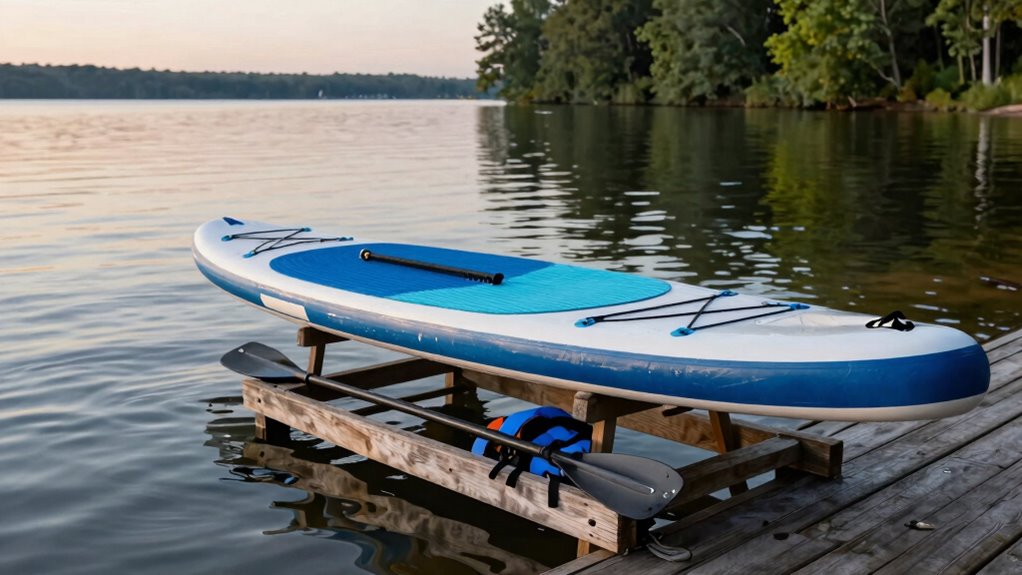

Proper storage is more important for your paddle board than many owners realize because it directly impacts its lifespan and performance. Exposure to sunlight, moisture, and improper support can cause warping, cracks, or discoloration over time. Protecting your board with the right setup keeps it in top shape and ready for your next adventure. If you want to discover how to store your board correctly and avoid costly damage, keep going to learn more.

Get pool and patio gear delivered free with Prime
- Fast, free delivery on millions of items
- Prime Video, Amazon Music and more included
- Member-only deals all year
Key Takeaways
- Proper storage prevents warping, cracks, and material degradation, extending the paddle board’s lifespan.
- Correct storage conditions protect the board from sun, heat, moisture, and environmental damage.
- Organized storage reduces risk of scratches, dents, and accidental damage to both the board and accessories.
- Regular inspections during storage help identify and address potential issues early, maintaining performance.
- Using protective covers and secure racks ensures safety and preserves the board’s structural integrity over time.
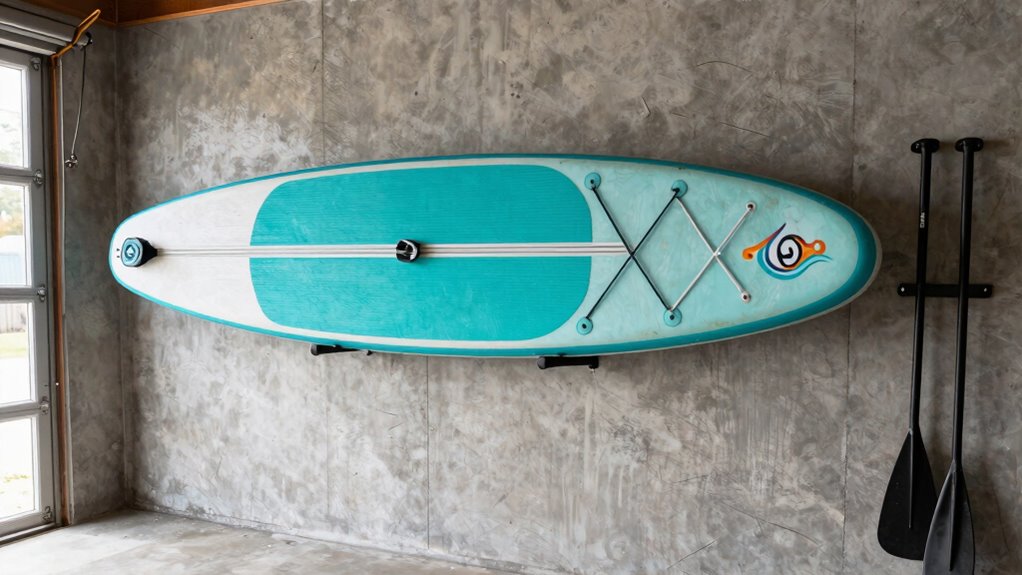
Storing your paddle board properly is vital to keep it in top shape and extend its lifespan. When you think about paddle board accessories, you might focus on things like paddles, leashes, or fins, but proper storage is just as important. Neglecting how you store your board can lead to warping, cracks, or other damage that diminishes its performance and shortens its lifespan. Taking a few simple steps to guarantee correct storage can save you money and hassle in the long run.
First, always avoid leaving your paddle board in direct sunlight or exposing it to extreme temperatures. UV rays can weaken the material, causing discoloration or cracking over time. If you don’t have a dedicated storage space, consider investing in a paddle board rack or wall mount. These accessories help keep your board off the ground and prevent accidental damage from foot traffic or falling objects. When installing racks, ensure they are sturdy and secure, following the manufacturer’s instructions. This is a key storage safety tip that prevents your board from falling or warping. Additionally, understanding the importance of proper storage conditions can greatly impact the longevity of your paddle board. Proper climate control is essential to prevent heat or moisture from damaging your board during long-term storage. Proper ventilation can also help reduce the risk of mold and mildew buildup, especially in humid environments. Incorporating environmental factors into your storage plan is crucial for maintaining your board’s integrity over time. Regular maintenance, such as inspecting the board for any signs of damage, can further prolong its life and ensure safe use.
Avoid direct sunlight and extreme temperatures to prevent damage to your paddle board.
Another vital aspect of storage safety tips involves cleaning and drying your paddle board thoroughly before putting it away. Saltwater, sand, and dirt can wear down the surface if left on for too long. Rinse your board with fresh water, wipe it down with a soft cloth, and let it dry completely. This prevents mold, mildew, and deterioration of the deck and hull. Be sure to store your paddle board in a cool, shaded area to avoid heat damage. If you’re planning to store the board for an extended period, consider loosening the fins slightly to avoid stressing the fin box. Regular inspections of your storage setup can also help identify potential issues before they cause damage, ensuring your board remains in pristine condition. Additionally, using protective padding or covers can help shield your board from accidental scratches or impacts during storage.
When it comes to paddle board accessories, make sure they are stored separately from the board if possible. Paddles and leashes can be hung on hooks or stored in a designated bin, keeping everything organized and preventing accidental scratches or dents. If you use a bag for your paddle board, ensure it’s well-ventilated to prevent moisture buildup. Proper storage safety tips also include keeping your board away from sharp objects and heavy items that could cause punctures or dents. Regularly inspecting your storage area for potential hazards can further ensure your paddle board remains in pristine condition. Proper storage practices are essential for maintaining your investment and ensuring your paddle board is ready for your next adventure.
As an affiliate, we earn on qualifying purchases.
Frequently Asked Questions
How Often Should I Clean My Paddle Board Before Storage?
You should clean your paddle board after each use, especially if you’ve been in saltwater or dirty water. Regular cleaning prevents damage and keeps it in top condition. For storage tips, make sure it’s completely dry before putting it away to avoid mold and warping. Cleaning frequency depends on usage, but a quick rinse after every session is ideal. Proper maintenance helps extend your paddle board’s lifespan and performance.
What Tools Are Best for Securing My Paddle Board During Storage?
Think of securing your paddle board like locking away a treasure chest—tight and reliable. Use sturdy straps or bungee cords to anchor it during storage, ensuring it stays put and safe. Foam blocks or wall mounts also work wonders for board maintenance and storage safety, preventing warping or damage. Invest in quality, weather-resistant fasteners to keep your board protected from the elements and accidental falls, preserving its condition for future adventures.
Can Improper Storage Damage the Paddle Board’s Material?
Yes, improper storage can damage your paddle board’s material. When you leave it exposed to direct sunlight, UV rays cause material degradation over time, weakening the board. Without proper UV protection, the board’s surface can crack or fade, reducing its lifespan. Always store your paddle board in a shaded, cool place and use UV-protective covers or wax to shield it from harmful rays, ensuring longevity and peak performance.
How Do Temperature Changes Affect Paddle Board Storage?
If you leave your paddle board in a hot car or exposed to fluctuating temperatures, it can suffer UV degradation and moisture buildup. For example, a paddle board stored in direct sunlight during summer may warp or fade over time. Sudden temperature changes cause the material to expand and contract, weakening the structure, leading to potential cracks or delamination. Proper storage in a cool, shaded spot helps prevent these issues.
Is It Better to Store a Paddle Board Indoors or Outdoors?
Storing your paddle board indoors is better for board maintenance and protecting it from the elements. An indoor storage location offers stable temperatures, reducing the risk of warping or damage caused by weather changes. Outdoors, your board faces UV rays, moisture, and temperature fluctuations, which can degrade the material over time. Keep it in a cool, dry place indoors for ideal longevity and to maintain its condition.
Conclusion
Think of your paddle board as a cherished friend—worthy of a cozy, protected home. Proper storage isn’t just about safety; it’s about preserving your adventures and keeping your water companion vibrant for years to come. When you give it the right space, you’re nurturing its spirit and ensuring every glide feels fresh and exciting. So, treat your board like a treasure—because with the right care, every splash will be a new chapter in your aquatic story.
Halloween Picks
halloween
As an affiliate, we earn on qualifying purchases.