
To build water endurance without overtraining, focus on pacing yourself with steady, comfortable efforts and breathing techniques that conserve energy. Incorporate varied training methods to challenge muscles while avoiding burnout, and always listen to your body’s signals to prevent fatigue. Keep workouts consistent but short, and prioritize proper recovery and hydration. By balancing effort and rest, you’ll see progress safely. Keep exploring these strategies to reveal even better endurance over time.

Get pool and patio gear delivered free with Prime
- Fast, free delivery on millions of items
- Prime Video, Amazon Music and more included
- Member-only deals all year
Key Takeaways
- Focus on steady pacing and gradual distance increases to prevent overexertion.
- Incorporate varied drills and strokes to challenge muscles without excessive fatigue.
- Prioritize proper breathing techniques to maintain energy and reduce stress.
- Listen to body signals and adjust training intensity to avoid overtraining.
- Ensure regular rest and recovery to support endurance development and prevent injury.
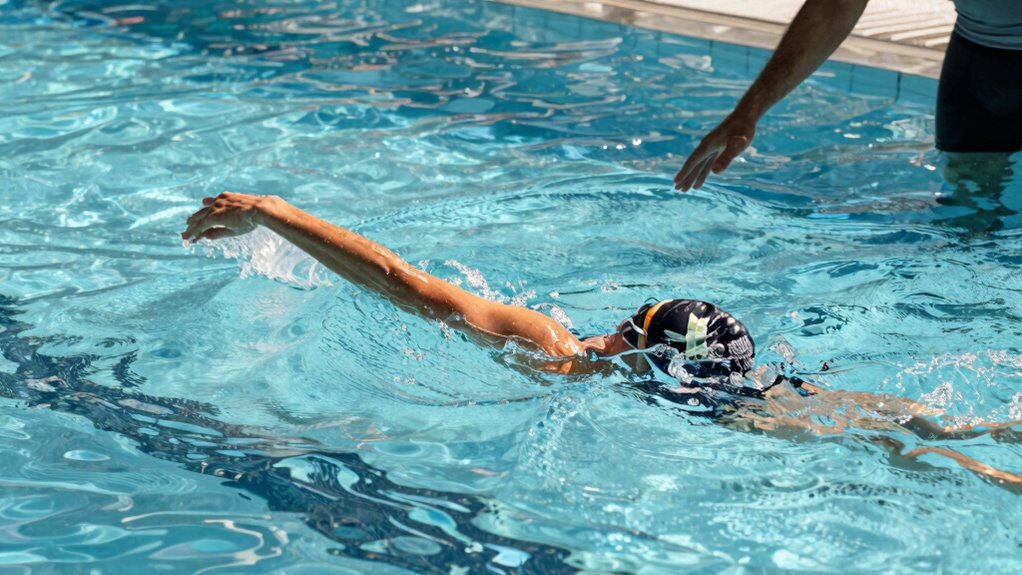
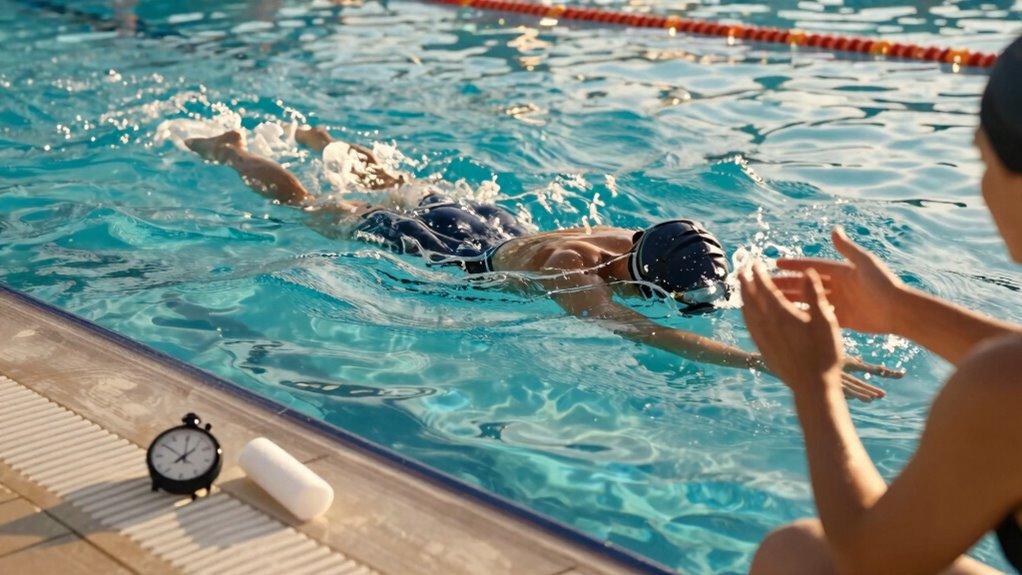
Building water endurance is essential if you want to improve your swimming stamina and perform better in the pool or open water. One of the most critical skills to develop along the way is breath control. When you focus on breathing efficiently, you conserve energy and reduce fatigue, allowing you to swim longer without overexerting yourself. Practice controlled breathing during your workouts by inhaling deeply through your nose or mouth, then exhaling slowly and completely underwater. This not only helps you stay relaxed but also guarantees a steady oxygen supply, which is indispensable for sustaining endurance over extended periods. As you become more comfortable with breath control, you’ll notice your ability to maintain a consistent pace improves, and you’ll be less likely to gasp or hyperventilate under pressure. Developing proper breathing techniques is fundamental to enhancing overall water endurance and ensuring you can sustain effort over longer distances. Alongside breath control, mastering pacing strategies plays a significant role in building water endurance without risking burnout. Instead of swimming at maximum effort every session, learn to pace yourself during each workout. Start with a comfortable, sustainable speed that allows you to swim longer distances without feeling drained. Over time, gradually increase your intensity or distance, but always listen to your body. Pacing strategies help you distribute your energy more evenly across your swim, preventing early fatigue. You might find it helpful to set time or distance goals for each session, focusing on maintaining a steady rhythm rather than pushing for speed. This approach ensures you build endurance gradually and avoid overtraining, which can lead to injuries or setbacks. Incorporating varied training methods, such as different strokes or drills, can also enhance your overall water endurance by challenging your muscles in new ways. Additionally, paying attention to your body’s signals can help you prevent overexertion and optimize recovery. Recognizing the importance of proper hydration can further support your training and recovery efforts. Remember, consistency is key. You don’t need to do long sessions every day—short, focused workouts with proper pacing and breathing techniques are more beneficial than sporadic, exhaustive efforts. Finally, pay attention to your body’s signals. If you’re feeling overly fatigued or experiencing discomfort, back off and allow your body to recover. Overtraining hampers progress and increases injury risk. By integrating breath control, pacing strategies, and attentive recovery, you’ll build water endurance steadily and safely, making every swim more efficient and enjoyable.
As an affiliate, we earn on qualifying purchases.
Frequently Asked Questions
How Do I Prevent Dehydration During Long Swims?
To prevent dehydration during long swims, focus on proper hydration strategies before and during your swim. Drink fluids with electrolytes to maintain electrolyte balance, which helps prevent cramping and fatigue. Consider carrying a waterproof hydration system or consuming electrolyte drinks at intervals if possible. Pay attention to your body’s signals, and don’t wait until you’re thirsty to hydrate, as early and consistent hydration keeps you energized and safe throughout your swim.
What Are Signs of Overtraining in Water?
About 30% of athletes experience overtraining symptoms like muscle fatigue and mental fatigue. If you notice persistent soreness, decreased performance, irritability, or trouble concentrating, you’re likely overtraining. You might also feel unusually tired during swims or lose motivation. Pay attention to these signs, and provide your body adequate rest. Recognizing early symptoms helps prevent injury and ensures you build water endurance safely and effectively.
How Should I Incorporate Rest Days Into My Routine?
You should incorporate rest days into your routine through effective rest scheduling, ideally taking at least one or two full rest days each week. Use recovery strategies like gentle stretching, hydration, and proper nutrition on rest days to promote muscle repair and prevent overtraining. Listening to your body is key—if you feel fatigued or sore, add extra rest days to avoid injury and support steady water endurance progress.
What Nutrition Is Best for Water Endurance Training?
You might think hydration strategies are enough, but nutrient timing plays a vital role in water endurance training. To optimize performance, focus on consuming carbs and electrolytes before and after your sessions to replenish energy and prevent cramps. Hydrate consistently, but don’t forget to include a balanced intake of proteins and healthy fats to support recovery. Proper nutrition guarantees your body stays fueled, helping you build endurance without risking overtraining.
How Can I Improve My Breathing Technique Underwater?
To improve your underwater breathing technique, focus on breathing drills and diaphragmatic breathing. Practice slow, deep breaths from your diaphragm to increase lung capacity and control. Incorporate exercises like lying on your back and inhaling deeply through your nose, then exhaling slowly through your mouth. Regularly practicing these techniques helps you stay calm, conserve oxygen, and breathe more efficiently during water activities, boosting your endurance over time.
Conclusion
Building water endurance is like planting seeds in a gentle stream—you must nurture it steadily and patiently. Keep your training consistent, listen to your body, and don’t rush the current. Over time, your strength will blossom like a vibrant coral reef, resilient and thriving beneath the waves. Stay committed, and soon you’ll glide through water with effortless grace, transforming each swim into a fluid dance—an unstoppable force flowing seamlessly with the rhythm of the sea.
Halloween Picks
halloween
As an affiliate, we earn on qualifying purchases.