
Understanding the difference between static and dynamic weight limits is key to safe rooftop tent use. Static limits refer to the maximum weight your roof rack can handle when stationary, while dynamic limits account for movement and vibrations during travel, usually being lower. Always check your vehicle’s and rack’s specified capacities, and stay within these limits for safety. Continuing will reveal how to make certain your setup remains secure and balanced on any trip.
Key Takeaways
- Static weight limit is the maximum the roof rack can hold when stationary; dynamic limit is lower, accounting for movement during travel.
- Always verify and adhere to the lower dynamic weight limit to ensure safe rooftop tent installation.
- Dynamic limits consider vibrations, acceleration, and braking, making them critical for safe transit.
- Check vehicle manual and roof rack labels for specific static and dynamic capacity ratings.
- Proper weight distribution and secure mounting help stay within safe dynamic weight limits during travel.
Why Are Rooftop Tent Weight Limits Important for Safety?
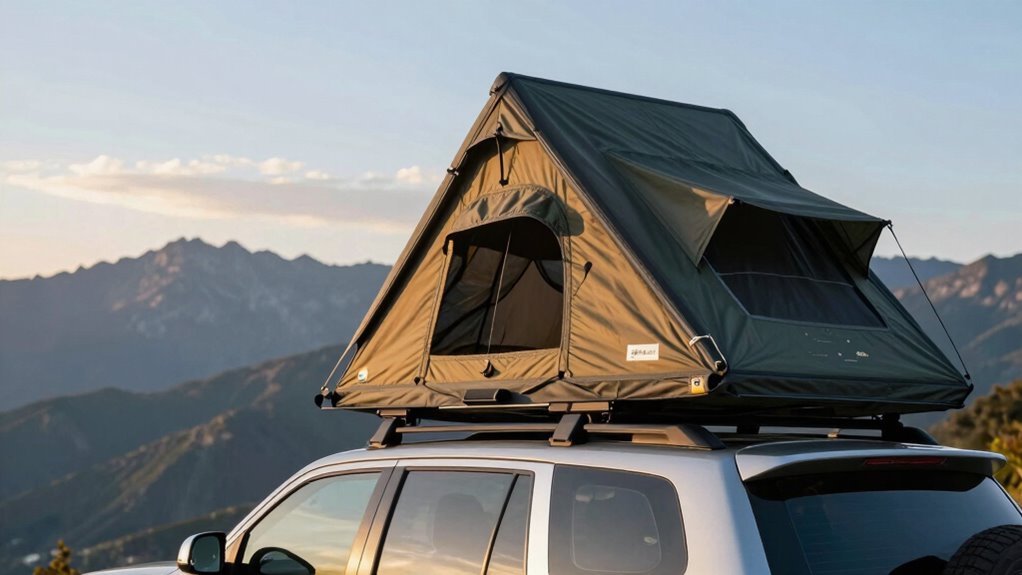
Rooftop tent weight limits are essential for safety because exceeding them can compromise your vehicle’s stability and increase the risk of accidents. Proper weight distribution is critical, as uneven loads can cause imbalance while driving or parking. When selecting a tent, pay close attention to the material strength of both the tent and your vehicle’s roof rack. Stronger materials allow for safer weight limits and reduce the risk of structural failure. Overloading can lead to damage not only to your vehicle but also to the tent itself. Maintaining within the recommended weight limits guarantees your vehicle remains steady, especially during turns or sudden stops. Always consider both the weight of the tent and how it’s distributed to keep your journey safe and smooth.
What Are Static and Dynamic Weight Limits on Roof Racks?
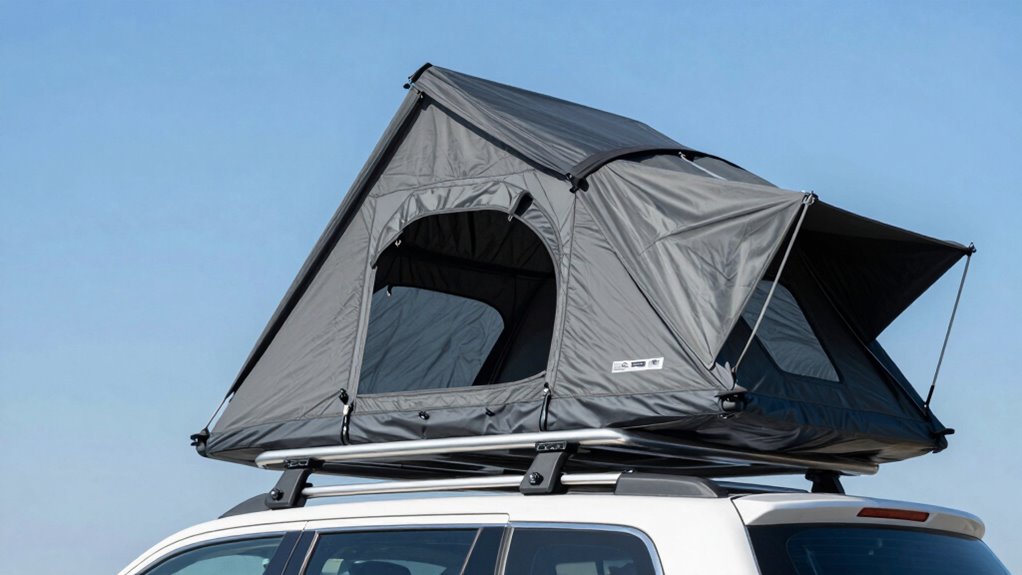
Understanding the difference between static and dynamic weight limits on roof racks helps you keep your vehicle safe while carrying a rooftop tent. Static weight limit refers to the maximum weight your roof rack can handle when the vehicle is stationary, ensuring roof rack durability. Dynamic weight limit, however, accounts for movement and vibrations during travel, which can reduce the safe load. To manage this effectively:
- Always respect the lower dynamic limit for safety during driving.
- Distribute weight evenly to maintain roof rack durability.
- Avoid exceeding the static limit when parked.
- Remember that weight shifts during transit, affecting the overall load.
Knowing these limits helps prevent damage to your vehicle and ensures your rooftop tent remains secure on the road. Proper weight distribution is key to maintaining the integrity of your roof rack.
How Can I Find Out My Roof Rack’s Weight Capacity?

Start by checking the label on your roof rack, which usually lists its weight capacity. If the label isn’t visible, refer to your vehicle’s manual for this information. Knowing these details guarantees you stay within safe weight limits for your rooftop setup.
Check Roof Rack Label
To determine your roof rack’s weight capacity, the most reliable method is to check the label or sticker usually found on the rack itself or nearby. The roof rack label clearly states the maximum weight capacity, which you should never surpass. Here’s what to do:
- Locate the sticker or label on the side or underside of your roof rack.
- Read the specific number listed as the weight capacity.
- Ensure this number matches your vehicle’s roof weight limits.
- Remember, the label is the authoritative source for safe loading.
Always rely on the roof rack label to confirm the weight capacity before adding any gear or rooftop tent. This ensures safety and prevents damage to your vehicle’s roof or rack.
Consult Vehicle Manual
Your vehicle’s manual is the most authoritative source for determining your roof rack’s weight capacity. It provides specific details tailored to your make and model, ensuring you don’t exceed safe limits. Checking this manual is a crucial step in vehicle maintenance, helping prevent damage and ensuring longevity. Knowing your roof rack’s capacity also enhances emergency preparedness, allowing you to pack safely and avoid accidents on the road. Manufacturers often list maximum static and dynamic weight limits, which are essential for safe rooftop tent setup. Always refer to your vehicle manual before installing or loading your roof rack, especially if you plan to carry heavy gear or a rooftop tent. This simple step safeguards your vehicle, your cargo, and your safety.
Tips for Staying Under Your Roof Rack’s Weight Limits
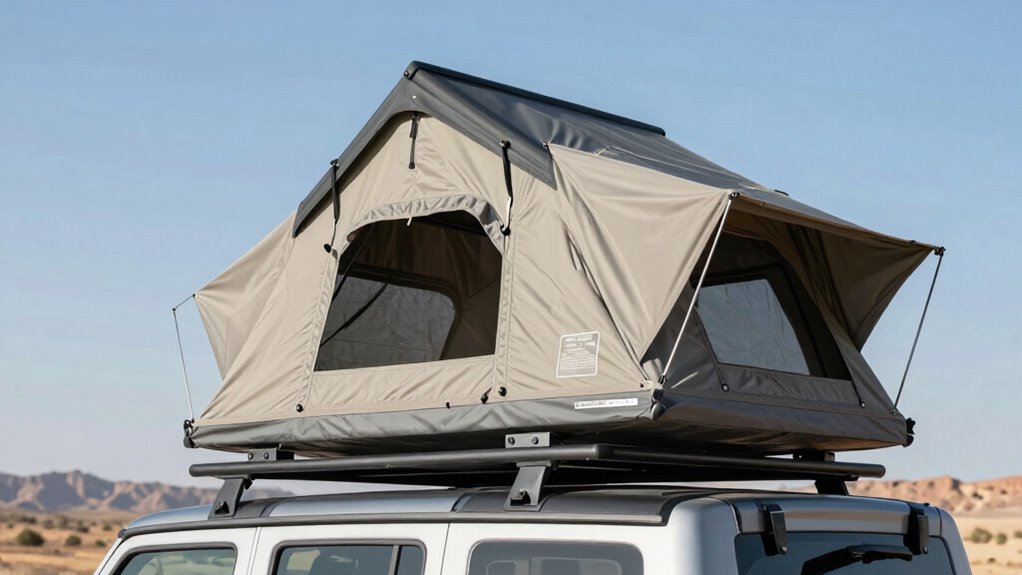
Keeping your rooftop tent within your roof rack’s weight limits is essential for safety and vehicle performance. To stay under those limits, consider these tips:
- Check roof rack materials: Opt for durable materials like aluminum or reinforced steel, which support heavier loads without compromise.
- Assess tent fabric durability: Choose a tent with strong, tear-resistant fabric to prevent damage under weight stress.
- Distribute weight evenly: Spread gear across the rack to avoid concentrated stress on one area.
- Use proper mounting hardware: Secure your tent with high-quality, compatible mounts to prevent shifting and uneven weight distribution.
Staying mindful of these factors helps ensure safety, prolongs equipment life, and keeps your vehicle performing at its best.
What Happens if I Overload My Roof Rack or Tent?
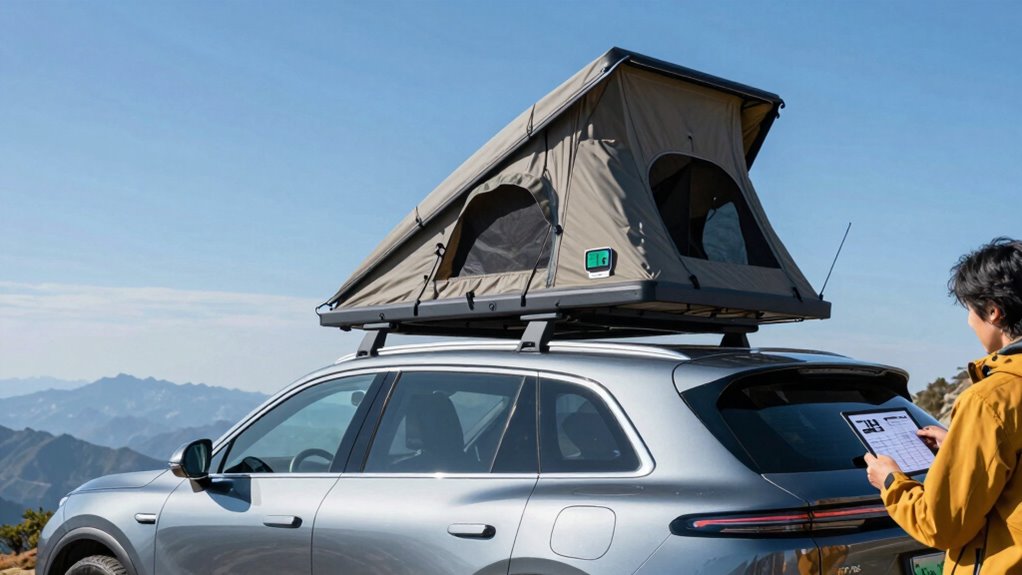
Overloading your roof rack or tent can lead to serious consequences that compromise both safety and vehicle integrity. When you exceed weight limits, overloading consequences include increased wear on your suspension, reduced handling, and a higher risk of accidents. Improper weight distribution worsens these effects, causing instability and uneven strain on your vehicle’s frame. Overloading can also damage roof rack components, leading to costly repairs or failures while driving. Additionally, your vehicle’s braking distance increases, making stops less safe. Ignoring weight limits may result in fines or penalties depending on local laws. To avoid these issues, always stay within recommended weight capacities and ensure proper weight distribution across your roof rack. This keeps your vehicle safe, stable, and ready for the road.
Are There Myths About Roof Rack and Tent Weight Limits?

Many people believe there are strict, universally fixed weight limits for roof racks and tents, but this is a common misconception. Myth busting reveals that weight limits vary based on your vehicle, rack design, and installation. Here are four common weight misconceptions to clear up:
- All roof racks have the same weight capacity.
- The maximum weight listed is the absolute limit.
- Heavier tents always mean exceeding safe limits.
- Static weight limits apply equally during dynamic driving.
Understanding these myths helps you avoid unnecessary fear and optimize your gear choices. Instead of fixed numbers, focus on manufacturer guidelines and your vehicle’s capabilities. Knowing the nuances prevents overloading and ensures safe, enjoyable trips without being misled by weight misconceptions.
How to Choose the Right Roof Rack and Tent for Your Vehicle and Travel Style
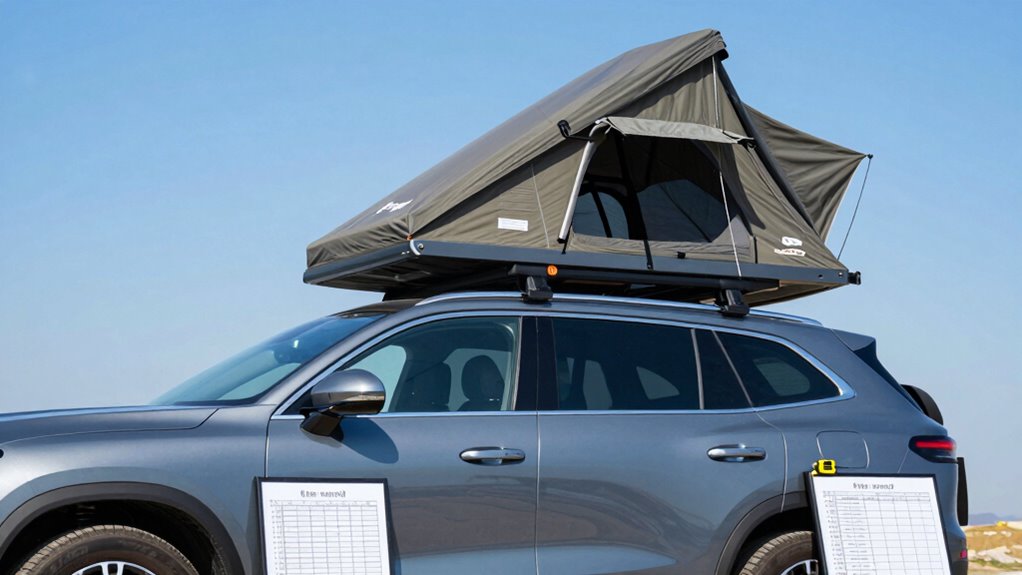
To select the appropriate roof rack and tent, you need to start with your vehicle’s compatibility and weight capacity. Consider your travel style—whether you prefer quick trips or extended adventures—and how that affects your gear choices. Matching your gear to your vehicle and plans ensures safe, enjoyable trips without overloading.
Vehicle Compatibility Checks
Choosing the right roof rack and rooftop tent starts with understanding your vehicle’s compatibility. First, check your vehicle’s roof type—factory rails, fixed points, or naked. Second, verify the roof rack weight limit to ensure it can support the tent and gear. Third, confirm that the roof rack installation is compatible with your vehicle’s make and model. Fourth, consider the overall weight capacity, including dynamic and static loads, to prevent overloading. Always consult your vehicle’s owner manual or manufacturer specifications. Proper vehicle compatibility guarantees safe, secure mounting and peak performance. Taking these steps helps you select a roof rack and tent that fit seamlessly, giving you peace of mind on your adventures.
Travel Style Considerations
Your travel style plays a crucial role in selecting the right roof rack and rooftop tent, as it influences how much gear you’ll carry and how often you’ll set up camp. If you prefer quick getaways and minimal gear, a lightweight tent with a sleek roof rack that complements your vehicle aesthetics is ideal. For extended trips with more gear, consider a sturdy rack that can support larger tents, prioritizing camping comfort. Your vehicle’s appearance matters too, so choose a rack that blends seamlessly with your vehicle’s design. If you enjoy frequent, spontaneous stops, a compact setup makes sense. Conversely, long-term travelers may opt for a more robust system. Tailoring your gear to your travel style ensures a comfortable, efficient, and visually appealing adventure.
Frequently Asked Questions
Can Weight Distribution Affect Roof Rack Safety Beyond Total Limits?
Yes, weight distribution definitely affects roof rack safety beyond just total limits. You should pay attention to load placement, ensuring weight is evenly spread to prevent stress on specific rack areas. Additionally, rack flexibility can impact stability—an uneven load can cause sway or damage. Properly distributing weight and considering rack flexibility helps maintain safety, prolongs gear lifespan, and keeps your vehicle stable during travel.
How Does Wind Resistance Impact the Safe Weight Limits of Rooftop Tents?
Wind resistance can turn your rooftop tent into a sail, making aerodynamic drag and wind pressure critical factors. As wind speeds increase, these forces amplify, risking instability or damage if you’re near weight limits. You should reduce load when facing strong gusts to prevent overloading your rack. Always consider wind conditions when planning trips—it’s like adding an invisible hand that can shift your safety balance.
Are Lightweight Materials More Prone to Structural Failure Under Load?
Lightweight materials can be more prone to structural failure under load if their durability isn’t designed to handle stress. While they often offer a higher load capacity relative to weight, they may lack the robustness of heavier materials. You should consider both material durability and load capacity, ensuring the tent’s construction can withstand your typical use. Proper engineering and quality materials are key to preventing failure.
What Are the Signs of Overloading a Roof Rack During Travel?
If you overload your roof rack, you’ll notice load sensor alerts flashing and uneven load indicators showing imbalance. You might feel increased wind drag, hear unusual noises, or notice decreased handling and braking responsiveness. These signs warn you that the weight distribution is unsafe, risking damage to your vehicle or rack. Always check these alerts and indicators, and verify your load stays within recommended limits to keep your trip safe.
Do Different Vehicle Types Have Varying Weight Limit Standards?
Yes, different vehicle types have varying weight limit standards. You should always verify your vehicle specifications and manufacturer guidelines to determine the maximum roof load. Larger SUVs and trucks often support more weight than smaller cars. Ignoring these limits can compromise safety and damage the vehicle. Always stay within the recommended weight limits to ensure safe travel and avoid potential mechanical issues.
Conclusion
Understanding weight limits keeps you safe, protects your gear, and preserves your vehicle. Knowing static and dynamic limits helps you pack smarter, avoid surprises, and enjoy stress-free adventures. Stay informed, stay within limits, and stay confident in your choices. By respecting weight capacities, you ensure safety, prolong equipment life, and maximize your travel enjoyment. Remember, safety starts with awareness, responsibility, and smart packing—so load wisely, travel happily, and explore freely.