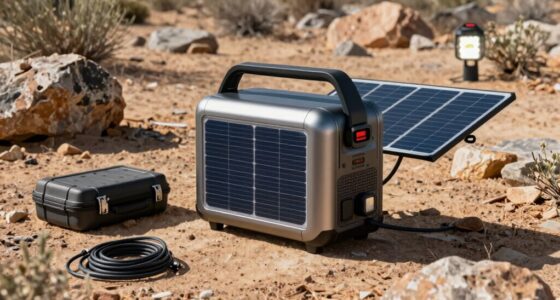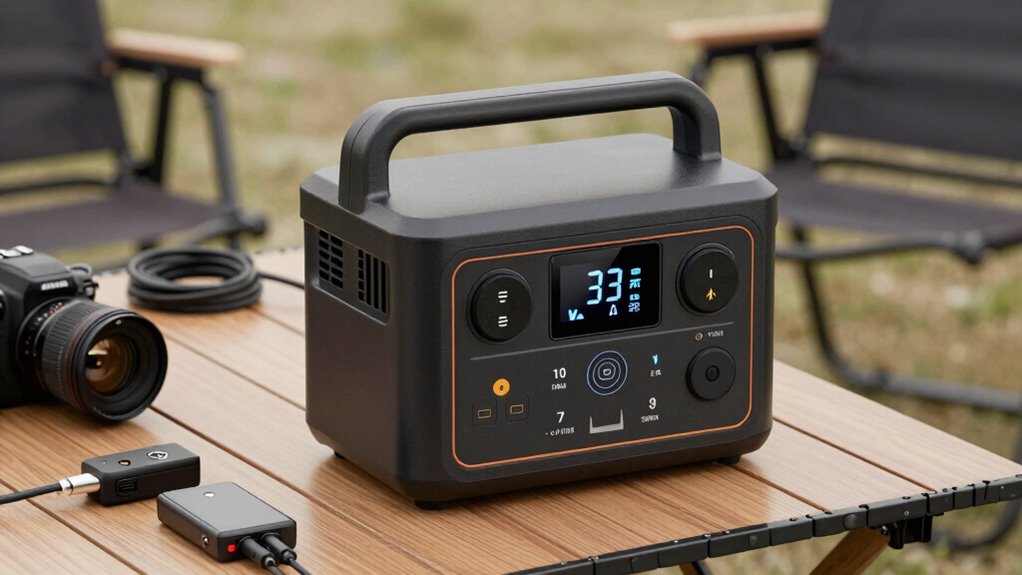

To avoid tripping your power station’s inverter, you need to add up the wattage of all your devices to make certain it stays below the inverter’s capacity. Check each device’s wattage (usually on the label) and factor in surge wattage for startup. Keep the total under your inverter’s limit, and don’t run high-wattage items together. Want to learn a simple method to keep your power use safe and efficient? Continue for detailed tips.

Get pool and patio gear delivered free with Prime
- Fast, free delivery on millions of items
- Prime Video, Amazon Music and more included
- Member-only deals all year
Key Takeaways
- Always check your devices’ wattage ratings and add them together to determine total power needs.
- Use an inverter with capacity higher than your combined device wattage to prevent overloads.
- Consider surge wattage of devices, especially appliances with motors or compressors, to avoid tripping the inverter.
- Balance device wattage and inverter capacity to support all devices simultaneously without exceeding limits.
- Regularly monitor power consumption during use to ensure total load stays within the inverter’s safe operating range.
portable power station with high inverter capacity
As an affiliate, we earn on qualifying purchases.
As an affiliate, we earn on qualifying purchases.
Understanding Wattage and Power Station Basics

To make the most of a portable power station, you need to understand wattage and its role in power capacity. Wattage determines how much energy your devices draw and helps you match your power needs with the station’s capabilities. When considering solar integration, understanding wattage becomes even more critical, as it influences how efficiently solar panels charge the station’s batteries. Different battery chemistries, like lithium-ion or lithium iron phosphate, impact how much wattage the station can store and deliver safely. Knowing these basics guarantees you select a power station that fits your energy demands without overloading the inverter or risking damage. By grasping wattage, you’ll better understand how your power station functions and how to optimize its use for various devices and charging sources.
How to Calculate Your Device’s Wattage Needs
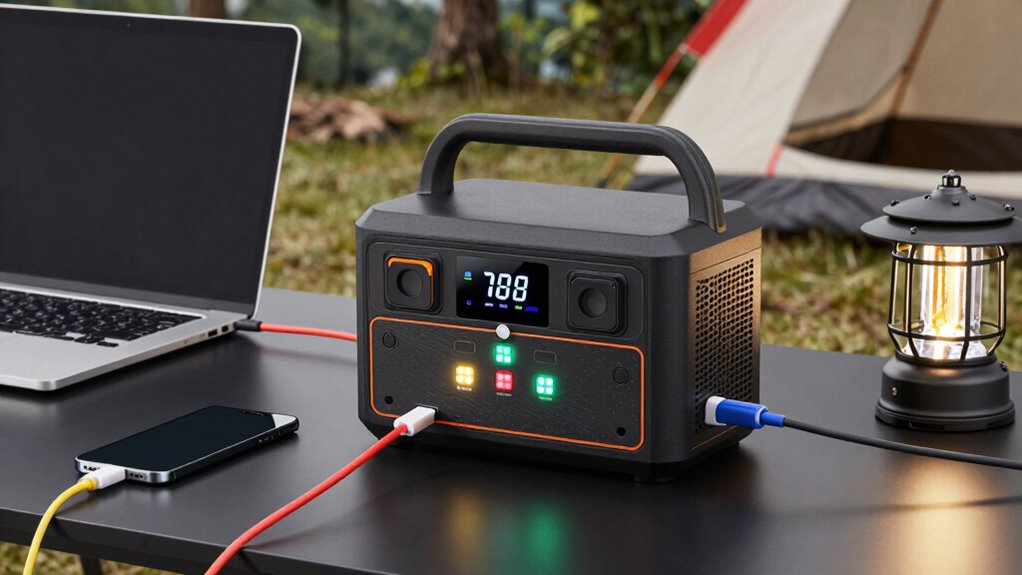
Understanding your device’s wattage needs is key to selecting a portable power station that can handle your energy demands. To do this, check the label or manual for wattage or amperage and voltage ratings. Multiply the current by voltage to find the wattage. Consider how long you need the device to run, which affects battery life. Also, note the outlet types your device uses, such as AC, USB, or 12V. Here’s a quick reference:
| Device Type | Power Consumption | Outlet Type |
|---|---|---|
| Laptop | 50-100W | AC |
| Smartphone | 5-20W | USB |
| Mini Fridge | 100-200W | AC |
| Drone | 50-150W | DC/12V |
Calculate total wattage to guarantee your power station can support all devices simultaneously.
Choosing the Right Power Station for Your Devices
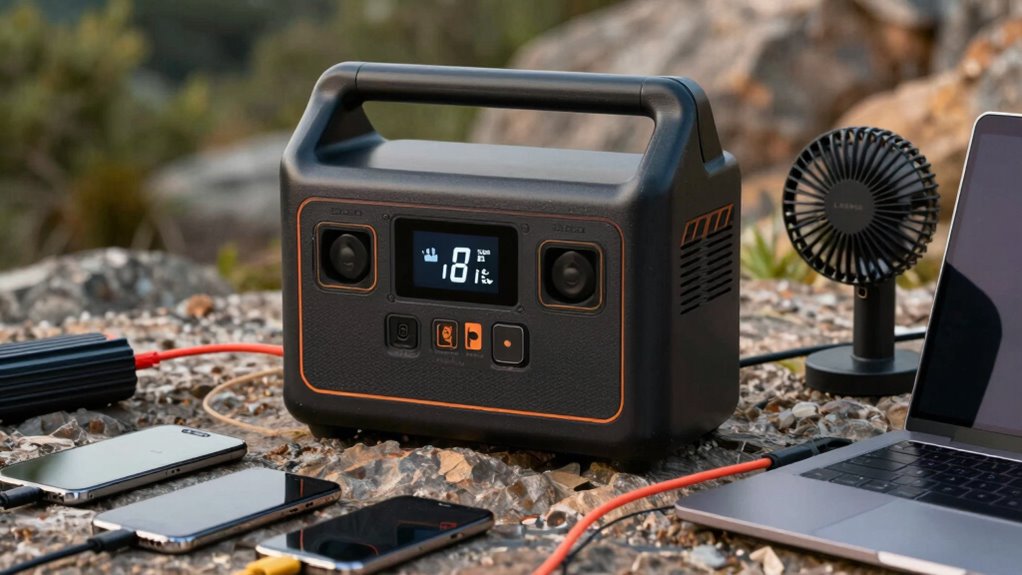
When selecting a power station, you need to find the right balance between size and capacity to match your needs. Make sure your devices are compatible and that the station can supply enough power without being too bulky. Consider your specific devices’ power requirements to choose the most effective and portable option.
Size and Capacity Balance
Choosing the right power station depends on balancing size and capacity to meet your device needs without unnecessary bulk. You want enough capacity to ensure good battery life, so your devices stay powered longer, but not so large that portability becomes a hassle. Consider how often you’ll need to carry the station—smaller units are easier to transport but may have limited capacity. If you plan to run multiple devices or longer trips, opt for a slightly bigger model with higher capacity. Think about your portability considerations—lightweight and compact units are ideal for quick outings, while bulkier options suit extended use. Finding the right size means matching your device demands with a station that’s manageable to carry and still provides reliable power.
Device Compatibility and Power Needs
Selecting a power station that matches your device compatibility and power needs guarantees you won’t be left powerless when you need it most. Start by checking the wattage requirements of your devices and ensure the station can handle their combined load. Consider solar compatibility if you plan to recharge using solar panels—this enhances convenience and sustainability. Pay attention to device efficiency, as some gadgets draw more power than necessary, impacting your station’s runtime. Choose a power station with outlets compatible with your devices’ plugs and voltage needs. By understanding your device power needs and ensuring compatibility, you’ll prevent tripping the inverter or overloading the system. This tailored approach guarantees reliable power, whether for camping, emergencies, or off-grid use.
How Inverter Capacity and Power Surges Affect Safety
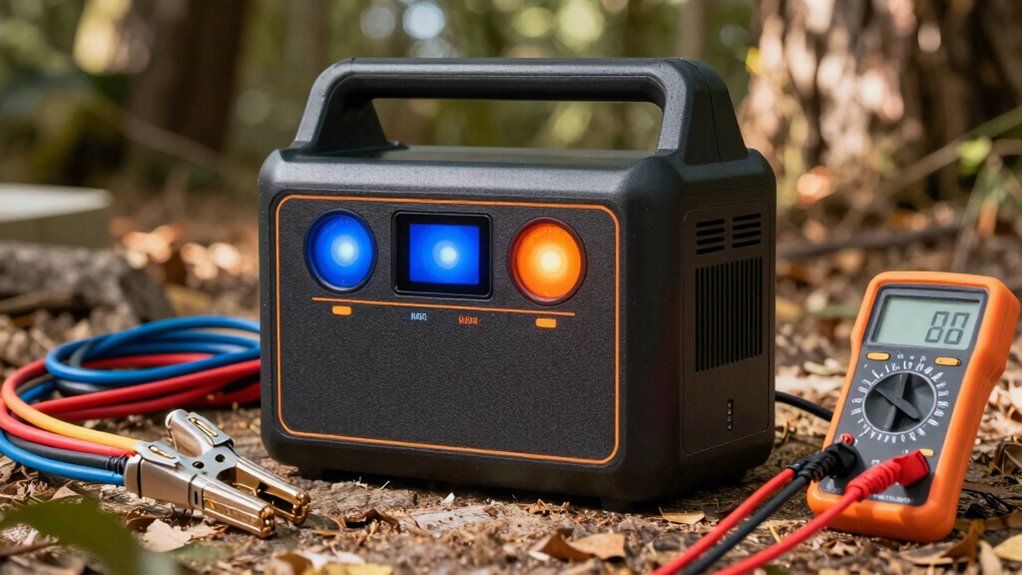
Understanding how inverter capacity and power surges impact safety is essential when using portable power stations. An inverter overload occurs when you draw more power than the inverter can handle, risking damage or fire. Power surges, sudden spikes in electricity, can also harm your devices if not properly managed. To stay safe:
- Always choose an inverter with sufficient capacity for your devices
- Use surge protection features to guard against sudden spikes
- Avoid plugging in high-wattage appliances simultaneously
- Monitor your power usage to prevent overloads
- Replace or upgrade inverters if they lack surge protection or are undersized
Common Mistakes That Cause Power Trips: and How to Avoid Them
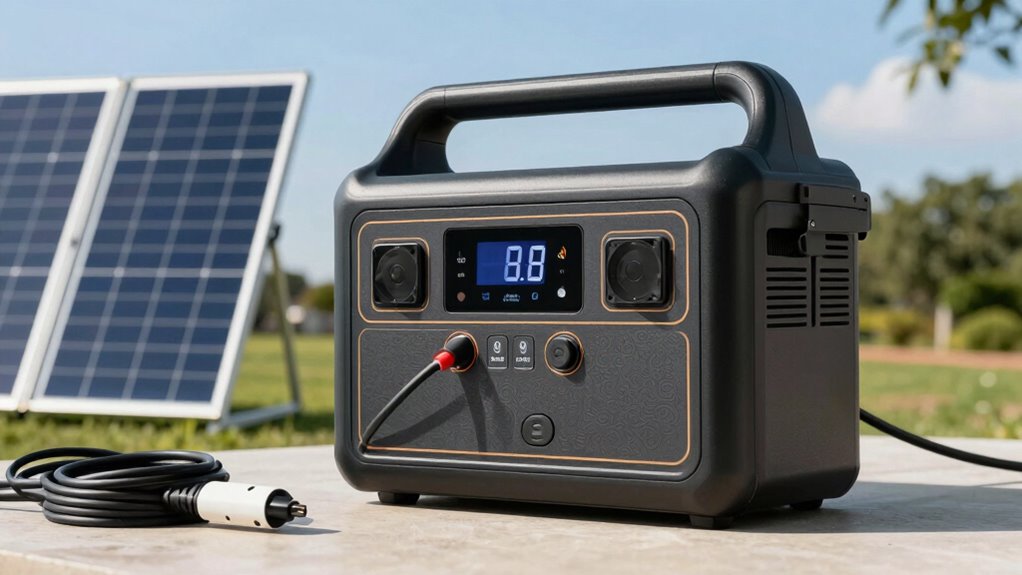
Power trips happen when your portable power station is overloaded or when there’s a short circuit, causing the system to shut down unexpectedly. One common mistake is neglecting proper battery management; overloading your station without monitoring the total wattage can push it beyond safe limits. Also, ignoring inverter efficiency can lead to excessive heat and strain, increasing the risk of trips. To avoid these issues, always calculate your total wattage and stay within the inverter’s capacity. Use devices compatible with your power station’s output, and don’t connect multiple high-wattage appliances simultaneously. Regularly check battery health and ensure proper ventilation to maintain inverter efficiency. Staying attentive to these details helps prevent power trips and prolongs your power station’s lifespan.
Troubleshooting Wattage Problems During Outages
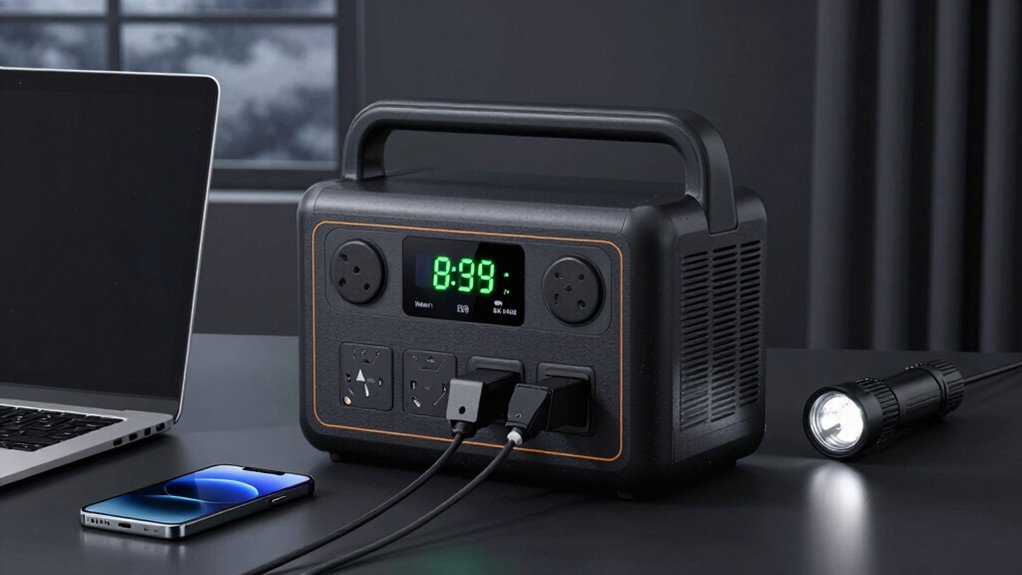
When your portable power station isn’t providing enough wattage during an outage, first check its power limits to make certain you’re not exceeding them. Managing surges effectively can prevent overloads that cut power unexpectedly. By understanding these factors, you can keep your devices running smoothly when it matters most.
Identifying Power Limitations
Ever wonder why your portable power station isn’t meeting your energy needs during an outage? You might be hitting a power limit due to several factors. Check the port selection—some outlets can’t handle high wattage loads, causing the system to shut down or underperform. Consider your battery lifespan; older batteries may not deliver full capacity, reducing available power. Overloading the station with multiple devices can push it past its limit, so prioritize essential gear. Also, verify the wattage of your devices—using high-wattage appliances can quickly exceed the station’s capacity. Finally, monitor your power usage regularly to identify when you’re nearing the station’s maximum output, preventing unexpected shutdowns and ensuring reliable backup during outages.
Managing Surges Effectively
Surges can cause significant issues with your portable power station, especially during outages when every watt counts. To manage surges effectively, ensure your station has proper surge protection in place. This helps prevent sudden voltage spikes from damaging sensitive electronics or tripping your inverter. Additionally, good voltage regulation is essential to maintain steady power output, avoiding fluctuations that can strain your system. Use surge protectors or power strips designed for portable stations to guard against unexpected surges. Regularly check your power station’s settings and ensure it’s configured to handle high inrush currents from devices like refrigerators or power tools. By combining surge protection with reliable voltage regulation, you’ll keep your power station running smoothly and avoid wattage problems during critical outages.
Quick Tips for Safe and Efficient Power Usage
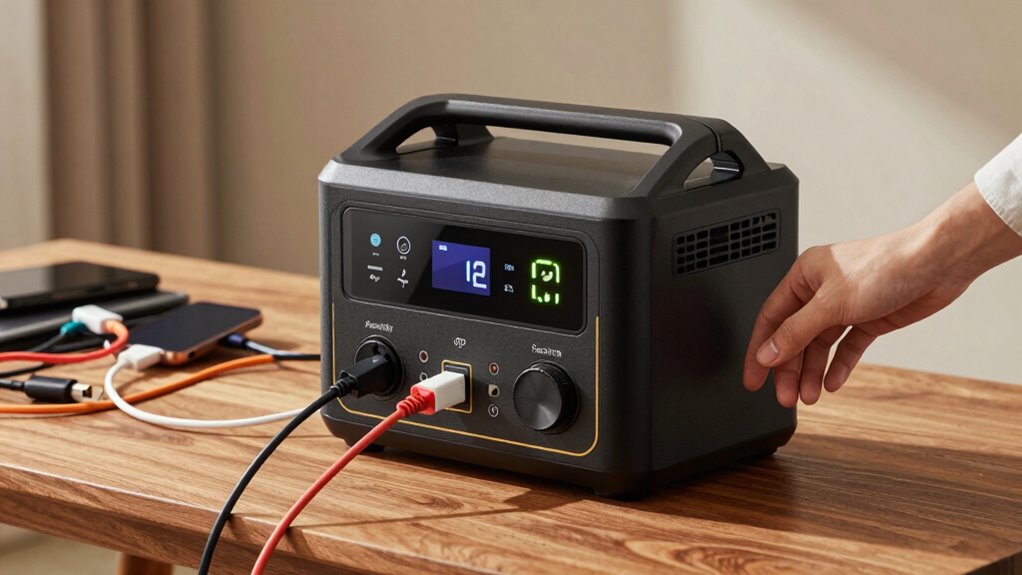
To guarantee your portable power station operates safely and efficiently, it’s essential to follow some simple but important tips. Proper battery maintenance ensures longevity and reliable performance, so keep an eye on charge levels and avoid deep discharges. Check solar panel compatibility before connecting, ensuring your panels match your station’s specifications for maximum charging. Avoid overloading outlets by knowing your wattage limits to prevent tripping the inverter. Store your power station in a cool, dry place to maintain battery health. Regularly inspect connections and ports for wear or damage, and clean them gently. Using the right accessories and following manufacturer guidelines will help you maximize efficiency and safety during use.
Frequently Asked Questions
Can I Connect Multiple Devices With Different Wattages Simultaneously?
Yes, you can connect multiple devices with different wattages simultaneously, but you need to check device compatibility and monitor power distribution. Make certain the total wattage doesn’t exceed your power station’s capacity, or you risk tripping the inverter. Distribute the load carefully, and avoid connecting high-wattage devices at once. This way, you keep everything running smoothly without overloading your portable power station.
How Does Inverter Efficiency Impact Overall Power Station Performance?
Think of inverter efficiency as the subtle art of power management, gently influencing your power station’s overall performance. Higher efficiency means less energy waste, helping extend your inverter lifespan and ensuring your devices run smoothly. When efficiency dips, it’s like wearing out a shoe faster—your power station works harder, draining batteries sooner. By choosing a more efficient inverter, you keep your system reliable and optimize energy use for longer-lasting, dependable performance.
What Are the Signs of an Overloaded Power Station?
You’ll notice your power station becomes sluggish or shuts down unexpectedly, which are signs of overload. Overloading can compromise battery safety and damage internal components. To prevent this, always monitor your power management and avoid exceeding the wattage limits listed for your device. If you see frequent tripping or overheating, it’s time to reduce your load or upgrade to a station with higher capacity, ensuring safe and reliable power use.
Can Temperature Affect Wattage Calculations and Device Performance?
Temperature effects can turn your portable power station into a temperamental artist, influencing how it performs. When it’s too hot or cold, devices might not operate efficiently, and wattage calculations could become unreliable. Cold temperatures can reduce battery capacity, while heat may cause overheating. To keep your devices performing at their best, make certain your power station is in a stable environment, avoiding extreme temperatures that can throw off wattage and performance.
How Often Should I Calibrate My Power Station’s Wattage Readings?
You should calibrate your power station’s wattage readings at least once every six months to guarantee accuracy. Regular calibration helps maintain ideal performance and extends your battery lifespan. If you notice discrepancies or unusual readings, calibrate more often. Consistent calibration keeps your device functioning correctly, prevents trips, and maximizes efficiency. Don’t forget, maintaining proper calibration is key to getting the most out of your portable power station over time.
Conclusion
Think of your power station as the captain of a ship steering stormy seas. By understanding wattage and avoiding overloads, you steer clear of dangerous seas—power trips and inverter trips. With careful calculations and smart choices, you keep your journey smooth and safe. Remember, mastering this wattage map ensures your adventure stays afloat, no matter how rough the outage waters get. Stay vigilant, and your power voyage will always reach safe harbor.
Halloween Picks
halloween
As an affiliate, we earn on qualifying purchases.