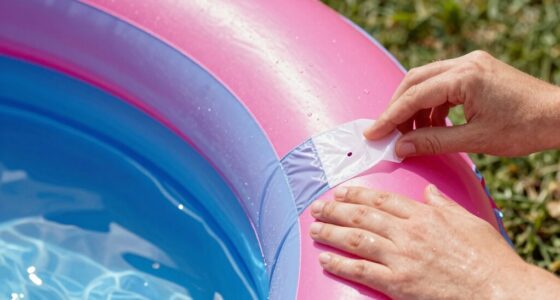
To avoid mold and cracks, regularly clean your foam water mat with warm water and mild soap, focusing on removing dirt and moisture. After cleaning, dry it thoroughly in a well-ventilated area, preferably flat or hanging, to prevent mold growth and deformation. Store it in a cool, dry place away from sunlight and dampness. Following these steps helps protect your mat and extends its lifespan. Stay with us to discover more tips to keep your water mat in top shape.
Key Takeaways
- Rinse the mat with warm water and mild soap after each use to remove dirt and prevent mold buildup.
- Ensure thorough drying in a well-ventilated area before storing to avoid mold and mildew growth.
- Store in a cool, dry, shaded location away from sunlight and moisture to prevent cracks and deterioration.
- Regularly inspect for tears or mold, repairing damage promptly with waterproof tape or patches.
- Apply waterproof coatings periodically and use odor-neutralizing sprays to protect and maintain your water mat.
Why Cleaning Your Foam Water Mat Prevents Mold and Damage
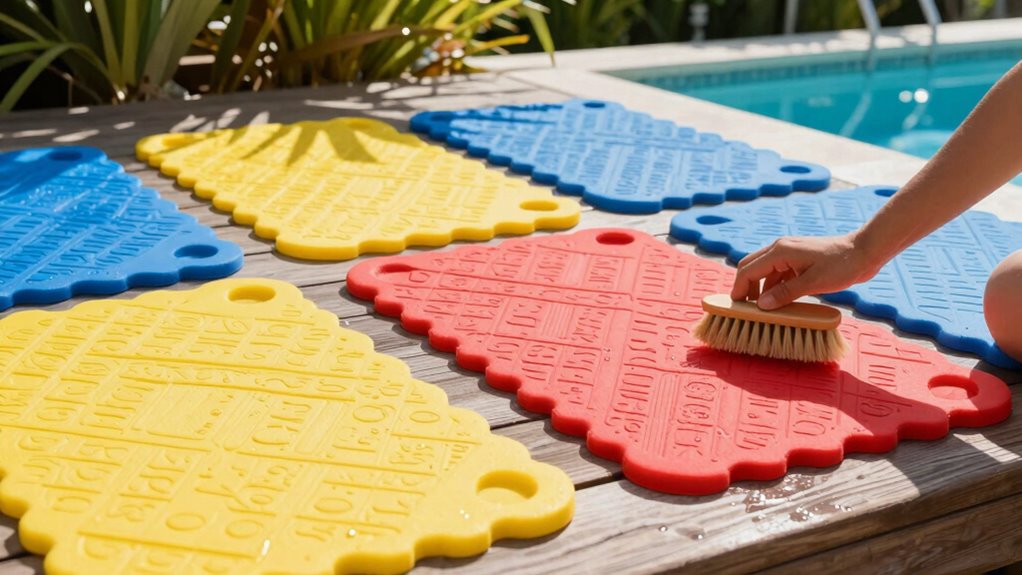
Cleaning your foam water mat regularly is essential because it helps prevent the buildup of mold, mildew, and bacteria that can thrive in damp, warm environments. Mold prevention is vital because mold spores can quickly spread and cause health issues, as well as unpleasant odors. By keeping your mat clean, you protect the material from deterioration, ensuring its lifespan is extended. Regular cleaning removes dirt, debris, and moisture that contribute to mold growth, helping preserve the integrity of the foam and its surface. When you focus on material preservation through consistent cleaning, you reduce the risk of cracks, tears, and other damages that can compromise its functionality. Ultimately, a well-maintained water mat stays safer, cleaner, and more durable for longer use.
How to Clean Your Water Mat Effectively
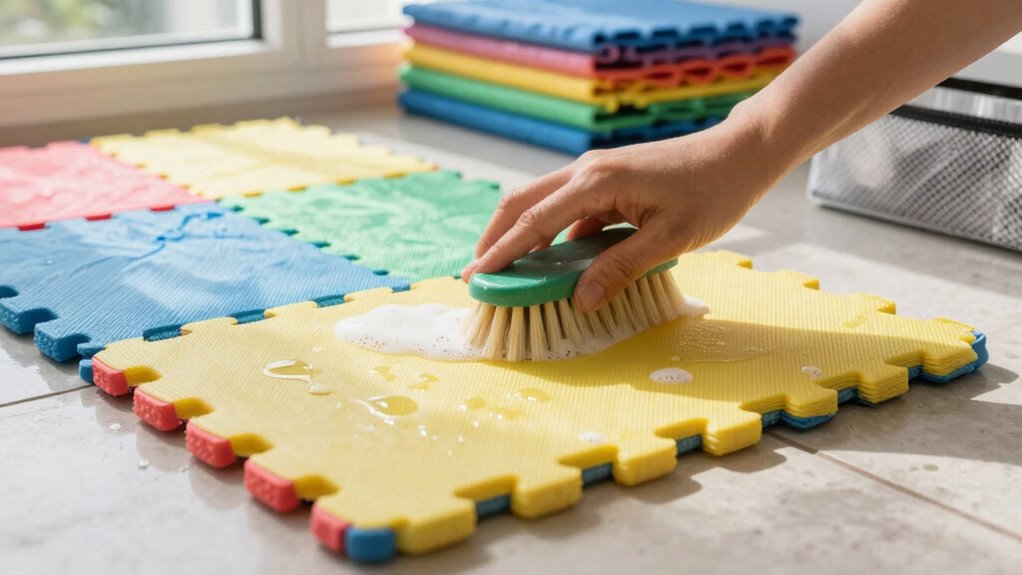
To keep your foam water mat in top shape, using the right cleaning methods is key. Start with gentle cleaning techniques like rinsing with warm water to remove surface dirt. For stubborn stains, mix a mild soap solution or a specialized cleaner designed for water mats. Use a soft brush or cloth to scrub affected areas, focusing on spots with visible grime. Rinse thoroughly to eliminate soap residue, which can cause cracks or mold buildup. For effective stain removal, avoid harsh chemicals that might damage the foam. Always inspect your mat after cleaning, ensuring no residue remains. Proper cleaning not only maintains appearance but also prolongs your water mat’s lifespan, preventing mold growth and cracks. Regular care keeps it fresh, safe, and ready for fun.
Tips for Drying and Storing to Protect Your Water Mat

Ensuring your foam water mat dries thoroughly before storing is essential to prevent mold and mildew growth. Good air circulation speeds up drying and keeps moisture away. Choose a well-ventilated storage environment, ideally indoors or in shaded areas, to avoid exposure to direct sunlight and temperature extremes. To optimize drying, lay the mat flat or hang it in a space with ample airflow. Use the following table for quick tips:
| Tip | Explanation |
|---|---|
| Air circulation | Keep the mat in a breezy area to promote drying |
| Proper storage environment | Store in a cool, dry place away from sunlight |
| Flat or hanging storage | Prevents deformation and ensures even drying |
| Avoid damp areas | Stops mold from developing |
How to Spot and Fix Common Water Mat Problems
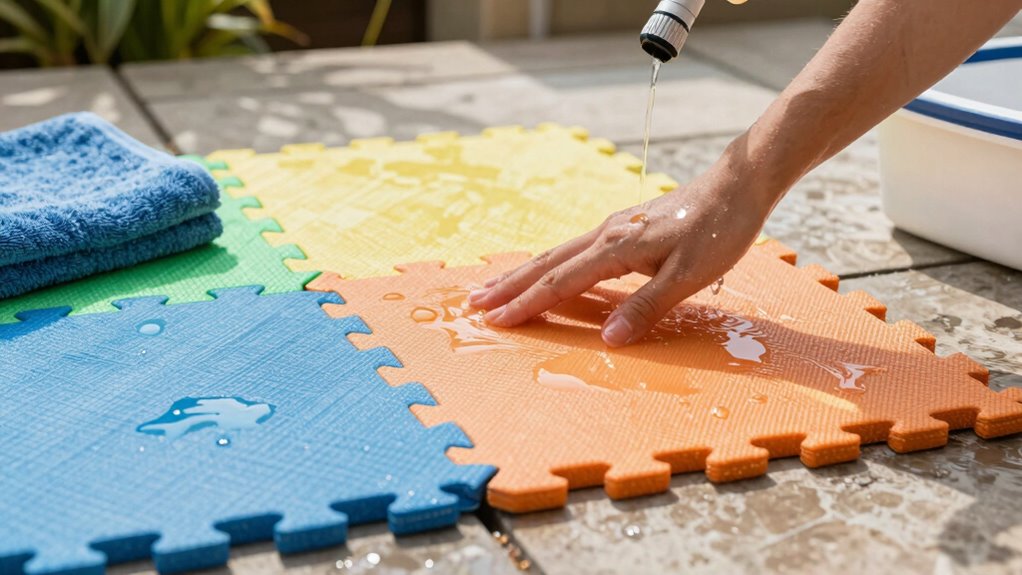
Water mats can develop common issues like mold, tears, or persistent odors, but spotting these problems early makes fixing them easier. Regularly check for visible mold spots, tears in the material, or lingering smells. If you notice mold, clean the affected area with a mixture of mild soap and water, then allow it to dry thoroughly. Tears can often be repaired with waterproof tape or patches designed for foam mats. Persistent odors may require a thorough cleaning and odor control treatments, like vinegar sprays. To prevent pests, ensure the water mat is completely dry before storage and avoid leaving food or debris nearby. Keep an eye on the following:
Regularly inspect your water mat for mold, tears, odors, and pests to keep it in optimal condition.
- Mold patches on the surface
- Rips or tears in the foam
- Unpleasant, persistent odor
- Signs of pest activity
Long-Term Maintenance Tips to Keep Your Water Mat in Top Shape
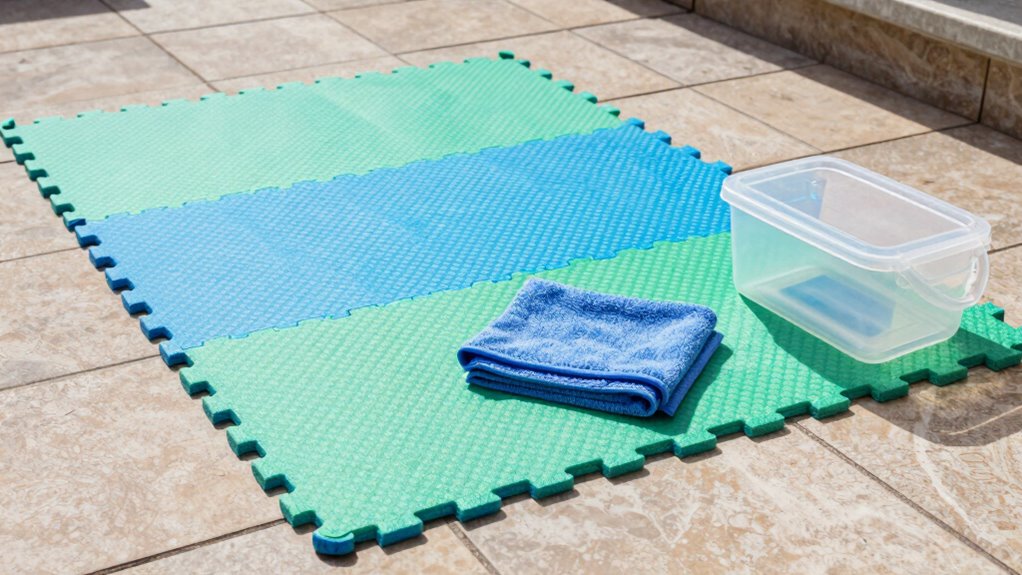
Regular long-term maintenance is essential for keeping your water mat in excellent condition. To prevent mold and cracks, consider applying waterproof coatings periodically, which help protect the foam from moisture and UV damage. This added layer enhances durability and reduces the risk of water seeping into seams. Consistently clean your mat after each use, focusing on areas prone to odor buildup, and ensure it’s thoroughly dried before storage. Incorporate odor control methods, such as airing out the mat and using odor-neutralizing sprays, to keep it fresh. Store your water mat in a cool, dry place away from direct sunlight. Regular inspections for signs of wear or damage will help you address issues early, extending your mat’s lifespan and maintaining its top shape over time.
Frequently Asked Questions
Can I Use Bleach to Disinfect My Foam Water Mat?
You shouldn’t use bleach to disinfect your foam water mat, as it can damage the material. Instead, opt for disinfectant alternatives like white vinegar or mild soap and water. These options effectively kill germs while preventing mold growth. Follow mold prevention tips such as thorough drying and storing your mat in a cool, dry place. This approach keeps your foam water mat safe, clean, and in good shape without risking cracks or damage.
What Should I Do if My Water Mat Develops a Bad Odor?
If your water mat develops a bad odor, you should start by rinsing it thoroughly with clean water to remove any residue. To tackle the smell, mix a solution of mild soap and water or use a vinegar solution for odor elimination. make certain you dry the mat completely in a well-ventilated area to prevent mold growth. Regularly cleaning and proper storage help with mold prevention and keep your water mat fresh.
Is It Safe to Fold the Foam Water Mat for Storage?
Did you know that about 60% of foam water mat users fold their mats for storage? Yes, it’s generally safe to fold your foam water mat, but you should do it carefully to avoid cracks. When folding, follow proper storage tips—like avoiding sharp creases and keeping it dry. This way, you’ll maintain the mat’s integrity and prolong its lifespan while keeping it ready for future fun.
How Often Should I Clean My Water Mat During Peak Use?
During peak use, you should clean your water mat at least once every two to three days. Follow a consistent cleaning schedule to prevent mold and bacteria buildup. Regular maintenance frequency keeps the mat fresh and safe for everyone. Use mild soap and water, then rinse thoroughly. If you notice dirt or algae, clean sooner. Proper maintenance guarantees your water mat stays in good condition and lasts longer.
Can Leaving the Water in the Mat Cause Damage Over Time?
Leaving water in your foam water mat is like trapping a storm inside—it can cause water damage and mold growth over time. The stagnant water creates a damp environment perfect for mold to thrive and can weaken the foam, leading to cracks. To protect your mat, always drain it thoroughly after use, ensuring it stays dry and mold-free, extending its life and keeping it safe for everyone.
Conclusion
By regularly cleaning and storing your foam water mat, you’re giving it the love it needs to stay vibrant and durable. Think of your mat as a loyal companion—neglect it, and it’ll crack or grow mold like shadows in the dark. But with proper care, your water mat can shine like a beacon of fun for years to come. Keep up the routine, and your aquatic adventure partner will always be ready to make waves!