
Water features boost your garden’s beauty by adding movement, soothing sounds, and visual interest. Pumps power these features, and selecting the right type and flow rate guarantees they work smoothly and look stunning. Higher flow rates make dramatic waterfalls, while lower rates create gentle streams. Noise levels can vary but can be minimized with proper setup and maintenance. Keep your water feature quiet and efficient by understanding these basics—you’ll find tips to help you get the most from your feature.
Key Takeaways
- Pumps drive water circulation, affecting the movement and visual appeal of fountains, waterfalls, and streams in water features.
- Adjusting flow rates alters water movement, from gentle streams to vigorous waterfalls, impacting aesthetics and sound.
- Noise levels from water features typically range from 50 to 70 decibels, influenced by pump type, flow rate, and installation methods.
- Proper pump selection and regular maintenance ensure efficient operation, reduce noise, and prolong equipment lifespan.
- Seasonal care and protection prevent damage, maintain performance, and keep water features quiet and visually appealing.
What Are Water Features, and How Do They Beautify Your Garden?
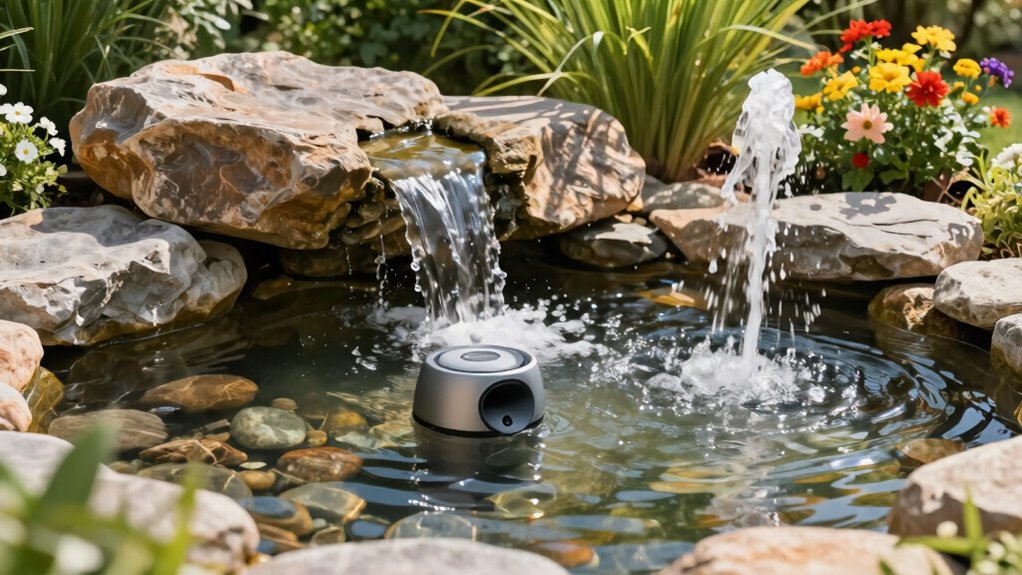
Water features are decorative elements that incorporate water into your garden, instantly adding visual interest and tranquility. They enhance your garden aesthetics by creating focal points, soothing sounds, and movement that draw the eye. Whether it’s a pond, fountain, or waterfall, these features add depth and character to your outdoor space. Plus, thoughtfully designed water features can promote water conservation by using recirculating systems that reuse water efficiently. This not only reduces waste but also minimizes your environmental impact. Incorporating water features can transform a plain garden into a serene retreat, making it more inviting and calming. With proper planning, you can enjoy their beauty while keeping sustainability in mind, ensuring your garden remains both stunning and eco-friendly.
How Do Pumps Power Water Features, and Why Is Pump Choice Important?
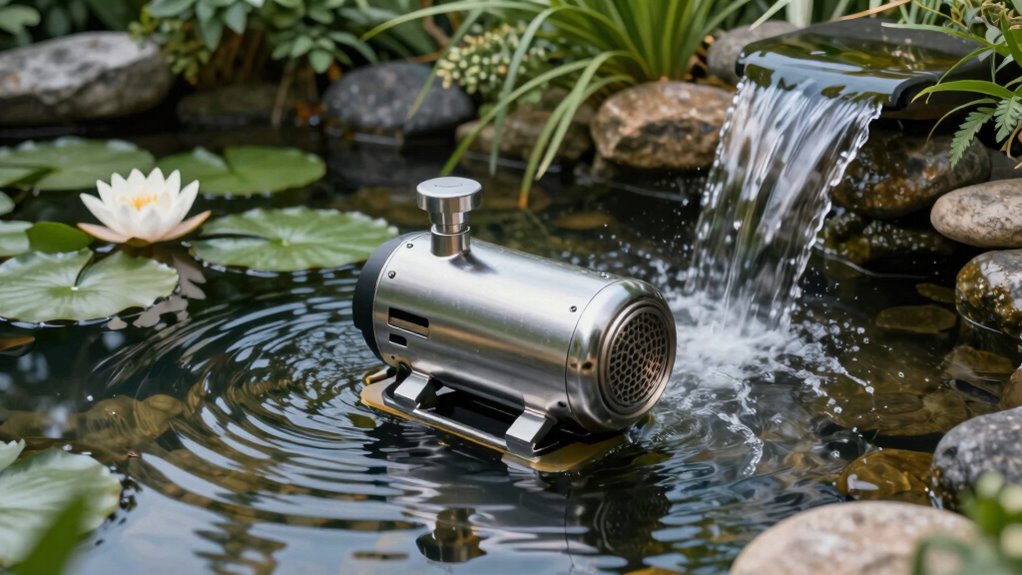
Choosing the right pump affects how your water feature looks and sounds, so understanding pump types and functions is key. Your pump’s flow rate influences the movement of water, impacting the overall effect. Additionally, factors like noise and energy use can make a big difference in your experience and costs.
Pump Types and Functions
Pumps are the heart of any water feature, driving circulation and creating movement that brings your installation to life. Different pump types serve various functions, from creating gentle waterfalls to powering powerful fountains. For example, some pumps are designed specifically for aquarium filtration, offering quiet operation and reliable flow that keeps water clean and clear. When choosing a pump, consider its flow rate and head height to match your feature’s needs. Proper pump maintenance guarantees longevity and consistent performance, preventing issues like clogging or reduced flow. The right pump type ensures your water feature operates smoothly, efficiently, and quietly, enhancing your overall experience. Selecting the appropriate pump is essential for achieving the desired aesthetic and functional results while minimizing noise and energy consumption.
Impact on Water Flow
Since pumps are responsible for moving water through your feature, their performance directly influences how effectively water flows and circulates. A well-chosen pump guarantees steady water circulation, supporting healthy aquatic plants and maintaining clarity. If the pump is too weak, water may stagnate, leading to algae growth and unhealthy aquatic plants. Conversely, an overly powerful pump can cause excessive splashing and disrupt delicate water features. Consider flow rate, head height, and the needs of your aquatic environment when selecting a pump. Proper pump selection maintains consistent water movement, which benefits aquatic plants and enhances the overall aesthetic.
- Guarantees even water circulation for healthy aquatic plants
- Prevents stagnant water and algae buildup
- Supports the natural health of your water feature
Noise and Energy Use
The performance of your water feature depends heavily on the pump’s noise level and energy consumption. A quieter pump enhances your enjoyment, especially in peaceful settings, while energy-efficient models save you money over time. Solar energy-powered pumps are an eco-friendly option, reducing electricity use and lowering noise levels since they often operate at lower speeds. Additionally, pump choice impacts water temperature regulation; efficient pumps help maintain stable temperatures, preventing overheating or freezing. When selecting a pump, consider how much energy it consumes and how loud it is during operation. A well-chosen pump balances power with quiet operation and energy savings, ensuring your water feature runs smoothly without excessive noise or high energy bills.
How Do Flow Rates Affect Water Movement and the Look of Your Water Feature?
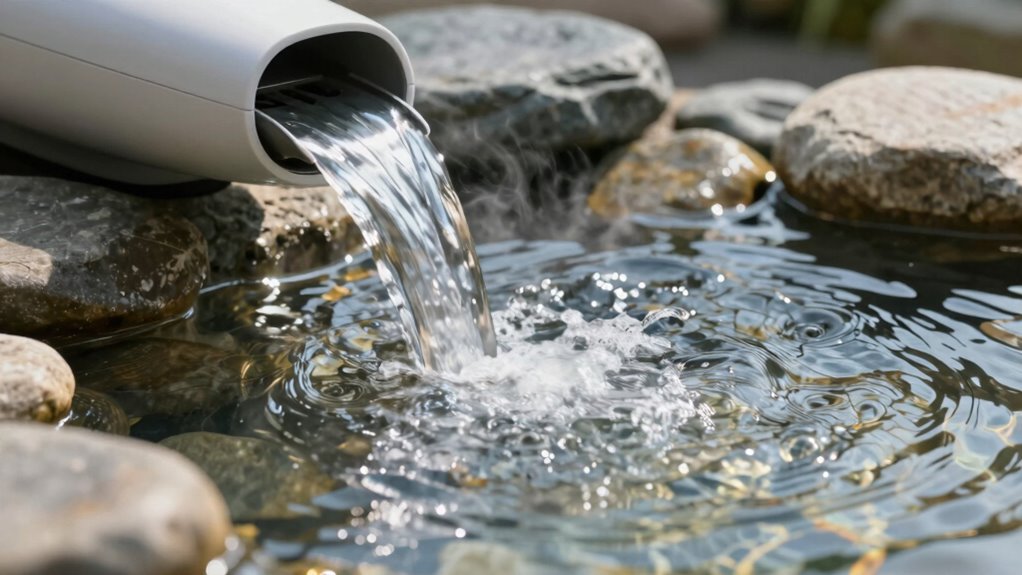
Flow rates play a crucial role in shaping how water moves and appears in your water feature. When you adjust the water flow, it impacts the overall aesthetic appeal and creates different visual effects. Higher flow rates produce more vigorous, energetic water movement, making waterfalls and sprays look dramatic. Conversely, lower flow rates result in gentle, calming flows that enhance serenity.
- Dramatic waterfalls vs. subtle streams
- Movement that highlights rock features or plants
- Sound levels that match your desired ambiance
Choosing the right flow rate helps you craft a look that complements your space and personal style. It also influences how the water interacts with light, creating reflections and ripples that enhance your water feature’s visual charm.
How Loud Are Water Features, and How Can You Keep Them Quiet?
Water features can vary widely in noise levels, often measured in decibels, so it’s important to know what to expect. You can find ways to keep the sound pleasant and unobtrusive, even in quiet spaces. Understanding sound ratings and applying simple noise reduction tips will help you enjoy your water feature without disturbance.
Sound Levels and Decibel Ratings
While water features can add soothing ambiance to your outdoor space, they can also produce varying noise levels that may be distracting or disruptive. Understanding sound levels and decibel ratings helps you choose a feature that fits your environment. Typically, water features range from 50 to 70 decibels, comparable to a conversation or background music. Keep in mind:
- Larger pumps often produce higher sound levels.
- Water flow rate influences noise—faster flow generally means more sound.
- Materials and installation methods can either amplify or dampen noise.
Knowing the decibel ratings allows you to balance visual appeal with comfort. If quiet is your priority, look for features with lower decibel ratings or consider soundproofing options. This helps create a peaceful oasis without unwanted noise.
Tips for Noise Reduction
If you want to enjoy the soothing sounds of your water feature without constant distraction, there are practical ways to keep noise levels down. Soundproofing techniques, such as enclosing pumps or lining the basin with acoustic panels, can notably reduce noise. Vibration dampening is also essential; placing the pump on a foam pad or rubber mat absorbs vibrations that would otherwise amplify sound. Regular maintenance, like cleaning filters and checking for loose fittings, prevents unnecessary noise caused by buildup or leaks. Installing water features on a stable, insulated surface minimizes vibrations transferred to surrounding structures. Combining these methods helps create a tranquil atmosphere, ensuring your water feature provides calming sounds without becoming a source of unwanted noise.
What Should You Consider When Choosing the Right Pump and Flow Rate?
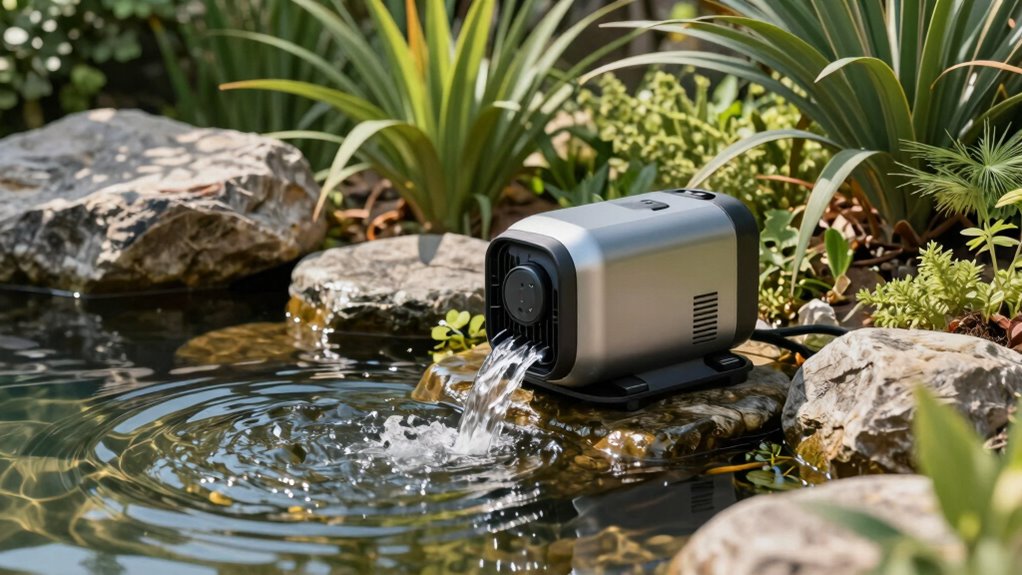
Choosing the right pump and flow rate is essential for guaranteeing your water feature functions smoothly and looks beautiful. To do this, consider pump compatibility with your setup and how easily you can adjust the flow. Proper flow adjustment allows you to control water movement for the desired effect and noise level.
Keep these points in mind:
- Guarantee the pump matches your water feature’s size and type for suitable pump compatibility
- Opt for pumps with adjustable flow settings to customize water movement
- Select a pump that offers quiet operation without sacrificing performance
How to Maintain Your Water Feature for Quiet, Efficient Operation
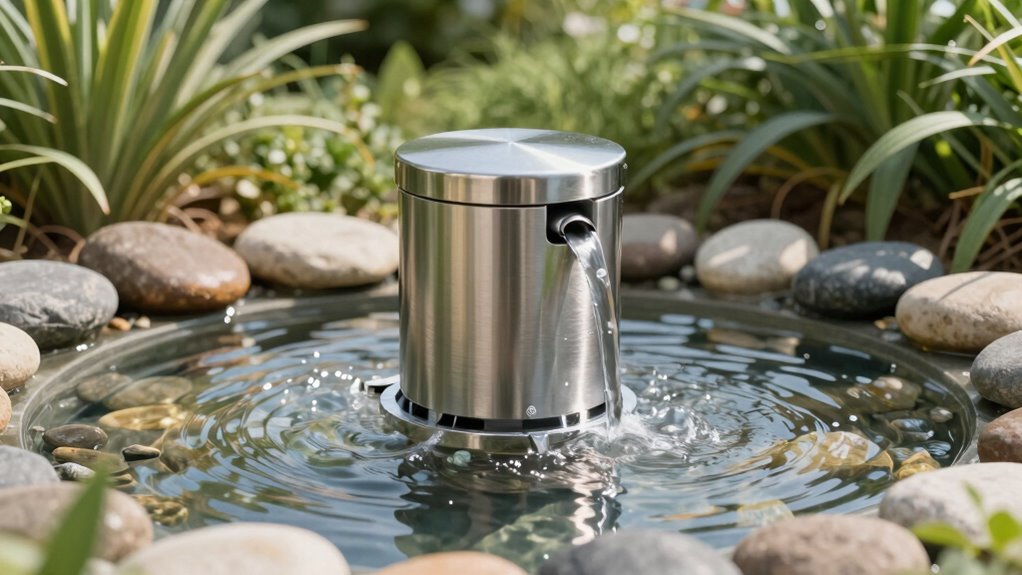
Regular maintenance keeps your water feature running smoothly and quietly. To achieve this, clean your pump and filters regularly to prevent buildup that can cause noise or inefficiency. Use eco-friendly materials for cleaning whenever possible to reduce environmental impact. During seasonal maintenance, drain and inspect the system, removing any debris or algae that may clog parts or create noise. Check for leaks or worn components and replace them promptly to keep operation smooth. Protect your water feature during harsh weather, covering or draining it as needed. Regular upkeep not only prolongs the life of your equipment but also ensures quieter, more efficient performance. Incorporating seasonal maintenance routines and eco-friendly materials helps maintain a peaceful, eco-conscious water feature year-round.
Frequently Asked Questions
What Are the Best Materials for Quiet Water Feature Pumps?
You should choose pumps made from rubber or silicone components for quieter operation, as these materials help mitigate noise and vibration. Regular pump maintenance, like cleaning and checking for debris, also minimizes noise. Employ noise reduction techniques such as placing the pump on a rubber pad or insulating it with foam. These strategies ensure your water feature runs smoothly and quietly, providing a peaceful, enjoyable atmosphere.
How Does Weather Affect Water Feature Noise Levels?
Imagine your water feature as a delicate musical instrument. Weather patterns, like wind or rain, can turn that melody into a chaotic noise, disrupting your peaceful retreat. Extreme temperatures can cause equipment to expand or contract, increasing noise levels. To keep things serene, you should focus on noise mitigation strategies, such as insulating pumps or choosing weather-resistant materials, ensuring your water feature remains a calming escape regardless of the weather outside.
Can Different Pump Brands Impact Flow Rate Accuracy?
Different pump brands can definitely impact flow rate accuracy, as reputable brands often produce more reliable and consistent pumps. A well-known brand’s reputation for quality usually means better craftsmanship and performance. Additionally, regular pump maintenance helps maintain accurate flow rates, regardless of the brand. If you choose a trusted brand and keep up with maintenance, you’ll experience more consistent flow rates and fewer issues over time.
Are There Eco-Friendly Options for Water Feature Pumps?
Yes, you can find eco-friendly water feature pumps, including solar-powered options that harness renewable energy to run your fountain or pond quietly and efficiently. Look for biodegradable pump materials that reduce environmental impact and prevent plastic waste. These eco-friendly choices help you enjoy a beautiful water feature while minimizing your carbon footprint and supporting sustainable practices. Switching to solar-powered and biodegradable pumps makes your water feature greener and more environmentally responsible.
How Can I Troubleshoot Common Noise Problems in My Water Feature?
Did you know that 60% of water feature noise issues come from vibrations? To troubleshoot common noise problems, start by checking for loose parts and applying soundproofing techniques like foam padding. Vibration dampening can markedly reduce noise, so consider adding rubber mounts or pads under the pump. Regular maintenance and ensuring your pump is properly aligned also help minimize sound, keeping your water feature peaceful and enjoyable.
Conclusion
Ready to enhance your garden with a water feature? Choosing the right pump, flow rate, and managing noise levels might seem tricky, but with a little knowledge, you’ll create a beautiful, tranquil oasis. Remember, the right equipment makes all the difference in keeping your water feature running smoothly and quietly. Isn’t it worth investing a bit of effort now to enjoy a peaceful, stunning garden centerpiece for years to come?