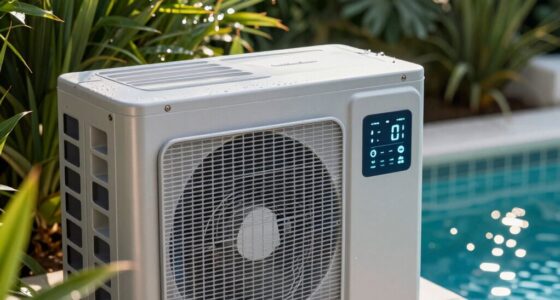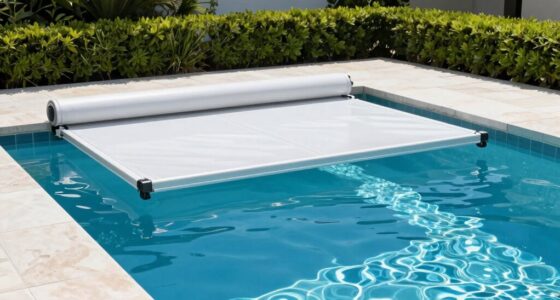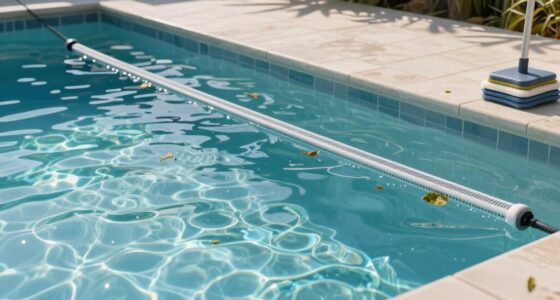
Pool alarms come in three main types: surface alarms detect activity or disturbances on the water’s surface, alerting you if someone falls in; gate alarms activate when someone opens or tamers with pool gates, preventing unauthorized access; door alarms monitor entry points like doors leading to the pool area, warning you if they’re opened. Each type targets specific safety risks, and combining them guarantees thorough protection. To learn more about choosing and maintaining these alarms, keep exploring.

Get pool and patio gear delivered free with Prime
- Fast, free delivery on millions of items
- Prime Video, Amazon Music and more included
- Member-only deals all year
Key Takeaways
- Surface alarms detect disturbances on the water surface, such as movement or water entry.
- Gate alarms monitor unauthorized access through gates or fences around the pool area.
- Door alarms alert when doors leading to the pool are opened, preventing indoor or access point breaches.
- Combining multiple alarm types enhances overall pool safety coverage.
- Proper placement, maintenance, and sensitivity adjustment are essential for accurate detection and minimal false alarms.
As an affiliate, we earn on qualifying purchases.
What Are the Main Safety Concerns That Pool Alarms Address?

Have you ever wondered what safety risks pool alarms are designed to prevent? These alarms primarily address the danger of children accidentally falling into the water, which can lead to drowning. They serve as an extra layer of security when child supervision isn’t enough or during moments when attention lapses. Pool alarms also help alert you to unauthorized access, especially near gates or doors leading to the pool area. Proper pool maintenance guarantees alarms function correctly, avoiding false alarms and ensuring reliable detection. By catching these safety concerns early, alarms give you peace of mind, allowing you to focus on enjoying your pool while reducing the risk of accidents. Ultimately, they’re an essential tool for safeguarding your loved ones around the water.
How Do Surface Pool Alarms Detect Someone Falling Into the Water?
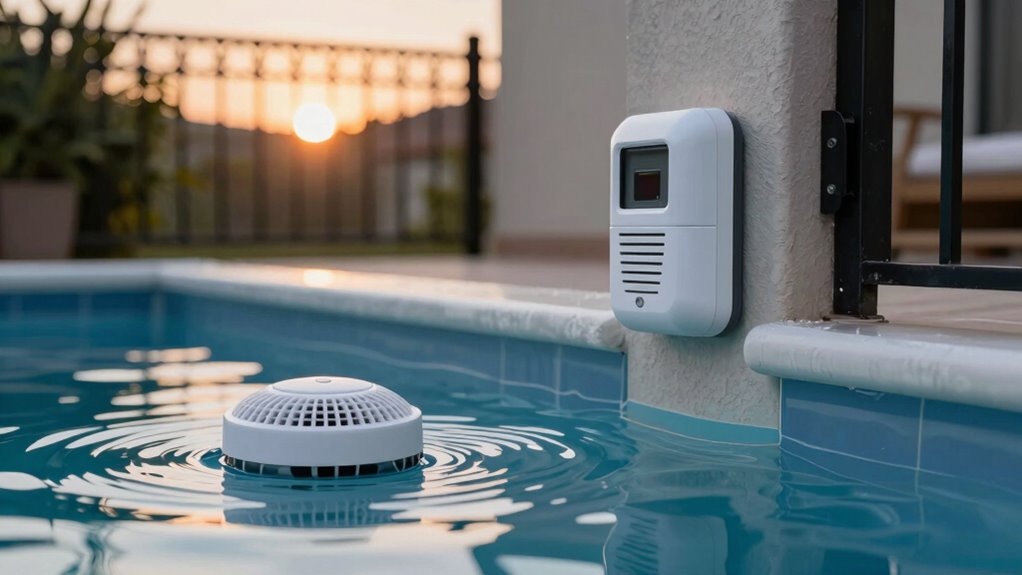
Ever wondered how surface pool alarms detect someone falling into the water? These alarms sit on the water surface, typically attached to a pool cover or float just above the water. When a person falls in, their movement disrupts the alarm’s sensing mechanism, which could be a tethered float switch or a pressure-sensitive pad. The alarm then sounds, alerting you immediately. Many surface alarms are designed to detect motion or disturbances on the water surface caused by a person entering the pool unexpectedly. By monitoring this disturbance, the alarm provides quick notification, helping prevent drownings. This simple yet effective system works best when placed correctly on the water surface, especially around areas where a child or swimmer might accidentally fall in.
When Do Gate Alarms Trigger, and How Do They Protect Your Pool Area?

Gate alarms activate the moment a gate is opened, serving as a vital layer of protection around your pool area. They enhance gate security by alerting you instantly if someone enters without permission. These alarms are set to trigger within specific alarm zones, which are designated areas monitored for unauthorized access. When a gate is opened, the alarm sounds loudly, warning you of potential danger. This immediate alert helps prevent accidents, especially with children or pets nearby. Gate alarms work continuously, ensuring your pool area stays secure even when you’re not around. By covering all access points, they create an effective barrier, giving you peace of mind that your pool remains protected from unsupervised entry.
How Do Door Alarms Prevent Unauthorized Access to Your Pool?
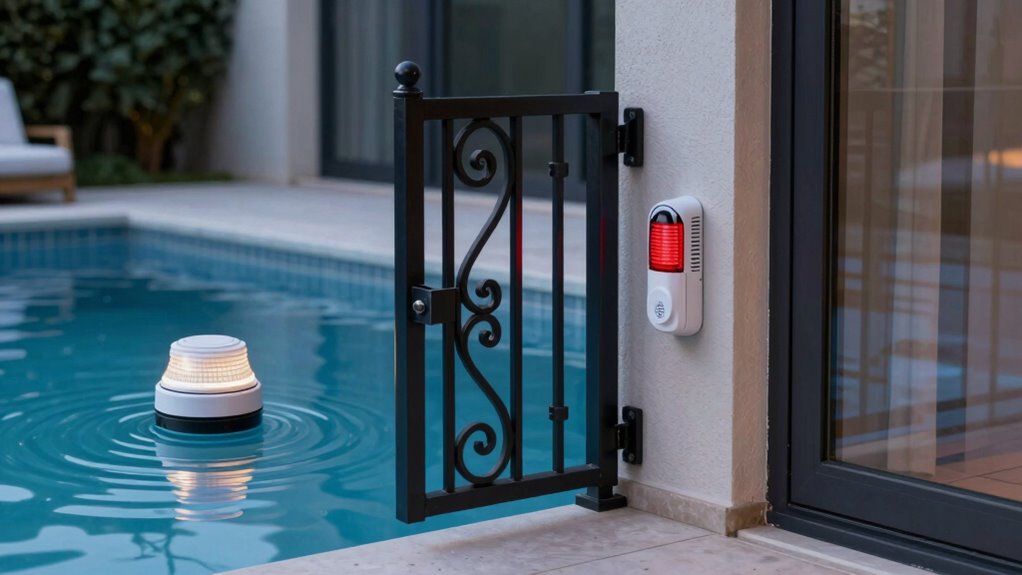
Door alarms detect unauthorized entry as soon as a door opens, giving you immediate awareness of any attempt to access your pool area. They alert you instantly, so you can respond quickly and prevent potential accidents. This quick detection helps keep your pool safe and secure at all times.
Detects Unauthorized Entry
When someone tries to access your pool without permission, door alarms immediately activate to alert you of the intrusion. This quick response helps prevent unauthorized entry, ensuring child safety remains a top priority. Door alarms are designed to detect even the slightest door movement, so you’re instantly notified if someone tries to open a gate or door leading to the pool area. Regular alarm maintenance is essential to keep it functioning properly and avoid false alarms. By catching unauthorized access early, these alarms give you peace of mind and help you respond promptly. This proactive approach reduces the risk of accidents and keeps children safe around the pool. Ultimately, door alarms serve as a reliable safeguard against unauthorized entry, giving you control and reassurance.
Alerts Immediately
Door alarms provide immediate alerts the moment someone attempts to access your pool area, ensuring you can react quickly to potential intrusions. When a door is opened, the alarm sounds instantly, alerting you to unauthorized access. Many systems also include alarms for pets, preventing accidental triggering and false alarms. This feature helps distinguish between everyday use and genuine security threats. Additionally, these alarms can be integrated into your existing alarm system, creating a thorough security network. With real-time notifications, you’re instantly aware of any breach, giving you the chance to respond swiftly. This level of immediate alertness is essential for maintaining safety, especially for households with children or pets, ensuring your pool area stays secure at all times.
Which Pool Alarm Type Offers the Best Coverage and What Are Its Limitations?
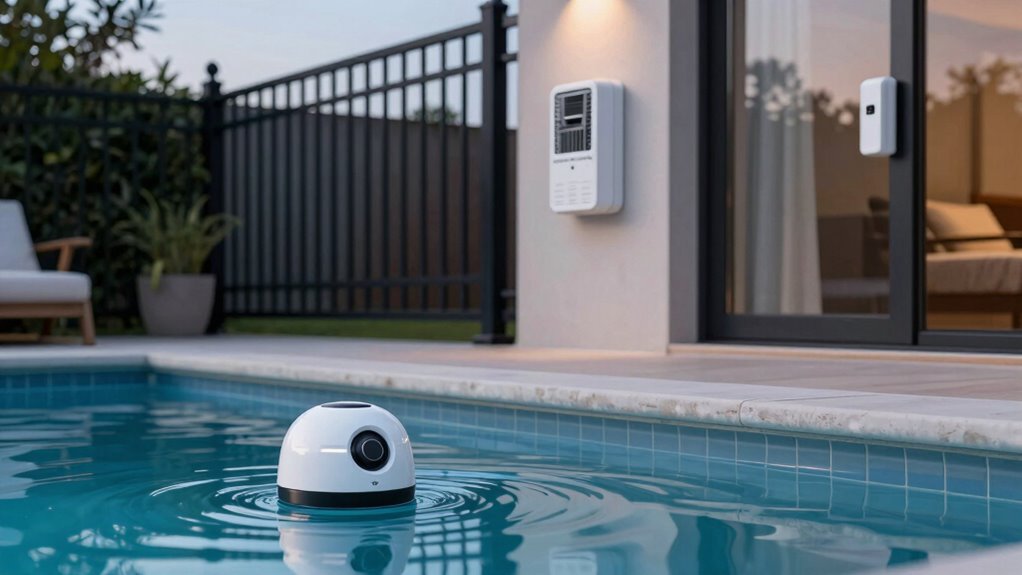
Have you wondered which pool alarm offers the best coverage? Generally, surface alarms provide thorough detection because they monitor the entire pool area. When integrated with your alarm system, they can trigger alerts immediately and coordinate with emergency response services efficiently. This integration ensures swift action if someone enters the pool unexpectedly. However, surface alarms have limitations—they can sometimes be triggered by floating debris or wind, leading to false alarms. Additionally, their coverage depends on proper placement and maintenance. While they offer broad protection, no alarm is perfect. Combining surface alarms with gate or door alarms can enhance coverage, but it’s important to understand each type’s specific limitations to create a reliable safety network around your pool.
What Factors Should You Consider When Choosing the Right Pool Alarm?

When selecting a pool alarm, you need to think about how well it fits with your pool type and setup. Easy installation and user-friendly operation are also key to ensuring you’ll actually use it consistently. Don’t forget to take into account the alarm’s sensitivity and detection range to make sure it can effectively monitor your pool area.
Compatibility With Pool Type
Choosing the right pool alarm depends heavily on your specific pool type, as not all alarms work with every setup. For example, if you have a pool cover, you’ll want an alarm that can detect unauthorized access even when the cover is in place. Underwater sensors are ideal for in-ground pools, as they monitor movement beneath the surface. Above-ground pools may require different alarms, such as surface alarms, which are more suitable for their design. Consider whether your pool has features like a gate or door, which might need compatible alarms that trigger upon entry. Always check if the alarm system is compatible with your pool’s structure and accessories to guarantee reliable safety coverage without false alarms.
Ease of Installation and Use
Selecting a pool alarm that’s easy to install and operate can save you time and frustration. Look for models with straightforward setup procedures and clear instructions, which simplify alarm maintenance. Consider alarms that come with user-friendly features, such as quick installation clips or wireless options, reducing the need for professional help. Ease of use also means understanding how to troubleshoot common issues, so choose alarms with accessible troubleshooting guides or customer support. A device that’s simple to maintain minimizes downtime and keeps your pool secure. Keep in mind, complex alarms might require frequent alarm troubleshooting, which can become a hassle. Ultimately, selecting an alarm that balances ease of installation with simple operation ensures reliable safety without adding unnecessary stress.
Sensitivity and Detection Range
Opting for a pool alarm with the right sensitivity and detection range guarantees you get timely alerts without false alarms. Alarm sensitivity determines how easily the system detects disturbances, while detection range defines how far the sensor can monitor. To choose wisely, consider:
- The size and layout of your pool area
- The types of activity you want to detect
- The risk level of your environment
- The potential for false triggers from debris or animals
- Whether adjustable sensitivity suits your needs
Balancing alarm sensitivity with an appropriate detection range ensures you’re notified promptly without constant false alarms. It’s vital to select a system that matches your pool’s specific characteristics to maintain safety and minimize inconvenience.
How Do You Properly Install and Maintain Your Pool Alarms for Maximum Safety?

To guarantee your pool alarm functions effectively, proper installation and regular maintenance are essential. Start with clear installation tips: place the alarm according to manufacturer instructions, ensuring it’s securely mounted and positioned where it can detect unwanted access or movement. Test the alarm after installation to confirm it’s working properly. Regular pool alarm maintenance involves cleaning sensors, checking batteries, and inspecting for damage or corrosion. Keep the area around the alarm clear of debris that could interfere with operation. Test the alarm weekly and after storms or heavy use to ensure reliability. Replacing batteries as needed prevents false alarms or failures. Staying proactive with maintenance and adhering to installation guidelines helps maximize safety and keeps your pool secure for everyone.
Frequently Asked Questions
Are There Any Legal Regulations Regarding Pool Alarm Installations?
Yes, there are legal requirements and installation mandates for pool alarms. You need to follow local and state regulations, which often specify the type of alarm, placement, and proper functioning. These laws aim to enhance safety and prevent accidents. You should check your area’s specific codes to make certain your pool alarm installation complies with all legal requirements, helping you avoid fines and ensure a safe environment for everyone.
Can Multiple Alarm Types Be Used Simultaneously for Better Safety?
Yes, you can use multiple alarm types simultaneously, creating a layered safety system that’s more effective. Imagine the added protection as a web of vigilance, catching potential dangers from different angles. Multi alarm systems strengthen your pool’s safety by covering surface, gate, and door entries, reducing blind spots. This layered approach not only enhances security but also offers peace of mind, knowing you’ve taken every precaution to keep loved ones safe.
How Do Battery Life and Power Sources Affect Alarm Reliability?
Battery life and power sources critically impact your alarm’s reliability. If the battery longevity is short, you risk false alarms or the device failing when needed most. Using a dependable power source, like long-lasting batteries or wired power, guarantees consistent operation. Regularly check and replace batteries to maintain peak performance. Reliable power sources keep your pool alarm active, giving you peace of mind and enhancing overall safety.
Are There Smart Pool Alarms Compatible With Home Automation Systems?
Yes, you can find smart pool alarms that are compatible with your home automation system. These alarms seamlessly integrate with smart home platforms, allowing you to monitor pool safety remotely. Automation integration lets you receive alerts directly on your devices, automate responses like turning on lights or sounding alarms, and enhance overall safety. With compatible smart alarms, you gain peace of mind knowing your pool’s security is connected and easily manageable through your existing smart home setup.
What Are Common False Alarm Triggers Across Different Alarm Types?
Common false alarm causes include environmental triggers like wind, rain, or debris hitting sensors, which can activate alarms unexpectedly. For surface alarms, splashing or objects disturbing the water may trigger false alerts. Gate and door alarms often respond to vibrations or minor impacts, causing false triggers. You should regularly check and maintain sensors, ensuring they’re clear of debris and environmental factors, to minimize false alarms and keep your pool safety reliable.
Conclusion
Think of your pool alarms as the vigilant guardians of your aquatic oasis. Just like a reliable alarm system keeps your home safe, choosing the right alarms guarantees peace of mind. I once watched a neighbor’s quick response when their gate alarm sounded—preventing a close call. By understanding each alarm’s role, you create a safety net that catches trouble before it happens. Remember, the right combination keeps your pool a fun, worry-free retreat.
Columbus Day / Indigenous Peoples' Day Picks
long weekend sales
As an affiliate, we earn on qualifying purchases.