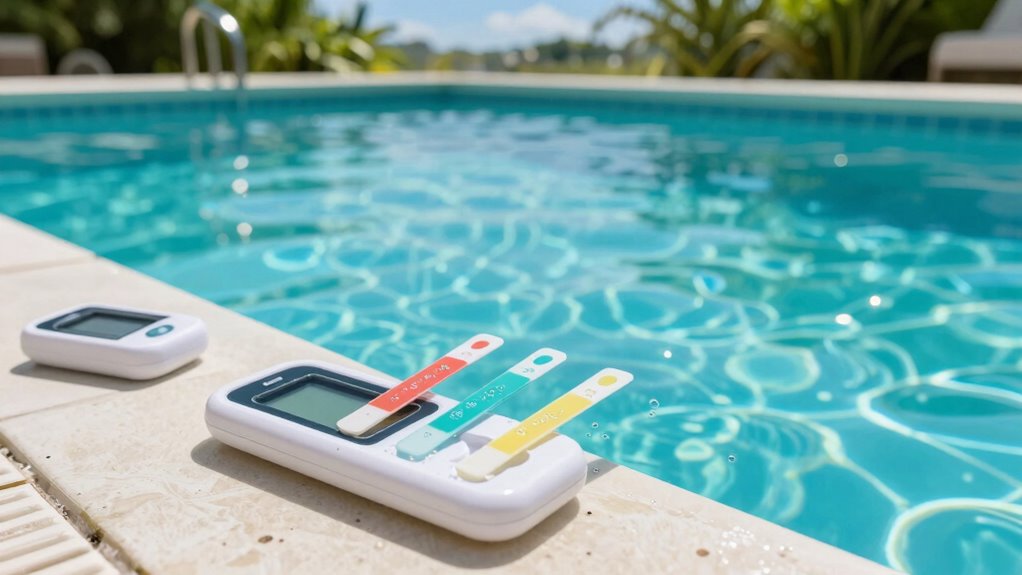
To quickly guarantee your pool is safe and balanced, start by checking free chlorine and pH levels regularly, as they directly affect water safety and clarity. Then, test alkalinity and calcium hardness to protect your equipment and maintain water balance. Also, monitor cyanuric acid to prevent chlorine loss and algae growth. Staying on top of these four numbers helps keep your pool in top shape, and more tips await if you keep exploring.

Get pool and patio gear delivered free with Prime
- Fast, free delivery on millions of items
- Prime Video, Amazon Music and more included
- Member-only deals all year
Key Takeaways
- Prioritize testing free chlorine and pH levels, as they directly impact water safety and clarity.
- Check alkalinity and calcium hardness to prevent equipment damage and maintain water balance.
- Measure stabilizer (cyanuric acid) levels to ensure chlorine effectiveness and prevent rapid dissipation.
- Establish a regular testing schedule, ideally twice weekly during peak season, for early problem detection.
- Record all test results to identify trends and make timely adjustments for optimal pool water quality.
As an affiliate, we earn on qualifying purchases.
Why Monitoring Free Chlorine and pH Is Key to Safe, Clean Water
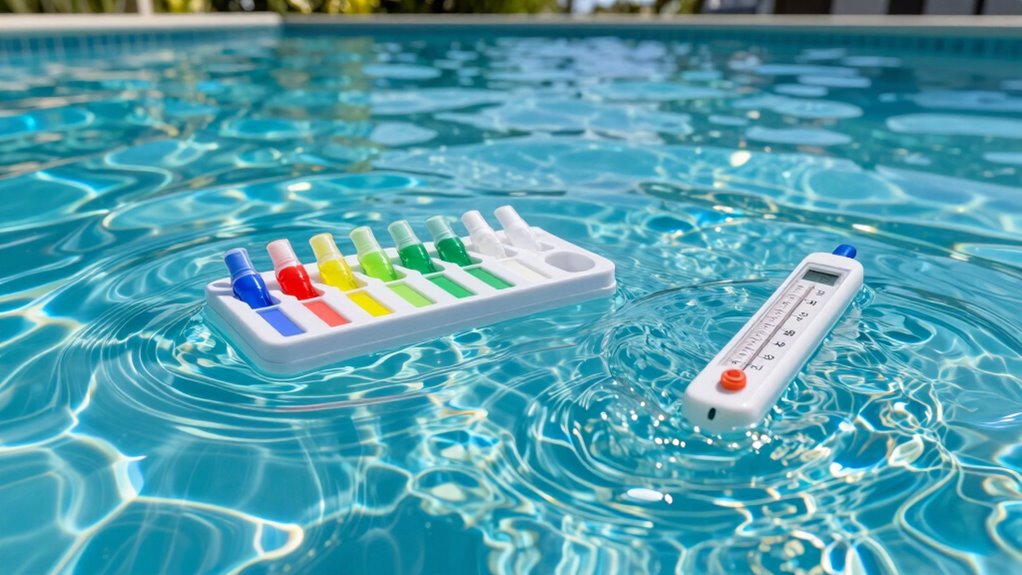
Monitoring free chlorine and pH levels is essential because they directly influence the safety and clarity of your pool water. Maintaining proper chlorine stability guarantees that bacteria and algae are effectively killed, preventing cloudy water and algae growth. Equally important is keeping the pH balance within the recommended range; if pH is too high or low, chlorine becomes less effective, compromising water safety. When your pH drifts out of balance, it can also cause skin and eye irritation or damage pool equipment. Regular testing helps you catch these issues early, allowing you to adjust chlorine levels and pH as needed. By staying on top of these key measurements, you ensure your pool remains safe, clean, and inviting for swimmers.
How to Test Your Pool’s Alkalinity and Calcium Hardness Levels
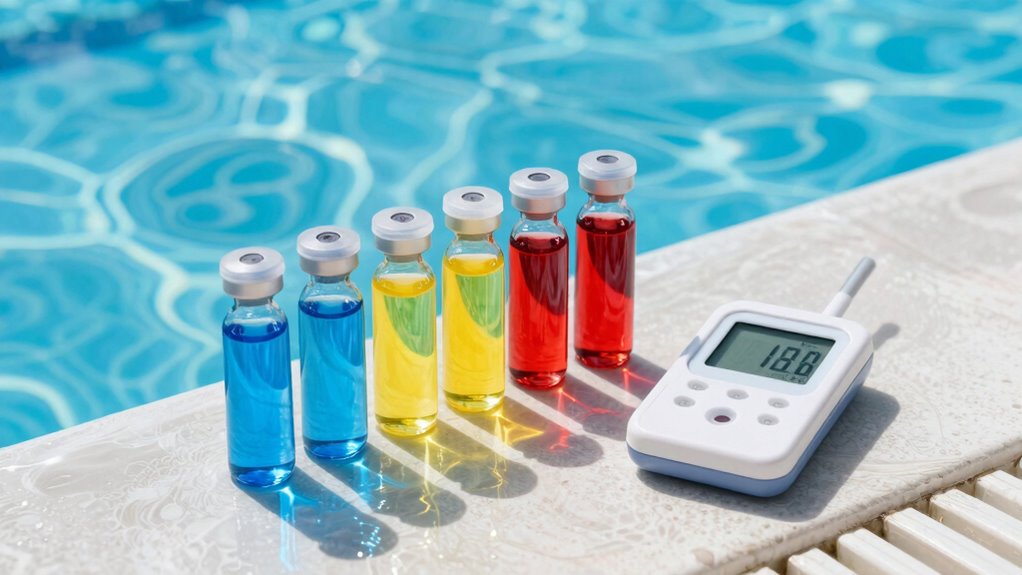
Maintaining proper alkalinity and calcium hardness levels is essential for keeping your pool water balanced and preventing damage to your equipment. To do this, you need to test both regularly. Use test strips or a liquid test kit to measure alkalinity balance and calcium levels. When testing alkalinity, aim for 80-120 ppm; for calcium hardness, target 200-400 ppm. Record your results and compare them to recommended ranges. If levels are off, adjust accordingly—add alkalinity increaser or decreaser, or calcium hardness increaser. Regular testing helps you keep water balanced and prolongs equipment lifespan. Here’s a quick overview:
| Test Type | Ideal Range |
|---|---|
| Alkalinity balance | 80-120 ppm |
| Calcium levels | 200-400 ppm |
How to Read and Adjust Cyanuric Acid and Stabilizer Levels
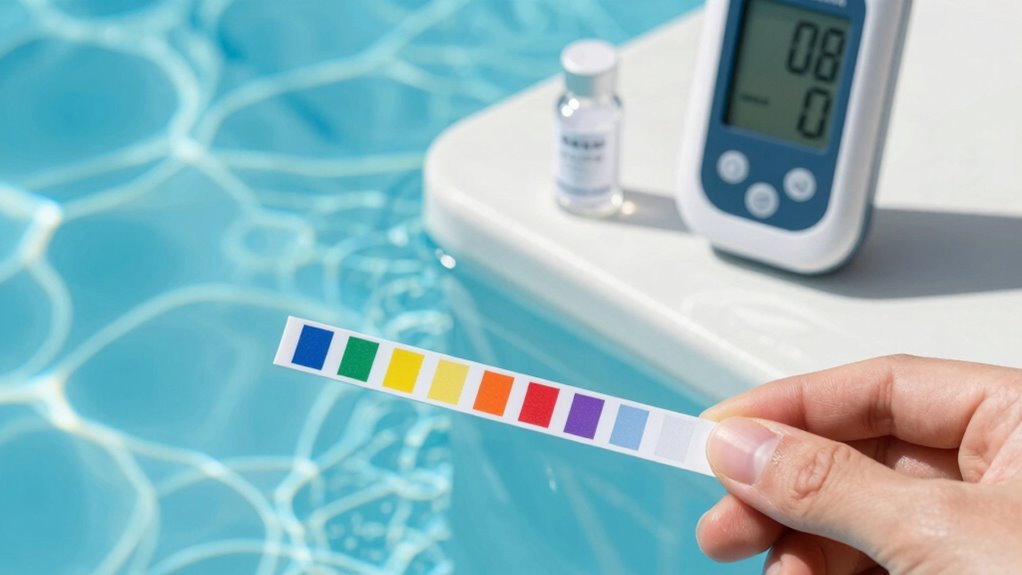
Understanding how to read and adjust cyanuric acid and stabilizer levels is crucial for protecting your pool from sun damage while ensuring effective chlorine performance. Cyanuric acid acts as a stabilizer, shielding chlorine from rapid degradation caused by UV rays. To check these levels, use a reliable test kit or strips, and compare your results to the recommended range of 30-50 ppm. If stabilizer levels are too low, chlorine dissipates quickly, leaving your pool unprotected. If they’re too high, chlorine becomes less effective, risking algae growth. To adjust, add cyanuric acid directly if levels are low, or dilute the pool water if levels are too high. Regular testing and adjusting help maintain ideal stabilizer levels, ensuring your chlorine works efficiently and your pool stays clear.
How to Create a Regular Pool Testing Schedule
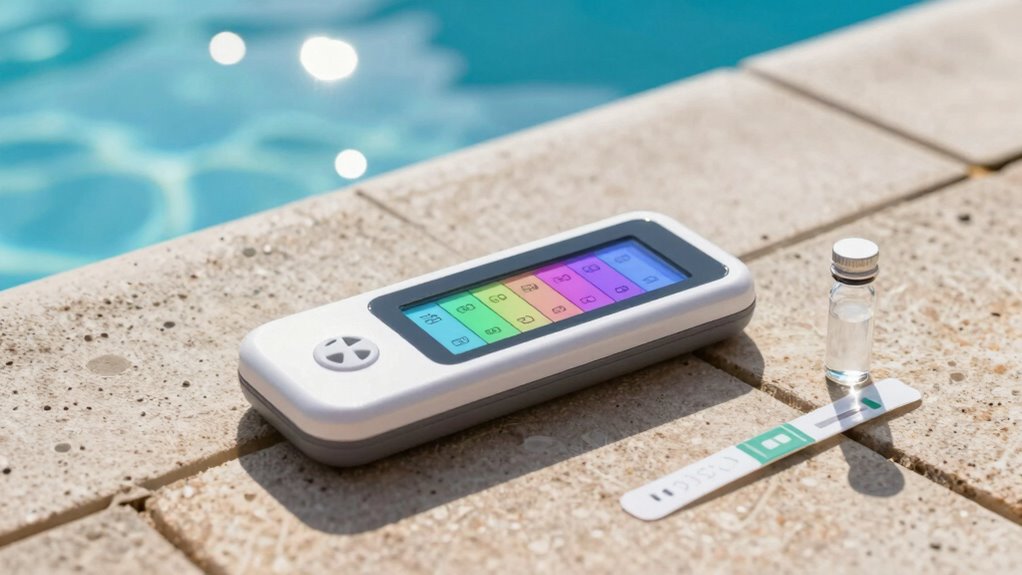
Creating a consistent pool testing routine helps you stay ahead of potential chemical imbalances and keep your water safe and inviting. To do this, establish a schedule that fits your pool usage and environment—testing at least twice a week during peak season and once a week off-season. Use reliable test kits to check key parameters like pH, chlorine, alkalinity, and stabilizer levels. Regular testing ensures your pool maintenance stays on track, preventing issues before they escalate. Record your results to track trends and adjust chemicals as needed for ideal chemical balance. Consistency is key; by sticking to your schedule, you’ll maintain clear water, reduce chemical waste, and extend the life of your pool equipment. A solid testing routine is essential for easy, effective pool maintenance.
Frequently Asked Questions
How Often Should I Test My Pool Water During Peak Season?
During peak season, you should test your pool water at least 2-3 times a week. Regular testing helps you monitor chlorine stabilization and pH balancing, ensuring safe, clear water. If the pool gets heavy use or after storms, test more often to prevent issues. Keep an eye on chlorine levels and pH to maintain proper chemical balance, making your swimming experience enjoyable and safe.
What Are the Signs of Imbalanced Pool Chemistry?
Think of your pool as a living mirror—if it shows cloudy water, strong chemical smells, or persistent algae, your chemistry’s out of sync. Watch for pH fluctuations, which cause water to feel sticky or irritating. An imbalanced alkalinity affects pH stability, leading to cloudiness or corrosion. If these signs appear, it’s time to check and adjust your chemicals, restoring harmony and clear, inviting water.
Can Outdoor Temperatures Affect Test Accuracy?
Outdoor temperatures can definitely affect test accuracy because temperature fluctuations impact how well your test reagents work. High or low temperatures may cause test calibration issues, leading to inaccurate readings. To guarantee precise results, try testing your pool water during consistent, moderate temperatures or wait until temperatures stabilize. This way, you minimize errors caused by environmental factors, keeping your pool chemistry balanced and safe for swimming.
What Are the Best Tools for Quick At-Home Pool Testing?
For quick at-home pool testing, you should use test strips or digital test kits. They allow you to easily check chlorine stability and pH balancing, ensuring your pool stays safe and clean. Test strips are convenient and inexpensive, providing instant results, while digital kits offer more accuracy. Regular testing helps you maintain proper chemical levels, preventing issues like algae growth or cloudy water.
How Do Weather Conditions Influence Chemical Levels?
Weather conditions directly impact your pool’s chemical levels. Solar evaporation can cause water to evaporate faster on hot, sunny days, concentrating chemicals and throwing off balance. Cloud cover reduces evaporation rates, helping maintain stable levels. You’ll notice pH and sanitizer levels fluctuate with these changes, so it’s essential to test regularly and adjust chemicals accordingly. Keeping an eye on weather patterns helps you maintain a safe, balanced pool.
Conclusion
By monitoring your free chlorine, pH, alkalinity, and calcium hardness regularly, you keep your pool safe, clear, and inviting. By testing consistently, adjusting promptly, and maintaining balance, you prevent issues before they start. By staying proactive, staying informed, and staying committed, you’ll enjoy crystal-clear water all season long. Remember, good pool chemistry isn’t a one-time task—it’s a routine that keeps your pool sparkling and your swim safe.
Halloween Picks
halloween
As an affiliate, we earn on qualifying purchases.