To make summer maintenance easier, establish a routine that includes proper pool cover removal, water chemistry adjustment, and thorough equipment inspection. Starting with a clean cover keeps debris out and protects your equipment. Balancing water chemistry ensures clear, safe water, while inspecting your equipment helps catch minor issues early. Maintaining consistency with each step prevents bigger problems later. Keep this routine steady, and you’ll save time and effort all season long—discover how to perfect each step for best results.

Get pool and patio gear delivered free with Prime
- Fast, free delivery on millions of items
- Prime Video, Amazon Music and more included
- Member-only deals all year
Key Takeaways
- Establish a consistent opening routine to simplify seasonal maintenance and prevent overlooked issues.
- Properly remove the pool cover carefully to avoid damage and ensure a debris-free start.
- Test and balance water chemistry early to maintain clear, healthy water throughout summer.
- Conduct thorough equipment inspection to identify and fix minor problems before peak use.
- Regularly monitor and adjust water levels and chemistry for smooth, stress-free pool operation.
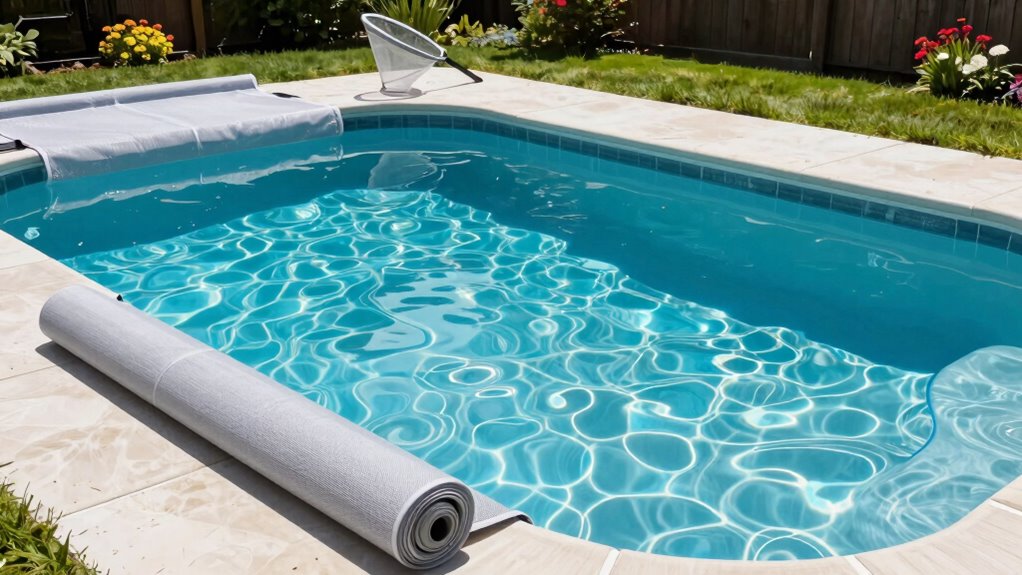
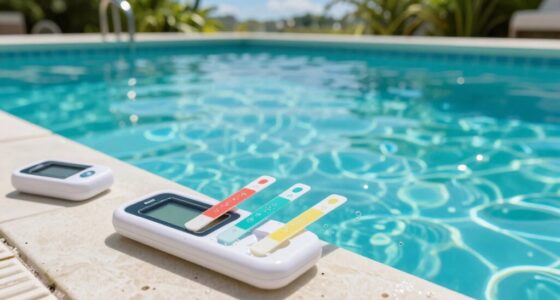
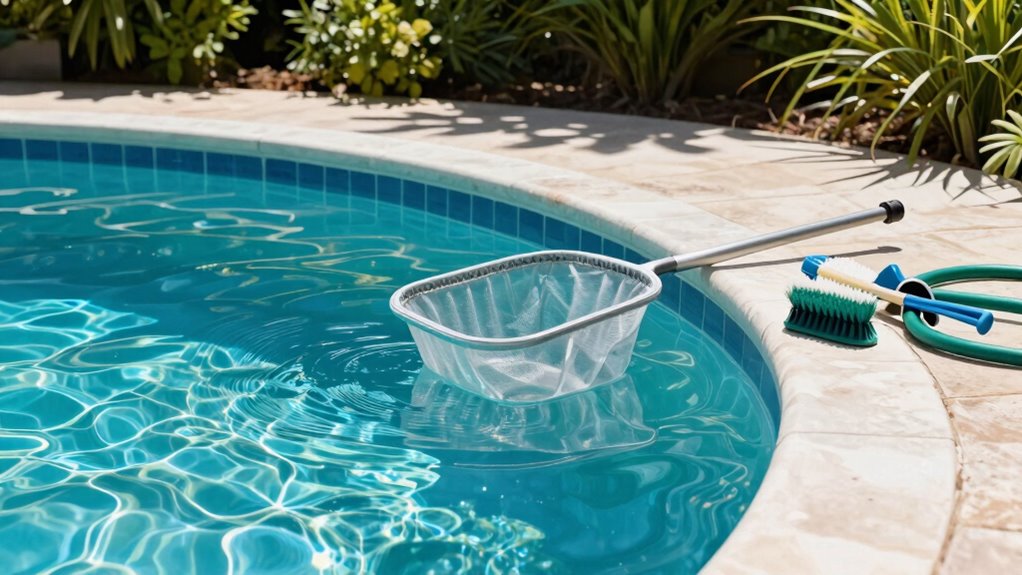
Have you ever wondered why establishing a pool opening habit can make the season more enjoyable and stress-free? The key lies in how you approach the initial steps, especially pool cover removal and water chemistry adjustment. When you develop a routine for these tasks, you set a solid foundation for the entire swimming season. Removing your pool cover properly is vital because it keeps debris out of your water and prevents potential damage to the cover itself. Instead of rushing, take your time to carefully peel back the cover, checking for any accumulated debris that needs removal. Using a pool cover pump or blower can make this easier and cleaner, guaranteeing no dirt or leaves end up in the water when you open your pool. Once the cover is off, it’s tempting to jump straight into filling the pool, but a quick inspection of the pool’s surface and equipment is essential. Look for tears or wear on the cover and clean any debris from the pool’s surface before filling it. Establishing a proper opening routine can also help you identify potential issues early, saving time and costs later on. After removing the cover, the next step is water chemistry adjustment. This is where your routine really pays off, as maintaining proper water balance prevents algae growth, cloudy water, and equipment damage later on. Start by testing your water with a reliable test kit or strips, focusing on pH, alkalinity, and sanitizer levels. If the pH is too high or low, it can affect sanitizer efficiency and cause scaling or corrosion. Adjust the pH first, then move on to alkalinity, which helps stabilize pH levels. Once these are balanced, you can add sanitizer to ensure your water stays clean and safe. Regular testing and adjusting during the opening process prevent issues from escalating as the season progresses. Additionally, inspecting your pool equipment and ensuring it is functioning properly can save you time and effort later. Performing a comprehensive inspection of your pool and equipment as part of your routine can help catch minor problems early, avoiding costly repairs down the line. Incorporating these steps into your opening routine to make it more manageable and less stressful. It’s not just about getting the pool ready but establishing a habit that streamlines future maintenance. Proper equipment maintenance is crucial because it ensures reliable operation and reduces unforeseen breakdowns during peak swimming months.
As an affiliate, we earn on qualifying purchases.
Frequently Asked Questions
How Early Should I Open My Pool Each Season?
You should open your pool early in the season, ideally when temperatures stay consistently above 60°F. This allows you to perform your seasonal opening checklist without rushing. During pool cover maintenance, remove debris and clean the cover thoroughly before uncovering. Opening early gives you ample time to balance chemicals, inspect equipment, and address issues, making summer maintenance easier and more manageable from the start.
What Tools Are Essential for Pool Opening?
You’ll need essential tools like a sturdy pool cover and a reliable filter system. Start by removing and cleaning the pool cover to keep debris out. Then, check and prime your filter system to make sure it’s functioning properly. These tools help protect your pool during the off-season and make opening easier, reducing the time and effort needed for summer maintenance. Regularly maintaining your cover and filter system keeps your pool in top shape.
How Do I Prevent Algae Growth After Opening?
Think of algae prevention as a battle you can win with the right strategy. To keep algae at bay after opening your pool, maintain proper chemical balance and regularly check pH and chlorine levels. Use algaecide as a backup, especially if you notice early signs. Keeping your water balanced and sanitized creates a hostile environment for algae, making your summer swimming experience smoother and more enjoyable.
What’s the Best Way to Store Pool Chemicals?
You should store pool chemicals in a cool, dry, well-ventilated area away from pool safety hazards and children’s reach. Keep them in their original containers with labels intact, and never mix chemicals or store them near other household products. This guarantees chemical safety and prevents accidents. Regularly check for leaks or damaged containers, and always follow manufacturer instructions for proper storage to make summer maintenance safer and easier.
How Often Should I Check Water Levels During Opening?
You should check your water levels daily during opening to confirm pool safety and ideal water filtration. Many believe once filled, levels stay steady, but evaporation and splashing can cause drops. Regular checks prevent issues like pump damage or cloudy water. By maintaining proper water levels, you protect your pool’s equipment and enjoy a safe, clean swimming environment all summer. Don’t overlook this simple habit—it makes a big difference.
Conclusion
By adopting this simple pool opening habit, you’ll turn a daunting summer task into a breeze, making each year’s start feel like revealing a sparkling oasis beneath the sun. Imagine your pool as a crystal-clear mirror, inviting you to plunge into endless summer adventures. This small change not only eases maintenance but also transforms your backyard into a personal paradise, where every splash echoes the promise of relaxation and fun just waiting to be embraced.
Halloween Picks
halloween
As an affiliate, we earn on qualifying purchases.