
Maintaining a steady pool cleaning rhythm makes it easier to keep your water crystal clear and avoid big problems later on. By testing your water twice a week, inspecting your equipment regularly, and skimming daily, you prevent algae buildup, cloudy water, and equipment issues. Sticking to a consistent schedule helps you catch problems early and keeps your pool inviting all season. Keep up this routine, and you’ll enjoy easier maintenance and a more enjoyable swim—there’s more to discover on how to keep it simple.

Get pool and patio gear delivered free with Prime
- Fast, free delivery on millions of items
- Prime Video, Amazon Music and more included
- Member-only deals all year
Key Takeaways
- Establish a weekly routine for chemical testing and equipment checks to prevent buildup and maintain water clarity.
- Perform daily skimming and filter cleaning to keep debris out and reduce major cleaning efforts.
- Schedule regular chemical level adjustments based on consistent testing to maintain balanced water chemistry.
- Inspect and maintain equipment weekly to detect issues early and ensure optimal operation.
- Develop a predictable maintenance pattern that minimizes surprises and keeps pool cleaning manageable.
Have you ever wondered if there’s a perfect rhythm to keeping your pool sparkling clean? The truth is, establishing a regular routine makes all the difference. Consistency helps you stay ahead of issues like algae buildup or cloudy water, so you don’t end up scrambling to fix problems caused by neglect. When you maintain a steady schedule, you can better monitor your pool’s chemical balance and catch equipment issues early, preventing costly repairs or replacements. This regular maintenance schedule isn’t about overdoing it; it’s about creating a manageable pattern that fits into your weekly routine.
Balancing your pool’s chemical levels is a vital part of this rhythm. Testing your water at least twice a week ensures you catch fluctuations in pH, chlorine, alkalinity, and other chemicals before they cause problems. When you keep the chemical balance steady, your pool stays clearer, safer, and feels more inviting. Using a reliable test kit or pool app helps streamline this process, making it quick and straightforward. Once you get into the habit of checking and adjusting, it becomes second nature. Proper chemical balance also reduces strain on your pool equipment, since imbalanced water can cause corrosion, scaling, or equipment failure over time. Regular testing and adjusting also contribute to pool water chemistry, which is essential for maintaining a healthy swimming environment. Developing a consistent testing routine can help ensure you don’t overlook critical chemical adjustments. Additionally, understanding the importance of water quality can motivate you to stay consistent with your routine. Incorporating proper water circulation is another key factor in maintaining overall water health and clarity.
Regularly testing and balancing your pool’s chemicals keeps water clear, safe, and equipment in top shape.
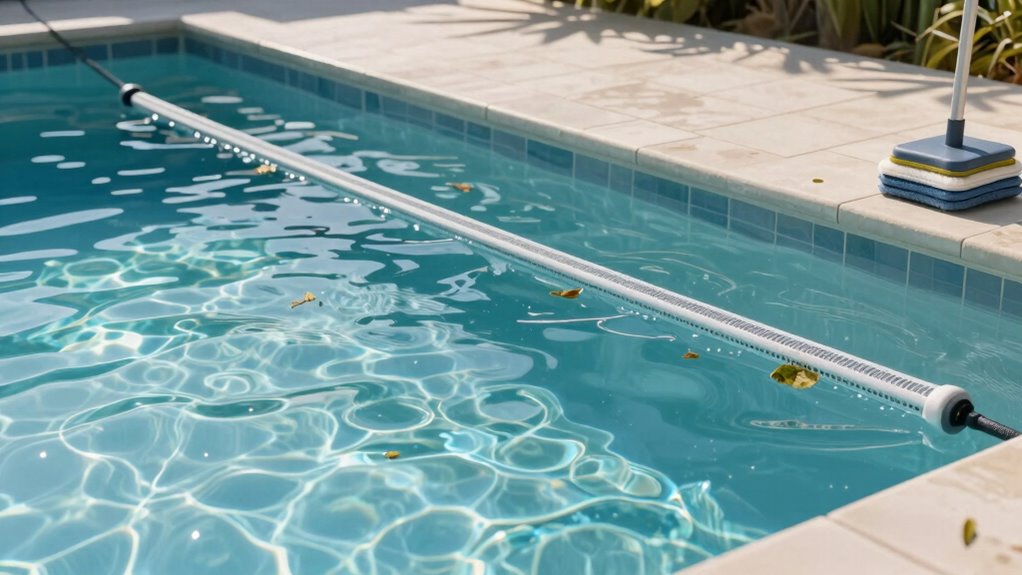
Equipment maintenance is another key aspect of your cleaning routine. Regularly inspecting your pump, filter, and skimmer ensures they’re functioning correctly. Clean your filter weekly if you’re using it heavily or during peak swimming seasons, and backwash or replace filter media as needed. Keep an eye out for unusual noises or reduced water flow, which can signal a problem. Skimming debris off the surface daily prevents leaves, bugs, and dirt from sinking and decomposing, which can cloud your water or foul your filter. These small, consistent steps help extend the lifespan of your equipment and keep your pool water pristine.
Scheduling these tasks at set times—say, every Saturday morning or after a weekend swim—creates a predictable rhythm that’s easy to stick with. Over time, it becomes less of a chore and more of a routine you don’t even think about. When you combine regular chemical testing with routine equipment checks, you’ll notice fewer surprises and fewer large-scale cleaning days. This approach not only keeps your pool inviting but also saves you time and money in the long run. In the end, finding your perfect pool cleaning rhythm means you spend less time worrying about your pool’s condition and more time enjoying it.
Frequently Asked Questions
How Often Should I Replace My Pool Filters?
You should replace your pool filters every 1 to 2 years, depending on usage and filter type. Regular filter maintenance helps keep your pool’s chemical balance in check and prevents buildup that can strain your system. Keep an eye on flow rate and pressure; if they rise despite cleaning, it’s time for a new filter. Proper filter care guarantees easier cleaning and a healthier, clearer pool all season long.
What’s the Best Time of Day to Clean the Pool?
Think of your pool as a garden; early morning or late afternoon is ideal for pool maintenance schedule. During these times, the sun isn’t at its peak, reducing evaporation and chemical loss. Perfect cleaning timing ensures you catch debris early and prevent buildup. You’ll find your pool stays clearer and healthier when you stick to a routine aligned with natural rhythms, making maintenance feel less like a chore and more like a natural part of your day.
Are Robotic Pool Cleaners Worth the Investment?
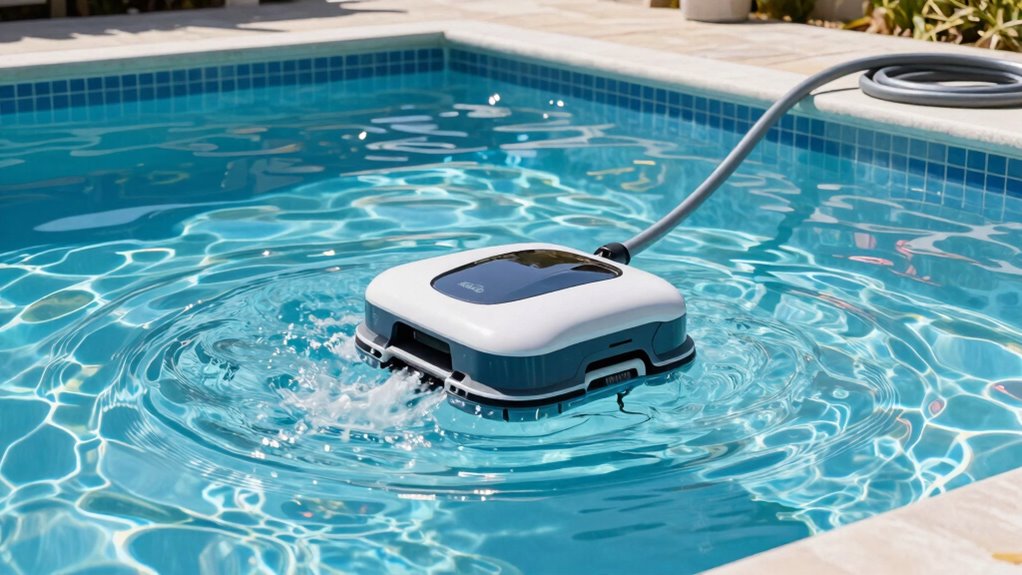
Yes, robotic pool cleaners are worth the investment. They offer robotic efficiency, making cleaning quicker and more thorough, saving you time and effort. Plus, they can reduce maintenance costs by preventing algae buildup and debris accumulation, which often lead to costly repairs. While the initial expense might seem high, their convenience and long-term savings make them a smart choice for maintaining a clean, inviting pool with less hassle.
How Can I Prevent Algae Buildup Effectively?
To prevent algae buildup effectively, you need to maintain proper chemical balance and control sun exposure. Regularly test and adjust your pool’s pH, alkalinity, and sanitizer levels to keep them ideal. Use a pool cover or shade to limit sun exposure, which encourages algae growth. Skim and brush the pool frequently, especially in sunny areas, and run your filter system consistently to keep water clear and algae-free.
What Are Signs My Pool Needs Professional Servicing?
When your pool starts resembling a science experiment gone wrong, it’s time for professional help. Signs include cloudy water, persistent algae, or strange odors—indicators that your pool chemistry’s out of whack. Also, if your equipment squeaks or leaks like a rusty gate, maintenance is overdue. Don’t ignore these clues; professional servicing restores balance, keeps your pool sparkling, and spares you from becoming the neighborhood’s unofficial swamp curator.
Conclusion
Sticking to a steady pool cleaning rhythm is like gently tuning a delicate instrument—you keep the waters clear and inviting, never letting grime build into a formidable symphony. When you maintain that gentle, consistent beat, your pool becomes a sparkling oasis, a mirror reflecting your care. Skip a beat, and you risk turning your invigorating retreat into a murky pond. Embrace the rhythm, and your backyard paradise stays bright, welcoming, and effortlessly beautiful.
Evergreen bestsellers Picks
bestsellers
As an affiliate, we earn on qualifying purchases.