To improve flow around the water, focus on strategic placement of entry and exit zones, ensuring they are wide and unobstructed for smooth movement. Incorporate gentle slopes, transfer walls, and zero-entry points for easy access, especially for those with mobility challenges. Use clear signage and proper drainage to guide and keep walkways dry, reducing hazards. Well-planned zones prevent congestion and support safe circulation, making the space welcoming and efficient—keep exploring to see how these details enhance your pool’s safety and flow.

Get pool and patio gear delivered free with Prime
- Fast, free delivery on millions of items
- Prime Video, Amazon Music and more included
- Member-only deals all year
Key Takeaways
- Strategically position entry and exit points to evenly distribute foot traffic and prevent congestion.
- Incorporate wide walkways and unobstructed paths for smooth movement around the pool.
- Use designated zones for entry and exit to streamline flow and reduce safety hazards.
- Ensure proper drainage systems to keep walkways dry and prevent water pooling.
- Design accessible features that seamlessly integrate with safety measures to enhance overall flow and inclusivity.
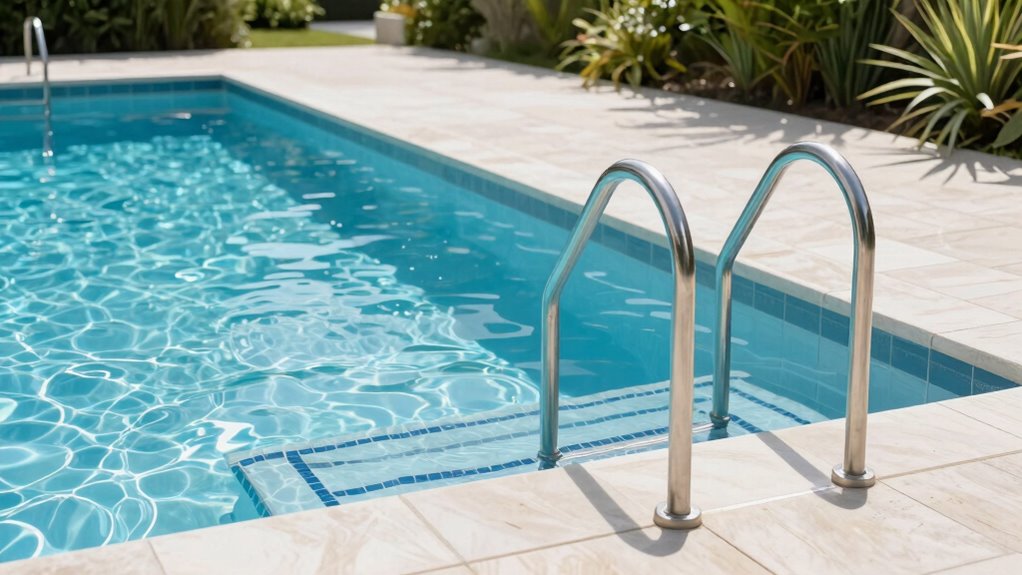
Have you ever wondered about the best way to enter and exit a pool safely and efficiently? It’s a question that combines water safety with smooth flow, ensuring that everyone can enjoy the water without unnecessary hazards or congestion. The key lies in understanding and implementing effective pool entry and exit details that prioritize safety and accessibility. When you focus on these aspects, you create a seamless experience that encourages more confident swimming and reduces the risk of accidents.
One of the most important considerations is ensuring that your pool design incorporates accessibility features. These are *vital* for accommodating all users, including those with mobility challenges. Features like ramps with gentle slopes, transfer walls, or zero-entry points allow you to enter and exit the pool comfortably, eliminating the need for stairs or ladders that can pose safety risks or become bottlenecks during busy times. Zero-entry pools, which gradually slope from the deck into the water, provide an inviting, safe way for everyone to get in and out without sudden drops or steps that might cause slips or falls.
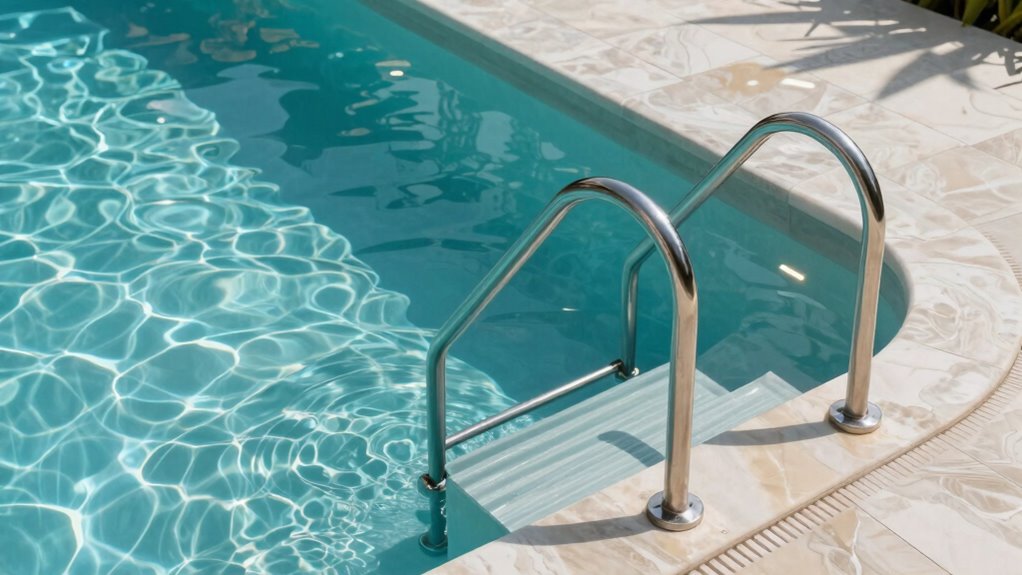
Water safety is at the heart of designing effective pool entry and exit points. Clear signage, non-slip surfaces, and well-lit areas help guide swimmers safely in and out of the water. When entry points are strategically placed, they help distribute foot traffic and prevent congestion, making it easier to maintain a safe environment. Ladders and steps should be sturdy, easy to grip, and checked regularly for wear or damage. The placement of these features should also be convenient, ideally near the pool’s shallow end, so beginners or children can access the water with minimal risk. Additionally, understanding the importance of accessible design can help create a more inclusive swimming environment for everyone. Incorporating proper planning can further enhance flow efficiency, reducing bottlenecks and creating a more enjoyable experience. Regular maintenance is also crucial to ensure all features remain safe and functional over time. Moreover, thoughtful placement of entry and exit zones can help prevent water from splashing into surrounding areas, reducing slip hazards outside the pool. Incorporating proper drainage systems can also help manage water runoff and keep walkways dry, further enhancing safety.
Efficient flow around the water isn’t just about safety; it’s about encouraging a smooth, enjoyable experience for everyone. When you design entry and exit points thoughtfully, you reduce interruptions and prevent crowding at certain spots, which can lead to accidents or discomfort. Proper planning includes wide walkways, unobstructed paths, and designated zones for entering and exiting. Combining accessibility features with safety-focused design not only makes the pool more inclusive but also enhances overall water safety, ensuring that all swimmers can enter and leave confidently.
In the end, paying attention to these details creates a more functional, safer aquatic environment. You’ll find that a well-designed flow around the water benefits everyone, from casual bathers to serious swimmers, making pool time safer, more accessible, and more enjoyable.
As an affiliate, we earn on qualifying purchases.
Frequently Asked Questions
What Materials Are Best for Slip-Resistant Pool Entry Surfaces?
For slip-resistant pool entry surfaces, you should choose materials with excellent surface traction and durability. Textured concrete, epoxy coatings with grit, or rubberized mats are ideal options, as they provide grip even when wet. These materials withstand constant exposure to water and weather, ensuring safety and longevity. By selecting surfaces with high surface traction and robust material durability, you create a safer, more reliable entry and exit point around your pool.
How Can We Prevent Congestion During Peak Pool Hours?
To prevent congestion during peak hours, you need to stay ahead of the game with effective congestion management. Implement staggered entry times and designate specific entry and exit points to improve water flow. Encourage swimmers to use different routes and monitor activity levels. By managing flow efficiently, you keep the pool running smoothly, avoiding bottlenecks and ensuring everyone has a good time. Stay proactive, and you’ll keep congestion at bay.
Are There Safety Standards for Pool Entry and Exit Designs?
Yes, safety standards for pool entry and exit designs exist, focusing on accessibility improvements and aesthetic enhancements. You should guarantee ramps, handrails, and non-slip surfaces meet ADA guidelines to accommodate all users safely. Incorporating visually appealing elements not only enhances the pool’s look but also guides swimmers effectively. By following these standards, you create a safer, more inviting environment that encourages smooth flow and reduces congestion during busy hours.
How Often Should Pool Entry Points Be Inspected for Safety?
Think of your pool as a busy highway; safety checks keep traffic flowing smoothly. You should inspect pool entry points weekly, ensuring that safety features like pool signage and emergency exits are clear, intact, and unobstructed. Regular inspections help catch hazards early, preventing accidents. Keep a schedule, document findings, and promptly address issues—your vigilance keeps everyone safe and the water welcoming.
Can These Designs Be Adapted for Small or Irregularly Shaped Pools?
Yes, you can adapt these designs for small or irregularly shaped pools by exploring custom design options. Focus on accessibility enhancements like adjustable steps or ramps that fit unique shapes. Custom designs guarantee smooth flow and safe access, regardless of pool size. You’ll want to work with professionals who can tailor solutions, making sure the entry and exit points complement your pool’s specific layout while improving safety and convenience.
Conclusion
By optimizing your pool’s entry and exit points, you’ll improve water flow and enhance safety. Thoughtfully designed access routes prevent congestion and make your swimming experience smoother. Isn’t it worth considering how simple adjustments can transform your pool’s efficiency? With a few smart changes, you’ll enjoy a more enjoyable, safer environment for everyone. So, why settle for less when the right details can make all the difference?
Halloween Picks
halloween
As an affiliate, we earn on qualifying purchases.