TL;DR

Get pool and patio gear delivered free with Prime
- Fast, free delivery on millions of items
- Prime Video, Amazon Music and more included
- Member-only deals all year
An Ideal Home gardening report outlines six potential benefits of mulching: protection from frost and heavy rain, improved soil fertility and structure, moisture retention, and support for garden wildlife. The benefits depend on the mulch and garden conditions; the report does not quantify results or compare different materials.
Ideal Home’s gardening report says mulching beds, borders and containers can help protect plants from seasonal weather, retain moisture and improve soil. The advice comes as a timely garden task ahead of colder weather, though the article presents expert guidance rather than measured results from a new study.
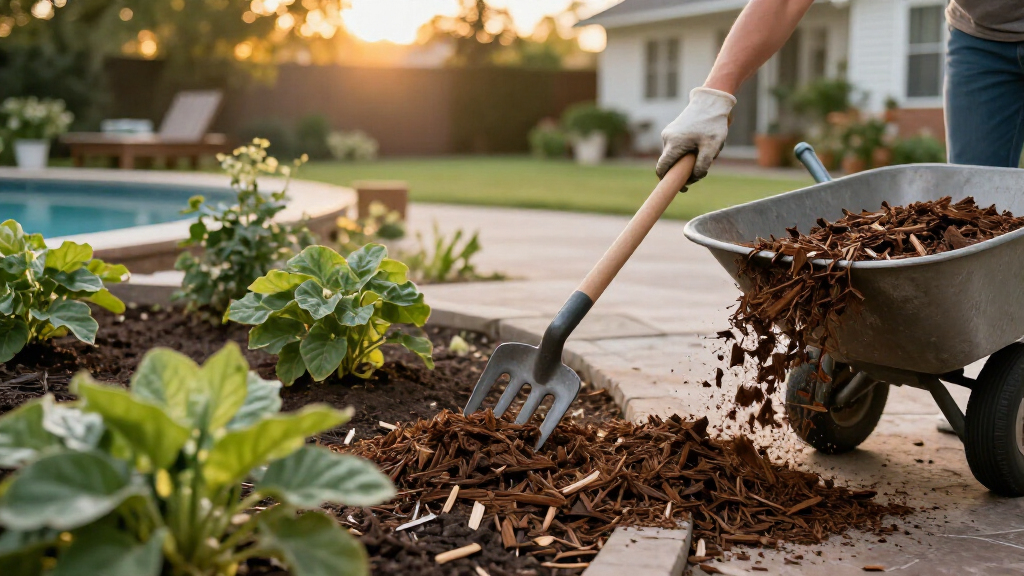
The report identifies six potential benefits: insulation against frost, reduced soil erosion during heavy rain, added organic matter, better moisture retention in hot weather, improved soil structure and support for wildlife. It defines mulching as applying a layer of organic material to garden soil.
For soil improvement, grow-your-own author Huw Richards recommends a layer 5–7 centimetres (2–3 inches) deep. He says organic mulch breaks down over time, adding organic matter and feeding worms, fungi and other soil organisms. The article does not say that this depth is suitable for every plant or material.
Landscape gardener Carl Jones says organic mulch can protect roots and reduce erosion when heavy rain washes over garden beds. The report also says mulch can slow moisture loss in hot weather, potentially reducing how often plants need watering. It gives no specific estimates for water savings or the degree of frost protection.
How Mulch Can Help Through Winter
Mulching matters to gardeners because it may address several seasonal problems with one task: temperature swings, rain-related soil loss and drying soil. A protective layer can be particularly relevant for exposed beds and borders, while organic materials that break down can contribute to soil health over time.
The wildlife benefit described in the report is also part of the case for using natural materials. Green Feathers wildlife expert James Ewens says mulch can support invertebrates, which are food for birds, hedgehogs, frogs and toads. That does not mean every type of mulch will produce the same effect, and the article acknowledges that some materials can provide shelter for slugs and snails as well.
These are practical gardening recommendations, not guarantees. Results will depend on the material used, local weather, soil and plants. The report offers no controlled comparisons or numerical measurements, so readers should treat claims about performance as expert guidance rather than quantified outcomes.
Popular right now

Vitamix 5200 Professional-Grade Blender, 64 oz. Container, Black

Samsung 85-Inch QN70H Neo QLED 4K Smart TV (2026)

KitchenAid Artisan 5-Quart Tilt-Head Stand Mixer, KSM150PS, Almond Cream
As an affiliate, we earn on qualifying purchases.
Seasonal Advice and Mulch Types
The Ideal Home article positions mulching as a task for the approach of winter, while also describing benefits in summer. It suggests compost, straw, leaves, grass clippings, leaf mould and bark chippings as examples of organic materials. Richards advises covering compost with straw, leaves or grass clippings to protect it from winter conditions.
The source also notes that living groundcover can help stabilise soil and suppress weeds. These options differ from a loose layer of mulch, and the article does not provide a detailed comparison of their costs, suitability or upkeep. Its central recommendation is that gardeners choose a material with their immediate aim in mind, such as insulating roots or adding organic matter.
“A layer of mulch acts like a blanket to protect the soil from frost.”
— James Ewens, wildlife expert at Green Feathers
What the Advice Does Not Measure
The report does not provide experimental data, quantified outcomes or a comparison across mulch types. It is not clear how much any given layer will reduce frost damage, erosion or watering needs, or how quickly a particular material will improve soil. Those outcomes can vary with local conditions and plant needs.
The article also does not offer a complete guide to material-specific application, including which plants may be unsuitable for particular mulches. Although it notes that mulch can shelter slugs and snails, it does not quantify that risk or recommend a single approach for managing it. Readers should check guidance suited to their plants and local conditions.
Choosing a Mulch for Your Beds
The next step for gardeners is to identify what they want the mulch to do: protect roots, reduce water loss, limit erosion or build soil. The report’s advice is to use organic matter and, when aiming to enrich soil, apply a layer around 5–7 centimetres deep; it also suggests an extra covering over compost in winter. These are recommendations from the cited experts, not a universal prescription.
As colder weather approaches, gardeners can apply the guidance to their own beds, borders and containers and monitor how plants and soil respond. The source gives no scheduled follow-up study or further announcement; the practical outcome will depend on the material selected and conditions in each garden.
Key Questions
What is mulching?
Mulching means spreading a layer of material over soil in beds, borders or containers. The Ideal Home report focuses mainly on organic materials, including compost, leaves and bark chippings.
How deep should mulch be?
Grow-your-own author Huw Richards recommends 5–7 centimetres (2–3 inches) in the report. The source does not establish that this depth suits every material, plant or garden.
Can mulch protect plants from frost?
The experts cited by Ideal Home say a mulch layer can insulate soil and protect roots. The article does not quantify the level of protection, which may vary with weather, material and planting conditions.
Does mulch help in hot weather?
The report says mulch can slow moisture loss and shelter roots, potentially meaning less frequent watering. It gives no estimate of water savings.
Does mulch attract slugs?
Mulch can provide shelter for slugs and snails, according to the report. Ewens also says these animals are food for hedgehogs, frogs and some birds; the article does not quantify either effect.
Source: idealhome.co.uk