
TL;DR
Floating pool loungers support you while you sit or recline on calm pool water, with designs ranging from inflatable rafts to mesh hammocks and fabric sling chairs. Choose by comfort, stated weight limit, stability, pool size, and storage needs; treat every lounger as a recreational float, never as a safety device. Rinse it after use, dry it fully, and check the maker’s instructions before using or repairing it.
The pool float that looks like a plush throne can turn into a wobbly balancing act once you climb aboard. Floating pool loungers come in many shapes, and the best one for you depends on how you want to sit, how much support you need, and where you plan to use and store it.

Get pool and patio gear delivered free with Prime
- Fast, free delivery on millions of items
- Prime Video, Amazon Music and more included
- Member-only deals all year
This guide compares inflatable, foam, and sling-style designs, explains which details affect comfort and stability, and gives you a practical checklist for choosing one. You’ll also learn how to care for your lounger and keep its role clear: it’s for recreation, not a substitute for attentive supervision or safety equipment.
Imagine a small backyard pool, a full weekend crowd, and a float that barely fits between the steps and the ladder. A few thoughtful checks before you buy can spare you the cramped fit, the awkward carry, and the sunny afternoon spent reinflating a slow leak.
Choose an inflatable, foam, or sling design based on how much support and water contact you want.
Compare dimensions and stated capacity; the maximum load does not promise a comfortable or stable fit.
Treat every pool lounger as a recreational float, never as a rescue device or a replacement for adult supervision.
Check construction, care directions, repair options, and warranty rather than relying on broad durability claims.
Rinse away chlorine or salt, dry the lounger fully, and store it away from sharp objects and harsh sun.
Choose a Lounger That Matches How You Want to Relax
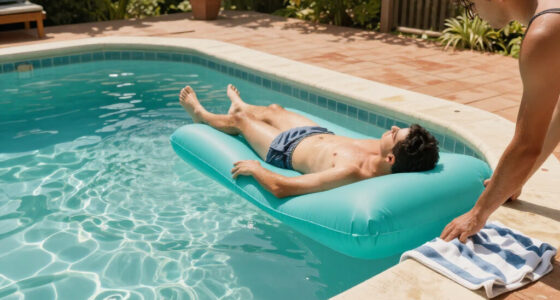
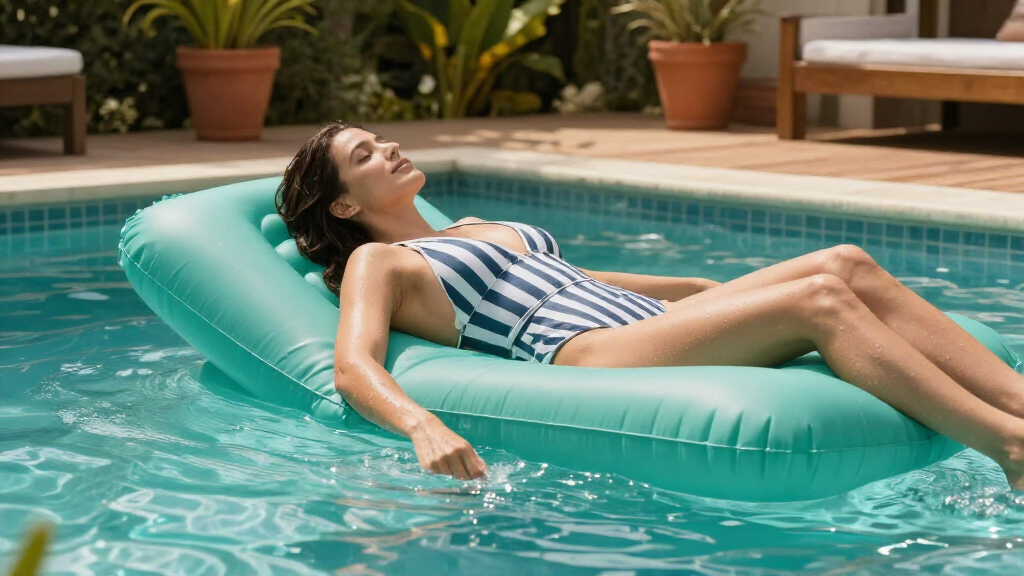
Floating pool loungers support you as you sit or recline on the water, and different designs distribute that support in different ways. Inflatable rafts hold more of your body above the surface, which can feel closer to a floating sunbed and keep clothing drier. The tradeoff is that air-filled surfaces can shift under your weight and depend on intact seams and valves. Hammock-style floats suspend a fabric or mesh center between buoyant ends, letting water reach your back and helping you stay cool, but they provide less coverage and may not suit someone who wants to remain mostly dry.
Think of choosing a float like choosing a chair for a long meal: a soft-looking seat is not much use if it leaves your neck unsupported. If you want to read for an hour, a backrest and a stable recline angle matter because you’ll notice small pressure points and posture changes more over time. If you want to cool off, a sling seat that lets water reach your back may be more comfortable, even if it offers less insulation from the water. For example, someone spending a quiet afternoon beside a shallow pool might enjoy a mesh hammock, while a reader who wants to stay mostly dry may prefer a solid inflatable lounger.
Some newer designs add adjustable recline, linked floats, or shade canopies. Each adds a convenience, but also something to assemble, clean, store, or potentially break. Adjustable straps can help different users find a comfortable angle, though they may need readjustment as the float shifts. Linked floats can keep a group together, but take up more pool space and can make it harder to move independently. A canopy may feel appealing in a hot yard, yet it can catch wind and may make storage more awkward, so check the maker’s use and care instructions.
When comparing styles, picture where you’ll actually use the float: the water, the pool deck, and the place you’ll put it away. A design that is comfortable in the water may be cumbersome to carry or take too long to set up for a short visit. Comfort, support, and easy handling usually matter more than a long list of accessories.
- Inflatable rafts: portable and easy to deflate, but they need inflation and can puncture.
- Mesh or fabric slings: let you sit partly in the water, but may offer less coverage.
- Foam or frame designs: can feel firmer, but often take more room to carry and store.
Popular right now

KitchenAid Artisan 5-Qt Tilt-Head Stand Mixer – Almond Cream (KSM150PS)

Ninja Foodi DualZone Smart XL Air Fryer, 10-Quart, 6-in-1, Black, DZ550

De'Longhi Classic Signature Espresso Machine with Adjustable Milk Frother
As an affiliate, we earn on qualifying purchases.
Compare Materials Before You Pay for Extra Features
Material names alone won’t tell you how long a lounger will last. Construction, seam quality, exposure to sun and pool chemicals, and storage habits all shape its useful life. Inflatable PVC or vinyl models are often simple to pack away, but a puncture or failing valve can make them unusable until repaired. Foam and fabric-on-frame designs can feel more substantial and avoid inflation, but their bulk can make them harder to transport and keep dry. Treat the material as a starting point; inspect the details that hold the product together and consider the conditions it will face.
Look closely at welded seams, stitching, valves, handles, and any frame joints. These are stress points: climbing aboard pulls on seams and handles, while repeated folding can strain creases and stitching. A glossy inflatable might look sturdy in a product photo, but a poorly finished valve can turn setup into a slow leak hunt. If you can, check whether the manufacturer gives clear cleaning directions, a repair method, and warranty terms. Claims such as “puncture-proof” deserve a closer look: ask what testing or construction detail supports the promise, since sharp objects and rough surfaces can still damage many floats.
For instance, if you plan to carry a lounger to a community pool every week, a compact inflatable with a reliable valve and manageable inflation time could fit your routine. The convenience depends on having a way to inflate it and a place to dry it before packing; otherwise, setup and damp storage can erase the space savings. If you’ll leave a fabric sling near a backyard pool, quick-drying fabric and a frame that resists corrosion may matter more. In either case, a repair kit only helps when it matches the material and damage; a patch may not fix a torn seam or faulty valve, so the ease of repair is part of the purchase decision.
Some manufacturers now promote reinforced seams, heavier-duty fabrics, or compact designs. These are product trends, not proof that every model is durable. Added reinforcement may improve resistance at a stress point while increasing weight or stiffness. Clear specifications and care guidance give you more to work with than a vague label or a crowded accessories list.
Buying clue: Check the seams, valve or frame joints, repair options, and warranty before treating a “heavy-duty” label as useful evidence.
Plastic inflatables can also be hard to recycle or repair, and an escaped float can become litter. Careful storage and a timely, compatible repair can extend its use; replacing it at the first scuff may mean sending a still-fixable product out of service. However, a repair should be reliable before the float goes back in the water: a patch that keeps leaking can create frustration and leave the product less predictable to use.
Check Comfort, Stability, and Fit as a Package
A comfortable lounger supports your body without feeling tippy or cramped. Reclining angle, seat depth, head and foot support, and the way the float shifts under you all affect the experience. These details work together: a deep seat may feel secure but make it harder to get out, while a high backrest may improve reading comfort but catch more wind. A model can have plenty of air and still feel awkward if your head slips backward or your knees hang off the end.
Check the product’s dimensions and stated weight limit before you order. Capacity is a maximum figure, not a promise that the lounger will feel roomy or stable at that load. Its shape and buoyancy distribution influence how it sits in the water, and a person near the limit may have less margin for shifting position. For example, a taller adult may fit within the listed limit but still find a compact chair-style float too short to support their legs. If the maker lists a user height range or seat measurements, use those alongside the capacity; they help distinguish a float that can carry someone from one that actually fits them.
Pool size matters, too. A wide raft can drift into the ladder or block a narrow swim lane, especially when several people share the water. That is more than an inconvenience: it can restrict access and make it harder for others to move freely. In a small above-ground pool, a slimmer sling might leave room for swimmers to pass; in a larger pool, a broad reclining float may feel less crowded. A few inches can change how easily you turn, steer, or reach the pool edge.
Think of stability like a shopping cart with a high, uneven load: a little movement can feel bigger than you expect. A lounger made for calm pool water may shift more when someone climbs aboard or when wind pushes it across the surface. A broad float may feel steady once you are settled but still rock during entry, while a sling can move with your body rather than hold a rigid shape. Try a controlled entry in calm, shallow water and follow the maker’s instructions; don’t assume a float designed for a pool will handle waves or currents.
Use Pool Loungers With Clear Safety Boundaries
A pool lounger is a recreational product, not a life-saving device. It cannot replace active supervision, a properly fitted life jacket when appropriate, or other suitable safety measures. Even a float that feels steady can tip, drift, or move away from someone who relies on it for support. Buoyancy helps the product float; it does not ensure that a person can keep their face clear of the water or return safely to the edge.
Children and inexperienced swimmers need close, attentive supervision around water. Keep them within reach when needed, and stay focused rather than relying on a phone, conversation, or the lounger to do the watching. A parent may relax on a float while another responsible adult watches the children, but the float itself should never count as supervision. This distinction matters because a drifting or overturned lounger can draw attention away from a child at the moment close attention is most needed.
Use the product only as its label directs and keep within designated swimming areas. A calm-looking lake can still have wind, changing conditions, or currents, and ocean waves can move a lounger farther than you expect. Unless the manufacturer says the model suits that setting, keep it in the pool. For example, a float that works well on a sheltered pool may become difficult to control in a lake breeze; a person who drifts away from shore may have trouble steering back even if the lounger remains afloat.
Before use, check for visible damage, confirm the valve or frame is secure, and follow age and capacity guidance from the manufacturer. Stay close to the pool edge if you need it for support, and get out if you feel unsteady, tired, or unable to control your position. These checks help catch obvious problems, but they do not turn a lounger into protective equipment. For children, pair clear pool rules with active adult supervision and appropriate safety equipment.
Safety rule: A lounger helps you relax on the water; it does not keep a child or an inexperienced swimmer safe.
Use This Five-Step Checklist to Pick the Right Float
Start with the person and the pool, then compare features. A useful choice fits the intended user, offers the support they want, suits the water setting, and can be carried and stored without a struggle. Each check filters out a different kind of mismatch: comfort alone won’t solve a float that blocks a narrow pool, and a compact design won’t help if its seat is too short. Run through these five checks before buying, whether you’re comparing a basic inflatable or a sling with adjustable straps.
- Pick your position. Decide whether you want to lie mostly above the water or sit with water passing through a mesh center. This choice determines how much coverage and support you get, as well as how cool or wet you may feel. A reader who dislikes getting their shoulders wet may prefer a solid raft.
- Check the fit. Compare length, width, seat depth, and stated capacity with the intended user. A capacity limit doesn’t guarantee a comfortable fit at the maximum; dimensions show whether the seat and backrest are likely to support that person.
- Match it to your pool. Measure the available space and think about ladders, steps, and swim lanes. A huge lounger can dominate a small pool, leaving less room for others and making access to the edge less convenient.
- Weigh setup against extras. Decide whether you’ll inflate it often and whether a pump, cup holder, handle, or canopy genuinely helps. Extra parts can add bulk and cost, and every additional feature may need cleaning or storage. A pump can save effort if you inflate the lounger regularly; a cup holder may matter less if the float is already difficult to maneuver.
- Read the care and safety details. Check the maker’s instructions, repair options, warranty, and allowed water conditions before you buy. These details tell you what upkeep the product requires and where the maker intends it to be used.
Imagine two shoppers. One wants a lounger for quick weekend trips and has little closet space, so a deflatable model with a simple valve may win. The other leaves a float near a backyard pool and values a supportive seat, so a fabric sling may be worth the extra room it takes to store. Neither choice is inherently better; the first prioritizes portability, while the second accepts more storage space for a different feel and less setup.
Recent designs often add ergonomic backrests, adjustable recline, linked floats, and shade. Useful as those can be, they don’t answer the basics: does it fit you, does it fit the pool, and can you keep it in good condition? A feature is worth paying for when it solves a recurring problem, such as helping you find a comfortable angle, rather than simply adding another part to manage. Choose the simplest design that meets your real needs, and verify current specifications and warranty terms with the manufacturer before ordering.
Keep Your Lounger Clean, Dry, and Ready for Next Time
Rinse, dry, and store your lounger carefully to limit wear from chlorine, salt, sun, and sharp objects. Following the product’s care label matters because cleaning and repair directions vary by material: a method safe for a fabric sling may be unsuitable for an inflatable surface. A few minutes of attention after swimming can prevent residue and trapped moisture from shortening its useful life or making it unpleasant to use.
After a pool day, rinse away chemicals or salt with fresh water and let the lounger dry fully before folding or packing it. Check folds, seams, and the underside where water can linger. Drying before storage helps prevent musty smells and avoids keeping damp material pressed together for days. For example, if you deflate a vinyl float while its surface is still wet, putting it in a warm storage bin can leave a musty smell by the next weekend.
Keep it away from sharp corners, rough deck surfaces, and prolonged harsh sun when possible. Sun exposure can gradually weaken or discolor some materials, while abrasion can wear through a surface at the points that touch the deck. If a leak appears, use a repair kit made for that material and follow its instructions; a patch might hold on a small puncture but fail on a damaged seam or valve. Let a repair cure as directed and check it before the next use in calm water. A failed repair can mean repeated inflation and less reliable performance, so replace the lounger if the damage is beyond the maker’s repair guidance.
Thoughtful care can also reduce waste. Inflatable plastic products may be difficult to recycle, and a float that escapes the pool can become litter. Store it securely and repair it when the damage allows; a careful rinse, a dry shelf, and a compatible patch can keep a useful lounger in service longer.
Frequently Asked Questions
Are floating pool loungers safe?
They can be used for recreation when you follow the manufacturer’s instructions and use them in suitable water. They are not life-saving devices and don’t replace active supervision or appropriate safety equipment. Keep close watch on children and inexperienced swimmers.
What is the difference between an inflatable lounger and a pool hammock?
An inflatable lounger is usually air-filled and keeps more of your body above the water. A hammock-style float often has a fabric or mesh center between buoyant ends, so you sit partly in the water. Choose based on how much coverage and water contact feel comfortable to you.
How much weight can a pool lounger hold?
Capacity varies by model, so check the manufacturer’s stated limit. That number doesn’t guarantee the lounger will feel stable or comfortable at its maximum load; compare its dimensions and any user-fit guidance as well.
Can I use a pool lounger in a lake or the ocean?
Only use it in those settings if the manufacturer says it is suitable and conditions are calm and appropriate. Wind, waves, and currents can move a float quickly. A model intended for a calm pool may be difficult to control elsewhere.
How should I clean and store a floating pool lounger?
Follow the care label. In general, rinse off chlorine or salt, let the lounger dry fully, and store it away from sharp objects and prolonged harsh sun. Check the valves, seams, or frame for damage before its next use.
Are mesh loungers better than solid floats?
Mesh lets water pass through and can help you stay cooler, while a solid float gives you more coverage and may feel firmer. Neither suits everyone; compare seat dimensions, back support, and how much of your body you want above the surface.
Conclusion
Pick a lounger that fits the person using it, the pool it will float in, and the space where you’ll store it. Check the dimensions, capacity, construction, and care instructions before you buy, then use it only as a recreational float with attentive supervision around children and inexperienced swimmers.
A good lounger should make the water feel like a quiet pause in your day. Let it help you unwind, but keep your eyes on the people in the pool.