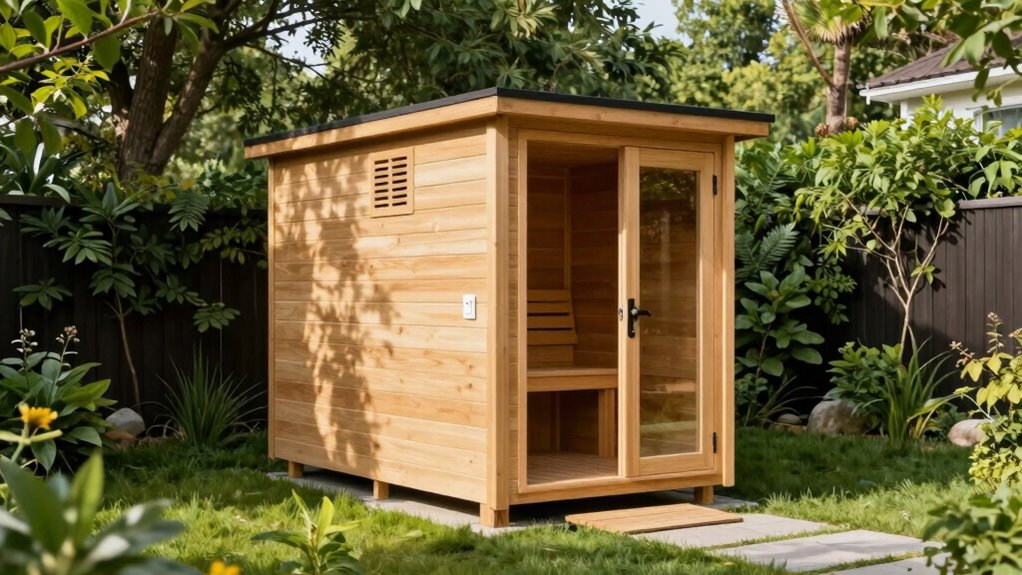

To set up a backyard sauna, choose a level, well-drained spot away from harsh weather and with privacy in mind. Guarantee proper ventilation to prevent overheating, control humidity, and maintain air quality, and install a dedicated, ground-fault protected electrical circuit to meet safety standards. Proper insulation and weatherproofing will protect it from outdoor elements. If you want to learn how to optimize your sauna’s location, ventilation, and power setup for safety and comfort, keep exploring.
Key Takeaways
- Select a level, well-drained location with good airflow, privacy, and easy access for sauna placement.
- Ensure proper insulation and weatherproofing to protect against outdoor elements and extend lifespan.
- Install ventilation systems to regulate humidity, prevent mold, and maintain safe air quality inside the sauna.
- Use a dedicated electrical circuit with proper wiring, grounding, and safety devices to meet power needs safely.
- Incorporate privacy features and accessible pathways to maximize seclusion, safety, and convenience around your sauna.
Why Choose a Backyard Sauna and What to Expect

A backyard sauna offers a convenient and private way to enjoy the health benefits of heat therapy right at home. By investing in a personal sauna, you can improve circulation, relax muscles, and reduce stress without leaving your yard. Beyond wellness, a well-designed sauna enhances your backyard aesthetics, adding a touch of elegance and functionality. It becomes a focal point that invites relaxation and socializing. Expect a customizable experience, from traditional to infrared models, tailored to your preferences. Maintenance is straightforward, and the long-term benefits justify the initial investment. Overall, a backyard sauna transforms your outdoor space into a retreat for health, relaxation, and visual appeal, making it a smart addition for your lifestyle.
How to Pick the Best Location for Your Sauna
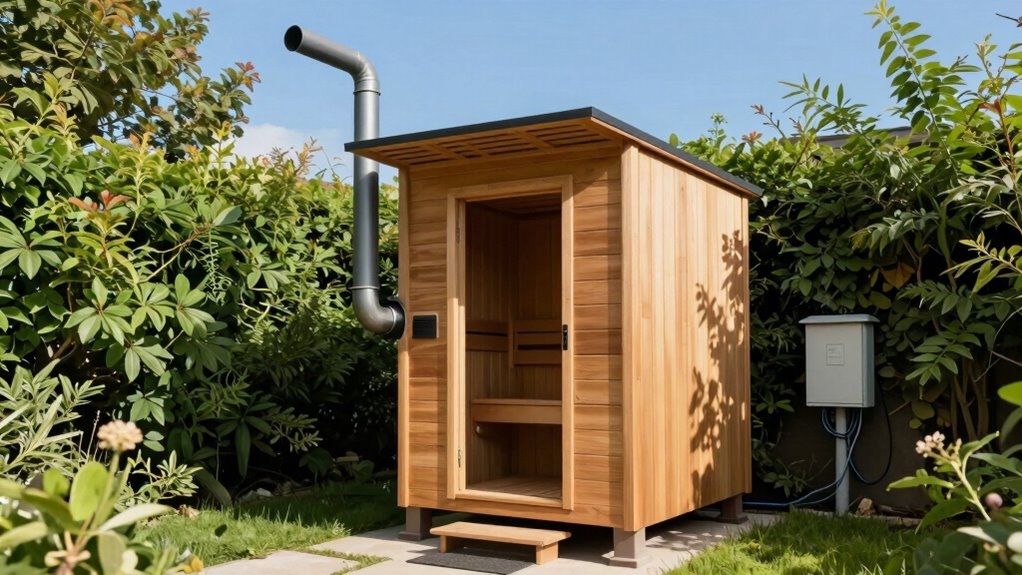
Choosing the right spot for your sauna is essential for convenience and comfort. You should consider how much space is available, how easily you can access it, and how well it preserves your privacy. Making smart choices now will ensure your sauna becomes a perfect addition to your backyard retreat.
Space Considerations
Selecting the right spot for your backyard sauna is essential to guarantee it fits seamlessly into your outdoor space and functions efficiently. Consider how it integrates with your landscape and existing features. A well-placed sauna enhances landscape integration and offers a cozy retreat. Adequate outdoor lighting is vital for safety and ambiance, especially if you plan to use it in the evening. Use the table below to evaluate key factors:
| Factor | Consideration |
|---|---|
| Space availability | Ensure enough room for comfort |
| Sun exposure | Maximize warmth and energy efficiency |
| Privacy & surroundings | Minimize disturbance, optimize view |
Balancing these elements helps you pick the perfect location for your sauna.
Accessibility and Privacy
Ensuring your sauna is accessible and private starts with careful site selection. Consider mobility challenges and choose a location that’s easy to reach, with stable, level ground and clear pathways. This makes entering and exiting safer and more comfortable for everyone. Privacy is equally important; position your sauna where visual privacy is maximized, such as behind fences, hedges, or trees, and away from neighbors’ view. Think about how the surroundings might change over time, and avoid placing it where landscaping or structures could compromise your privacy. By balancing easy access with strategic placement for visual privacy, you create a welcoming, functional retreat that respects your needs for comfort and discretion.
Why Proper Ventilation Matters for Sauna Safety
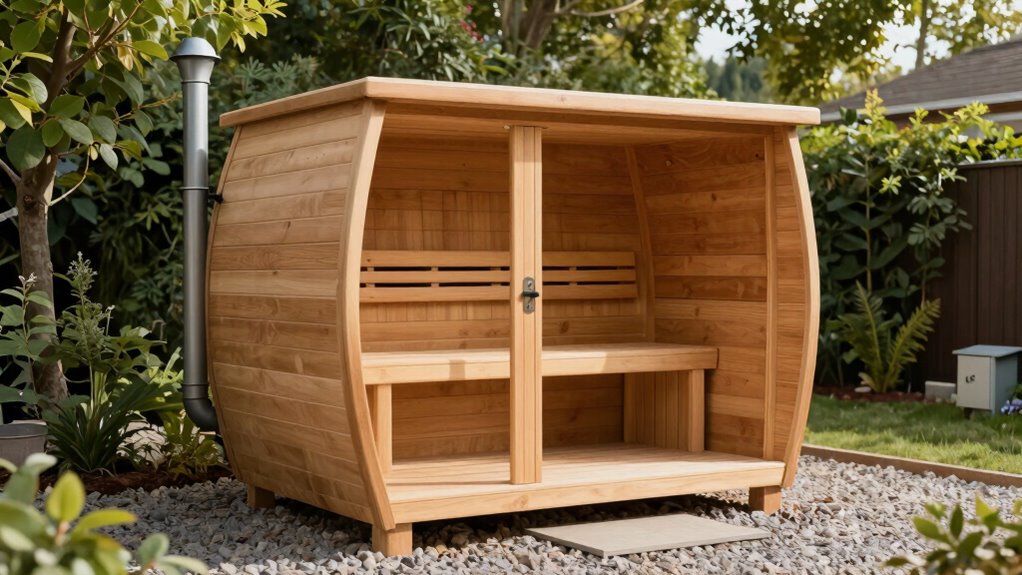
Proper ventilation is essential for keeping your sauna safe and comfortable. It ensures adequate airflow safety, preventing overheating and reducing the risk of harmful fumes. Without proper ventilation, humidity can build up, causing mold and compromising the structure. Proper airflow also helps regulate temperature and removes excess moisture, making your sauna more enjoyable and safer. Consider this table to understand ventilation importance:
| Ventilation Aspect | Safety Benefit |
|---|---|
| Adequate airflow | Prevents overheating |
| Moisture control | Reduces mold risk |
| Fume removal | Ensures air quality |
| Temperature regulation | Maintains comfort |
Prioritize good ventilation to enjoy your sauna safely and maximize its lifespan.
What Are the Power Needs for Your Backyard Sauna?
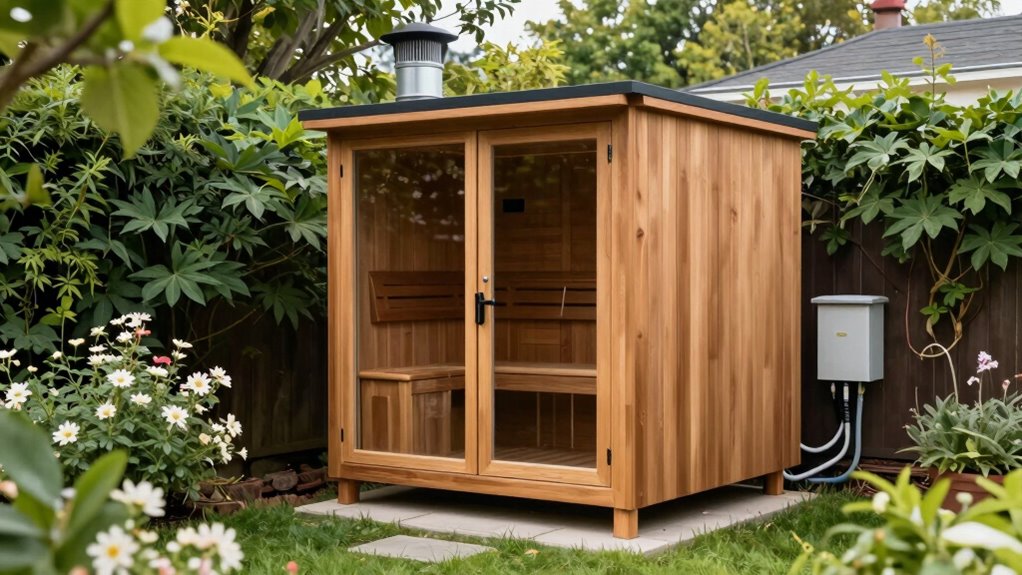
Understanding the power requirements for your backyard sauna is essential to guarantee it operates safely and efficiently. Proper electrical requirements ensure your sauna functions correctly and prevents hazards. First, determine the sauna’s wattage needs based on its size and heating element. Second, check your existing circuit capacity to handle the load without overloading. Third, install a dedicated circuit to maintain circuit safety, avoiding shared circuits that could cause trips or fires. Make sure your electrical system complies with local codes and regulations. Adequate power planning minimizes the risk of electrical issues and ensures your sauna runs smoothly. Remember, circuit safety is vital—never compromise on proper wiring or circuit protection to keep your backyard oasis safe and enjoyable.
How to Set Up Electrical Wiring Safely
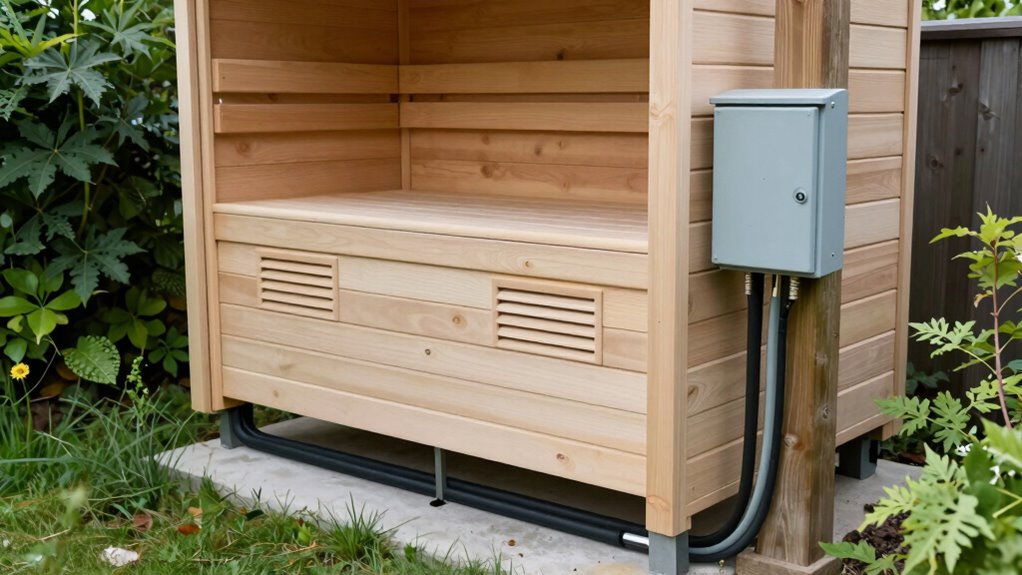
Setting up your electrical wiring for a backyard sauna requires careful attention to safety and code compliance. First, follow wiring guidelines to make certain your setup meets local electrical codes and standards. Use a dedicated circuit with the appropriate amperage to prevent overloads and potential hazards. Install a GFCI (ground-fault circuit interrupter) breaker to protect against electrical shocks, especially in outdoor environments. Keep wiring insulated and protected from moisture, and run conduit underground or through protective conduit where needed. Always plan your wiring route carefully, avoiding sharp bends and potential damage points. Before starting, turn off the main power supply and double-check all connections. If you’re unsure about any step, consult a licensed electrician to make sure your setup is safe and compliant with electrical safety standards.
Where to Place Your Sauna for Privacy and Accessibility
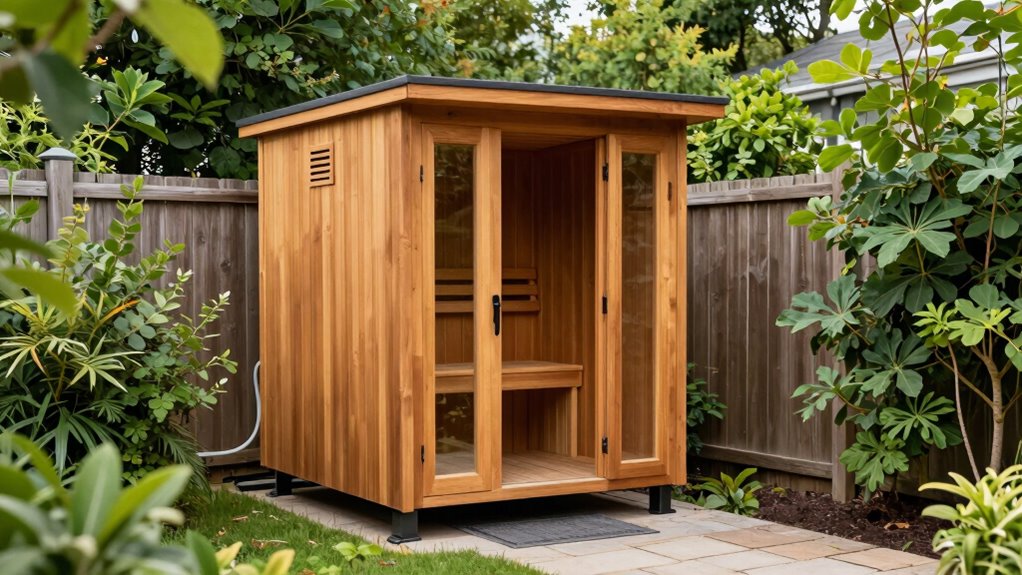
When choosing a spot for your sauna, consider how private it will be from neighbors and passersby. You’ll also want to guarantee easy access with clear pathways that don’t create hazards. Balancing privacy with convenience is key to making your backyard sauna enjoyable and practical.
Privacy Considerations
Choosing the right spot for your backyard sauna is essential to guarantee privacy and easy access. To assure a secluded retreat, consider these steps:
- Use privacy screening like tall fences or hedges to block views from neighbors.
- Incorporate soundproofing measures, such as insulated walls or acoustic panels, to minimize noise disturbance.
- Position the sauna away from busy areas or walkways, creating a private oasis.
These strategies help maintain your privacy while enhancing relaxation. Keep in mind that natural barriers, like trees, can also serve as effective privacy screening. Proper placement combined with soundproofing ensures your sauna remains a peaceful escape, free from prying eyes and noise disturbances.
Accessibility and Pathways
To guarantee your backyard sauna is both accessible and private, careful placement of pathways is essential. Ensure pathway clearance is sufficient for easy access, avoiding obstructions that could cause accidents or inconvenience. If you or guests have mobility challenges, include accessibility ramps that connect your home to the sauna seamlessly. Position pathways away from noisy or high-traffic areas to maintain privacy and tranquility. Consider natural elements like trees or shrubs to create visual barriers along pathways, enhancing privacy. Keep pathways well-lit for safety during evening use. By thoughtfully designing clear, unobstructed routes and incorporating ramps where needed, you make your sauna accessible to everyone while preserving your backyard’s privacy and serenity.
Common Mistakes to Avoid When Installing Your Sauna Outdoors
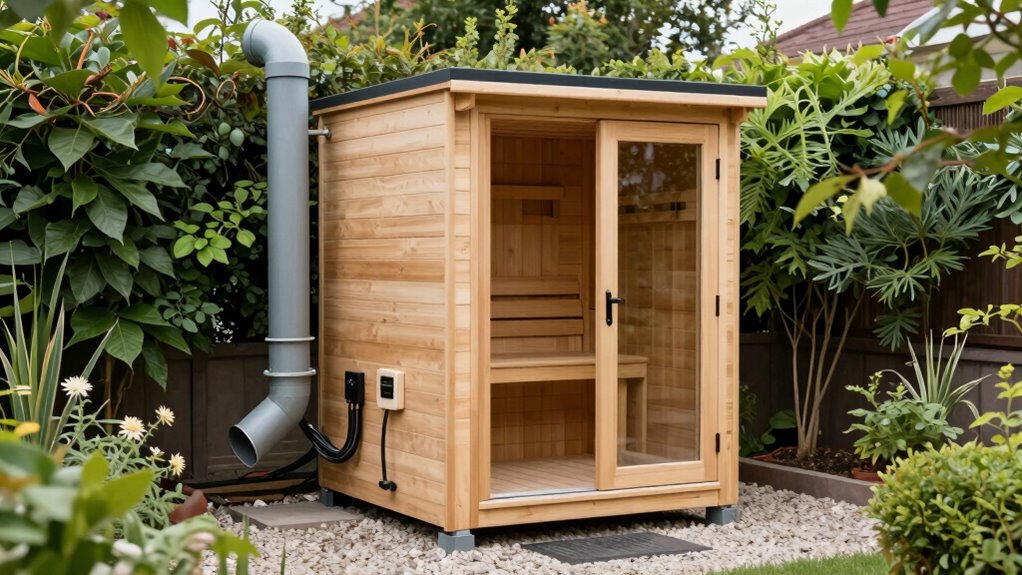
Installing an outdoor sauna can be a rewarding addition to your backyard, but overlooking common mistakes can lead to costly issues later on. One mistake is neglecting proper sauna insulation, which affects heat retention and energy efficiency. Second, poor outdoor weatherproofing can cause moisture damage and reduce durability. Third, improper placement can expose the sauna to harsh elements or poor ventilation, leading to structural problems. To avoid these issues, ensure your sauna has adequate insulation designed for outdoor use and apply weatherproofing materials to protect against rain and snow. Additionally, choose a location with natural drainage and good airflow. By paying attention to sauna insulation, outdoor weatherproofing, and placement, you’ll enjoy your sauna safely and for years to come.
Planning for Future Additions and Upgrades
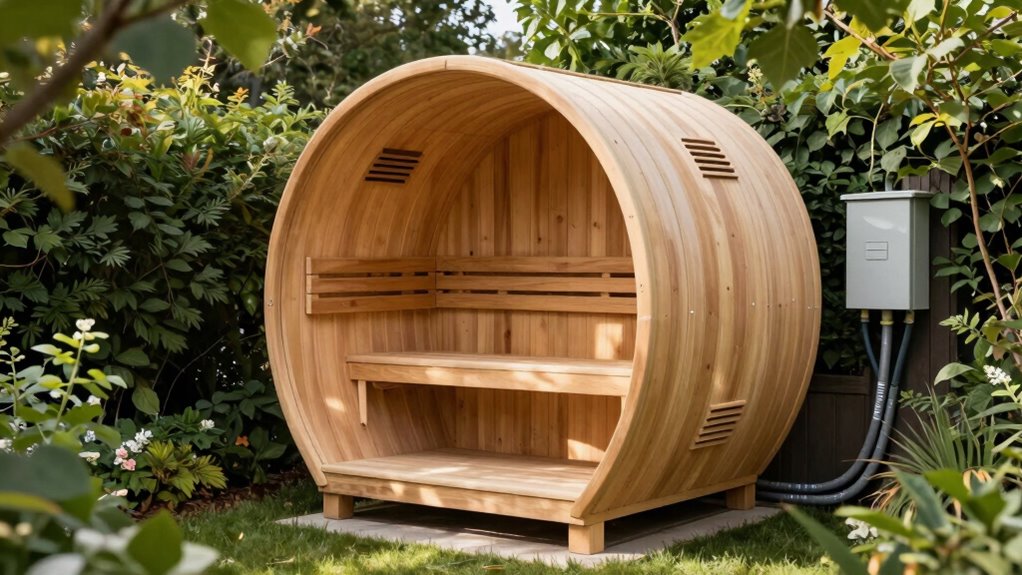
Planning for future additions and upgrades guarantees your outdoor sauna stays functional and enjoyable over time. When you consider expansion planning early, you create flexibility for future upgrades, whether adding seating, a changing area, or advanced features. Think about the space around your sauna and how it might accommodate these changes without significant disruption. Incorporate extra electrical capacity or plumbing provisions now if possible, saving headaches later. By planning ahead, you ensure your setup can evolve with your needs and preferences. Keep in mind potential upgrades like improved insulation or enhanced ventilation systems. Taking these steps allows you to adapt your sauna easily, making it a long-term investment that remains practical and enjoyable for years to come.
Final Checklist for Safe and Effective Sauna Setup
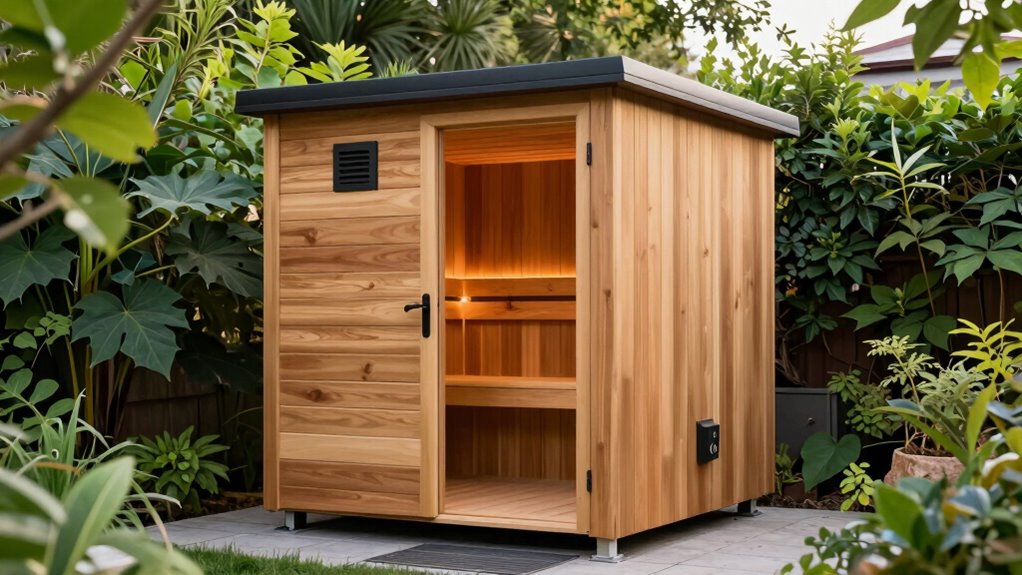
Ensuring your backyard sauna is both safe and effective starts with a thorough final checklist before use. First, check that the sauna’s ventilation is functioning correctly to control sauna humidity, preventing mold and ensuring comfort. Second, confirm all electrical connections are secure and properly grounded to avoid hazards. Third, inspect the wood treatment, ensuring all wood surfaces are properly sealed to withstand heat and moisture. This helps prevent warping and deterioration. Additionally, verify that the door and windows seal tightly, maintaining consistent temperatures and humidity levels. Regularly review your setup, especially after weather changes, to keep your sauna safe and enjoyable. Completing these steps guarantees your sauna remains a relaxing, safe retreat.
Frequently Asked Questions
How Weather-Resistant Should My Sauna Be for Outdoor Use?
Your outdoor sauna should be highly weather-resistant. Use weatherproofing materials like treated wood or waterproof sealants to protect it from rain and snow. Proper exterior insulation helps maintain heat and prevents moisture damage. Make certain your sauna is well-sealed and elevated slightly off the ground. By combining these weatherproofing materials with good exterior insulation, you’ll keep your sauna durable, comfortable, and protected regardless of the weather conditions.
Can I Install a Backyard Sauna Without Professional Help?
You can attempt a DIY installation, but it’s like maneuvering a maze without a map—easy to get lost or make costly mistakes. While some handy folks succeed, professional assistance ensures your backyard sauna is safe, properly wired, and weather-resistant. If you’re not confident in electrical work or structural setup, it’s wise to call in experts. They’ll help you avoid pitfalls and create a cozy retreat that stands the test of time.
What Maintenance Is Required for Outdoor Sauna Ventilation Systems?
You need to regularly check and replace your outdoor sauna ventilation filters to keep airflow clear. Clean the filters as needed and inspect for debris or blockages. Additionally, troubleshoot airflow issues by ensuring vents aren’t obstructed and ducts are free of leaks. Proper maintenance keeps your sauna ventilated, safe, and comfortable, preventing moisture buildup and mold. Make ventilation upkeep a routine part of your sauna care to enjoy ideal performance.
Are There Specific Permits or Regulations for Outdoor Saunas?
Yes, you need to check local zoning laws and building codes before installing your outdoor sauna. These regulations specify where you can place it, how close it can be to property lines, and whether you need permits. Failing to adhere to can lead to fines or needing to remove your sauna. Always contact your local authorities or building department to ensure you follow all requirements and get the necessary permits.
How Do I Ensure Privacy While Maintaining Proper Airflow?
To guarantee privacy while maintaining proper airflow, you can install tall fences, privacy screens, or strategic landscaping around your sauna. Use airflow solutions like vents positioned away from neighboring properties to promote ventilation without sacrificing privacy. Consider adding frosted or tinted glass to your sauna windows for privacy, and design airflow pathways that allow fresh air to circulate without exposing you or your guests to prying eyes.
Conclusion
With thoughtful planning and attention to details like ventilation, power, and placement, you’ll create a backyard oasis that feels just right. By avoiding common pitfalls and considering future upgrades, you’re gently paving the way for endless relaxation and enjoyment. Remember, every good foundation allows your sauna experience to blossom beautifully over time. Embrace the process, and soon you’ll find your backyard transforming into a peaceful retreat where serenity naturally flows.