
To set up your hot tub properly, make sure it has the right electrical power with a dedicated GFCI circuit and safe wiring following local codes. Choose a sturdy, level base pad like concrete or rubber to prevent sinking. Seal gaps and insulate around panels, pipes, and joints to minimize heat loss. Check all connections and test the system before filling. If you keep these steps in mind, you’ll create a safe, efficient setup that lasts—learn more to optimize your hot tub experience.

Get pool and patio gear delivered free with Prime
- Fast, free delivery on millions of items
- Prime Video, Amazon Music and more included
- Member-only deals all year
Key Takeaways
- Ensure the hot tub has a dedicated, GFCI-protected electrical circuit meeting manufacturer specifications.
- Place the hot tub on a solid, level base like concrete or rubber mats to prevent shifting and heat loss.
- Seal all gaps, joints, and panels with weatherproof caulk and insulate shells and plumbing to retain heat effectively.
- Regularly test and balance water chemistry to improve heat retention and protect electrical components.
- Inspect wiring, connections, and circuit breakers periodically; seek professional help for persistent electrical or heating issues.
As an affiliate, we earn on qualifying purchases.
Determine Your Hot Tub’s Power Needs
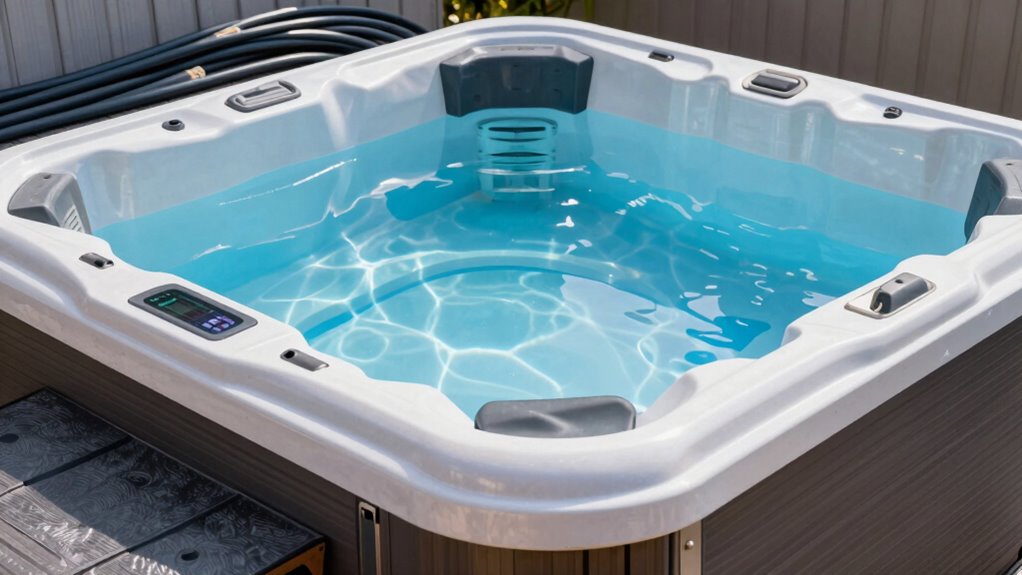
Before installing your hot tub, it’s essential to determine its power requirements. Knowing the hot tub capacity helps you estimate the electrical load you’ll need to support. Larger tubs with more seats typically require higher wattage to heat water efficiently and run pumps properly. Check the manufacturer’s specifications for the recommended electrical load, which includes the voltage, amperage, and circuit size. Confirming your electrical system can handle this load prevents overloads and potential hazards. If your hot tub has a high capacity, you might need a dedicated circuit to avoid tripping breakers. Accurately assessing power needs beforehand guarantees safe operation, avoids electrical issues, and ensures your hot tub functions smoothly once installed.
Ensure Electrical Safety: Wiring and GFCI Protection

To guarantee electrical safety when installing your hot tub, it’s essential to use proper wiring practices and incorporate GFCI protection. Ensuring correct electrical wiring reduces fire hazards and prevents shocks. GFCI protection cuts power immediately if a ground fault is detected, safeguarding you from potential electrocution.
Ensuring proper wiring and GFCI protection is vital for hot tub safety and preventing electrical hazards.
Follow these key steps:
- Verify your electrical wiring meets local codes and manufacturer specs.
- Install a dedicated circuit breaker for your hot tub.
- Use a GFCI outlet or GFCI breaker to provide instant shutdown upon fault detection.
- Regularly test GFCI protection to confirm it functions properly.
Prioritizing proper electrical wiring and GFCI protection minimizes risks and keeps your hot tub setup safe for everyone.
Choose the Right Base Pad to Prevent Sinking
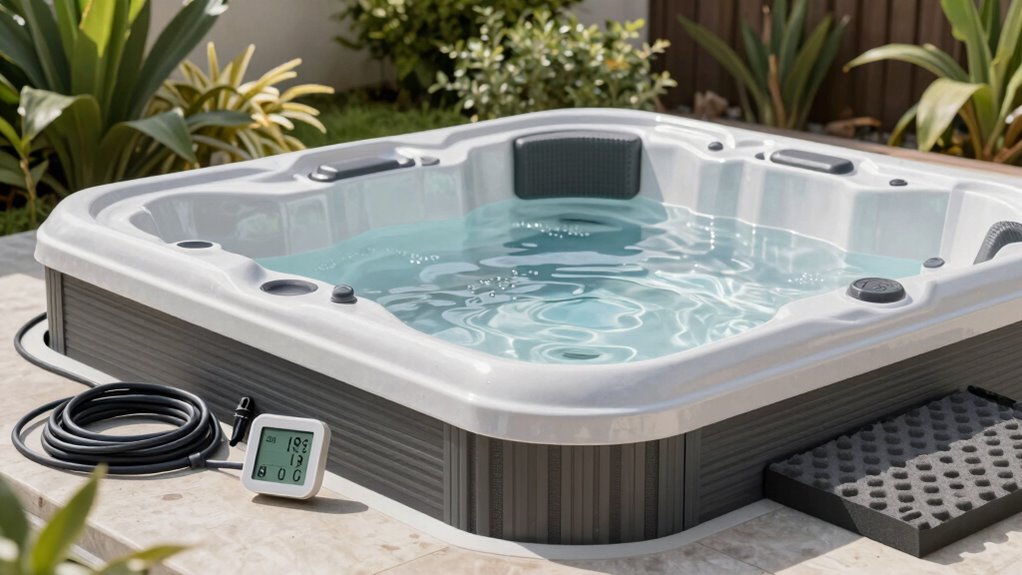
Choosing the right base pad is essential to prevent your hot tub from sinking over time. You should consider materials that provide solid support and resist shifting, like concrete or reinforced pads. Ensuring your surface is level will also keep your hot tub stable and safe for use.
Material Matters for Pads
Selecting the right base pad is essential to prevent your hot tub from sinking into the ground over time. The material you choose impacts both material selection and pad durability, ensuring long-lasting support. Consider these options:
- Composite foam: Lightweight, resistant to moisture, and offers excellent durability.
- Plastic-based pads: Highly durable, resistant to decay, and easy to clean.
- Rubber mats: Flexible, shock-absorbent, and withstands weather elements.
- Concrete slabs: Extremely durable, stable, but heavier and less forgiving.
Prioritize materials that resist moisture and decay, as these qualities extend pad lifespan. Your choice directly affects stability and prevents sinking issues, making material selection a key step in your setup.
Level Surface Ensures Stability
A stable, level surface is fundamental to supporting your hot tub and preventing uneven settling or sinking over time. Ensuring proper deck clearance allows for adequate ventilation and easy access, reducing the risk of water pooling or shifting the foundation. When choosing a base pad, pick one that offers even support across the entire bottom of the tub, preventing any points of imbalance. An uneven surface can cause the hot tub to tilt, making it unsafe and difficult to maintain. Additionally, consider privacy screens that don’t obstruct the base area or cause instability. A level, well-supported setup not only keeps your hot tub steady but also helps maintain its insulation, reducing heat loss and extending its lifespan.
Position Your Hot Tub Safely and Conveniently

To guarantee safety and convenience, you need to carefully position your hot tub in a way that minimizes risks and maximizes ease of use. First, choose an outdoor placement that offers ample space around the tub for easy access and maintenance. Second, consider hot tub aesthetics by selecting a location that complements your landscape and enhances visual appeal. Third, ensure the spot is level and stable, avoiding areas prone to flooding or excessive shade. Fourth, keep the hot tub away from trees or overhanging branches to prevent debris and damage. Proper placement not only enhances safety but also makes future use more enjoyable, confirming your hot tub is both functional and visually appealing in your outdoor space.
Seal Heat Loss Gaps and Insulation Points
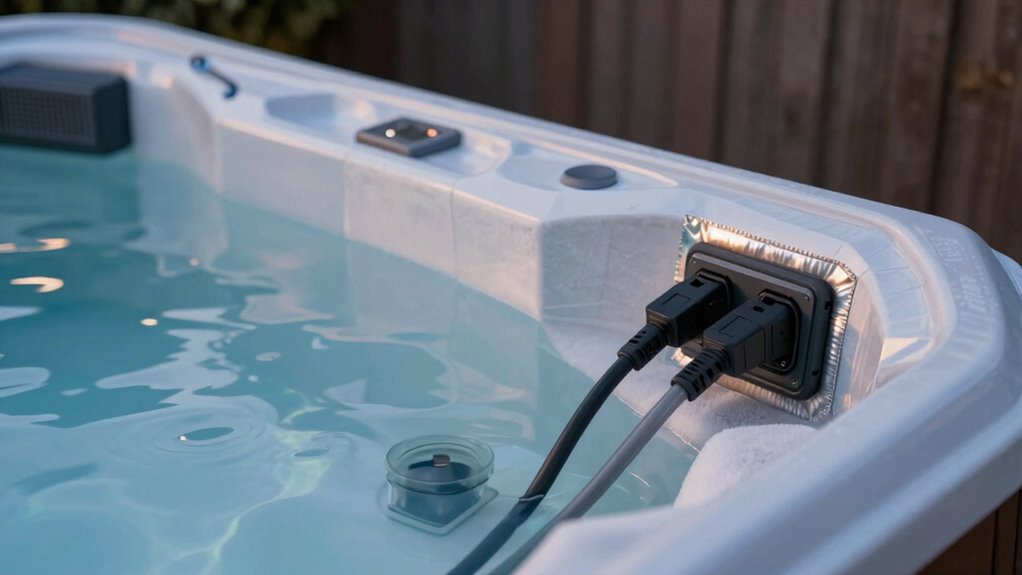
To keep your hot tub warm and energy-efficient, you need to seal any heat loss gaps carefully. Focus on insulating critical points like the skirting, panels, and any joints that might let heat escape. Proper sealing and insulation can make a big difference in maintaining your hot tub’s temperature and reducing energy costs.
Sealing Heat Loss Gaps
Ever wonder why your hot tub loses heat so quickly? Sealing heat loss gaps is essential for efficiency. Start by inspecting the area around your tub for drafts or cracks. Then, consider these steps:
- Install thermal curtains around the tub to block wind and retain heat.
- Use draft stoppers on any gaps between the tub and surrounding structures.
- Seal cracks or openings with weatherproof caulk to prevent air leaks.
- Ensure the cover fits snugly and replace any worn or damaged seals.
These measures help trap heat and reduce energy waste. Proper sealing not only keeps your hot tub warmer longer but also lowers your heating costs. Combining thermal curtains with draft stoppers provides an extra barrier against heat loss, making your hot tub more energy-efficient.
Insulating Critical Points
After sealing gaps and cracks around your hot tub, the next step is to safeguard key points that contribute to heat loss. Focus on creating effective thermal barriers around the shell, plumbing, and equipment compartments. Use foam or reflective insulation to minimize heat escape. Additionally, install moisture barriers beneath the hot tub and around exposed plumbing to prevent condensation, which can reduce insulation efficiency and cause damage. Proper insulation not only maintains water temperature but also lowers energy costs. Ensure that all critical points, including skirting and access panels, are well insulated with appropriate materials. This layered approach—thermal barriers combined with moisture barriers—keeps heat in and moisture out, maximizing your hot tub’s efficiency and longevity.
Insulate Your Hot Tub and Pipes for Better Heat Retention
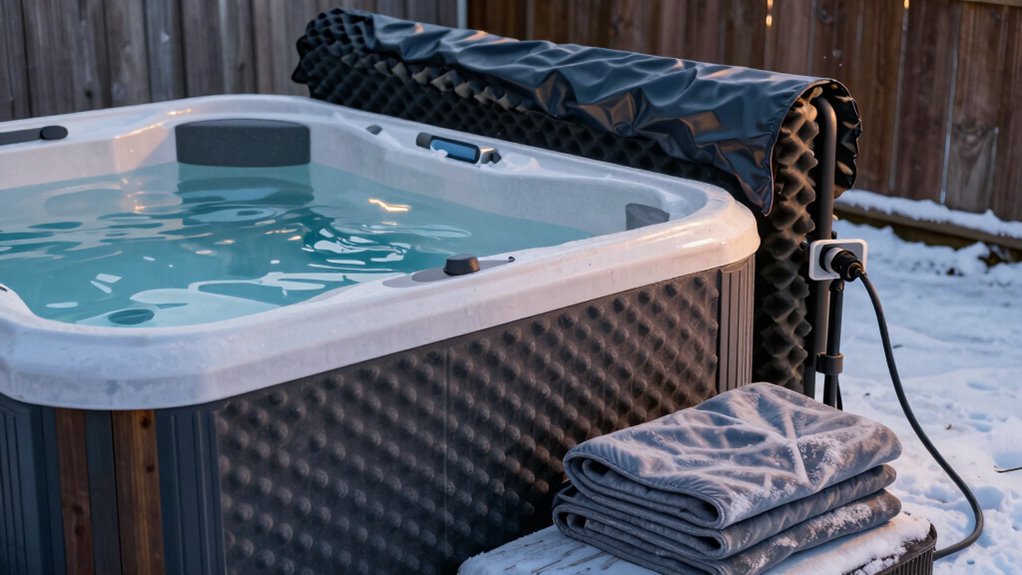
Insulating your hot tub and its pipes is essential for maintaining efficient heat retention and reducing energy costs. Proper insulation creates thermal barriers that prevent heat loss and keep your water warmer longer. To optimize this, consider these steps:
- Install foam pipe insulation around all exposed pipes to minimize heat escape.
- Use thermal barriers, such as insulating blankets or covers, over the hot tub shell.
- Wrap the hot tub’s exterior with a weatherproof, insulating material to block drafts.
- Seal gaps and cracks around panels and fittings to prevent heat leaks.
Test Your Setup Before Filling the Hot Tub
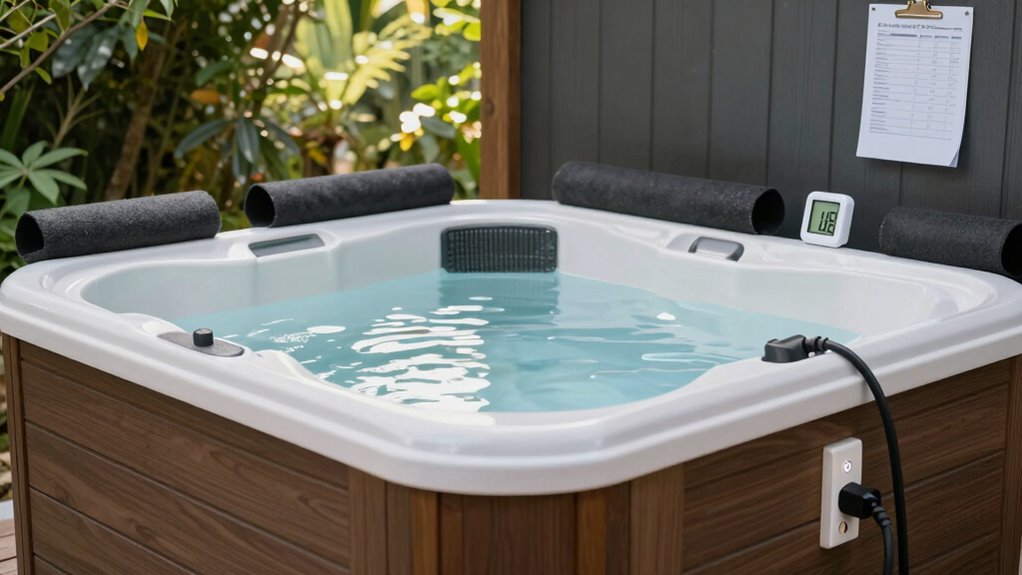
Before filling your hot tub, it’s important to test your setup to make certain everything functions correctly and efficiently. Start by checking that the power supply is working and the heater operates without issues. Once the tub is filled, test the water chemistry to ensure proper chemical balancing, which helps prevent issues like corrosion or bacteria growth. Use a reliable test kit to measure pH, alkalinity, and sanitizer levels. Adjust chemicals as needed before adding water. Confirm that pumps and filters are running smoothly and that no leaks exist. Properly balanced water chemistry not only keeps your hot tub safe but also helps maintain ideal heat retention and longevity of your equipment. Taking these steps ensures a trouble-free start and a better hot tub experience.
Troubleshoot Common Power and Heating Issues
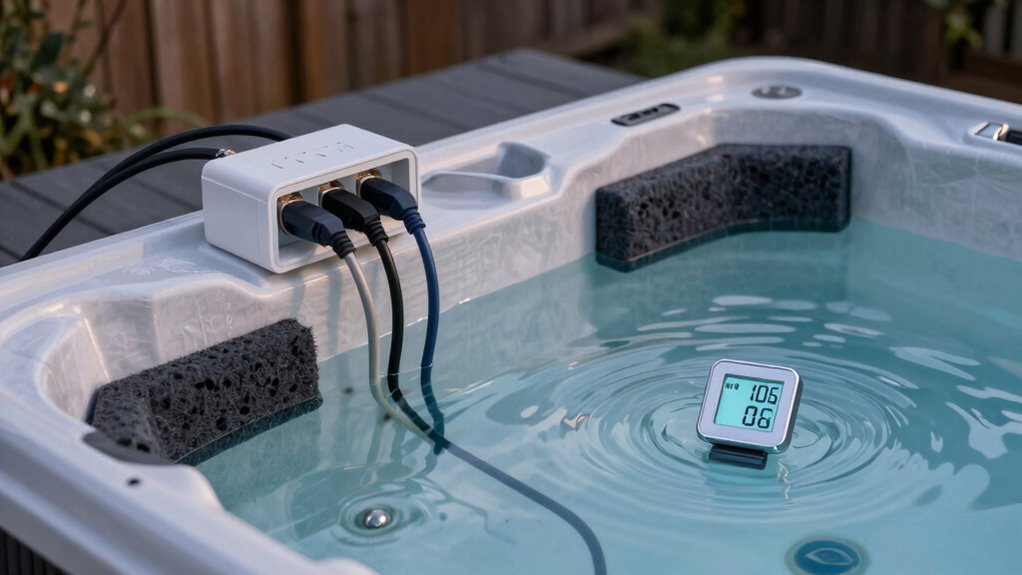
If your hot tub isn’t heating properly or there’s no power, the first step is to identify the source of the problem quickly. Check your electrical wiring connections for any loose or damaged wires. Confirm your circuit breakers haven’t tripped, resetting them if needed. Use these steps:
- Confirm the circuit breaker dedicated to your hot tub is in the ON position.
- Inspect wiring connections at the control panel and the main power supply.
- Test for a blown fuse if your system has one.
- Verify there are no signs of corrosion or damage in the wiring or terminals.
If issues persist, consider consulting a professional to inspect your electrical wiring and circuit breaker setup. Proper troubleshooting prevents further damage and ensures safe operation.
Maintain Your Hot Tub for Long-Term Efficiency

Regular maintenance is essential to keep your hot tub running efficiently and extend its lifespan. Proper chemical maintenance ensures balanced water chemistry, preventing cloudy water, scaling, or corrosion. Regular testing and adjusting pH, alkalinity, and sanitizer levels keep the water safe and inviting. Consider this visual:
| Water Condition | Ideal Range |
|---|---|
| pH | 7.2 – 7.8 |
| Chlorine/Bromine | 3 – 5 ppm |
| Alkalinity | 80 – 120 ppm |
| Calcium Hardness | 150 – 250 ppm |
| Temperature | 100°F – 104°F |
Staying on top of these parameters helps maintain water chemistry, reduces maintenance costs, and ensures your hot tub stays inviting for longer.
Frequently Asked Questions
How Often Should I Inspect Electrical Wiring for Safety?
You should inspect your hot tub’s electrical wiring at least once every three to six months to guarantee electrical safety. Regular wiring inspections help identify signs of wear, corrosion, or loose connections that could pose safety risks. If you notice any issues like frayed wires or burning smells, shut off power immediately and have a professional electrician check it out. Staying proactive with wiring inspections keeps your hot tub safe and functioning properly.
Can I Install a Hot Tub on a Wooden Deck?
You can install a hot tub on a wooden deck if it has adequate deck support and a sufficient weight capacity. Make certain your deck is strong enough to handle the hot tub’s weight when filled, including water and occupants. Reinforce the deck if needed, and check that the support beams are sturdy. Properly distributing the weight prevents damage and ensures safety, so consult a professional if you’re unsure about your deck’s capacity.
What’s the Best Way to Prevent Heat Loss During Winter?
Prevent heat loss during winter with powerful, practical techniques. You should prioritize proper cover insulation, ensuring your hot tub’s cover fits snugly to trap heat. Additionally, use insulation techniques like foam boards or thermal blankets around the hot tub’s shell and pipes. These simple, sturdy steps help hold in heat, keep your hot tub warm, and make winter soaking more enjoyable. Keep cold air out and cozy heat in!
How Long Does It Typically Take to Heat a Hot Tub?
It usually takes about 8 to 12 hours to heat a hot tub, depending on its size and starting temperature. To guarantee temperature stability and maximize energy efficiency, you should use a well-insulated cover and keep the heater running consistently. Keeping the cover on when not in use helps trap heat, so your hot tub reaches the desired temperature faster and stays warm longer, saving energy and maintaining comfort.
Are There Eco-Friendly Options for Hot Tub Insulation?
Yes, you can choose eco-friendly insulation for your hot tub. Did you know that using sustainable materials can reduce your hot tub’s energy consumption by up to 30%? Look for eco-friendly insulation options like recycled denim, sheep’s wool, or cellulose made from recycled paper. These sustainable materials not only help protect the environment but also improve thermal efficiency, keeping your hot tub warm longer while lowering your carbon footprint.
Conclusion
With wise wiring, proper pads, and thorough thermal trapping, you’ll keep your hot tub humming happily. Regularly reviewing your setup safeguards your soothing sanctuary, ensuring consistent comfort and cost-effective coziness. Staying vigilant with vigilant checks and vigilant maintenance prevents problems before they pop up. By balancing basic basics with diligent details, you’ll bask in blissful bubbles for years to come. Proper preparation and proactive practices promise a perfect, pleasurable hot tub experience every time.
Halloween Picks
halloween
As an affiliate, we earn on qualifying purchases.