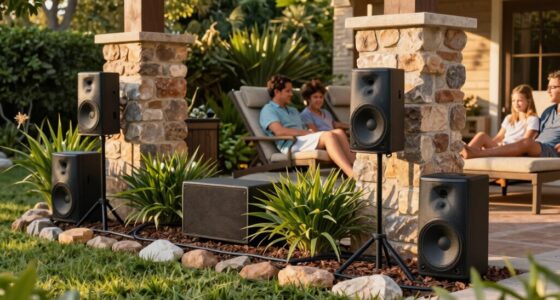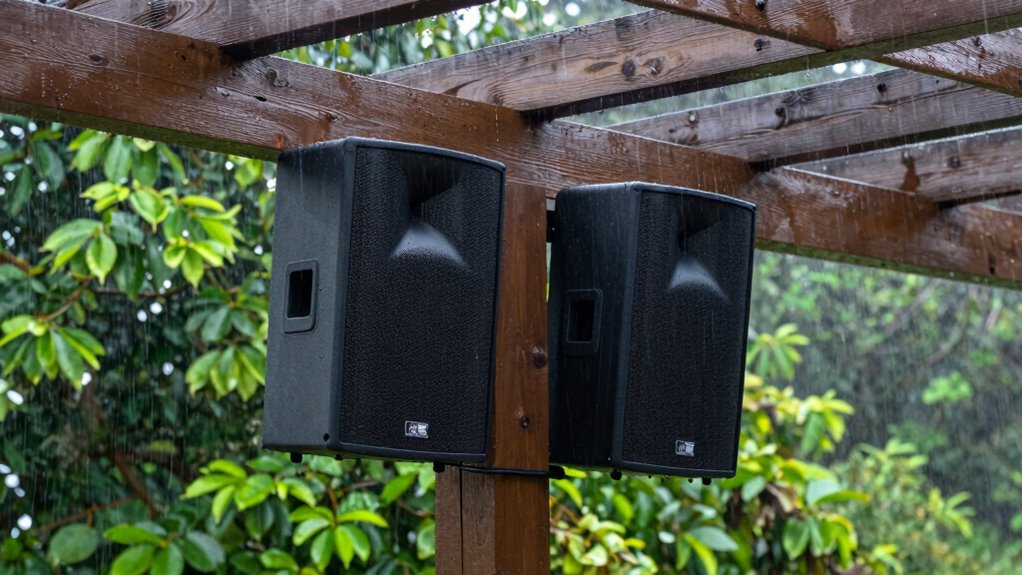
When shopping for weatherproof outdoor speakers, pay close attention to their IP ratings, which show how well they resist dust, water, and snow. Higher ratings like IP65 or IP67 offer better protection against rain, snow, and dust storms, making your speakers more durable outdoors. Keep in mind, IP ratings don’t cover everything like impact or temperature changes. If you want to make certain of long-term performance, understanding these ratings helps you choose the right model—more details follow.

Get pool and patio gear delivered free with Prime
- Fast, free delivery on millions of items
- Prime Video, Amazon Music and more included
- Member-only deals all year
Key Takeaways
- IP ratings indicate the level of dust and water resistance, guiding the selection of durable outdoor speakers.
- Higher IP ratings (e.g., IP65, IP67) offer better protection against dust, rain, and water immersion.
- IP ratings do not cover temperature extremes, physical impacts, or prolonged water exposure; additional safeguards are needed.
- Regular maintenance and environment-specific choices extend outdoor speaker lifespan regardless of IP rating.
- Choosing speakers with appropriate IP ratings based on your climate ensures reliable performance in various weather conditions.
weatherproof outdoor speakers IP65
As an affiliate, we earn on qualifying purchases.
As an affiliate, we earn on qualifying purchases.
What Are IP Ratings and Why Do They Matter for Outdoor Speakers

If you’re choosing outdoor speakers, understanding IP ratings is essential. IP ratings, or Ingress Protection ratings, tell you how well a device resists dust and water. For outdoor speakers, this info helps you select models that can withstand weather elements without damage. Many weatherproof speakers feature solar panels, making them eco-friendly and self-sufficient. An aesthetic design is also important, ensuring your speakers blend seamlessly with your outdoor decor. The right IP rating guarantees your speakers won’t fail prematurely due to rain, snow, or dirt. It’s a quick way to assess durability and reliability. Whether you’re relaxing by the pool or hosting a backyard party, knowing the IP rating helps you choose speakers built for the outdoors, protecting your investment and enhancing your space.
How to Read and Interpret IP Ratings
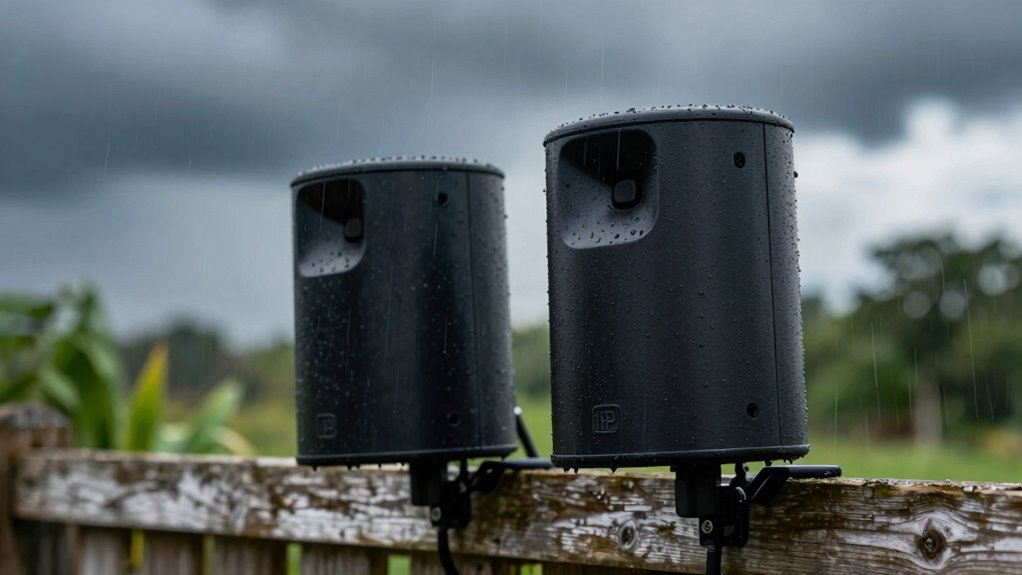
Ever wondered how to decipher the numbers on an IP rating label? The first digit indicates the level of protection against solid objects like dust, while the second shows resistance to liquids, such as rain or splashes. For outdoor speakers, a higher second digit means better protection for features like wireless connectivity, ensuring your device stays connected even in challenging weather. If your speaker uses solar power, understanding the IP rating helps you gauge its durability in sunlight exposure. For example, an IP67 rating means dust-tight protection and the ability to withstand immersion in water, ideal for outdoor use. By knowing how to read these numbers, you can confidently select weatherproof speakers that perform reliably in your outdoor environment.
Common IP Ratings for Weatherproof Outdoor Speakers

When choosing weatherproof outdoor speakers, understanding common IP ratings helps you determine their durability in various conditions. Many outdoor speakers feature IP65 or IP66 ratings, meaning they resist dust ingress and can handle powerful water jets, making them suitable for rain, snow, and dust storms. If you’re looking for solar-powered options, verify they have appropriate ratings to withstand prolonged sun exposure and moisture. Wireless connectivity is common, but check if the IP rating covers potential exposure to outdoor elements that could affect signal stability. Some high-end models even boast IP67 ratings, offering complete waterproof protection and dust-tight seals. Knowing these ratings helps you pick speakers that remain functional and reliable, whether you’re relaxing in a dusty desert or caught in a sudden downpour.
How IP Ratings Protect Against Rain, Dust, and Snow
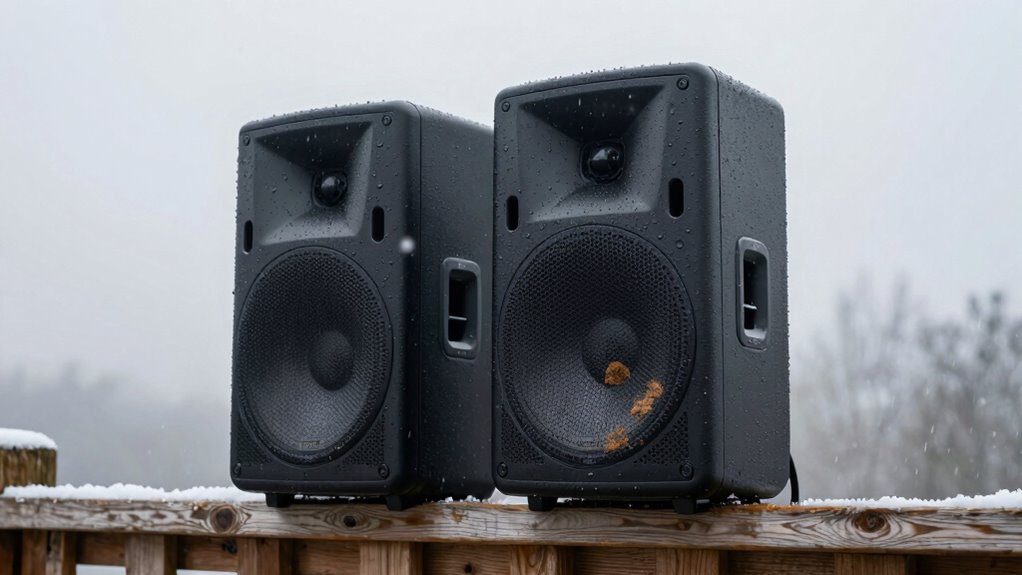
IP ratings set the standards for how well outdoor speakers resist rain, dust, and snow. You’ll want to understand what these ratings mean for protection against water and debris. Knowing this helps you choose speakers that can withstand harsh weather conditions effectively.
Rain Resistance Standards
Rain resistance standards, indicated by IP ratings, are essential for ensuring outdoor speakers withstand various weather conditions. These standards specify how well a speaker resists rain, which is vital if you rely on solar power or Bluetooth connectivity outdoors. To meet these standards, look for speakers with an IP rating of at least IPX4, meaning they can handle splashes and light rain. Higher ratings, like IPX5 or IPX6, offer even better protection against heavy rain. Remember, these standards protect against:
- Water jets from any direction
- Continuous splashing or rain
- Snow and ice accumulation
Dust and Snow Protection
While rain resistance is vital for outdoor speakers, protecting against dust and snow is equally important to guarantee durability in harsher conditions. Dust can clog vents and damage internal components, while snow’s moisture can cause corrosion. High IP ratings, like IP65 or IP67, ensure protection against these elements. Features such as solar compatibility and wireless connectivity enhance outdoor use, but only if dust and snow don’t compromise the device. The table below shows how different IP ratings defend against these elements:
| IP Rating | Dust Protection | Snow Resistance | Notes |
|---|---|---|---|
| IP65 | Yes | Limited | Suitable for light snow |
| IP66 | Yes | Good | Better snow resistance |
| IP67 | Yes | Excellent | Ideal for heavy snow |
Choose wisely to keep your outdoor speakers performing in any weather.
Choosing the Right IP Rating for Your Outdoor Space
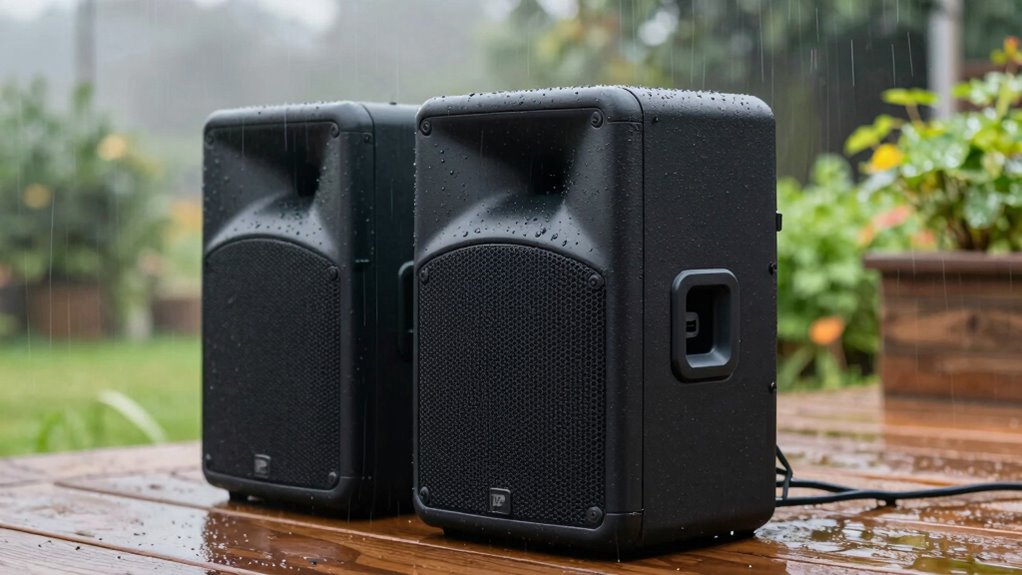
Choosing the right IP rating for your outdoor speakers is essential to guarantee they withstand the elements and perform reliably over time. Consider your environment and how your speakers will be used, especially if you plan to incorporate solar energy or rely on wireless connectivity. Higher IP ratings offer better protection against water and dust, but not all ratings are necessary for every space. Focus on:
- The typical weather conditions in your area
- The level of exposure to dust, snow, or rain
- Compatibility with solar energy setups and wireless signals
A higher IP rating (like IP66 or IP67) ensures durability, especially if your speakers are exposed to frequent moisture. Selecting the proper rating helps maximize longevity and performance.
What IP Ratings Don’t Cover (And Why That Matters)

IP ratings focus on water and dust resistance but don’t account for temperature changes that can damage your speakers. They also don’t measure how well the enclosure withstands mechanical impacts or accidental hits. Understanding these limits guarantees you choose speakers that truly stand up to your outdoor environment.
Impact of Temperature Fluctuations
Temperature fluctuations can markedly impact outdoor speakers, even if they have high IP ratings. Rapid changes cause thermal expansion and contraction, which can weaken seals and internal components over time. Humidity effects also come into play, as moisture can seep in during temperature drops, damaging electronics. Here are key points to contemplate:
- Sudden temperature shifts can stress the materials, leading to cracks or degradation.
- Thermal expansion may loosen seals designed for static conditions, risking water ingress.
- Humidity effects can cause corrosion or mold growth inside the enclosure, regardless of IP rating.
While IP ratings focus on water and dust resistance, they don’t account for these temperature-related issues. Understanding this helps you choose speakers better suited for your climate conditions.
Resistance to Mechanical Damage
While high IP ratings protect outdoor speakers from water and dust, they don’t guarantee resistance to physical impacts or mechanical damage. Storm damage, such as falling branches or debris, can still harm your speaker if it’s not specifically designed for impact resistance. Similarly, vandal protection isn’t typically covered by IP ratings; someone intentionally damaging your speaker could break or dislodge it regardless of its waterproof qualities. To ensure your speakers withstand physical threats, look for models with reinforced enclosures or impact-resistant designs. Remember, IP ratings focus on environmental sealing, not physical durability. Proper installation and additional protective housing can help guard against storms and vandalism, giving you peace of mind in unpredictable outdoor conditions.
Limitations of Water Resistance
Although an outdoor speaker may have a high IP rating, that doesn’t mean it’s fully safeguarded against all water-related issues. IP ratings primarily address static exposure, not dynamic conditions like heavy rain, water jets, or submersion. This means:
- You shouldn’t assume waterproofing covers all water situations, especially during storms or high-pressure water jets.
- Continuous exposure to water can damage internal components, even if the speaker’s IP rating is high.
- Wireless connectivity might be affected if water penetrates, and the aesthetic design could be compromised if water causes corrosion or mold.
While these ratings protect the core electronics, they don’t guarantee immunity from all water-related risks. Always consider usage environment and maintenance to ensure longevity, especially when balancing wireless features and stylish design.
Examples of Weatherproof Speakers With Trusted IP Ratings

When selecting weatherproof outdoor speakers, it’s essential to choose models with trusted IP ratings that guarantee durability against the elements. For example, the Bose Free Space 51 offers an IP55 rating, making it suitable for outdoor use with excellent resistance to dust and water. The Sonos Move stands out with an IP56 rating, combining marine durability with wireless connectivity, allowing seamless streaming even in challenging environments. The Klipsch AW-650 is another reliable option, boasting an IP65 rating that ensures protection against dust and water jets, perfect for exposed outdoor spaces. These speakers are built to withstand harsh weather conditions, maintaining performance and sound quality over time. When investing in weatherproof speakers, look for trusted IP ratings that match your outdoor environment’s demands.
How to Maintain Outdoor Speakers for Maximum Durability
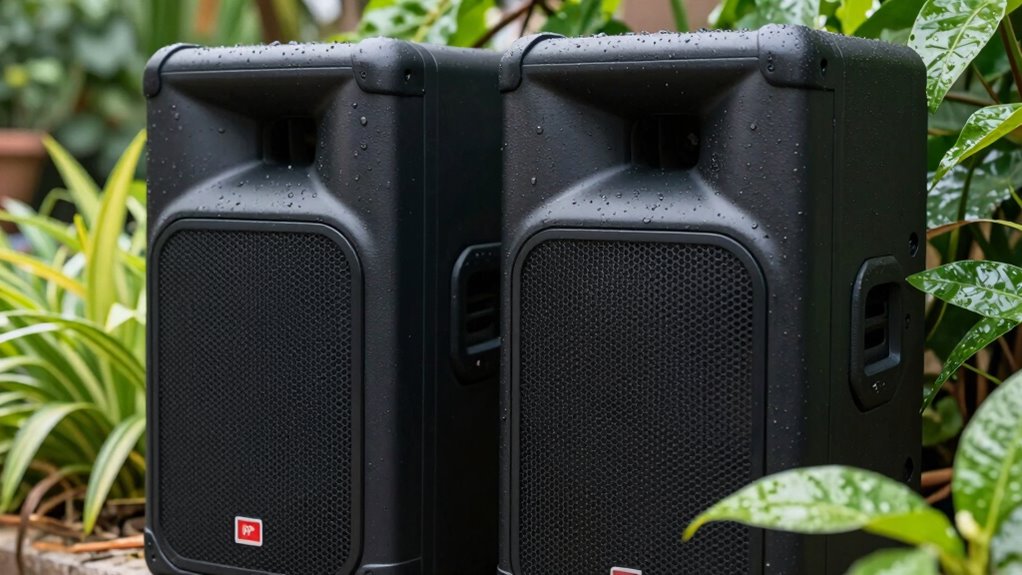
Proper maintenance is essential to guarantee your outdoor speakers stay durable and perform well over time. To keep them in top shape, follow these tips:
- Regularly clean your speakers with a damp cloth to remove dirt and debris, especially if they’re part of your garden decor.
- Protect your speakers from harsh weather by covering them during storms or heavy rain, even if they’re weatherproof.
- Avoid using indoor use speakers outdoors, as they lack the necessary protection and will degrade faster.
Check for corrosion or damage periodically, and ensure cables remain sealed. Proper care prolongs their lifespan, so your outdoor setup remains reliable and vibrant, blending seamlessly with garden decor while performing at their best year-round.
Do You Need a High IP Rating? Tips for Different Climates

Choosing outdoor speakers with a high IP (Ingress Protection) rating can be crucial depending on your climate. If you experience heavy rain, snow, or high humidity, opt for an IP67 or higher rating to guarantee durability. In drier or milder environments, a lower IP rating might suffice, saving you costs. Consider solar-powered speakers if sunlight is abundant; they can operate efficiently without wiring, but ensure they’re weatherproof enough for your conditions. Bluetooth connectivity offers convenience, but check that the device maintains a solid connection in your climate’s temperature fluctuations. For coastal areas with salt spray, look for corrosion-resistant materials alongside a high IP rating. Matching your climate needs with the right IP rating guarantees your outdoor speakers perform reliably year-round.
Frequently Asked Questions
Can IP Ratings Guarantee Complete Protection Against All Weather Conditions?
IP ratings don’t guarantee complete protection against all weather conditions. They measure water resistance and temperature tolerance, but extreme weather like heavy storms or prolonged exposure can still cause damage. You might think your outdoor speakers are fully protected, but in severe conditions, water ingress or temperature fluctuations could harm them. Always consider additional safeguards, like covers or placement, to guarantee your speakers last through unpredictable weather.
How Do IP Ratings Compare to Other Outdoor Speaker Durability Features?
IP ratings mainly focus on waterproof materials and dust resistance, but they don’t cover shock resistance or other durability features. When choosing outdoor speakers, look for models that combine high IP ratings with rugged construction, like shock-resistant enclosures and UV-proof materials. This way, you’ll guarantee your speakers handle not just weather, but also accidental drops and harsh environmental conditions, providing thorough outdoor durability.
Are Higher IP Ratings Always Necessary for Every Outdoor Environment?
You might not need the highest IP ratings everywhere. Imagine a gentle summer rain or a dusty patio—lower IP ratings with good rain resistance and dust protection still keep your speakers safe. But if you’re near a pool or in a harsh desert, higher ratings are essential to prevent water or dust from damaging your gear. Assess your environment to choose the right balance of durability and performance.
Do IP Ratings Expire or Degrade Over Time With Use?
IP ratings don’t expire or degrade over time with use, but weather-induced degradation can affect their performance. You should regularly check your outdoor speakers for signs of wear, corrosion, or damage caused by exposure to rain, sun, or snow. Proper IP rating maintenance, like cleaning and protecting connectors, helps guarantee your speakers stay weatherproof. Keep an eye on their condition so you can address any issues before they compromise your equipment’s protection.
Can Outdoor Speakers With Lower IP Ratings Be Safely Used in Humid Areas?
You can safely use outdoor speakers with lower IP ratings in humid areas, but you should be cautious. Humidity concerns can affect indoor vs outdoor speakers differently, and lower IP ratings offer less protection against moisture. If you choose lower-rated speakers, make certain they’re placed in sheltered spots away from direct rain or humidity exposure. For long-term durability, opt for higher IP ratings designed to withstand outdoor weather conditions.
Conclusion
Choosing the right IP rating guarantees your outdoor speakers withstand the elements, but don’t assume higher always means better for your needs. Consider your climate and usage, and remember that even the highest-rated speakers require proper maintenance. Investing in trusted brands with certified ratings means peace of mind and long-lasting performance. With a little research, you can enjoy clear sound outdoors, rain or shine, without overpaying for features you don’t need.
Fall Picks
fall essentials
As an affiliate, we earn on qualifying purchases.