
To stay safe while floating, observe the water’s surface for signs like ripples, foam, debris, or swirling patterns that show current direction and strength. Feel the water with your hand to detect push or resistance, and watch how floating objects move. Natural features like rocks or river bends can also indicate flow speed. Being aware of these signs helps you gauge risks, and if you keep exploring, you’ll discover even more ways to stay safe in water.

Get pool and patio gear delivered free with Prime
- Fast, free delivery on millions of items
- Prime Video, Amazon Music and more included
- Member-only deals all year
Key Takeaways
- Observe surface signs like ripples, foam, or debris moving consistently in one direction to identify current flow.
- Feel the water with your hand while floating to detect the push and strength of the current.
- Watch for swirling patterns, eddies, or converging water to recognize areas of stronger or changing currents.
- Use floating objects or natural features to trace the current’s direction and speed over time.
- Be aware of environmental factors such as tides, wind, and underwater topography that influence current behavior.

Have you ever wondered how to tell which way water is flowing in a river or ocean? Recognizing water currents is vital for safe floating and understanding your environment. There are different types of water currents, each with distinct behaviors and effects. Surface currents, for example, are driven primarily by wind and affect the upper layers of water. These currents tend to be faster and more visible, often creating noticeable ripples or waves. Deep water currents, on the other hand, are driven by differences in water density caused by temperature and salinity. They move more slowly and are less visible but are equally important in shaping the overall movement of water bodies.
Understanding the effects of water currents helps you gauge potential risks and plan your floating activities accordingly. For instance, strong surface currents can quickly carry you away from your starting point or into dangerous areas like rocky shores or fast-moving channels. Conversely, gentle currents may help you float smoothly and conserve energy, making your experience more enjoyable. Currents also influence water temperature, nutrient distribution, and marine life movement, which can impact safety and comfort during your float. Recognizing these effects allows you to anticipate changes in water behavior, especially if you’re paddling or swimming near coastal areas or in open water.
Recognizing water currents helps you stay safe and plan enjoyable water activities.
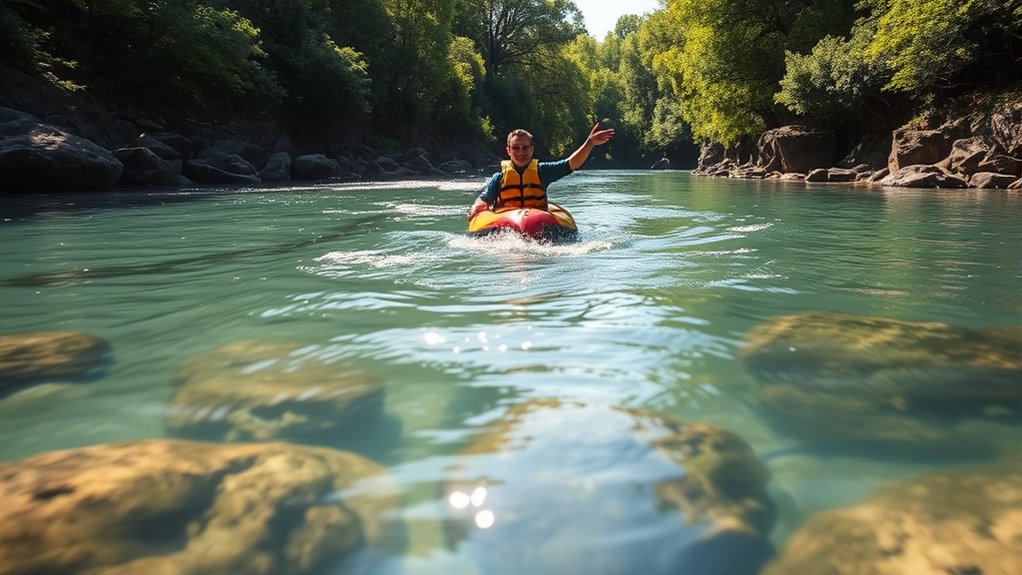
To read water currents, start by observing the surface. Look for visible signs such as ripples, foam, or debris moving in a particular direction. Feel the water with your hand if possible—if it pushes against your hand when you’re floating, that indicates a current. Notice the water’s surface patterns: swirling or converging areas often signal the presence of currents or eddies. In rivers, watch for the way the water flows around rocks or bends; these features can create whirlpools or faster flow zones. In the ocean, look for differences in wave patterns, color variations, or the movement of floating objects to identify the presence and direction of a current. Additionally, understanding frictional unemployment can help you recognize how changes in water flow might create temporary disruptions or opportunities for adapting your approach.
Remember that currents can be affected by tides, wind, and underwater topography, so they’re not always predictable. Always stay alert and keep an eye out for changing water behaviors. Knowing the types of water currents and their effects helps you make smarter decisions for safe floating. Whether you’re paddling, swimming, or just relaxing in the water, a clear understanding of how water moves around you ensures you stay safe and enjoy your time in the water.
As an affiliate, we earn on qualifying purchases.
Frequently Asked Questions
How Do Water Currents Differ in Freshwater Versus Saltwater?
You’ll notice freshwater flow tends to be steady and predictable, often moving in one direction from rivers or streams. Saltwater tides, however, are influenced by the moon and sun, causing fluctuations that can be rapid and complex. When you’re floating, pay attention to these differences: freshwater flows smoothly, while saltwater tides can shift suddenly, affecting your safety and navigation. Always observe the current patterns before venturing into either environment.
What Equipment Is Best for Detecting Water Currents?
You should consider equipment comparison when choosing tools for detecting water currents. Modern technological innovations, like handheld current meters and drone-based sensors, offer precise readings and real-time data. These devices help you understand flow patterns effectively. Opt for durable, waterproof gear with digital displays, ensuring accurate detection and safety. Using advanced equipment, you can confidently navigate water currents, making your floating experience safer and more enjoyable.
Can Water Currents Change Rapidly, and How to Adapt?
Water currents can change rapidly, like a chameleon blending into its surroundings. You should constantly observe the current speed and flow direction, especially when floating. When you notice shifts, adapt quickly by adjusting your position or choosing a different route. Keep an eye on your surroundings, stay alert to the water’s behavior, and trust your instincts—these quick changes are natural, so stay flexible to stay safe.
How Do Weather Conditions Influence Water Currents?
Weather conditions, like storms and wind, critically influence water currents by creating unpredictable shifts and stronger flows. Weather patterns such as heavy rain or drought can alter the flow speed and direction. Tidal shifts also play an essential role, causing regular, predictable changes in current strength and direction. By observing these factors, you can better understand how weather impacts water currents and adjust your floating plans for safety.
Are There Specific Signs Indicating Dangerous Water Currents Nearby?
Yes, look for subtle ripples and surface indicators like foam, debris, or discolored water, which can signal dangerous currents nearby. If you notice these signs, stay alert and avoid swimming in that area. Calm water doesn’t always mean safety, so trust your observations of surface indicators and subtle ripples to identify potential hazards and keep yourself safe while floating or swimming.
Conclusion
By understanding how to read water currents, you’ll feel more confident and safer while floating. Trust your observations—look for ripples, changes in flow, and obstacles—that reveal current directions. A popular theory suggests that respecting these signs helps prevent accidents and enhances your experience. So, stay alert and attentive to the water’s cues. With practice, you’ll enjoy floating more freely, knowing you’re in tune with the natural flow, making every adventure both fun and safe.
Halloween Picks
halloween
As an affiliate, we earn on qualifying purchases.