
TL;DR

Get pool and patio gear delivered free with Prime
- Fast, free delivery on millions of items
- Prime Video, Amazon Music and more included
- Member-only deals all year
A Country Living gardening report outlines four fall planting mistakes that may leave trees and shrubs struggling: untreated circling roots, planting too deeply, inadequate watering during establishment, and mulch piled against the trunk. It recommends checking roots and the root flare, watering according to soil moisture, and keeping mulch away from bark.
A Country Living gardening report identifies four mistakes that can undermine newly planted trees and shrubs: leaving circling roots untreated, planting too deeply, not providing enough water during establishment, and piling mulch against the trunk. For more fall planting advice, see this planting-hole tip. The advice matters because these errors can affect root growth and plant health long after planting, even when a plant initially looks healthy.
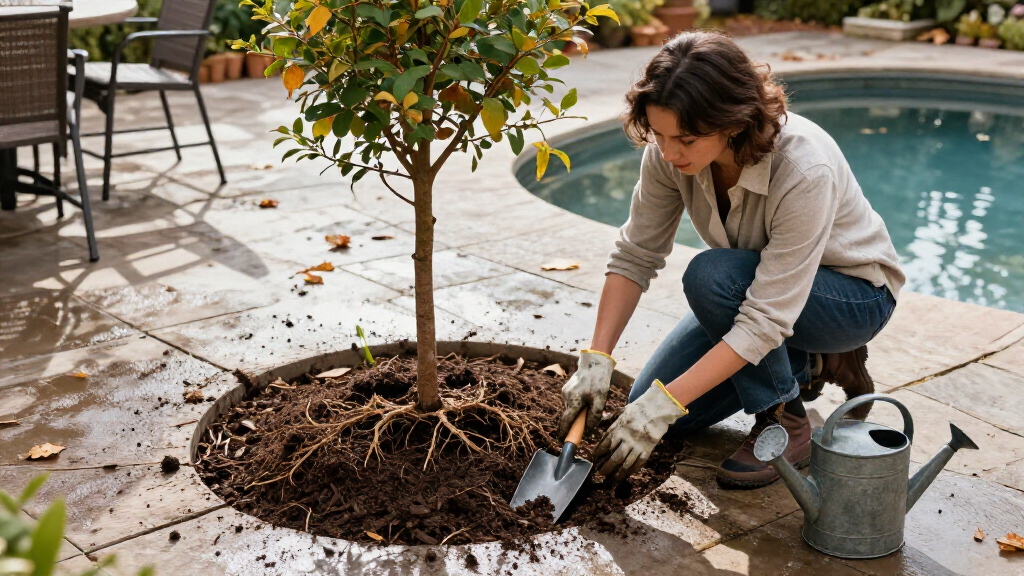
The report says roots that have grown around the inside of a nursery pot may keep circling after planting if they are not loosened and spread outward, so check the roots before planting with this fall planting advice in mind. In severe cases, roots can grow around and constrict the trunk, a condition known as trunk girdling. It recommends inspecting the root ball, loosening the soil and roots, and cutting large, tight problem roots when needed.
A second risk is burying the root flare—the point where the trunk widens into roots. The report advises finding the flare before digging and setting it at or slightly above the soil line. It also recommends a hole wider than the root ball but no deeper, with firm soil beneath it so the plant does not sink.
New plantings need a thorough initial watering and continuing attention as roots establish; this guide to planting shrubs and perennials in fall offers an additional planting tip. Rather than assuming rainfall is sufficient or following a rigid schedule, the report advises checking soil near the root ball and watering slowly and deeply when it is drying out. Soil should remain moist, not waterlogged. For mulch, it recommends a two- to three-inch layer spread across the root zone, with several inches of clearance around the trunk.
How Planting Errors Affect Establishment
These recommendations focus on problems that may not be obvious at planting time. Roots confined to a tight circular shape may not spread as intended; a buried root flare can contribute to bark decay and root problems; and inconsistent moisture can make establishment harder. Mulch touching bark can hold moisture against it and hide the root flare, making it harder to notice overly deep planting.
For homeowners, the practical consequence is that a planting job is not finished when a tree or shrub goes into the ground. Checking the root structure, planting depth, soil moisture and mulch placement can help reduce avoidable stress during establishment. The report describes potential outcomes; it does not quantify how frequently each mistake causes long-term damage.
Popular right now

KitchenAid Artisan 5-Quart Tilt-Head Stand Mixer, KSM150PS, Almond Cream

Vitamix Propel Series 510 Professional-Grade Blender, 3 Programs, Black

KitchenAid Artisan 5-Qt Tilt-Head Stand Mixer, Cardamom
As an affiliate, we earn on qualifying purchases.
Why Fall Can Suit New Plantings
The report describes fall as a potentially favorable time to plant because cooler weather can make outdoor work more comfortable, while warm soil may give roots time to settle before winter. Those conditions do not remove the need for correct planting and care, however. Roots still need room to grow, the flare should remain visible, and the root zone needs appropriate moisture.
The four recommendations are practical guidance from the supplied Country Living report, not a study comparing planting seasons or measuring the effects of each mistake. Local climate, plant species and soil conditions can affect care needs, so the report’s soil-moisture advice is based on checking the individual planting rather than applying one schedule to every tree or shrub.
“The goal is moist soil, not waterlogged soil.”
— Country Living report
What the Report Does Not Measure
The supplied report does not provide a publication date, research methods, or data on how often these errors occur or how long resulting problems last. It also does not specify a single watering frequency, which would vary with weather, soil and plant needs. The advice is presented as general gardening guidance; the extent of risk for any particular planting remains dependent on its conditions.
Checks to Make After Planting
For readers planting this fall, the report’s next steps are to inspect roots before planting, locate the root flare, set the plant at the correct depth, and monitor soil near the root ball as it establishes. Keep mulch in a shallow, even layer and away from the bark, then continue checking moisture rather than relying only on rainfall or a fixed calendar.
The report does not announce a follow-up study or further guidance. Gardeners should adapt its recommendations to the plant and site, and consult a local nursery, extension service or qualified arborist if roots, planting depth or ongoing decline are difficult to assess.
Key Questions
What are the four fall planting mistakes?
The report lists untreated circling roots, planting too deeply, inadequate watering while roots establish, and piling mulch against the trunk.
How can I tell whether a tree is planted too deeply?
Find the root flare, where the trunk widens into the roots. The report says it should be visible at or slightly above the soil line.
How often should I water a newly planted tree or shrub?
The report does not prescribe a fixed schedule. Check soil near the root ball and water slowly and deeply when it is drying out; aim for moist rather than waterlogged soil.
How should mulch be placed around a new tree?
Spread a thin, even layer about two to three inches deep over the root zone, leaving several inches between mulch and trunk so the bark and root flare remain uncovered.
Source: countryliving.com