

Understanding rip currents and floaters is vital for your water safety. Rip currents are fast-moving channels flowing away from the shore that can trap swimmers, so staying calm and swimming parallel to the coast helps you escape. Floaters or anyone caught in a rip should relax and signal for help instead of fighting the current. Learning these techniques and recognizing warning signs can protect you and others. Keep exploring to discover how to stay safe during water adventures.

Get pool and patio gear delivered free with Prime
- Fast, free delivery on millions of items
- Prime Video, Amazon Music and more included
- Member-only deals all year
Key Takeaways
- Rip currents are fast-moving channels flowing away from shore, often appearing calm but dangerous to swimmers.
- Stay calm and float or tread water if caught; avoid panicking or swimming directly against the current.
- To escape, swim parallel to the shoreline until free, then swim diagonally toward the beach.
- Recognize rip currents by narrow channels of choppy water or differences in wave appearance.
- Professional rescue techniques include reaching, throwing, or calling for help; avoid risking personal safety during rescues.
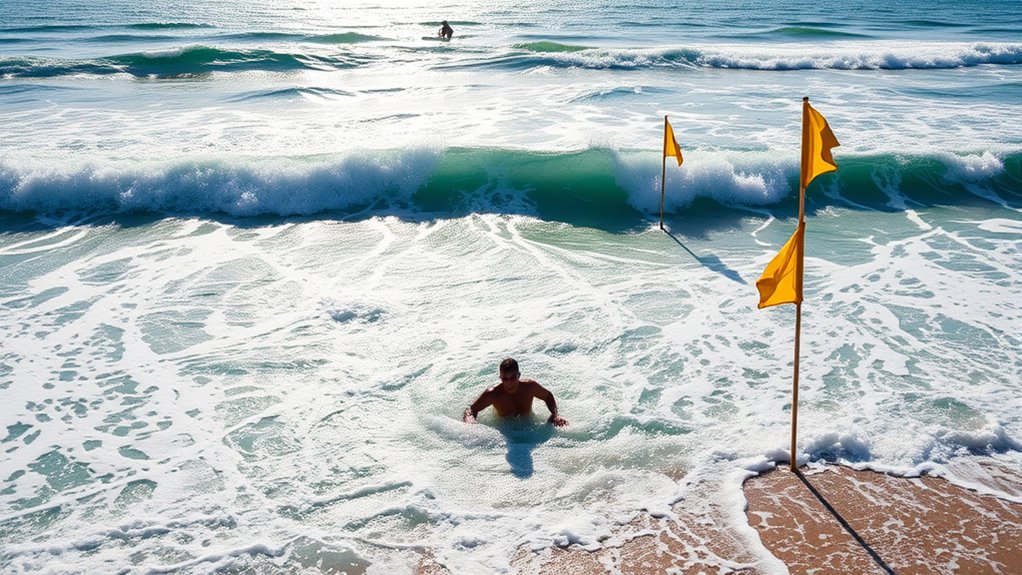
Water Safety
Have you ever wondered how to stay safe around water? Whether you’re swimming at the beach, a pool, or a lake, understanding water safety is essential. One of the most dangerous hazards you might encounter is rip currents, which can quickly pull even the strongest swimmers away from shore. Knowing how to recognize and respond to these powerful currents is *indispensable* for your safety. That’s where specialized training, like lifeguard training, comes into play. Lifeguards are trained to understand water rescue techniques that help them save lives in emergencies. Learning these skills isn’t just for professionals; anyone who spends time near water benefits from understanding how rip currents work and how to handle them.
Rip currents are fast-moving channels of water that flow away from the shoreline, usually through breaking waves. They can be narrow or wide and often appear as calmer areas between breaking waves, misleading swimmers into thinking the water is safe. If you find yourself caught in one, the first thing to do is stay calm. Panicking will only tire you out faster and make escape more difficult. Instead of trying to swim directly back to shore against the current, which can be exhausting and futile, you should conserve your energy and float or tread water. Use this time to signal for help if someone is nearby.
When you’re ready to escape the rip current, the best technique is to swim parallel to the shoreline. Rip currents usually flow in a narrow, concentrated path, so swimming sideways allows you to exit the current’s pull without expending excessive energy. Once you’re out of the current, you can then swim diagonally towards the beach. Remember, the key is to stay calm, conserve energy, and avoid fighting the current directly. Understanding water rescue techniques is essential for safe and effective responses in emergencies, and even non-professionals can benefit from this knowledge.
Your safety around water also depends on understanding water rescue techniques, which are covered extensively in lifeguard training. These techniques include methods like reaching, throwing, and, when necessary, entering the water to assist someone in distress. Even if you’re not a lifeguard, knowing how to perform a safe water rescue can make a *crucial* difference. It’s important to avoid putting yourself in danger, so always assess the situation carefully before intervening. If you’re unsure, calling for professional help is the safest choice.
rip current rescue floatation device
As an affiliate, we earn on qualifying purchases.
As an affiliate, we earn on qualifying purchases.
Frequently Asked Questions
How Can I Identify a Rip Current From the Shore?
To identify a rip current from the shore, look for visual cues like a narrow, darker area of churning water that appears different from the surrounding smooth waves. Watch for color changes, such as a channel of murky or foam-filled water moving away from the beach. These signs indicate where the current is pulling water and swimmers away from shore, so stay alert and avoid swimming in those zones.
Are Rip Currents Dangerous for Experienced Swimmers?
Rip currents can still be dangerous for experienced swimmers, despite common rip current myths suggesting otherwise. Your swimmer safety depends on understanding how these currents work and respecting their power. Even skilled swimmers can become trapped or exhausted if they don’t recognize a rip current or attempt to swim against it. Always stay alert, avoid assumptions, and follow safety guidelines to prevent accidents and guarantee your safety in the water.
What Should I Do if Caught in a Rip Current?
You find yourself caught in a rip current—stay calm and don’t panic. Swim parallel to the shoreline using steady, controlled strokes, then head back to land once you’re free. Remember rescue techniques like signaling for help if needed. Prevention strategies include swimming in designated areas and always observing warning signs. Staying calm and knowing these steps can keep you safe when facing rip currents unexpectedly.
Can Floatation Devices Help Escape a Rip Current?
Floatation devices can definitely help with rip current escape. If you’re caught, try to stay calm and use a floatation device to conserve energy while you signal for help. It can keep you afloat and make it easier to stay above water as you work to escape the rip current’s pull. Remember, a floatation device is a valuable tool for increasing your chances of safely getting out of a rip current.
How Do Weather Conditions Affect Rip Current Formation?
Weather conditions play a big role in rip current formation. When wave height increases, it can create stronger currents as water moves back out to sea. High wind speeds also contribute by generating larger waves and pushing water towards the shore, which can increase the likelihood of rip currents forming. Always pay attention to weather forecasts and ocean conditions before swimming, especially during stormy or windy days.
Conclusion
Remember, respecting rip currents and recognizing floater risks can mean the difference between danger and safety. Stay vigilant, avoid vulnerable waters, and never swim alone. By being brave, aware, and cautious, you can conquer water woes and keep your adventures enjoyable. Your safety’s in your hands—so stay smart, stay safe, and surf with confidence. Protect yourself, practice prudence, and plunge into water fun with confidence and care.
Fall Picks
fall essentials
As an affiliate, we earn on qualifying purchases.