
TL;DR

Get pool and patio gear delivered free with Prime
- Fast, free delivery on millions of items
- Prime Video, Amazon Music and more included
- Member-only deals all year
Livingetc published four Japanese-inspired tablescaping suggestions for autumn hosting, developed with Nakagawa, a Nara craft maker and retailer founded in 1716. The report recommends combining individual place settings with shared dishes, choosing some tableware for the person using it, matching vessels to food, and changing plates with the season.
Livingetc has published four Japanese-inspired tablescaping lessons for autumn hosting, drawing on its work with Nakagawa, a craft maker and retailer founded in Nara in 1716. The suggestions combine personal place settings with shared serving dishes, and use seasonal vessels to shape the meal’s atmosphere.
The report describes a Japanese table as having two layers: a setting for each person and shared dishes in the middle. An individual place may include an oshiki, or flat tray, with a rice bowl, soup bowl and small plate. The report calls each person’s area meimei no ba. Food is served from central platters as the meal progresses, rather than requiring hosts to choose only between fully plated courses and family-style service.
A second suggestion is to select some pieces for the people who will use them. The report says family members may have their own rice bowls and chopsticks, chosen for hand size and preferred feel. It contrasts this individualized approach with the Western convention of buying a coordinated set, while presenting mixing and matching as a way to make a table more personal.
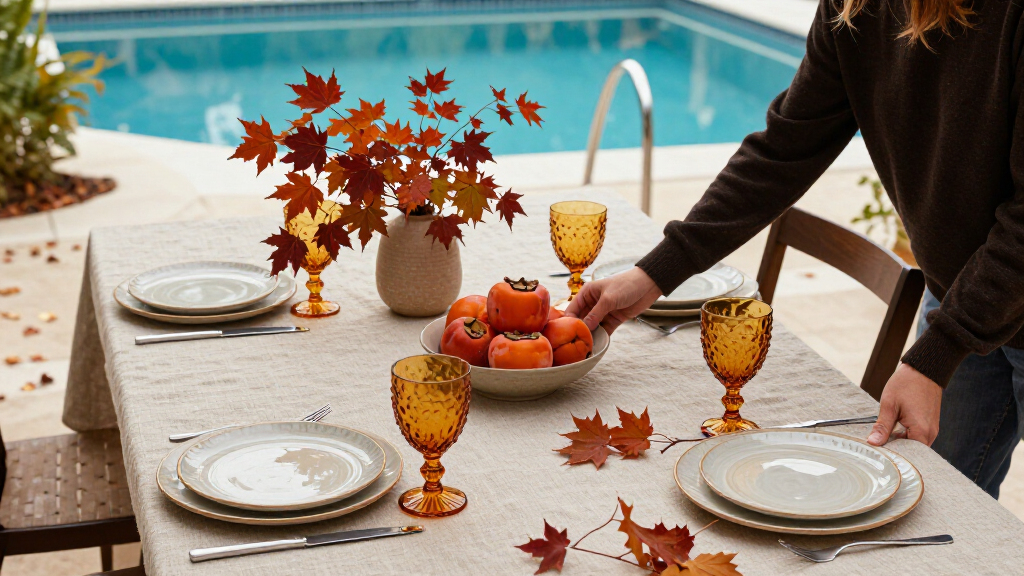
The remaining lessons focus on the relationship between food and its vessel, and on seasonal changes. The report describes bowls and plates as part of the dining experience, including their weight, warmth and the open space around food. For autumn, it suggests swapping summer glass and white porcelain for warm clay and persimmon or rust glazes, with one small seasonal accent such as a chrysanthemum-shaped chopstick rest or a mame-zara, a small plate.
A More Flexible Autumn Table
The recommendations offer hosts a way to change the mood of a meal without replacing the whole dining set or adding elaborate decorations. Their emphasis is on how people eat together and on practical choices—serving dishes, bowls and small plates—rather than a large centerpiece. The report’s approach also makes room for a table to be both carefully arranged and informal: guests have individual settings, while shared food remains accessible.
For readers planning autumn gatherings, the ideas can be applied selectively. A host could start with a shared platter and a few individual bowls, then add seasonal colors through existing ceramics or one small accessory. The article presents these as design lessons, not as rules all Japanese households follow, and it does not claim that the suggestions will produce a particular hosting outcome.
Popular right now

Samsung 42-Inch Class OLED S90F 4K Smart TV (2025)

Roborock RockNeo Q110H Wire-Free Robot Lawn Mower

Bose QuietComfort Wireless Noise-Cancelling Over-Ear Headphones, Black
As an affiliate, we earn on qualifying purchases.
The Four Habits in Brief
The report’s first lesson is to blend plated and family-style dining. Guests can have their own place settings while taking food from dishes in the center. Its second is to consider the individual rather than buy every item as a uniform set: personal bowls and chopsticks can reflect the user’s hand and preferences.
For the third lesson, the report invokes a phrase it attributes to potter and restaurateur Kitaōji Rosanjin: “the vessel is the kimono of the food.” It connects that idea to the tactile and visual qualities of tableware, and recommends small plates known as mame-zara as versatile pieces to collect and mix. The fourth lesson is to update vessels with the season rather than redesign the entire table. The report suggests setting out autumn pieces slightly ahead of the season, in keeping with its description of Japanese seasonal practice.
“A Japanese table is laid as two things at once. A private setting in front of each person, and shared dishes in the middle for everyone to take from.”
— Livingetc report, describing the Japanese table
What the Report Does Not Establish
The source is a design and hosting report, not a survey of Japanese households or a formal guide to Japanese dining customs. It does not establish how widely each practice is followed, or whether approaches vary by region, household or occasion. Its descriptions should be read as the author’s account of habits and ideas that can be adapted, rather than universal standards.
The source also gives no publication date and does not provide testing, reader feedback or evidence comparing the suggestions with other hosting styles. It is not clear which product references are editorial examples and which, if any, involve commercial arrangements; the supplied material does not explain those relationships.
How Hosts Can Apply the Ideas
Livingetc’s report offers practical steps readers can use for their next autumn meal: combine personal settings with shared platters, choose a few pieces for the people using them, consider how tableware feels as well as how it looks, and bring in seasonal colors through bowls or plates. A small accent can signal the change of season without changing the rest of the table.
No follow-up event or further reporting is announced in the source. The next step is left to readers: adapt the ideas to their own meal, available tableware and guests, while treating the article as design inspiration rather than a prescriptive account of Japanese homes.
Key Questions
What are the four Japanese tablescaping lessons?
Livingetc recommends combining individual place settings with shared dishes, choosing some vessels for the person who will use them, considering tableware as part of the food’s presentation, and changing plates and bowls with the season.
What does meimei no ba mean in the report?
The report uses meimei no ba for each person’s own area at the table, which may include a tray, rice bowl, soup bowl and small plate.
What tableware does the report suggest for autumn?
It suggests warm clay and glazes in persimmon and rust, with a small seasonal detail such as a chrysanthemum-shaped chopstick rest or a mame-zara.
Does the article say every Japanese home follows these practices?
No. The source presents four habits and design ideas drawn from its account of Japanese tablescapes; it does not establish how common they are across households or regions.
Source: rss