TL;DR

Get pool and patio gear delivered free with Prime
- Fast, free delivery on millions of items
- Prime Video, Amazon Music and more included
- Member-only deals all year
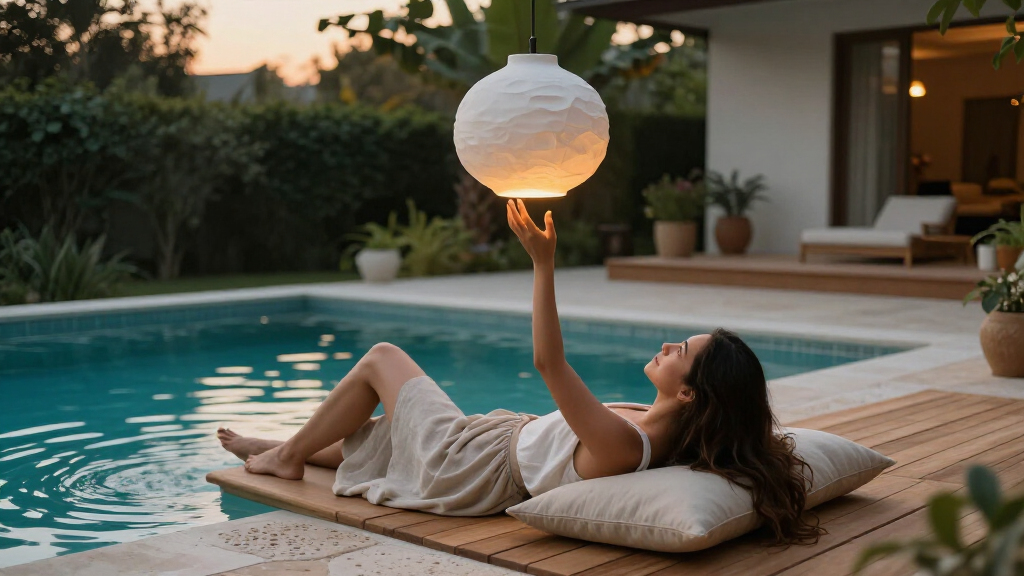
PINCH’s Anders pendant light was first designed in 2009 as a prop for a studio photoshoot, then took five years to perfect. Designer Russell Pinch says its layered banana-fiber shade was developed to create the soft drape and diffused glow he wanted; each lamp is still handmade, and the design has since expanded to include a wall-light version.
PINCH’s Anders pendant began as a light made for a studio photoshoot in 2009, but turning its layered, fabric-like form into a finished product took five years, designer Russell Pinch told Livingetc. The British design studio now makes the shade from banana fiber, with each piece cut, stiffened, sewn and shaped by hand.
Pinch designed the lamp when his studio needed a pendant to hang above a table during a shoot featuring its early furniture designs. He told Livingetc that an image of a Lanvin dress caught in motion, its outer skirt lifting to expose layers beneath, gave him the idea for a light with a similar sense of movement. His first model, made from fabric, captured the concept but was not ready for production.
Finding a way to make the shade took the design beyond a straightforward lighting-manufacturing process. Pinch said manufacturers had offered to form it in plastic, but he wanted a material with the drape of a dress. A creative director at Jasper Conran, where Pinch was freelancing, suggested he consult a milliner rather than a tailor. The final material was banana fiber, whose translucency, Pinch said, diffuses light through the overlapping layers.
PINCH’s production method remains labor-intensive. According to the Livingetc report, individual layers are cut, stiffened, sewn and pinned, then sculpted into shape. Pinch said makers quality-check the angle of each fold, even though the finished shade is meant to look informal. The collection has also grown beyond the pendant: Livingetc reports that a wall-light version has been introduced.
How Handmaking Shapes the Light
The Anders story shows how a lighting design’s visual simplicity can depend on detailed, skilled production. Its soft outline is not simply a decorative choice: the carefully arranged layers are central to how the banana fiber filters and diffuses light. The labor involved also distinguishes the pendant from a shade made through a single molded or mass-produced process.
Its slow commercial rise is part of the account. Pinch told Livingetc that the light sold only modestly for nearly a decade, and the studio kept it in the collection partly because it continued to use it in photographs. The design later became one of PINCH’s most requested pieces, according to the report, appearing in homes and commercial projects. That trajectory offers readers a concrete example of how a product can find an audience gradually rather than through an immediate launch response.
The new wall-light format extends the same sculptural approach into another part of a room. Designer Lonika Chande, quoted by Livingetc, said the material gives the lit lamp a warm glow and creates atmosphere. That is her design assessment, not a measured lighting-performance claim; the report provides no technical output figures.
handmade banana fiber pendant light
As an affiliate, we earn on qualifying purchases.
As an affiliate, we earn on qualifying purchases.
From Photoshoot Prop to Collection
PINCH was founded in 2004. When Russell Pinch conceived the Anders in 2009, he told Livingetc, the studio had only a small group of designs, including the Avery chair, Harper table and Moreau sofa. The pendant was created to complete the scene for a photoshoot, not as a planned commercial product.
After the first fabric model, the studio explored possible construction methods. Pinch rejected plastic because, in his view, it would not deliver the soft, layered quality he had in mind. The millinery suggestion helped redirect the search toward a form that could be built and shaped in layers. The reported development period was five years, although Livingetc does not give a precise date for the product’s commercial release.
For years after its introduction, sales were limited, Pinch said. The piece gradually became more widely requested and was later used in projects including a Texas yoga studio and a project by interior designer Lonika Chande. The report describes a design still being developed, with a wall light joining its pendant forms.
“I wanted it to have the drape of a dress.”
— Russell Pinch, speaking to Livingetc
Production and Sales Details
The Livingetc report does not specify the Anders’ current production volume, price, lead time, or how many versions are available in each market. It also gives no detailed chronology for the five-year development period or exact date when the lamp became a commercial product. Pinch’s account of the design process and its sales history is attributed to him; the report does not provide independent sales data or production records.
The article describes banana fiber as the material that gives the shade its diffused quality, but it does not include technical measurements of brightness, energy use, or material sourcing. Readers should treat statements about warmth and atmosphere as design descriptions rather than quantified performance claims.
The Anders Range Continues
The development already identified in the report is the addition of a wall-light version alongside the pendant. PINCH’s current product availability, specifications and pricing are not detailed in the source, and no further release dates or planned changes are stated. The next developments in the range, if any, have not been announced in the report.
For prospective buyers, the practical next step is to check PINCH’s official product information or contact the studio or an authorized retailer for current options and availability. The account establishes the design’s history and handmaking process, but not the terms or timing of a purchase.
Key Questions
What is the PINCH Anders pendant light?
It is a layered pendant lamp designed by Russell Pinch for the British studio PINCH. Its sculptural shade is made from banana fiber and is shaped by hand.
How long did it take to develop?
Russell Pinch told Livingetc that perfecting the design took five years. The report does not provide exact dates for each stage or for its commercial release.
What inspired its shape?
Pinch said an image of a Lanvin dress in motion, with its outer skirt lifting to reveal layers underneath, inspired the pendant’s folded, flowing form.
What material is used for the shade?
The shade is made from banana fiber. Pinch said the material’s translucency helps diffuse light through its layers.
Is the Anders available as a wall light?
Livingetc reports that PINCH has added a wall-light version. The article does not list current availability, prices or specifications, so buyers should check directly with PINCH or a retailer.
Source: rss
Columbus Day / Indigenous Peoples' Day Picks
long weekend sales
As an affiliate, we earn on qualifying purchases.