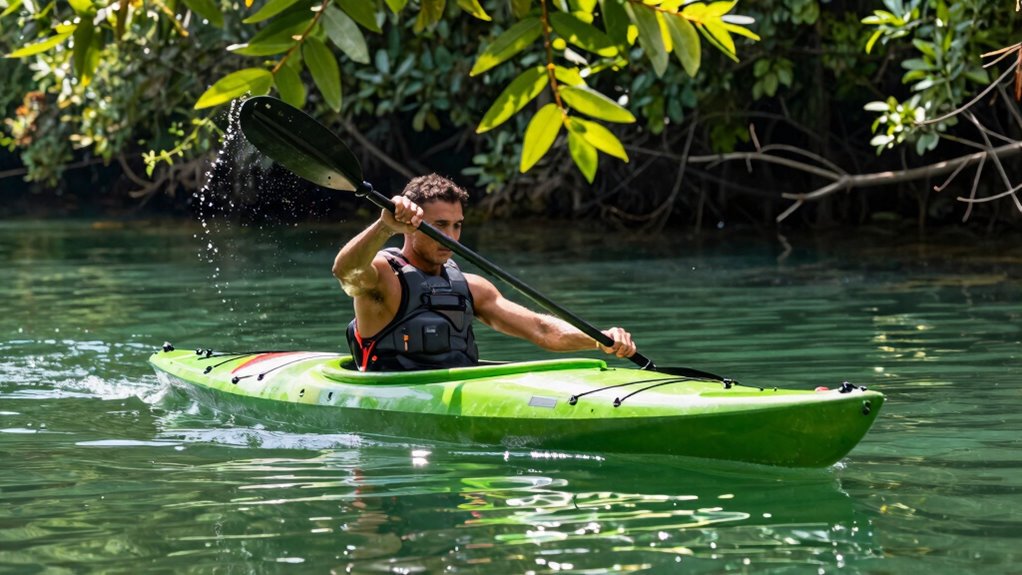

Your kayak might feel slow even when you’re paddling hard because of overlooked maintenance, like a dirty or scratched hull that creates drag, or warped paddles that waste energy. Inefficient paddling technique, such as poor body positioning or rushing strokes, can also drain your effort and reduce speed. External factors like wind and currents play a role too. To boost your performance, you’ll want to check these areas carefully; continue exploring for more tips to improve your pace.

Get pool and patio gear delivered free with Prime
- Fast, free delivery on millions of items
- Prime Video, Amazon Music and more included
- Member-only deals all year
Key Takeaways
- A dirty or scratched hull increases water resistance, reducing speed despite effort.
- Inefficient paddling technique or poor body positioning wastes energy and lowers propulsion.
- Worn or loose paddles and fittings decrease paddling efficiency.
- External factors like wind, current, or waves can slow you down regardless of effort.
- Inconsistent technique or rushing strokes can cause fatigue and reduce overall speed.
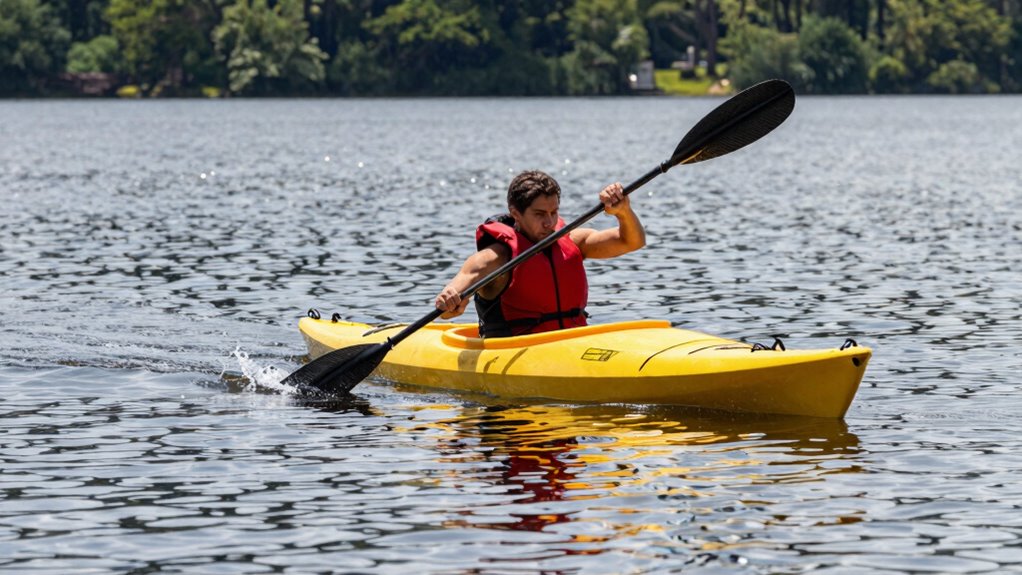
If you’ve ever pushed your kayak hard and felt it slow down instead of speeding up, you’re not alone. It’s frustrating when you’re giving it your all, yet your kayak seems to resist your effort. Usually, this isn’t just about how hard you paddle; several factors come into play, including equipment maintenance and paddling technique. Understanding these elements can help you get better performance and enjoy your time on the water more.
First, consider your kayak’s equipment maintenance. Even small issues, like a dirty or scratched hull, can markedly increase water resistance. Over time, algae, dirt, or debris can build up on the bottom of your kayak, creating more drag as you paddle. Regularly cleaning and inspecting your kayak ensures that its surface remains smooth and free of obstructions. Also, check the condition of your paddles—warped blades or loose fittings can waste your energy and reduce efficiency. Properly maintained equipment allows your kayak to slice through water with less resistance, making your efforts more effective. Additionally, paying attention to equipment upkeep can prevent unnoticed issues that compromise speed. Being proactive about maintenance can also help identify potential problems before they significantly affect performance.
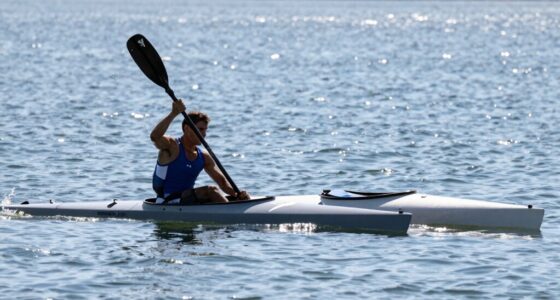
Next, your paddling technique plays an essential role in how fast or slow your kayak feels. If you’re not engaging the right muscles or using inefficient strokes, you’ll find yourself exerting more effort with less return. For example, relying solely on arm strength instead of engaging your core can tire you out quickly and reduce your paddling power. Focus on a smooth, consistent stroke, planting your paddle fully into the water and pulling back with a controlled, powerful motion. A high-quality paddling technique maximizes propulsion and minimizes fatigue, helping you move faster even when paddling hard. Developing proper technique can also help you avoid unnecessary strain or injury, leading to longer, more enjoyable outings. Practicing these skills can also improve your overall efficiency and reduce the effort needed for a given speed.
Another aspect worth examining is your body positioning. Sitting too upright or leaning too far forward can disrupt your balance and reduce efficiency. Keep your torso engaged and your movements fluid, allowing your core muscles to do most of the work. Additionally, avoid over-paddling or rushing your strokes, which can cause unnecessary resistance. Efficient paddling involves a rhythm—push yourself to develop a steady, controlled cadence that matches your kayak’s design. Proper body positioning and rhythm work together to optimize your energy use and improve overall speed. Incorporating body mechanics into your paddling routine can lead to noticeable improvements in performance and comfort.
Lastly, environmental factors like wind, current, or waves can make your kayak feel slow regardless of your effort. While these aren’t always controllable, understanding how to adjust your paddling and course can help compensate for external conditions. Being aware of how external conditions influence your speed allows you to adapt your approach and make the most of your paddling effort. Learning to read the water and weather patterns can significantly enhance your ability to maintain speed and conserve energy during your trips.
As an affiliate, we earn on qualifying purchases.
Frequently Asked Questions
Can Kayak Design Affect Speed Even With Strong Paddling?
Yes, kayak design can affect speed even with strong paddling. Material efficiency plays a role since lightweight, durable materials reduce drag and make paddling easier. The hull shape is essential too—longer, narrower hulls typically cut through water better, increasing speed. If your kayak’s design isn’t optimized for efficiency, you’ll feel slower despite paddling hard. Focus on a sleek hull and quality materials to maximize your speed potential.
How Does Water Temperature Influence Kayak Performance?
Water temperature considerably influences your kayak’s performance because temperature effects alter water density. Colder water is denser, creating more resistance against your kayak, which slows you down even if you’re paddling hard. Conversely, warmer water is less dense, reducing drag and helping your kayak glide more smoothly. So, on colder days or in colder water, expect more effort for less speed, while warmer conditions can give you a slight boost.
Does Paddle Type Impact Kayak Speed?
Yes, paddle type greatly influences your kayak speed. You should consider paddle ergonomics to reduce fatigue and enhance efficiency. A paddle with an ideal shaft length and comfortable grip helps you paddle longer and stronger. Additionally, the paddle blade shape matters—long, narrow blades cut through water more easily, increasing speed. Choosing a paddle designed for your kayak and paddling style ensures you maximize propulsion and minimize effort, making your trips faster and more enjoyable.
Can Weather Conditions Make My Kayak Feel Slower?
Like Icarus flying too close to the sun, you might feel your kayak slow despite paddling hard. Weather conditions, especially wind resistance and water currents, play a big role. Headwinds create extra drag, making your kayak feel sluggish, while strong currents can oppose your movement. So, when the weather turns, your kayak’s speed can drop considerably, even if your effort stays the same. Adjust your technique or plan around calmer conditions to glide more easily.
How Often Should I Maintain My Kayak for Optimal Speed?
You should maintain your kayak regularly, ideally after every few trips, to keep it at ideal speed. Proper kayak storage prevents damage and warping, while hull maintenance, like cleaning and inspecting for scratches or cracks, ensures smooth paddling. Regularly checking your kayak helps identify issues early, keeps it lightweight, and improves performance. Consistent upkeep makes a noticeable difference in how fast and efficiently you can paddle.
Conclusion
So, next time your kayak feels like it’s dragging its feet, remember it’s often just a matter of technique or conditions, not your strength. Think of paddling as tuning a musical instrument—you need the right touch and rhythm to hit the right notes. Don’t let frustration weigh you down; with a little adjustment, you’ll glide smoother and faster, turning every stroke into a symphony of progress. Keep paddling, and soon you’ll outpace even your own expectations.
Halloween Picks
halloween
As an affiliate, we earn on qualifying purchases.