

Using a dedicated session journal helps you improve faster on the water by letting you track your actions, analyze progress, and adjust your techniques based on real data. You can set clear goals before each session, record your performance, and reflect afterward to see patterns and areas for growth. This focused approach makes your practice more purposeful and data-driven. Stay tuned, and you’ll discover how this method can turn your progress into consistent improvement.

Get pool and patio gear delivered free with Prime
- Fast, free delivery on millions of items
- Prime Video, Amazon Music and more included
- Member-only deals all year
Key Takeaways
- Use a dedicated session journal to record specific water sessions, noting conditions, tricks practiced, and techniques used.
- Set clear, measurable goals for each session to focus efforts and track progress systematically.
- Review and analyze recorded videos and journal entries to identify strengths and areas needing improvement.
- Consistently reflect on session data to refine techniques and adjust training strategies for faster progress.
- Track small wins and patterns over time to maintain motivation and accelerate skill development on the water.
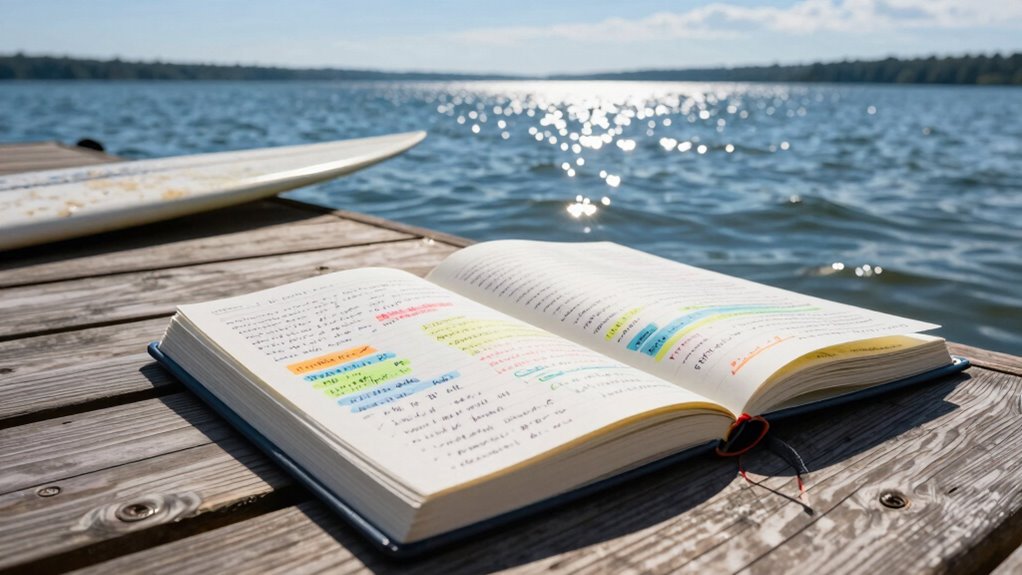
To improve faster on the water, keeping a dedicated session journal can be a game-changer. It’s not just about recording what you did; it’s about actively analyzing your progress and making informed adjustments. When you focus on technique tracking, you gain insight into what works and what needs improvement. Whether you’re working on a new maneuver or refining an existing skill, jotting down specific details about your technique helps you identify patterns and pinpoint areas for growth. Did you notice your stance was off during that last run? Were your turns sharper or smoother than before? Recording these observations allows you to see tangible progress over time, making your practice sessions more purposeful.
Goal setting is another essential component of your journal. Before each session, set clear, achievable objectives—like improving your jumps, reducing your fall rate, or increasing your speed. Writing down these goals keeps you focused and motivated. As you progress, revisit and revise them based on your performance. For instance, if you aimed for three successful tricks during your last session but only managed two, you can adjust your goals to be more realistic or challenge yourself further. By tracking your goals alongside your technique, you create a detailed picture of your development. This clarity helps you prioritize what to work on and prevents aimless practicing.
Your session journal also encourages consistency. When you write down your goals, techniques, and observations after each session, you’re more likely to stick with your routine. Over time, this consistency builds momentum, leading to faster improvement. Additionally, reviewing your past entries can boost your confidence, as you see how far you’ve come. It’s easy to forget incremental progress when you’re focused on the big picture, but your journal keeps those small wins in view, fueling your motivation. Incorporating data-driven insights from your recordings can further enhance your training effectiveness. Moreover, understanding technique analysis through your records helps you develop a more strategic approach to your practice. The ability to interpret your own data fosters a deeper understanding of technique principles and performance metrics, which are essential for targeted improvements. Regular reflection on your data can also help you recognize learning patterns that accelerate your development.
Another advantage of maintaining a detailed session journal is that it makes your practice more deliberate. Instead of mindlessly repeating routines, you analyze what’s effective and what’s not. This active approach ensures you’re always working towards specific improvements rather than wasting time on less productive exercises. Over weeks and months, this method accelerates your learning curve because you’re constantly refining your technique based on real data. Recognizing patterns in your performance data also helps you better understand the learning process, allowing for more efficient skill development.
In short, a dedicated session journal that emphasizes technique tracking and goal setting transforms your water practice from random efforts into a strategic, results-driven process. It becomes your personal coach, guiding you through each session with purpose and clarity. With discipline and consistency, this simple habit can considerably speed up your progress on the water, helping you reach your goals faster than ever before.
As an affiliate, we earn on qualifying purchases.
Frequently Asked Questions
How Often Should I Review My Session Journal?
You should review your session journal after each session and then weekly. Regular personal reflection helps you identify progress and setbacks, while goal setting keeps you focused. By reviewing consistently, you can adjust your training, celebrate milestones, and stay motivated. This routine fosters continuous improvement on the water, making your efforts more effective and enjoyable. Regular reviews turn your journal into a powerful tool for faster progress.
What Specific Metrics Should I Track During Each Session?
You should track performance metrics like speed, distance, and consistency, along with technique analysis such as stroke efficiency or balance. Ironically, the more detailed your metrics, the faster you’ll improve, so don’t overlook subtle details. Focus on key performance indicators that reveal weaknesses and strengths, allowing you to refine your skills. By consistently monitoring these, you’ll turn small improvements into big gains on the water.
How Can I Stay Motivated to Keep Journaling Consistently?
To stay motivated to journal consistently, try using motivation strategies like setting small, achievable goals and rewarding yourself for sticking to your habit. Remember the journaling benefits, such as tracking progress and gaining insights that boost your skills. Keep your journal accessible and make it part of your routine, so it feels natural. Focus on how journaling helps you improve, and you’ll find it easier to stay committed over time.
What Tools or Apps Are Best for Maintaining a Session Journal?
If you want to keep your session journal on the ball, try apps like Strava or MySwimPro for digital tracking. They let you log your sessions seamlessly and monitor progress over time. Incorporate photo documentation to capture your best moments and track improvements visually. These tools make it easy to stay consistent and motivated, turning your progress into a story worth telling. Keep at it, and you’ll see results faster than you think.
How Do I Interpret Progress From My Journal Entries?
You interpret progress by analyzing your techniques and noting improvements over time. Look for patterns in your journal entries, such as better control, smoother shifts, or increased confidence. Use goal setting to set specific benchmarks and track how your skills evolve. When you see consistent progress in these areas, it’s a clear sign you’re improving. Regularly reviewing your journal helps you stay motivated and adjust your training for even better results.
Conclusion
By keeping a session journal, you’ll see your progress unfold and identify areas for improvement more efficiently. Some might think it’s tedious or unnecessary, but in reality, it’s a powerful tool that accelerates learning and boosts confidence. When you regularly reflect on your sessions, you’re not just recording data—you’re actively shaping your growth. Trust the process, stay consistent, and watch yourself improve faster on the water, turning setbacks into stepping stones.
Fall Picks
fall essentials
As an affiliate, we earn on qualifying purchases.