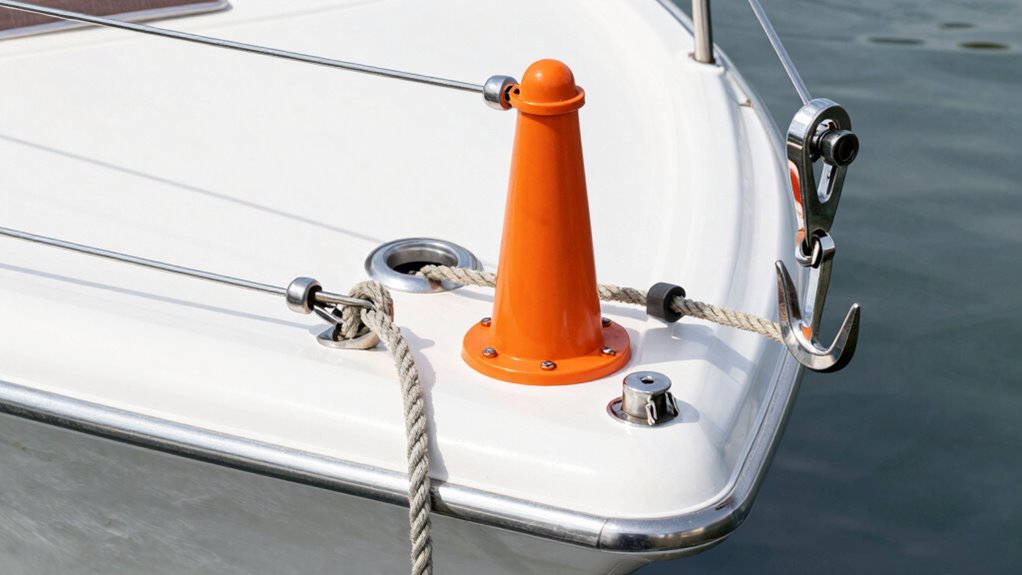

Choosing the right tow point—bridle, pylon, or transom hookup—is key to your safety and boat performance. A bridles distribute force evenly, offering stability in rough conditions but can be complex to set up. Pylons provide a strong, centralized attachment perfect for heavy loads, while transoms are quick and simple for casual use. To maximize safety and efficiency, consider your boat’s design and towing needs; explore more details if you want to make the best choice.
Key Takeaways
- Proper tow point selection depends on the boat’s purpose, size, and towing conditions for safety and performance.
- Bridles evenly distribute forces, offering stability but require correct setup and maintenance.
- Pylons provide strong, centralized attachment points ideal for heavy loads and rough waters.
- Transom hookups are quick and simple but may not evenly distribute force, affecting stability.
- Regular inspection and choosing rated, compatible tow points are essential for safe towing operations.
Why Tow Point Safety Is Critical for Your Boat
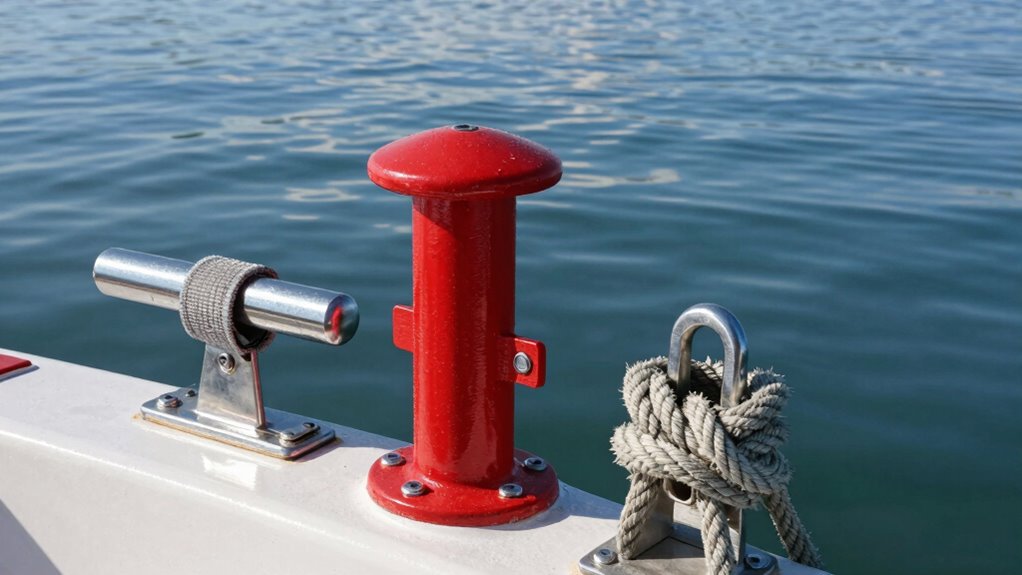
Your boat’s tow point is a crucial safety feature that you can’t afford to overlook. Properly chosen anchor points ensure your towing setup is secure and balanced, preventing accidents or damage. Using correct towing techniques, like attaching to the right tow point, helps maintain stability and control, especially in rough conditions. If you neglect tow point safety, you risk equipment failure, which can lead to dangerous situations for everyone on board. Always double-check that your anchor points are strong and properly positioned before towing. Reliable tow point safety reduces strain on your boat and gear, keeps your crew safe, and ensures a smooth towing experience. Remember, the right tow point isn’t just about convenience — it’s about safety first.
The Main Types of Tow Points: Bridle, Pylon, and Transom

Have you ever wondered which type of tow point best suits your boat’s towing needs? The main options are the bridle, pylon, and transom hookup. A bridle tow point evenly distributes pulling forces, helping maintain dinghy stability during towing. It’s ideal when you want balanced tension across two attachment points, reducing side-to-side sway. A pylon is a vertical post mounted on the boat, providing a strong anchor line attachment point that keeps the tow line high and clear of obstructions. It’s especially useful for high-speed towing or when you need a dedicated, stable tow point. Transom hookups attach directly to the stern, offering simplicity and quick access. Each type serves different towing situations and boat designs, so choosing the right one impacts safety and performance.
Pros and Cons of Using a Bridle as a Tow Point
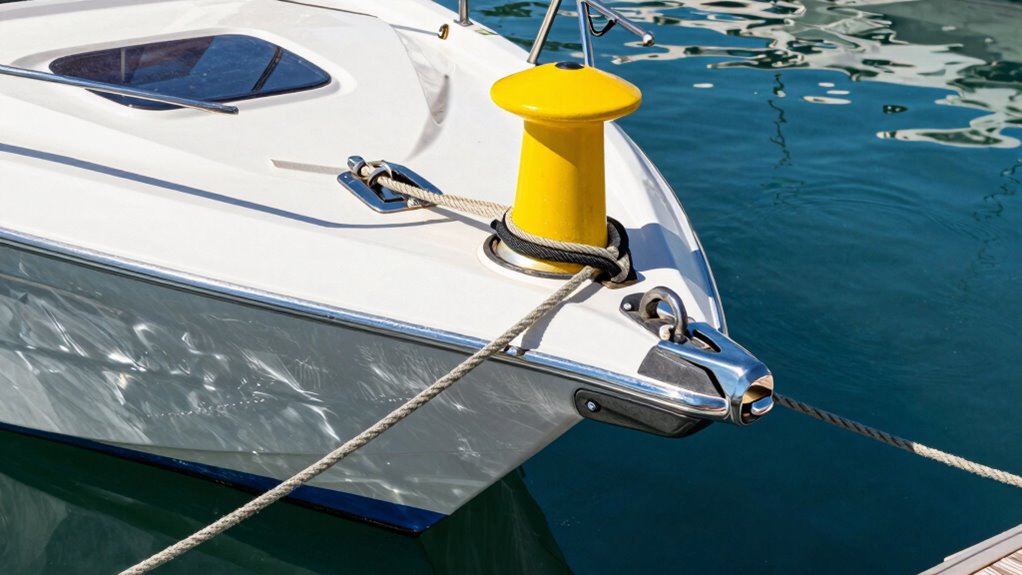
Using a bridle as a tow point offers several advantages, but it also comes with some drawbacks to consider. It distributes towing forces evenly, improving anchoring stability and reducing strain on the boat’s structure. Additionally, high-quality rope durability ensures it withstands harsh conditions. However, a bridle can be complex to set up correctly, requiring proper attachment points to avoid uneven load distribution. It may also cause increased wear on the rope if not inspected regularly. Here’s a quick comparison:
| Advantage | Disadvantage | Best Use Case |
|---|---|---|
| Even force distribution | Setup complexity | Heavy-duty towing |
| Improved anchoring stability | Potential rope wear | Long-distance or rough waters |
| High rope durability | Maintenance required | Multiple towing situations |
When to Use a Pylon for Towing and What to Watch Out For

A pylon is most effective for towing when you need a strong, centralized attachment point that can handle heavy loads and maintain stability. Use a pylon when your boat’s anchor points aren’t suitable for direct towing or when you require better control during towing operations. Pylons excel with towing techniques that demand high strength and balanced load distribution, especially in rough conditions. Always make certain the pylon is securely mounted and rated for the load you plan to tow. Watch out for potential issues like improper attachment or misalignment, which can cause instability or damage. Regularly inspect the pylon for wear and corrosion. Properly used, a pylon provides a reliable, stable connection that enhances safety and efficiency during towing.
How to Choose the Best Tow Point for Your Boat
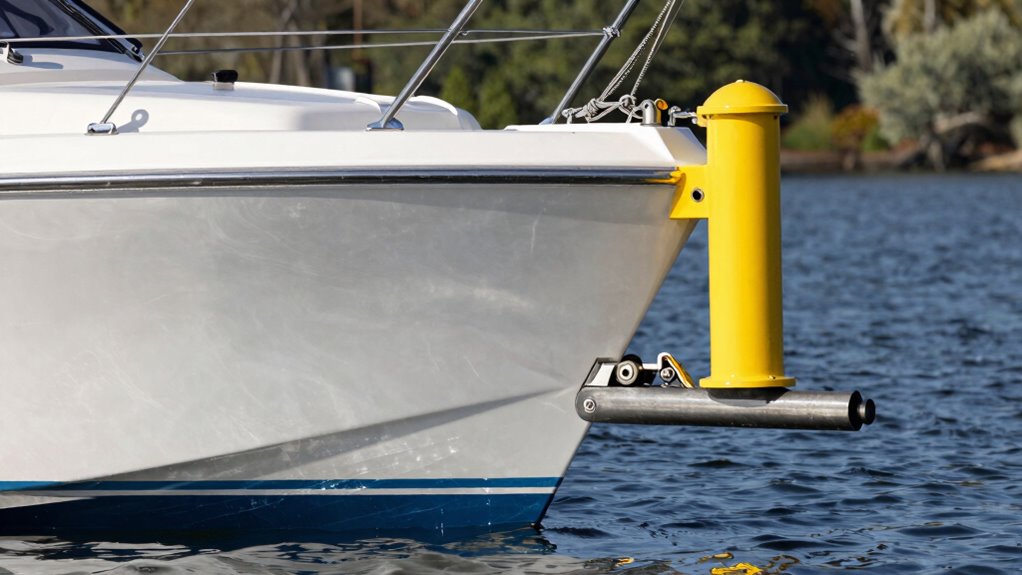
Choosing the right tow point for your boat involves evaluating your specific towing needs and the boat’s design. To do this effectively, consider these factors:
- Towing purpose – whether for wakeboarding, water skiing, or towing tubes.
- Boat material – verify the tow point materials are compatible and durable, like stainless steel or reinforced fiberglass.
- Boat maintenance – select a tow point that’s easy to inspect and maintain to prevent corrosion or damage.
- Positioning and strength – pick a tow point that offers ideal placement and can handle the required load.
Frequently Asked Questions
How Do I Inspect My Tow Point for Wear and Damage?
You should regularly inspect your tow point for wear and damage by checking the material, whether it’s stainless steel, aluminum, or composite, for cracks, corrosion, or deformation. Confirm the tow point is securely positioned and not loose or misaligned. Look for frayed or worn straps or fittings, and verify that the attachment points remain strong. If you notice any signs of damage or wear, replace or repair the tow point before use to ensure safety.
Can I Switch Between Tow Point Types Easily?
Yes, you can switch between tow point types easily, but you should perform proper tow point maintenance and guarantee each connection is secure. Customizing your tow points allows you to adapt to different towing needs, but always double-check the hardware and attachment points for wear or damage before making changes. Proper maintenance ensures safety and peak performance, making it simple to switch tow point setups when needed without risking damage or accidents.
What Safety Gear Should I Wear When Towing?
Ever notice how safety gear can make all the difference? When towing, you should wear a life jacket, gloves, and protective eyewear to stay safe. Remember, proper boat trailer maintenance and following anchoring procedures are essential for secure towing. Always double-check your gear and equipment before hitting the water, ensuring your safety and smooth towing experience. Staying prepared prevents accidents and keeps everyone safe on your adventure.
How Does Boat Size Affect Tow Point Selection?
Your boat size substantially influences tow point selection because larger boats have more weight and require higher towing capacity. If your boat is heavy, opt for a robust tow point like a pylon or a transom hookup designed to handle the increased load. Confirm the tow point matches your boat’s weight and towing capacity to prevent accidents. Always check manufacturer guidelines to select the safest, most appropriate tow point for your boat’s size.
Are There Legal Regulations for Tow Point Installations?
Yes, there are legal regulations for tow point installations. You need to guarantee your setup complies with local and federal safety standards, which promote legal compliance and safe operation. Always follow installation standards specified by manufacturers and relevant authorities. Properly securing tow points prevents accidents, protects passengers, and keeps you within legal boundaries. Check with marine safety agencies or local regulations before installing or modifying tow points to avoid fines or safety issues.
Conclusion
Choosing the right tow point is like selecting the perfect anchor in a storm—you need stability and confidence. Whether you opt for a bridle, pylon, or transom hookup, understanding their strengths and limitations maintains your boat steady and your ride safe. Think of your tow point as the backbone of your towing setup; when chosen wisely, it ensures smooth sailing through any challenge. Prioritize safety, and let your boat’s true potential shine.