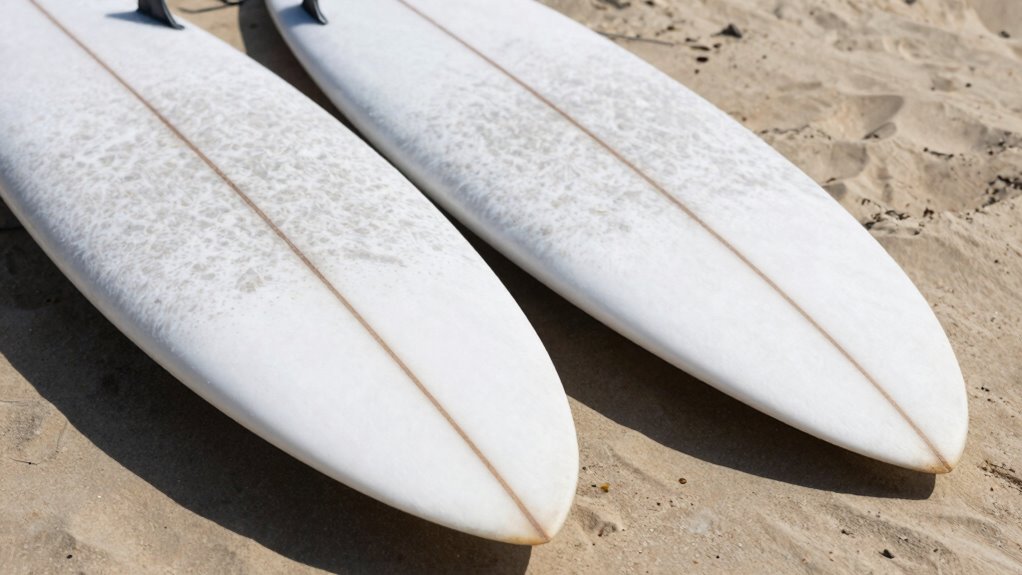

The shape of your surfboard quickly affects its stability in changing waves. Wider, rounded noses distribute weight evenly and provide more balance, making your ride more forgiving. Narrower, pointed noses cut through water efficiently but respond faster to wave shifts, which can reduce stability. The bottom shape also matters—flat bottoms offer smooth glide, while curved or pointed bottoms improve maneuverability but may feel less stable. Keep exploring to understand how these shape choices can enhance your surfing experience.

Get pool and patio gear delivered free with Prime
- Fast, free delivery on millions of items
- Prime Video, Amazon Music and more included
- Member-only deals all year
Key Takeaways
- Wider, rounded-nose boards provide greater stability and balance, especially in choppier conditions.
- Narrow, pointed noses cut through water efficiently but reduce initial stability.
- Flat-bottomed shapes increase surface area, enhancing smooth gliding and stability.
- Material density and stiffness affect responsiveness and how quickly stability shifts.
- Shape and material interaction determine how fast a board reacts to wave energy changes.
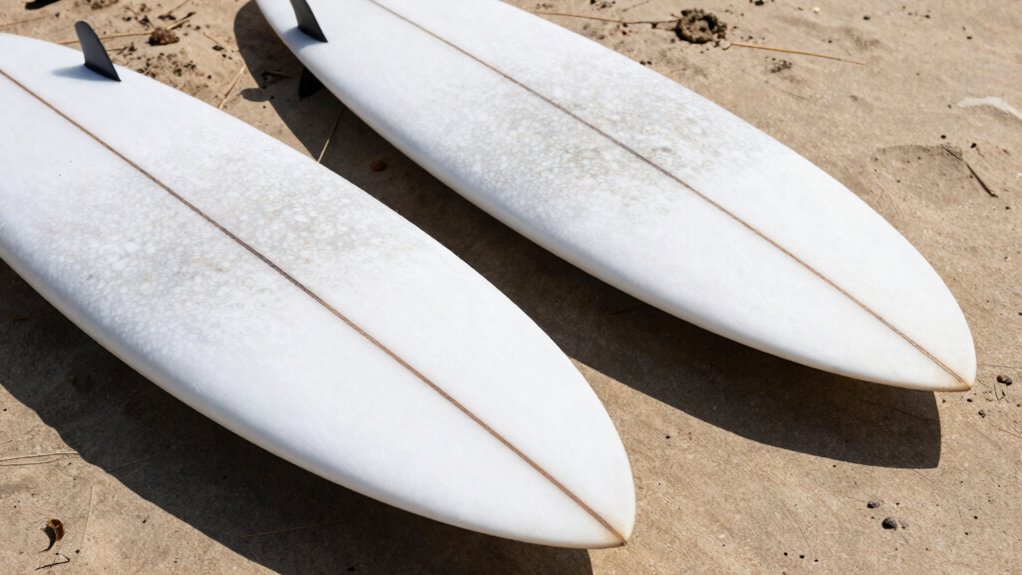
Have you ever wondered how the shape of a surfboard influences its stability on the water? It all comes down to how the board interacts with wave dynamics and the material impact. When you ride a wave, your surfboard acts as the bridge between you and the water’s energy. Different shapes respond uniquely to wave movement, affecting your balance and control. For example, wider boards with a rounded nose tend to be more stable because they distribute your weight more evenly, making it easier to stay upright, especially in smaller or choppier conditions. Narrower, pointed noses cut through the water more efficiently, but they can be less forgiving if you’re still mastering your balance.
Wider, rounded-nose boards offer greater stability, especially in choppy conditions, by evenly distributing your weight for easier balance.
Wave dynamics play a crucial role here. As the wave’s energy moves beneath you, the shape of your board influences how that energy is absorbed and redirected. A board with a flatter bottom creates a broader surface area that helps it glide smoothly over the water, providing a stable ride even when the waves are less predictable. Conversely, a more curved or pointed bottom design can increase maneuverability but may sacrifice some stability. You’ll notice that boards designed for stability often have a more forgiving shape that responds well to changing wave patterns, helping you stay balanced even when the wave’s energy shifts unexpectedly. Additionally, understanding wave energy distribution can help you choose a board that responds best to your preferred conditions. Recognizing how board shape interacts with wave energy and water movement can further refine your selection process. Incorporating material properties into your choice is also essential, as they directly influence the board’s response to wave forces, making some designs more suitable for specific conditions. Moreover, considering the board construction can enhance your overall stability and durability.
Material impact also plays a significant role in stability. The material your board is made of affects its weight, flexibility, and buoyancy—all critical factors in how it handles wave dynamics. A lightweight foam core with a durable fiberglass shell offers a good balance of buoyancy and strength, giving you that feeling of being securely atop the water. Heavier, solid wood boards tend to have more stability because their mass makes them less reactive to sudden wave movements, but they might be harder to maneuver. The choice of materials impacts how quickly your board responds to wave changes. If you want quick stability shifts, a board with a stiffer, heavier build might be the way to go. But if you prefer a more forgiving, easy-to-control experience, lighter, flexible materials could serve you better.
Ultimately, the difference in surfboard shape that impacts stability fast hinges on how well the design responds to wave dynamics and the materials used. By understanding how these elements interact, you can choose a shape that matches your skill level and the conditions you most often surf in. Whether you prioritize quick stability shifts or steady control, selecting the right shape and material combination makes all the difference in your surfing experience.
As an affiliate, we earn on qualifying purchases.
Frequently Asked Questions
How Does Tail Shape Influence Surfboard Stability?
Your surfboard’s tail shape greatly impacts stability through its tail curvature and rocker angle. A wider tail with more curvature provides better balance, especially in small waves, while a steeper rocker angle enhances maneuverability but can reduce stability. When you choose a tail shape, consider how the tail’s curvature and rocker influence your control, making sure it matches your skill level and the surf conditions you’re riding.
Do Thicker Boards Always Offer More Stability?
You might think thicker boards always mean more stability, but that’s not the whole story. The board material and rail design play vital roles in how stable you feel on a wave. A thicker board with a well-designed rail can offer excellent balance, while a thinner one with the right material might be more maneuverable. So, don’t judge stability by thickness alone—there’s more at play.
Can Fin Placement Affect Board Stability?
Yes, fin placement can considerably affect board stability. When you adjust fin position, it influences how the board tracks and responds to your movements. Fin materials also matter; stiffer fins offer more control, while softer materials provide flexibility. Additionally, the fin placement relative to the board surface impacts stability—fins positioned further back increase hold, while those closer to the nose enhance maneuverability. Experimenting with fin placement and materials helps optimize your stability on the water.
How Does Board Length Impact Balance?
You’ll find that longer boards generally offer better balance because they provide more surface area, making stability easier. The board material also plays a role; lightweight foam or fiberglass enhances responsiveness, helping you stay steady. Regular wax application improves grip, preventing slipping and boosting confidence in your stance. So, choosing a longer board with quality materials and proper wax application can notably improve your balance on the water.
Are There Specific Shapes Better for Beginner Stability?
Your chances of staying stable skyrocket with beginner-friendly surfboard shapes, like wide, flat-bottomed boards. These shapes handle wave energy better, offering more control and confidence. They’re made from durable materials that withstand the wear and tear of learning. These boards are designed to be forgiving, helping you balance better and catch waves easily. They truly make your learning curve less steep, turning surfing from intimidating to fun.
Conclusion
So, when choosing a surfboard, remember that its shape can change your stability like a steering wheel guides a car. A wider nose or thicker tail offers more balance, making your ride smoother and more controlled. Think of it as the difference between walking on a tightrope and strolling on a sturdy bridge. Picking the right shape helps you stay steady, so you can focus on catching waves and enjoying every thrilling moment on the water.
Fall Picks
fall essentials
As an affiliate, we earn on qualifying purchases.