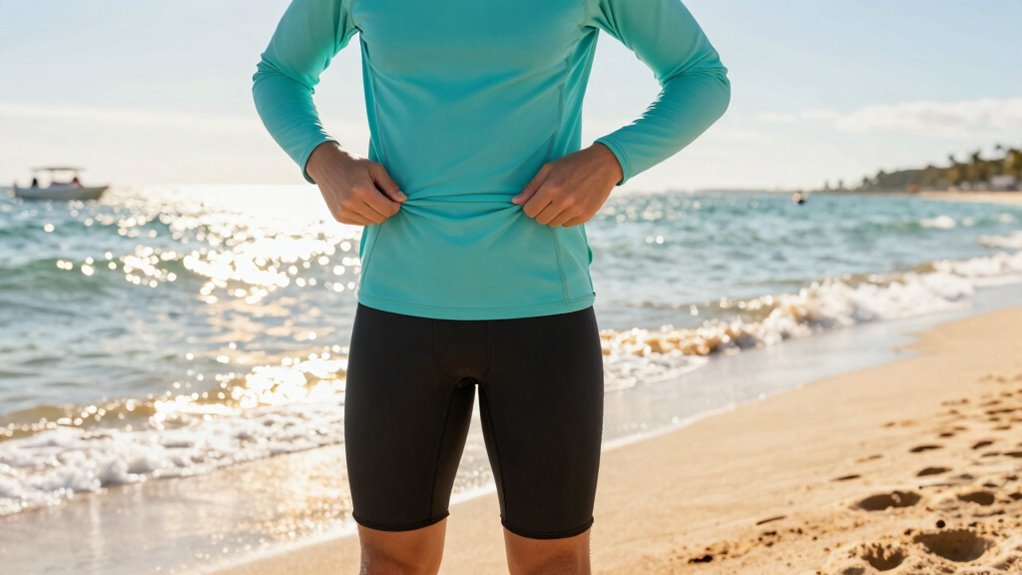

When the air feels warm but the water is cold, you should layer your clothing for water sports. Wear a moisture-wicking rash guard or light wetsuit top to keep warm without restricting movement. Add a waterproof jacket or windbreaker if it’s breezy. Use water shoes or neoprene booties for grip and foot protection. Don’t forget sun protection like sunscreen, a hat, and polarized sunglasses. For more tips on staying comfortable and safe, keep exploring the essentials.

Get pool and patio gear delivered free — and shop member deals
- Fast, free delivery on millions of items
- Access to Prime Big Deal Days deals on October 6–7
- Prime Video, Amazon Music and more included
Key Takeaways
- Wear a wetsuit or wetsuit top for thermal protection and flexibility in cold water conditions.
- Layer moisture-wicking, quick-drying clothing, like rash guards, to retain warmth and protect against sun.
- Choose water shoes or neoprene booties for grip, foot protection, and warmth on wet or rocky surfaces.
- Apply broad-spectrum, water-resistant sunscreen and wear wide-brim hats or caps for sun safety.
- Combine thermal layers with waterproof or windproof jackets to adapt to changing weather and water temperatures.
Dressing appropriately for water sports is vital for comfort, safety, and enjoyment. Even when the air feels warm, remember that the water may still be cold, so your clothing choices can considerably impact your experience. Proper attire helps you stay comfortable and reduces the risk of hypothermia, especially if you fall into the water. Start by selecting suitable clothing that offers insulation without restricting movement. A wetsuit or a wetsuit top can be a smart choice, as it provides thermal protection while allowing flexibility. If you prefer not to wear a wetsuit, consider layering with quick-drying, moisture-wicking garments that can help retain body heat. Understanding the thermal properties of water can help you make better decisions about your layering choices.
Dressing properly for water sports ensures comfort, safety, and warmth, even when water feels cold.
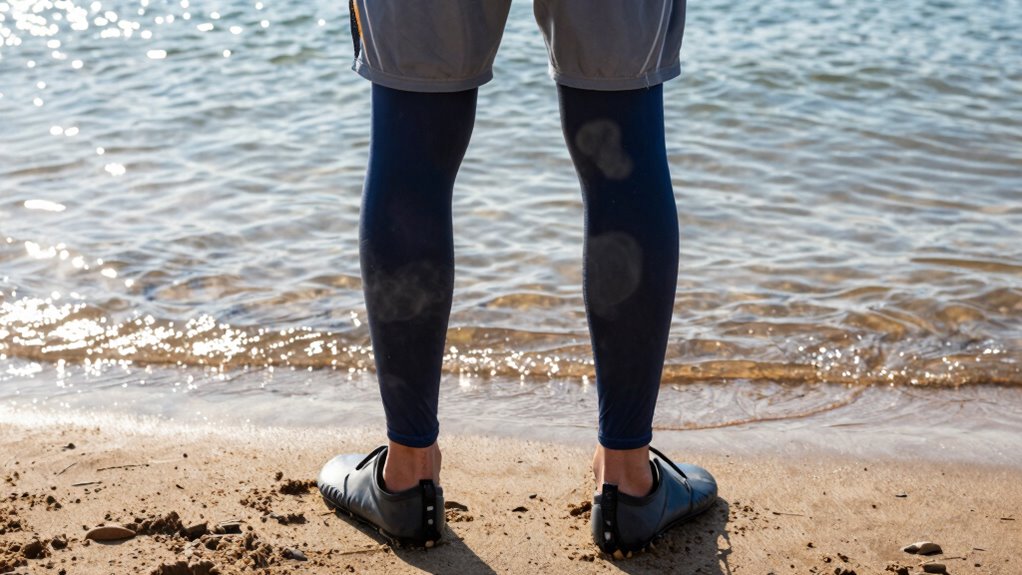
When it comes to footwear, appropriate footwear is a must-have to prevent slips, protect your feet from sharp objects, and improve stability. Water shoes or neoprene booties are excellent options because they grip the surfaces better than bare feet and shield your feet from rocks, shells, or debris. Avoid flip-flops or sandals that can easily slip off or lack proper support. Having the right footwear guarantees you get the most out of your activity while keeping your feet safe and dry when walking on wet or uneven terrain. Proper foot protection is essential for avoiding injuries and maintaining stability on different surfaces. Additionally, choosing footwear with good thermal insulation can help keep your feet warm in colder water conditions, enhancing your overall comfort.
Sun protection is also vital, even if it’s cloudy or the water appears cooler than the air. Your skin can still suffer from sunburns, and prolonged exposure to UV rays increases the risk of skin damage. Apply a broad-spectrum, water-resistant sunscreen generously to all exposed skin, paying special attention to your face, neck, and ears. Wear a wide-brimmed hat or a cap to shield your face from direct sunlight, and consider sunglasses with polarized lenses to reduce glare off the water’s surface. These accessories not only protect you but also improve your visibility, making it easier to keep track of your surroundings.
Layering your clothing appropriately is key. A lightweight, long-sleeved rash guard or swim shirt offers added sun protection and helps keep your skin dry and warm. If it’s windy or you’re prone to feeling cold, a lightweight windbreaker or waterproof jacket can provide extra comfort without overheating. Remember, even if the air feels warm, water’s cooling effect can quickly chill you if you’re not dressed properly. Being prepared with the right clothing, footwear, and sun protection ensures you stay comfortable, safe, and able to fully enjoy your water sports adventure.
moisture-wicking rash guard for water sports
As an affiliate, we earn on qualifying purchases.
As an affiliate, we earn on qualifying purchases.
Frequently Asked Questions
What Materials Are Best for Water Sports Clothing in This Scenario?
For water sports in warm air but cooler water, choose materials that balance fabric breathability and durability. Look for quick-drying, lightweight fabrics like polyester or nylon, which wick moisture and keep you comfortable. These materials are durable enough to withstand water exposure and physical activity. Avoid cotton, as it absorbs water and stays heavy. Selecting the right fabric helps you stay comfortable and protected during your water adventures.
How Can I Prevent Chafing With Layered Water Sports Apparel?
To prevent chafing with layered apparel, make certain your clothing fits snugly but isn’t too tight. Use moisture-wicking fabrics to reduce friction and keep skin dry. Apply anti-chafing creams or powders on areas prone to irritation before your activity. Consider wearing seamless or flat-seam garments to minimize rubbing. Adjust your layers throughout the activity if you notice any chafing signs, and choose smooth, soft fabrics to enhance comfort.
Should I Wear a Wetsuit or Drysuit in Warm Air?
When the air feels warm but the water doesn’t, choosing between a wetsuit or drysuit is like balancing fashion trends with practicality—one keeps you stylishly comfortable, the other safeguards your health. Stick with a wetsuit for warm air, as it offers flexibility and requires less equipment maintenance. It’s your best bet to enjoy water sports comfortably, blending current trends with the essential gear for safe, enjoyable adventures.
How Do I Stay Warm if Water Temperature Drops Suddenly?
When water temperature drops suddenly, you stay warm by wearing a swim cap and water shoes, which help retain body heat and protect your extremities. Keep a wetsuit or a thermal rash guard handy for quick donning. Also, move actively in the water to generate warmth, and dry off quickly afterward. These precautions guarantee you stay comfortable and safe, even if the water chills unexpectedly.
Are Uv-Protective Garments Necessary for Warm Air but Cool Water?
Yes, UV-protective garments are necessary even when the air feels warm but the water is cool. They shield your skin from harmful sun rays, preventing burns and long-term damage. Plus, they help maintain skin hydration by reducing sun exposure’s drying effects. Wearing these garments keeps you comfortable, protected, and safe, ensuring you can enjoy your water sports without worry about sunburn or dehydration.
Conclusion
Remember, dressing wisely for water sports isn’t just about staying comfortable—it’s about making sure you can enjoy every splash and wave to the fullest. Think of your outfit as your trusty sidekick, helping you stay cozy when the air’s warm but the water’s a little more reserved. With the right layers, you’ll feel confident and ready to embrace the adventure. So, gear up smartly, and let the good times roll—your perfect water day awaits!
Fall Picks
fall essentials
As an affiliate, we earn on qualifying purchases.