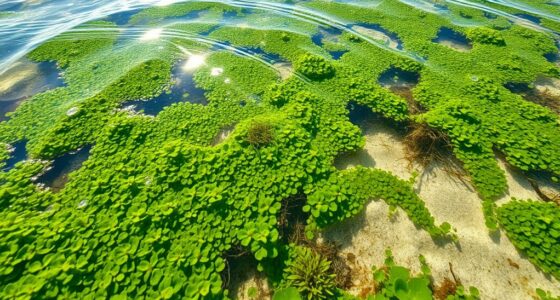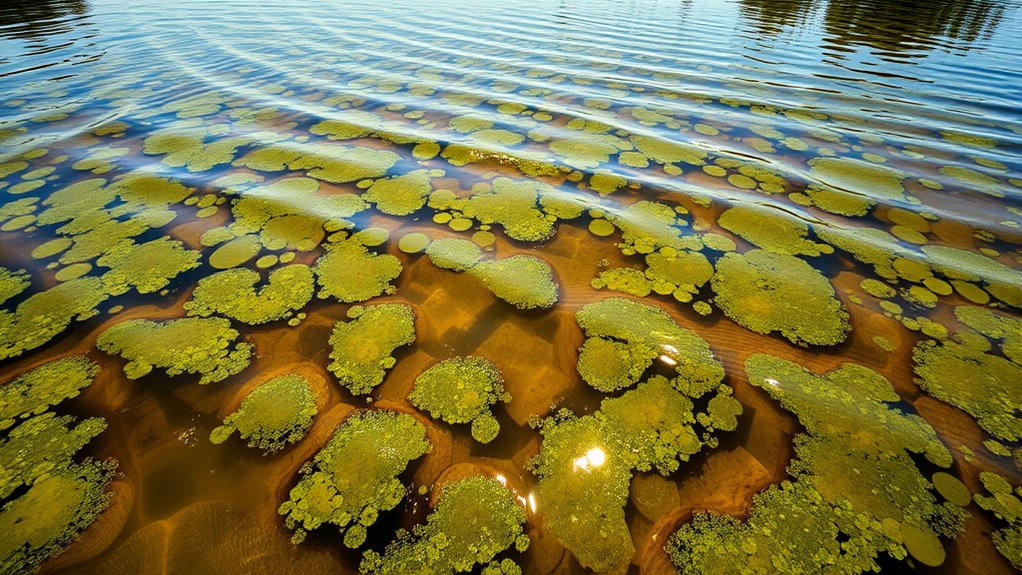

Seasonal algae blooms turn your floating areas murky and less inviting, blocking sunlight and disrupting aquatic plants and animals. They deplete oxygen when they decay, causing fish kills and ecological imbalance. The toxins released can threaten your health and contaminate water supplies. Over time, these blooms weaken ecosystems and reduce water quality, impacting recreation and local economies. Keep exploring to discover how these blooms can have lasting effects on your environment.
Key Takeaways
- Algae blooms turn water surfaces murky, blocking sunlight and disrupting aquatic ecosystems.
- They produce toxins harmful to aquatic life and humans, contaminating water supplies.
- Decomposition of algae reduces oxygen levels, causing fish kills and ecosystem imbalance.
- Dense algae coverage prevents sunlight from reaching submerged plants, leading to their decline.
- Long-term blooms can cause lasting ecological damage, affecting water quality and recreational activities.
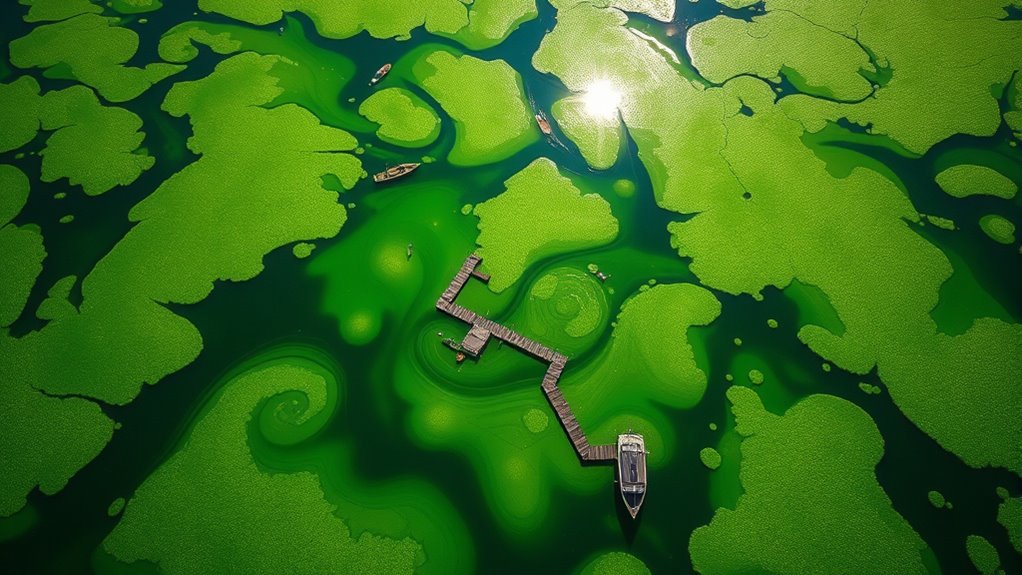
Algae blooms can considerably disrupt floating areas, turning once-pristine waters into murky, algae-covered surfaces. When these blooms occur seasonally, they often strike at the heart of water quality, reducing clarity and oxygen levels. As algae proliferate rapidly during certain times of the year—often fueled by warmer temperatures, increased nutrient runoff, and sunlight—they create a visual and environmental disturbance that can be difficult to ignore. You’ll notice the water becoming clouded, with a thick layer of algae forming on the surface, which blocks sunlight from reaching underwater plants. This not only diminishes water quality but also hampers the natural ecological balance. The delicate interactions among aquatic species can quickly unravel when algae take over, leading to declines in fish populations and other aquatic life that rely on clear, oxygen-rich waters. Algae proliferation can accelerate under these conditions, further exacerbating environmental impacts.
The impact on water quality is especially damaging because algae blooms consume oxygen in the water when they decompose. This process, known as hypoxia, can cause large fish kills and disrupt local ecosystems. As oxygen levels plummet, aquatic organisms struggle to survive, and the overall health of the water body deteriorates considerably. When the water quality drops, it becomes less suitable for recreation, fishing, and other human activities, which often depend on clean, clear waters. Furthermore, certain types of algae produce toxins that are harmful to both aquatic life and humans. These toxins can contaminate drinking water supplies, making them unsafe to use without proper treatment. The presence of such toxins not only affects the ecological balance but also raises public health concerns.
Seasonal algae blooms also alter the natural ecological balance. Under normal conditions, a variety of aquatic plants and animals maintain a fragile but stable ecosystem. When algae dominate, they outcompete native plants for nutrients and sunlight, shifting the balance drastically. This imbalance can lead to declines in native species, disrupting food chains and habitat structures. As algae cover large areas of water, they prevent sunlight from reaching submerged plants, causing them to die off. The loss of these plants further destabilizes the ecosystem because they play a vital role in oxygen production and providing habitat. With the natural ecological processes disrupted, the overall health of the floating area diminishes, sometimes for years to come.
Frequently Asked Questions
How Do Algae Blooms Affect Local Aquatic Wildlife?
Algae blooms can seriously impact your local aquatic wildlife by disrupting fish habitats through algae competition for nutrients and oxygen. As algae overgrow, they block sunlight, reducing underwater plant growth that fish rely on for shelter and food. This can lead to fish suffocation and decreased biodiversity. You might notice fewer fish and other aquatic creatures, indicating that algae blooms are harming the delicate balance of your local ecosystem.
Can Algae Blooms Be Prevented in Floating Areas?
Preventing algae blooms in floating areas is possible with proactive algae prevention strategies. You can use floating barriers to block nutrient inflow, reducing algae growth. Regularly removing debris and controlling runoff helps limit nutrients that fuel blooms. Installing aeration systems boosts water movement, discouraging algae buildup. By combining these methods, you create a clean, calm environment, effectively preventing algae blooms and maintaining healthy, harmonious floating areas.
What Are the Health Risks Associated With Algae Toxins?
Algae toxin exposure can pose serious health risks, especially if you come into contact with contaminated water. You might experience skin rashes, respiratory issues, or gastrointestinal problems from water contamination. If you swallow or inhale water with algae toxins, it could lead to more severe health effects like liver damage or neurological symptoms. Always avoid swimming or drinking water from affected areas during blooms to protect yourself from these dangers.
How Do Climate Changes Influence Bloom Frequency?
Climate variability and temperature increase directly influence bloom frequency, making algae blooms more common and severe. As global temperatures rise, warmer water creates ideal conditions for algae growth, especially during prolonged periods of heat. You’ll notice more frequent blooms in warmer months, which can disrupt aquatic ecosystems and affect water quality. By understanding these patterns, you can better anticipate and manage the impacts of climate change on algae proliferation.
Are There Effective Methods to Remove Algae From Floating Surfaces?
Yes, there are effective methods for algae removal from floating surfaces. You can use floating surface cleaning techniques like manual scrubbing or specialized tools to physically remove algae. Additionally, eco-friendly algaecides can help control growth without harming your environment. Regular maintenance and monitoring are key. By staying proactive with floating surface cleaning, you prevent algae buildup and keep your area clean and healthy.
Conclusion
Just like Icarus flying too close to the sun, your floating areas face risks during seasonal algae blooms. These vibrant yet potentially harmful blooms can turn your peaceful retreat into a chaos of green and slime. By staying vigilant and taking proactive steps, you can avoid a fall like Icarus’s and keep your floating paradise safe. Remember, nature’s beauty is a delicate balance—respect it, and your tranquil haven will thrive instead of falter.