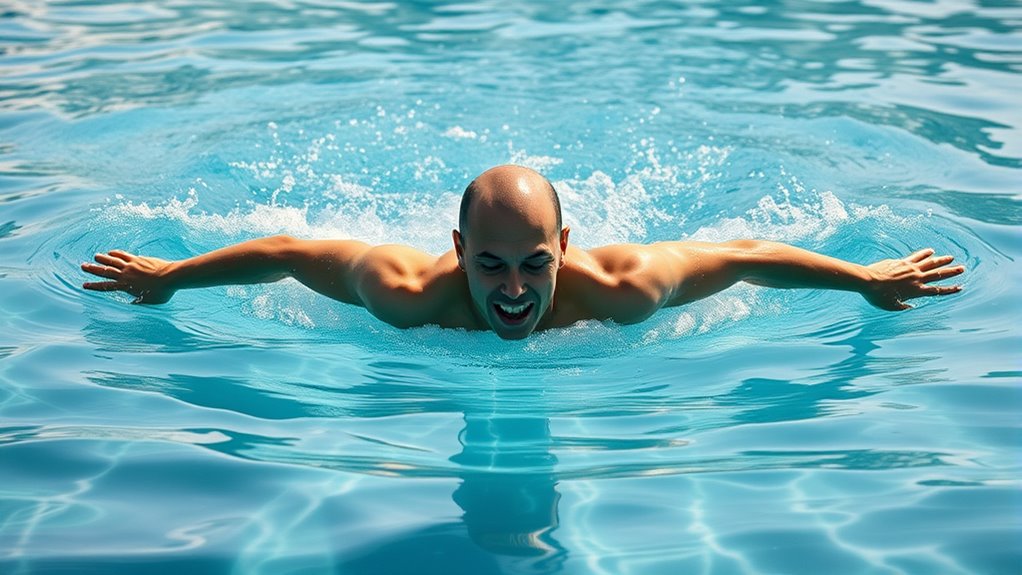

To shift smoothly between float and swimming, stay relaxed and focus on steady, deep breaths to keep your body stable. Move gradually from horizontal floating to a streamlined position, engaging your core to maintain alignment. Use gentle, controlled movements—push off with your hips high and breathe rhythmically during the change. Practice consistently, keeping your body relaxed and your focus on smooth, deliberate adjustments. Keep going, and you’ll discover even more techniques to improve your fluid motion.

Get pool and patio gear delivered free with Prime
- Fast, free delivery on millions of items
- Prime Video, Amazon Music and more included
- Member-only deals all year
Key Takeaways
- Maintain steady, controlled breathing to stay relaxed and prevent panic during the transition.
- Use small, deliberate movements to shift from floating to swimming without losing balance.
- Engage core muscles and keep body aligned to reduce drag and facilitate a smooth change in position.
- Push off the float with a streamlined posture, exhaling steadily and inhaling rhythmically to guide movement.
- Practice regularly to build confidence, focusing on relaxation and proper form for effortless transition.
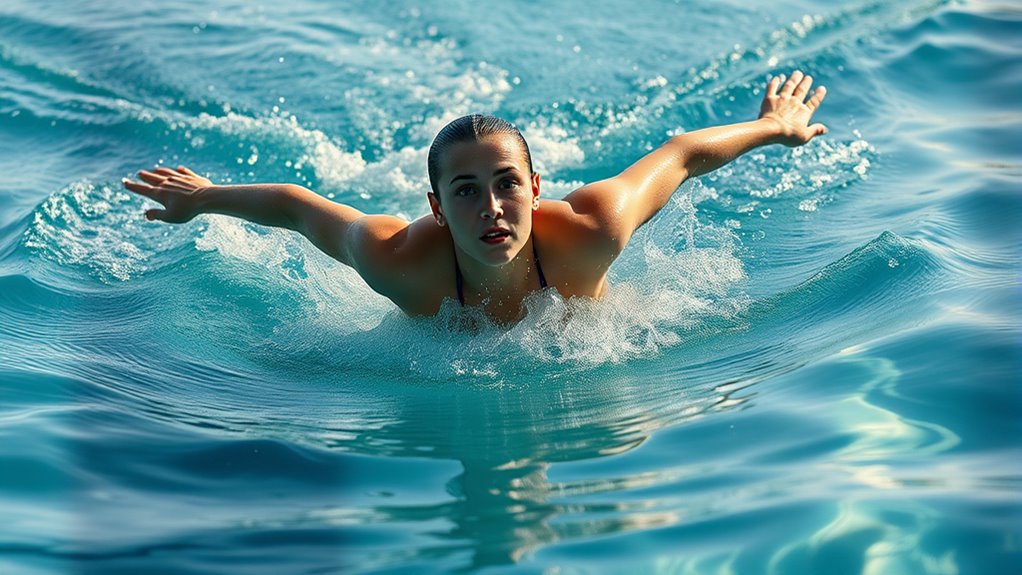
Mastering the shift between floating and swimming is essential for developing confidence and efficiency in the water. When you move seamlessly from floating to swimming, you conserve energy and stay relaxed, making your entire experience more enjoyable. To do this smoothly, you need to pay close attention to your breathing techniques and body positioning. These elements are the foundation of a fluid transition, helping you stay balanced and relaxed as you switch from one activity to the other.
Start by focusing on your breathing. Proper breathing techniques are crucial because they calm your nerves and stabilize your body. When you float, take slow, deep breaths, inhaling through your nose and exhaling gently through your mouth. This calm breathing keeps your heart rate steady and prevents panic, especially when you’re transitioning into swimming. As you begin to move from floating to swimming, maintain these controlled breaths. Consistent, rhythmic breathing helps keep your body aligned and prevents you from tensing up. Remember, irregular or shallow breathing can lead to unnecessary fatigue or loss of balance, making the transition more difficult.
Focus on slow, deep breaths to stay relaxed and prevent panic during your transition from float to swim.
Next, pay attention to your body positioning. When floating, your body should be relaxed, with your face gently submerged and your arms resting comfortably. As you prepare to swim, shift your body gradually from a horizontal float to a more streamlined position. Engage your core muscles to keep your hips and legs aligned, which reduces drag in the water. Keep your head in a neutral position, looking slightly downward or straight ahead, depending on your stroke. This alignment ensures your body remains balanced and ready to propel forward smoothly. When transitioning, avoid sudden movements; instead, make small, controlled adjustments to your body positioning. This helps you maintain stability and prevents unnecessary splashing or losing momentum. Additionally, understanding your body positioning and maintaining it throughout the transition can significantly improve your efficiency and confidence.
As you push off the float and start to kick or stroke, keep your body streamlined, with your hips high in the water and your head aligned with your spine. Using your breathing to guide your movements, exhale steadily as you start to swim and inhale rhythmically as needed. This coordination between breath and movement makes the shift feel natural and effortless. With practice, you’ll find that maintaining good body positioning and breathing techniques allows you to move seamlessly from float to swim, boosting your confidence and efficiency in the water. The key is to stay relaxed, stay focused on your form, and make gradual adjustments. Over time, this fluid transition will become second nature, turning what once felt like a challenge into a smooth, confident motion.
swimming float and go transition training aid
As an affiliate, we earn on qualifying purchases.
As an affiliate, we earn on qualifying purchases.
Frequently Asked Questions
How Long Does It Typically Take to Master Transitioning Between Float and Swim?
It usually takes a few weeks of consistent practice to master switching between float and swim. You’ll improve faster by focusing on breathing control and body positioning, which help you stay relaxed and balanced. As you practice regularly, you’ll become more confident in shifting smoothly from float to swim. Remember, patience is key—everyone progresses at their own pace, so keep practicing and you’ll see steady improvements.
Can I Practice Transitioning Without a Swimming Instructor?
Yes, you can practice shifting solo. Think of yourself as a river, flowing smoothly from stillness to movement. Use self-practice tips like breath control, gentle body movements, and gradual shifts between float and swim. Solo drills such as holding your breath, floating for a set time, then pushing off to swim help build confidence. With patience and consistency, you’ll develop a seamless rhythm, mastering the flow without an instructor.
What Are Common Mistakes to Avoid During the Transition?
You should avoid rushing the shift, as poor breath control can cause you to panic or lose focus. Keep your body aligned to maintain stability and streamline movement. Don’t forget to breathe steadily; shallow or irregular breaths disrupt your rhythm. Also, avoid tensing up, which hampers fluid motion. Practice slowly, focus on maintaining good breath control, and keep your body aligned to move seamlessly between float and swim.
Is There Specific Gear Recommended for Practicing This Transition?
Think of gear as your trusty sidekick on this journey. For practicing tips, consider using a kickboard to build confidence and streamline your movements, or fins to enhance propulsion and feel secure. A wetsuit or swim cap can also help you feel more buoyant and comfortable. These gear recommendations turn your practice into a smooth dance, making shifts feel natural and less intimidating. Embrace your gear, and let it guide your progress.
How Do I Stay Calm if I Feel Anxious During the Switch?
When you feel anxious during the shift, focus on calming your body with breathing techniques—inhale slowly through your nose, then exhale gently through your mouth. Use mental visualization to imagine yourself smoothly moving forward, which can boost your confidence. Remind yourself that feeling nervous is normal, and with practice, you’ll get better at staying calm. Keep your movements relaxed and steady, and trust your training to guide you through the process.
Conclusion
Mastering the shift between float and swim is key to becoming a confident swimmer. Remember, nearly 80% of water-related accidents could be prevented with proper skills like these. When you smoothly move from floating to swimming, you not only save energy but also boost your safety and confidence in the water. Keep practicing these transitions, and you’ll find yourself feeling more comfortable and in control during every swim. Stay persistent—you’re on your way to becoming a stronger, safer swimmer.
Fall Picks
fall essentials
As an affiliate, we earn on qualifying purchases.