TL;DR

Get pool and patio gear delivered free with Prime
- Fast, free delivery on millions of items
- Prime Video, Amazon Music and more included
- Member-only deals all year
Country Living’s gardening report recommends moving portable potted plants into a garage, shed, basement or home before frost. For pots that must stay outside, it advises grouping and covering them, adding mulch and watering as needed; the right approach depends on plant and weather conditions.
Country Living has published seasonal guidance for protecting outdoor potted plants before the first frost, recommending that gardeners move containers indoors when possible or insulate them outdoors. The advice matters because container plants do not benefit from the warmth of surrounding ground soil and can be more exposed to cold, though the best protection depends on local temperatures, plant hardiness and available shelter.
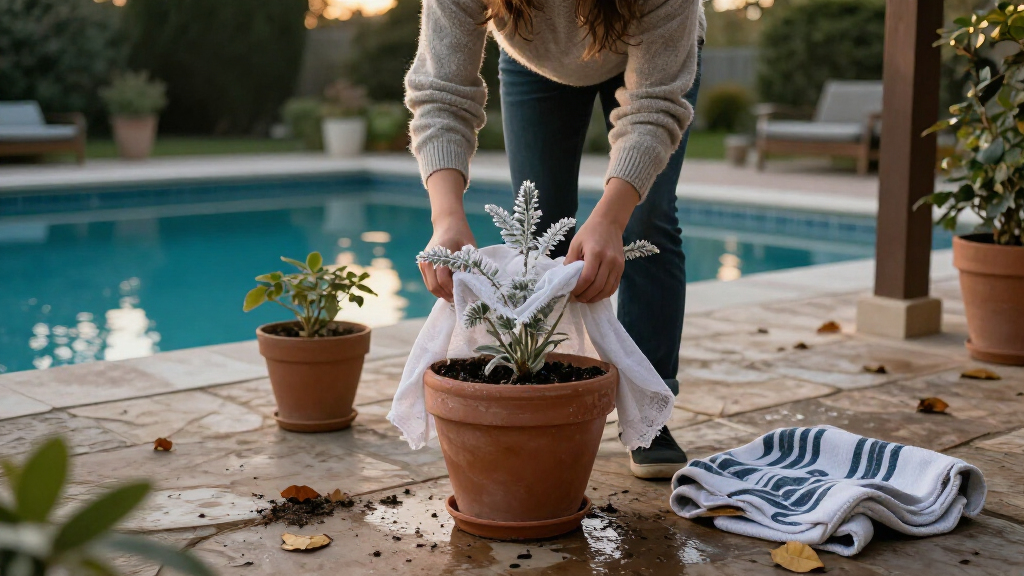
For pots that are light enough to lift, the report suggests moving them into a garage, shed, basement or house, as detailed in this guide to protecting container plants before the first frost. If the chosen space gets very cold at night, the containers can be wrapped in old sheets or blankets. Moving plants indoors is presented as the simplest option when both space and access allow it.
When pots must remain outside, Country Living advises placing them in a sunny spot and grouping them close together, with the containers touching; a zip-up frost jacket is another option for protecting garden plants. Sheets, burlap, plastic or cardboard can be wrapped around the group. During especially cold conditions, lightweight fabric or plastic can also be draped over the plants. Heavy blankets and towels may weigh on foliage, and the covering should be kept from pressing against leaves and branches where possible to limit breakage.
The report cautions that plastic sheeting should be removed in the morning before sunlight reaches the plants, because trapped heat can damage them. For large pots that cannot be moved, adding mulch over the soil can help insulate roots, one of several steps to keep potted plants safe as weather worsens. Watering may also help: horticulture experts at Mississippi State University’s Extension are cited as saying that well-watered soil can retain heat and help prevent damage. The report recommends watering as needed, not following a fixed schedule.
Why Container Roots Need Protection
Potted plants face a different exposure to cold from plants growing in the ground: their roots are surrounded by a container rather than insulated by the earth. That makes the pot and its soil a focus of frost preparation, alongside the leaves and stems. Grouping pots, adding mulch and choosing a sheltered location are practical ways to address that exposure when carrying containers indoors is not possible.
The advice also highlights a balance gardeners need to manage. Covers can shield plants from cold, but plastic left in sunlight may trap heat, while heavy coverings can press on or break foliage. Checking plants and adjusting or removing coverings as conditions change can help avoid creating a new problem while trying to prevent frost damage.
Popular right now

Apple AirPods Max 2 Wireless Over-Ear Headphones – Midnight

Shark HydroVac MessMaster Cordless Wet Dry Vacuum and Mop Combo, AW261

LG 85-Inch QNED73B Mini LED 4K Smart TV (2026)
As an affiliate, we earn on qualifying purchases.
The Report’s Seasonal Guidance
Country Living frames the recommendations for the seasonal shift from fall into winter, when temperatures begin to drop. Its report offers three main approaches: move pots indoors, group and cover them, or insulate the soil with mulch. These options are not presented as a one-size-fits-all guarantee; the choice depends in part on whether containers can be lifted and whether a suitable indoor space is available.
For its point about watering, the report cites horticulture experts at Mississippi State University’s Extension. It says well-watered soil can retain heat and help prevent damage, while mulch can help keep soil from drying out. The material provided does not specify a particular plant list, frost temperature threshold or watering amount.
“Plants in containers don’t get warmth from ground soil, so they are especially vulnerable to frost damage.”
— Country Living report
Local Frost Risks Still Vary
The guidance does not give a universal temperature threshold for bringing plants inside or covering them. It also does not identify which plant species tolerate frost, how long a covering should remain in place during a cold spell, or how much water a particular container needs. Those details can vary with plant type, pot size, local forecast and exposure.
The report describes general precautions rather than a guarantee that plants will avoid damage. Gardeners should check local forecasts and consider the needs of each plant; the source material does not provide location-specific advice or a detailed list of frost-sensitive varieties.
Check Forecasts and Adjust Covers
As the first frost approaches, gardeners can assess which pots are movable, identify an indoor location and prepare suitable coverings for containers that must stay outside. The report’s recommendations point to checking conditions daily: cover plants when cold threatens, remove plastic before direct morning sun reaches it, and water according to need.
Because frost timing and plant needs differ, the next step is to use a local forecast and plant-specific guidance when deciding how much protection to provide. The source material does not announce a single date for the first frost or a later update; these are seasonal steps to take as temperatures fall.
Key Questions
What is the simplest way to protect a potted plant from frost?
Country Living recommends moving a portable pot into a garage, shed, basement or home. If the indoor space gets very cold at night, the container can be wrapped in an old sheet or blanket.
What if I cannot bring my pots indoors?
Place them in a sunny area and group the containers together. The report suggests wrapping the pots with sheets, burlap, plastic or cardboard and using a lightweight cover over plants when conditions are especially cold.
Should plastic coverings stay on all day?
No. The report advises removing plastic sheeting in the morning before sunlight reaches the plants, since it can trap heat. Keep coverings from pressing on leaves and branches where possible.
Should I water potted plants before a light freeze?
The report cites Mississippi State University Extension horticulture experts saying that well-watered soil can retain heat and help prevent damage. It advises watering as needed, but does not give a universal amount or schedule.
Can mulch protect a large pot that cannot be moved?
Yes. Country Living recommends adding a layer of mulch over the soil to help insulate the roots, then covering the plant and container as needed. The report does not specify a particular mulch depth.
Source: countryliving.com